Oil jumps as US-Iran conflict escalates, disrupts shipping
Brent crude oil briefly topped US$82 in early trading on Monday (Mar 2) before easing.
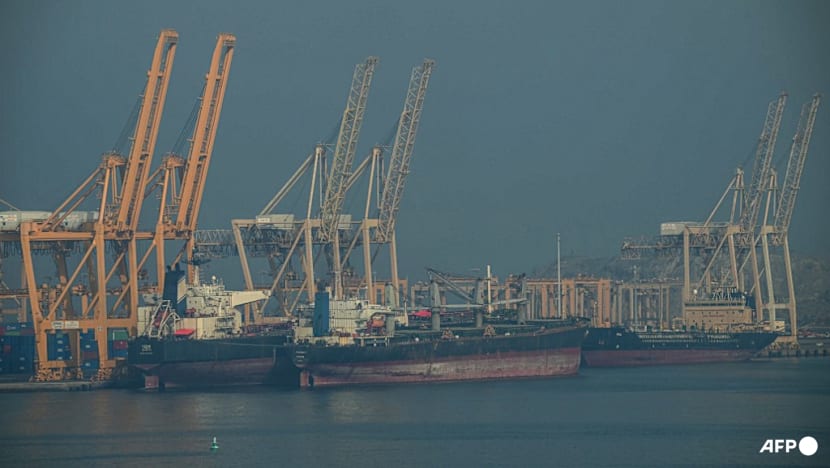
Tankers are seen at the Khor Fakkan Container Terminal, the only natural deep-sea port in the region and one of the major container ports in the Sharjah Emirate, along the Strait of Hormuz, a waterway through which one-fifth of global oil output passes on June 23, 2025. (File photo: AFP/Giuseppe CACACE)
SYDNEY: Oil prices rose on Monday (Mar 2) and shares slid as military conflict in the Middle East looked set to last weeks, threatening to upend a global economic recovery and perhaps reignite inflation.
Brent jumped 6.4 per cent to US$77.57 a barrel, though it had briefly topped US$82.00 at one stage, while US crude climbed 6.2 per cent to US$71.17 per barrel. Safe-haven gold rose 1.6 per cent to US$5,360.
Military strikes by the United States and Israel on Iran showed no sign of lessening, while Iran responded with missile barrages across the region, risking dragging its neighbours into the conflict.
President Donald Trump suggested to the Daily Mail the conflict could last for four more weeks, while posting that attacks would continue until US objectives were met.
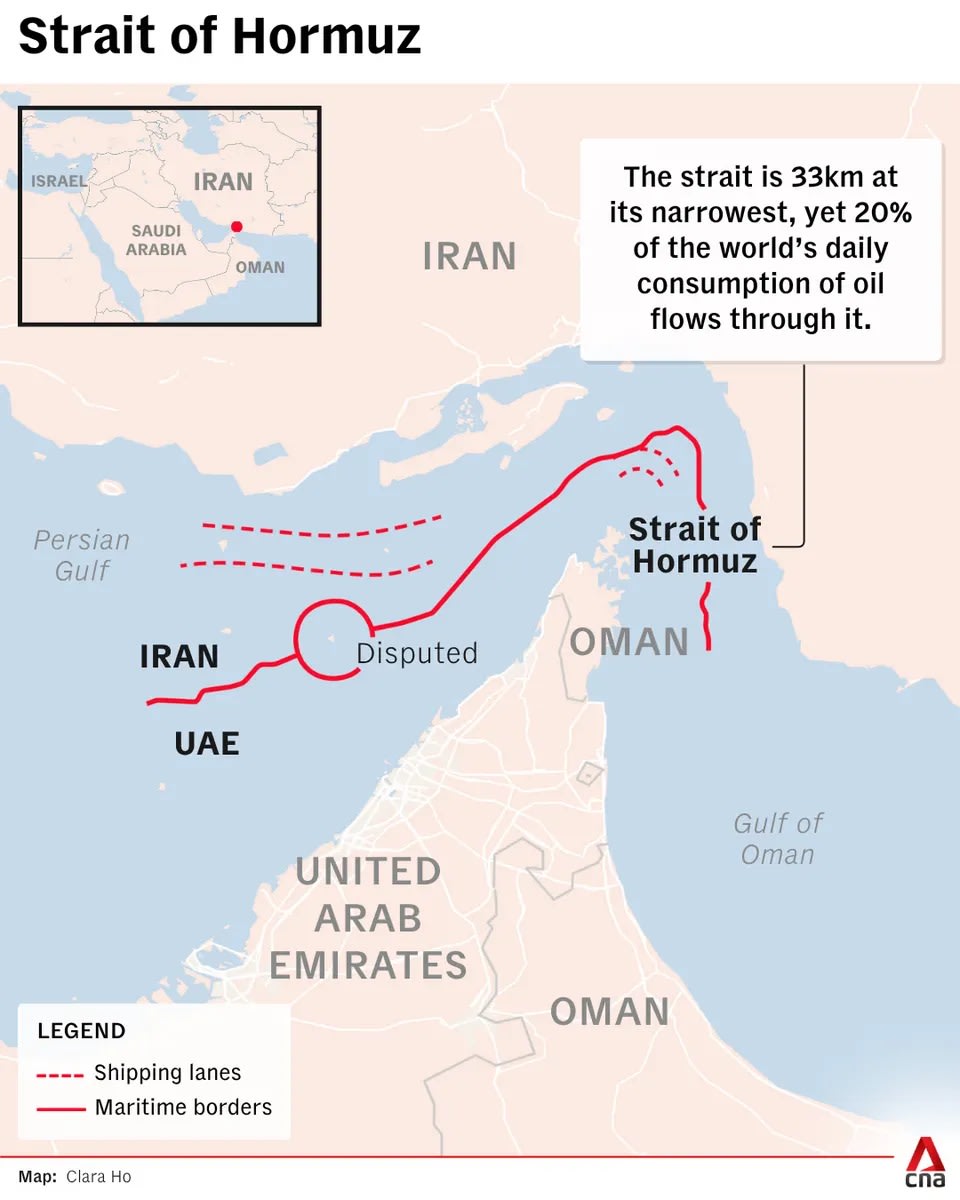
All eyes were on the Strait of Hormuz, where around a fifth of the world's seaborne oil trade flows and 20 per cent of its liquefied natural gas.
While the vital waterway has not yet been blocked, marine tracking sites showed tankers piling up on either side of the strait, wary of attack or maybe unable to get insurance for the voyage.
"The most immediate and tangible development affecting oil markets is the effective halt of traffic through the Strait of Hormuz, preventing 15 million barrels per day of crude oil from reaching markets," said Jorge Leon, head of geopolitical analysis at Rystad Energy.
"Unless de-escalation signals emerge swiftly, we expect a significant upward repricing of oil."
A prolonged spike in oil prices would risk reigniting inflationary pressures globally, while also acting as a tax on business and consumers that could dampen demand.
OPEC+ did agree on a modest oil output boost of 206,000 barrels per day for April on Sunday, but a lot of that product still has to get out of the Middle East by tanker.
"The nearest historical analogue in our view is the Middle East oil embargo of the 1970s, which increased oil prices by 300 per cent to around US$12 per barrel in 1974," said Alan Gelder, SVP of refining, chemicals and oil markets at Wood Mackenzie.
"That is only US$90 per barrel in 2026 terms. Eclipsing this in today's market concerned about significant losses of supply seems very achievable."

ASIAN MARKETS REACTION
Investors had a muted reaction in Asia, with markets mostly mixed during midday trading.
Singapore, Hong Kong, Taiwan, Tokyo and India were all trading down, while Shanghai and Australia saw slight gains.
The Hang Seng Index slid 1.59 per cent, while Taiwan’s stock market was down 0.35 per cent. The Shanghai Composite Index was trading flat, and Australia’s stock market was up slightly at 0.16 per cent.