Trump says war in Iran could last a month, vows to avenge US military deaths
The US president also said 48 Iranian leaders had been killed and that the US military had started sinking Iran's Navy, destroying nine Iranian warships so far and "going after the rest".
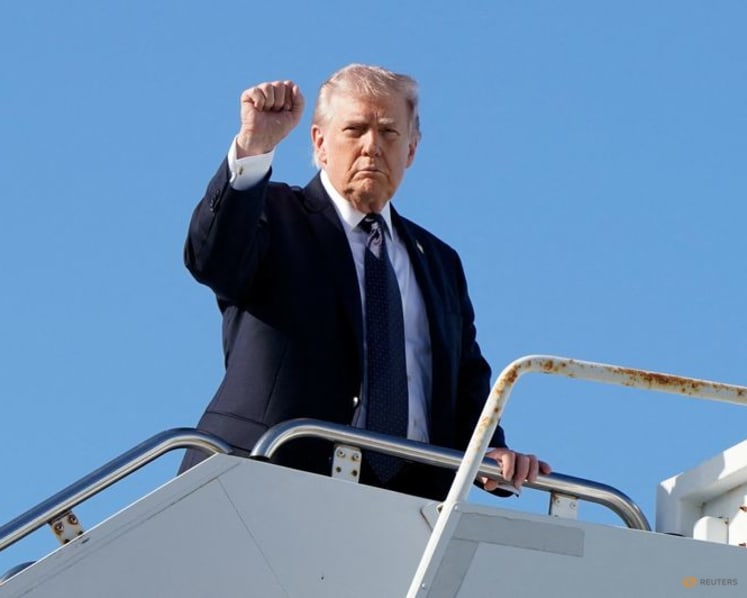
US President Donald Trump gestures as he boards Air Force One at Palm Beach International Airport in West Palm Beach, Florida on Mar 1, 2026. (Photo: Reuters/Elizabeth Frantz)
WASHINGTON: US President Donald Trump said on Sunday (Mar 1) the war on Iran could last a month, after Washington announced it had destroyed the headquarters of Iran's powerful Revolutionary Guards and Israel said the joint operation had dealt "a severe blow" to Tehran's command and control apparatus.
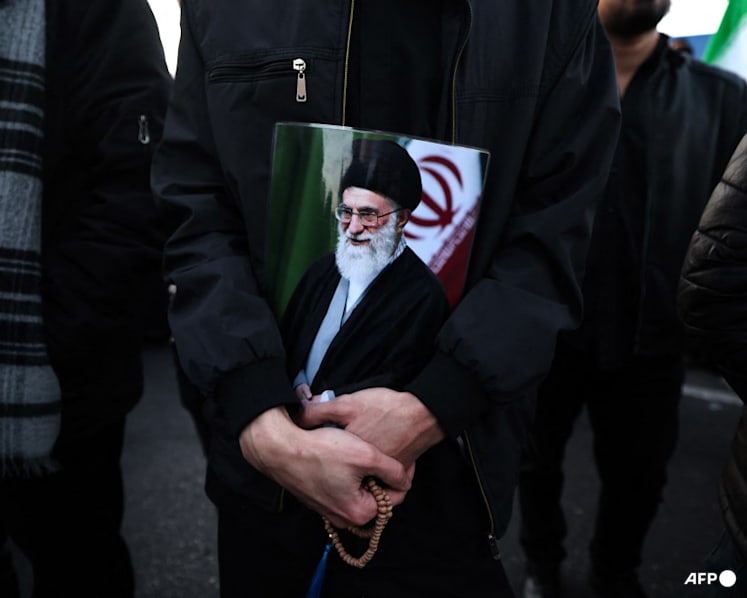
A day after the killing of Supreme Leader Ali Khamenei pitched the Middle East and the global economy into deepening uncertainty, the US and Israel pressed ahead with a military campaign that has sent shockwaves through sectors from shipping to air travel to oil. US officials have said to expect a multi-day campaign.
In a separate interview with the Daily Mail, Trump said the strikes could go on for four weeks.
"It's always been a four-week process. We figured it will be four weeks or so. It's always been about a four-week process so - as strong as it is, it's a big country, it'll take four weeks - or less," Trump was quoted as saying.





Trump told the newspaper he remained open to more talks with the Iranians, but did not say if that would happen "soon".
"I don't know," Trump said, according to the report. "They want to talk, but I said you should have talked last week, not this week," he added.
FIRST US CASUALTIES
As the conflict entered its second day, Trump said 48 Iranian leaders had been killed and that the US military had started sinking Iran's Navy, destroying nine Iranian warships so far and "going after the rest".
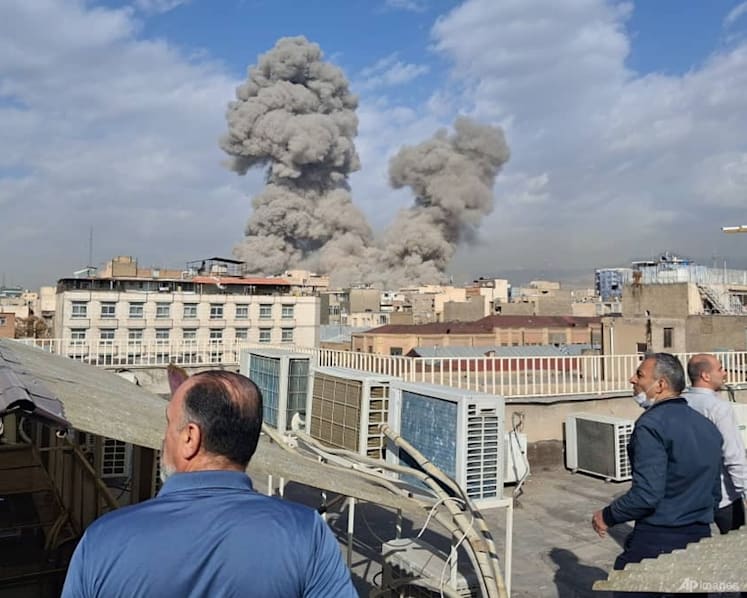
US aircraft and warships have struck more than 1,000 Iranian targets since Trump ordered the start to major combat operations on Saturday, the US military said.
The strikes include B-2 stealth bombers dropping 2,000-pound bombs on hardened, underground Iranian missile facilities.
Iran's retaliatory attacks also started taking their toll. Although the US military reported no casualties on Saturday, on Sunday it said three US troops were killed and another five were seriously wounded in US operations against Iran.
US Central Command said several other US troops suffered minor shrapnel injuries and concussions as well. It did not disclose where or how those casualties took place.
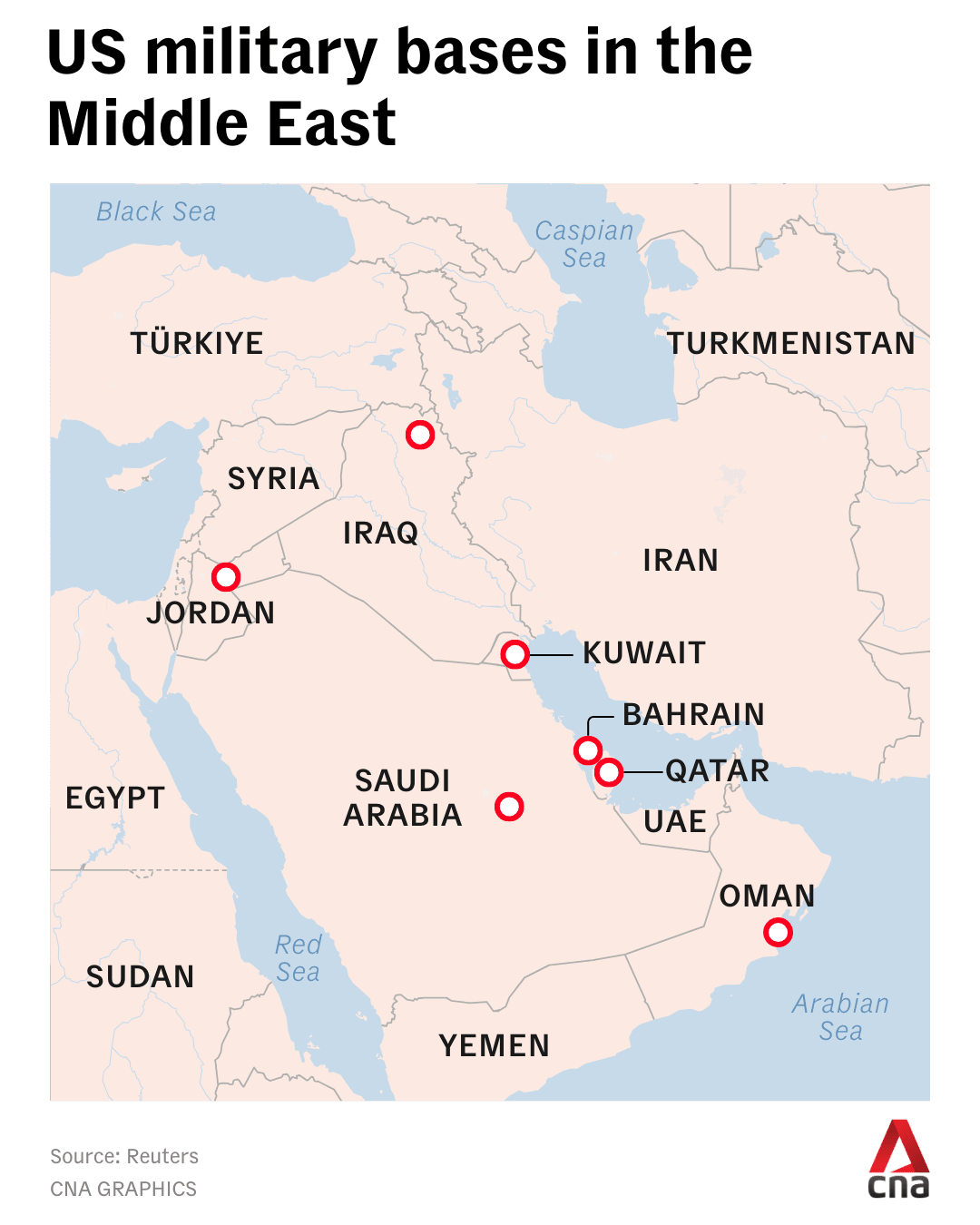
Two US officials, speaking on condition of anonymity, told Reuters the US service members were killed on a base in Kuwait.
Trump sought to brace the US public for more casualties as he acknowledged the deaths, the first in major operations since he returned to office last year. The US bombing of Iran's nuclear sites last June and the US military's seizure of Venezuela's president in January did not lead to US fatalities.
In a video address, Trump lamented the deaths but added that "sadly, there will likely be more before it ends".
"But America will avenge their deaths and deliver the most punishing blow to the terrorists who have waged war against, basically, civilisation," he said.
Michael Waltz, the US envoy to the United Nations, said in a post on X: "Freedom is never free."
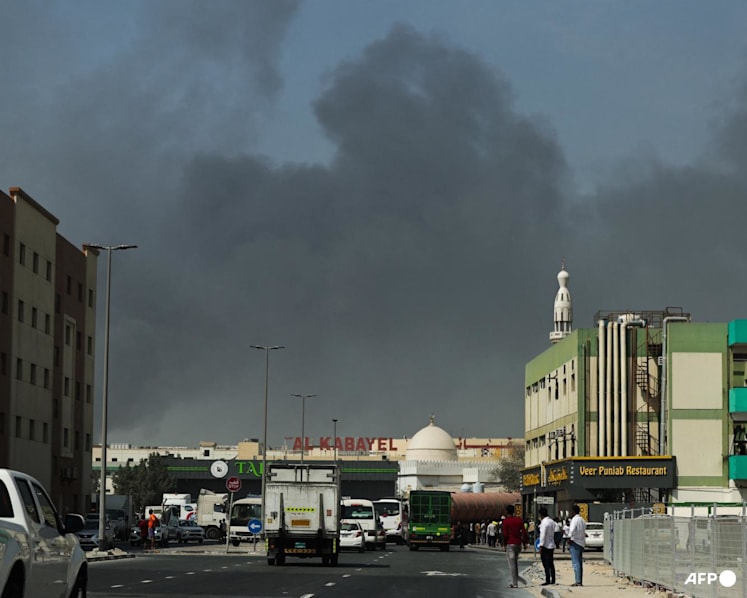
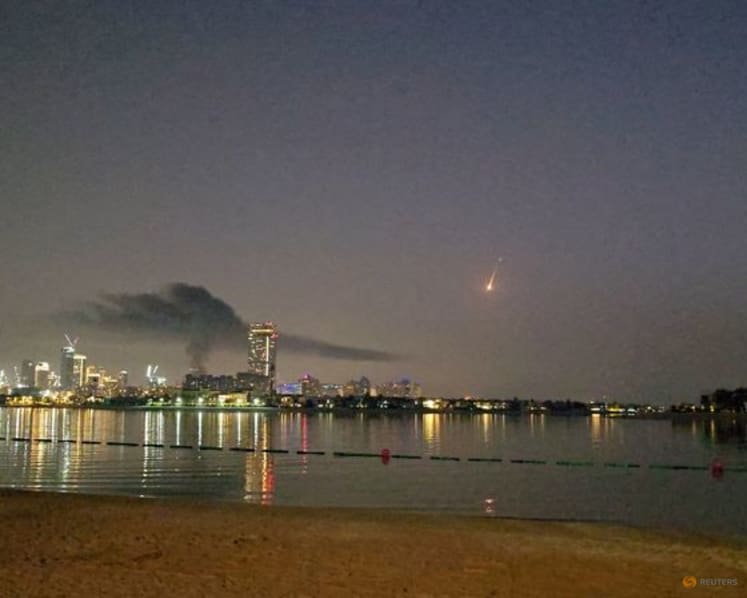
With the vital Strait of Hormuz closed and the Gulf cities of Dubai, Abu Dhabi and Doha under bombardment, the scale of the risk taken by Trump in attacking Iran months before US midterm elections that will decide control of Congress is becoming clearer.
Only around one in four Americans approve of the operation, according to a Reuters/Ipsos poll on Sunday. And if Hormuz - the passage for about 20 per cent of world oil supplies - remains closed for more than a few days, US consumers will start to feel the pressure on prices at the pumps.
EXISTENTIAL CHALLENGE FOR IRAN
The Israeli military said late on Sunday that its air force had established aerial superiority over Tehran, and that a wave of strikes across the capital had targeted intelligence, security, and military command centres.
Israel's present focus is to undermine the Iranian government so that it collapses, an Israeli official said on condition of anonymity, adding that Israel "is acting in its own ways" to get Iranians to take to the streets.
Iran's Revolutionary Guards said on Sunday they had hit three US and UK oil tankers in the Gulf and the Strait of Hormuz, and attacked military bases in Kuwait and Bahrain with drones and missiles. Shipping data showed hundreds of vessels including oil and gas tankers dropping anchor in nearby waters with traders expecting sharp jumps in crude oil prices on Monday.
Global air travel was also heavily disrupted as continued air strikes kept closed major Middle Eastern airports, including Dubai - the world's busiest international hub - in one of the biggest aviation interruptions in recent years.
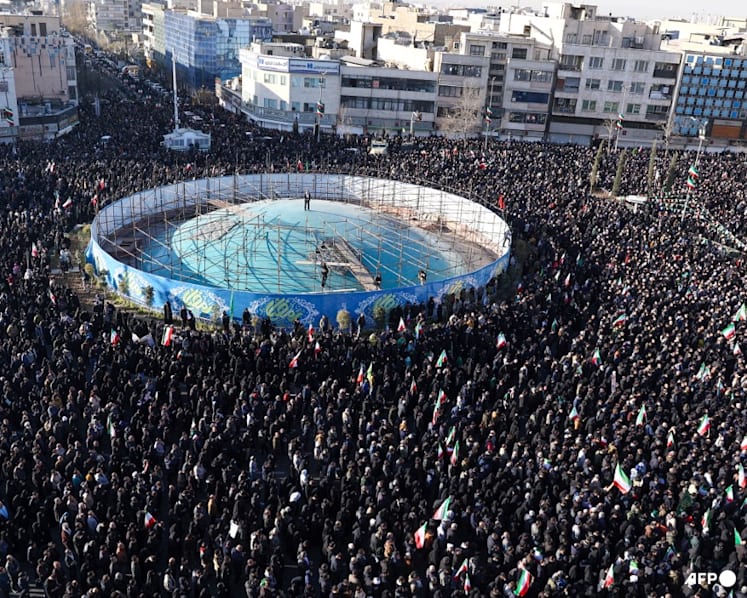
In Iran, facing its biggest existential challenge since the 1980-88 war with Iraq, President Masoud Pezeshkian said a leadership council composed of himself, the judiciary head and a member of the powerful Guardian Council had temporarily assumed the duties of Supreme Leader.
Oman's foreign ministry said Iranian Foreign Minister Abbas Araghchi had indicated Tehran was open to de-escalation. But in a post on X, Araghchi suggested Iran was ready to keep fighting.
"We've had two decades to study defeats of the US military to our immediate east and west," he wrote. "Bombings in our capital have no impact on our ability to conduct war."
NO SIMPLE ANSWER FOR WHAT'S NEXT
Trump has called on Iranians to topple their government, but on Sunday told a magazine that Iran's new leadership wanted to talk to him and that he has agreed.
Democratic US Senator Chris Coons said he did not see how regime change in Iran could happen with the current operation. "There's no example I know of in modern history where regime change has happened solely through air strikes," Coons said on CNN's State of the Union program.
Jonathan Panikoff, a former US deputy national intelligence officer for the Near East, said Washington and Israel appear to be pursuing a strategy aimed not only at degrading Iran's military response capabilities, but at destabilising the regime itself by removing its senior leadership and testing the loyalty of the rank and file.
The success of that approach, he said, would ultimately depend on whether security forces stand aside or defect if public unrest resurfaces.
"There's no simple answer for what's going to come next," Republican Senator Tom Cotton, who chairs the Senate Intelligence Committee, said on CBS News' Face the Nation program.
Republican Senator Lindsey Graham, a staunch Trump ally and defence hawk, echoed Trump's call for the Iranian people to decide who should lead their government.
"You know, this idea, 'You break it, you own it,' I don't buy that one bit," Graham said on NBC's Meet the Press program.
"This is not Iraq. This is not Germany. This is not Japan. We're going to free the people up from a terrorist regime."