







Trump threatens Canada with aircraft tariffs, decertification over Gulfstream approvals

President Donald Trump speaks during a cabinet meeting at the White House on Jan 29, 2026, in Washington. (File photo: AP/Evan Vucci)
WASHINGTON: President Donald Trump said on Thursday (Jan 29) the US was decertifying Bombardier Global Express business jets and threatened 50 per cent import tariffs on other aircraft made in Canada until the country's regulator certified a number of planes produced by US rival Gulfstream.
"If, for any reason, this situation is not immediately corrected, I am going to charge Canada a 50 per cent Tariff on any and all aircraft sold into the United States of America," Trump said of the Gulfstream certification process in a post on Truth Social.
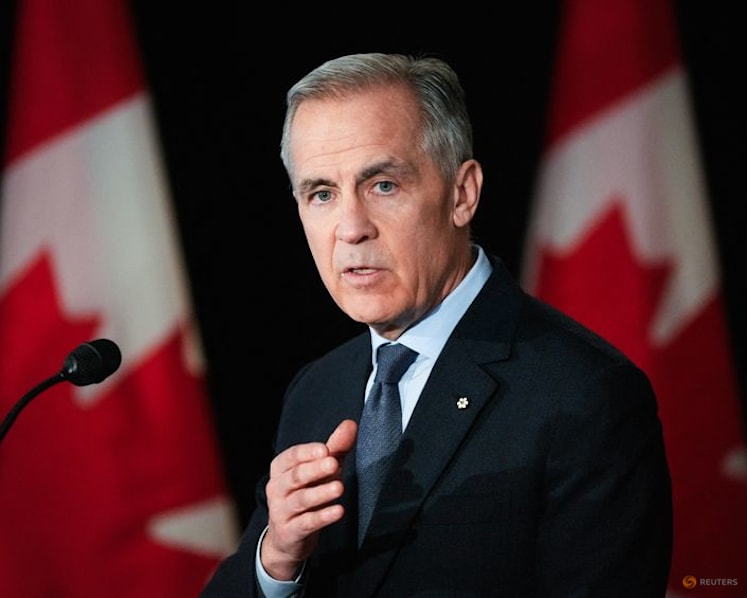
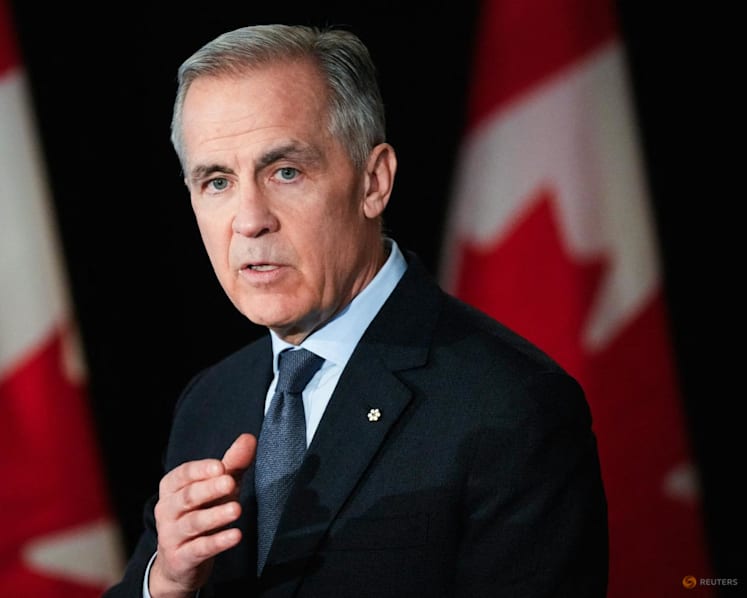
His declaration came amid broader tensions between the neighbouring countries after Canadian Prime Minister Mark Carney, citing US trade policy, last week urged nations to accept the end of the rules-based global order that Washington had once championed.
Trump also said he was "decertifying their Bombardier Global Expresses, and all Aircraft made in Canada" until the Gulfstream planes were certified.





That threat, if carried out, would have a drastic impact on US carriers like American Airlines and Delta Air Lines, which rely on Canadian-made aeroplanes for many of their regional services. Delta declined to comment and American Airlines did not immediately respond to requests for comment.
Airline officials said if the US could decertify aeroplanes for economic reasons, it would give other countries a powerful weapon and could put the entire aviation system at risk.
Bombardier also operates multiple service centres in the United States and has a facility in Wichita, Kansas, where it is growing its defence business. The US is the world's largest market for business aviation and the Canadian company has about 3,000 employees based there.
Bombardier, General Dynamics-owned Gulfstream and Carney's office did not immediately respond when asked for comment.
MORE THAN 5,000 CANADIAN PLANES IN US
It was unclear what planes beyond Bombardier's Global large cabin jets would fall under Trump's increased tariffs, including the Airbus A220 commercial jets made in Canada. Most A220 jets operated by US carriers are produced at an Airbus production line in Mobile, Alabama.
FlightRadar24 said on X there were more than 400 Canadian-made planes operating to and from US airports as of about 1am GMT (9am, Singapore time) on Friday.
Data provider Cirium said there were 150 Global Express aircraft in service registered in the US, operated by 115 operators and 5,425 total aircraft of various types made in Canada in service registered in the US including narrowbodies, regional jets and helicopters.
Trump said Canada has refused to certify the Gulfstream 500, 600, 700, and 800 jets. In April, the Federal Aviation Administration and the European Union Aviation Safety Agency certified the Gulfstream G800 jet. Transport Canada, which is responsible for Canadian certification, did not respond immediately to a request for comment.
It was unclear how Trump would decertify the planes since that is the job of the Federal Aviation Administration, but he has made similar declarations in the past that were ultimately carried out, often with exemptions, by relevant agencies.
It does not appear the FAA has the legal authority to revoke certifications for planes based on economic reasons, as it can only do so for safety reasons under existing regulations. The FAA declined immediate comment.
CERTIFICATION PROCESS
Under global aviation rules the country where an aircraft is designed - the US in Gulfstream's case - is responsible for primary certification known as a type certificate, vouching for the design’s safety.
The FAA in December certified Bombardier's Global 8000 business jet, the world's fastest civilian plane since the Concorde with a top speed of Mach 0.95, or about 1,173 kmh. It was initially certified by Transport Canada on Nov 5.
Other countries typically validate the decision of the primary regulator, allowing the plane into their airspace, but have the right to refuse or ask for more data. Following a Boeing 737 MAX crisis, European regulators delayed endorsement of some US certification decisions and pressed for further design changes, sparking tensions with the FAA.
Due to US tariffs on key Canadian imports, Carney is pushing to diversify trade away from the United States, which takes around 70 per cent of all Canadian exports under terms of the US-Mexico-Canada free trade deal.




