







US captures Venezuelan President Maduro and wife in bombing raid, charges them with drug and terrorism offences
Venezuelan leader Nicolas Maduro and his wife Cilia Flores, who were earlier removed from the country by US military, "will soon face the full wrath of American justice on American soil in American courts", says Attorney-General Pamela Bondi.
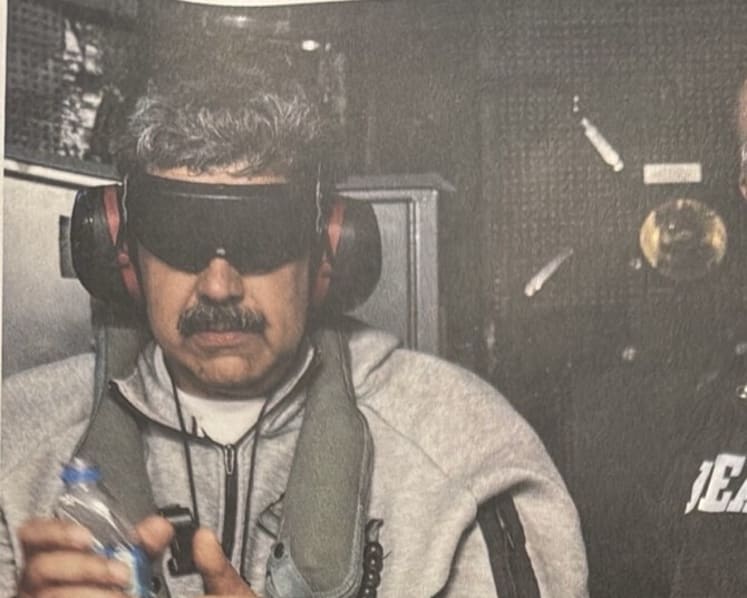
US President Donald Trump shared a photo of captured Venezuelan President Maduro aboard the US warship Iwo Jima. (Image: Truth Social/@realDonaldTrump)
CARACAS: The Trump administration said on Saturday (Jan 3) that Venezuela's captured leader Nicolas Maduro and his wife will face the "full wrath of American justice" under drug and terrorism charges.
"Nicolas Maduro and his wife, Cilia Flores, have been indicted in the Southern District of New York," Attorney General Pamela Bondi said on X.
"Nicolas Maduro has been charged with Narco-Terrorism Conspiracy, Cocaine Importation Conspiracy, Possession of Machineguns and Destructive Devices, and Conspiracy to Possess Machineguns and Destructive Devices against the United States."
Bondi thanked President Donald Trump for "having the courage to demand accountability on behalf of the American people" as well as the US military for its "incredible and highly successful mission" in nabbing Maduro and his wife.





Trump earlier said on Saturday that US forces had captured Maduro after launching a "large scale strike" on the South American country.
"The United States of America has successfully carried out a large scale strike against Venezuela and its leader, President Nicolas Maduro, who has been, along with his wife, captured and flown out of the country," Trump said on his Truth Social platform.
Trump added he would give a news conference at 11am local time (12am Singapore time) at his Mar-a-Lago residence in Florida.
Trump told Fox News in an interview hours after the capture of Maduro and his wife that they were aboard the US warship Iwo Jima and headed to New York, where the couple will face prosecution.
He later took to Truth Social to post a photo of Maduro aboard the warship. Maduro was wearing what appeared to be noise-canceling ear muffs and grey Nike-branded sweatpants and a jacket.
Trump said that the US will decide on what is next for Venezuela. "We’ll be involved in it very much" as to who will govern the country, he said.
"We can’t take a chance in letting somebody else run and just take over what he left, or left off."
Maduro was first indicted in March 2020 on “narco-terrorism" conspiracy charges in the southern district of New York. He last appeared on state TV on Friday while meeting with a delegation of Chinese officials in Caracas.
Utah Senator Mike Lee posted on X that he had spoken with Secretary of State Marco Rubio, who briefed him on the strike. Rubio "anticipates no further action in Venezuela now that Maduro is in US custody", Lee further wrote on X.

Maduro and his wife were at their home within the Fuerte Tiuna military installation when they were seized in the US operation, Venezuelan ruling party leader Nahum Fernandez told the Associated Press. Tiuna is Venezuela's largest military complex.
"That’s where they bombed," he said. "And, there, they carried out what we could call a kidnapping of the president and the first lady of the country."
In an audio played on state TV, Vice President Delcy Rodriguez earlier said that the Venezuelan government did not know the whereabouts of Maduro or his wife.
"We demand immediate proof of life of President Nicolas Maduro and the first combatant Cilia Flores," Rodriguez said.
Venezuela separately said in a statement it rejected the "military aggression" by the US.
Attacks took place in the capital of Caracas and the states of Miranda, Aragua and La Guaira, the statement said, prompting the country's government to declare a national emergency and call on social and political forces to "activate mobilisation plans".
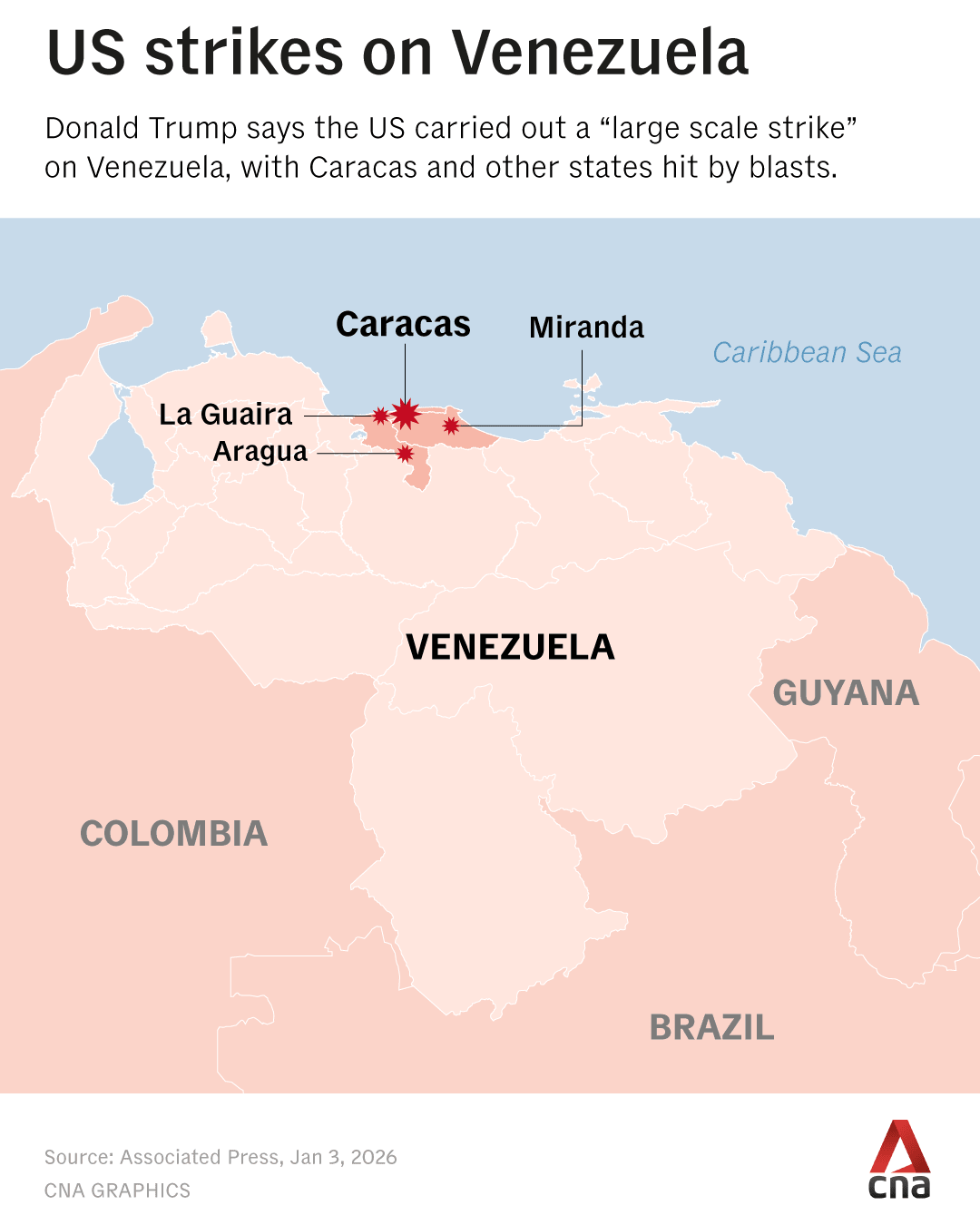
"The objective of this attack is none other than to seize Venezuela’s strategic resources, particularly its oil and minerals, attempting to break the nation’s political independence by force. They will not succeed," the statement added.
Venezuela's government said civilians and military personnel died in Saturday's strikes but did not give figures.
Caracas will resist the presence of foreign troops, Defence Minister Vladimir Padrino said in a video that condemned the intervention.
"Free, independent and sovereign Venezuela rejects with all the strength of its libertarian history the presence of these foreign troops, which have only left behind death, pain and destruction," Padrino added.
"Today we clench our fist in defense of what is ours. Let us unite, for in the unity of the people we will find the strength to resist and to triumph."
Interior Minister Diosdado Cabello also appeared on state TV on a street and wearing a helmet and flak jacket, urging people not to cooperate with the "terrorist enemy".
Ahead of the overnight strikes, the US had accused Maduro of running a "narco-state" and rigging the 2024 election, which the opposition said it won overwhelmingly.
The 63-year-old former bus driver, who was handpicked by the dying Hugo Chavez to succeed him in 2013, has denied those claims and said Washington was intent on taking control of his nation's oil reserves, the largest in the world.
The US has not made such a direct intervention in its backyard region since the invasion of Panama 37 years ago to depose military leader Manuel Noriega over similar allegations. In the Panama case, Noriega ended up in prison for 20 years.


ACTION IN VENEZUELA RECALLS PAST US INTERVENTIONS
While various Latin American governments oppose Maduro and say he stole the 2024 vote, direct US action revives painful memories of past interventions and is generally strongly opposed by governments and populations in the region.
Trump's action recalls the Monroe Doctrine, laid out in 1823 by President James Monroe, laying US claim to influence in the region, as well as the "gunboat diplomacy" seen under Theodore Roosevelt in the early 1900s.
The Venezuelan opposition, headed by recent Nobel Peace Prize winner Maria Corina Machado, said in a statement on X that it had no official comment on the events. It says Maduro has repeatedly cheated it of power in elections, as well as crushing street protests and jailing opposition figures.
Maduro has mocked Machado as being in Trump's pocket.
CAPITAL HIT BY BLASTS
At least seven explosions and low-flying aircraft were heard around 2am local time (2pm, Singapore time) on Saturday in Caracas.
Smoke could be seen rising from the hangar of a military base in Caracas. Another military installation in the capital was without power.
People in various neighborhoods rushed to the streets.
"The whole ground shook. This is horrible. We heard explosions and planes," said Carmen Hidalgo, a 21-year-old office worker, her voice trembling. She was walking briskly with two relatives, returning from a birthday party. "We felt like the air was hitting us."


Venezuelan state TV did not interrupt its programming and aired a report on Venezuelan music and art.
Venezuelan state-run energy company PDVSA's oil production and refining were normal and its most important facilities had suffered no damage according to an initial assessment, two sources with knowledge of the company's operations said.
The port of La Guaira near Caracas, one of the country's largest but one which is not used for oil operations, was reported to have suffered severe damage, one of them said.
The blasts come as the US military has been targeting, in recent days, alleged drug-smuggling boats. On Friday, Venezuela said it was open to negotiating an agreement with the United States to combat drug trafficking.
Maduro also said in a pre-taped interview aired on Thursday that the US wants to force a government change in Venezuela and gain access to its vast oil reserves through the month-long pressure campaign that began with a massive military deployment to the Caribbean Sea in August.

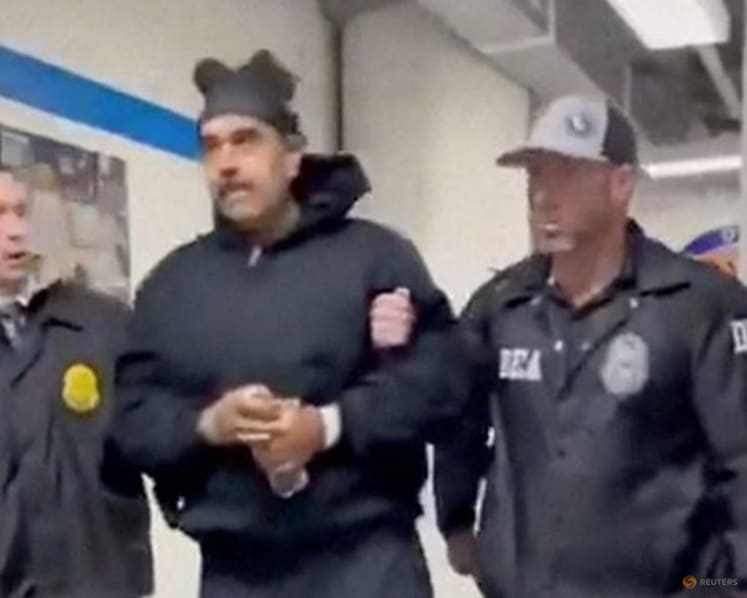
The CIA was behind a drone strike last week at a docking area believed to have been used by Venezuelan drug cartels in what was the first known direct operation on Venezuelan soil since the US began strikes on boats in September.
Trump, for months, had threatened that he could soon order strikes on targets on Venezuelan land.
The US has also seized sanctioned oil tankers off the coast of Venezuela, and Trump ordered a blockade of others in a move that seemed designed to put a tighter chokehold on the South American country’s economy.
The US military has been attacking boats in the Caribbean Sea and the eastern Pacific Ocean since early September.
As of Friday, the number of known boat strikes is 35 and the number of people killed is at least 115, according to numbers announced by the Trump administration.
They followed a major buildup of American forces in the waters off South America, including the arrival in November of the nation’s most advanced aircraft carrier, which added thousands more troops to what was already the largest military presence in the region in generations.
Trump has justified the boat strikes as a necessary escalation to stem the flow of drugs into the US and asserted that the US is engaged in an "armed conflict" with drug cartels.
It remains unclear under what legal authority the latest US strikes were carried out.
Trump’s move risks a backlash from the Congress, which has the constitutional right to declare war, and from his own political base, which favours an “America first” policy and largely opposes military intervention abroad.





