US tariffs on Brazilian instant coffee would hit US consumers and businesses, industry says
The warning came as Brazilian coffee industry representatives attended US Trade Representative (USTR) hearings in Washington.
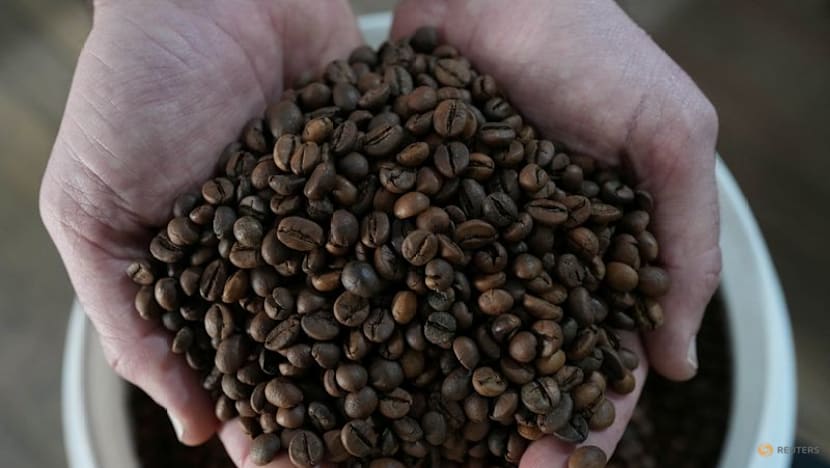
A coffee grower holds robusta coffee beans at his farm shop in Sao Domingos do Norte, Espirito Santo state, Brazil Sep 23, 2025. (Photo: REUTERS/Alexandre Meneghini)
SAO PAULO: A proposed US tariff of 25 per cent on Brazilian instant coffee risks increasing costs for US businesses and consumers by disrupting supplies of a product the country largely imports, Brazil's instant coffee industry said.
More than 90 per cent of Brazil's instant coffee is destined for the US, accounting for more than a fifth of the North American country's instant coffee imports, equivalent to around 15,500 metric tons annually, according to the Brazilian Soluble Coffee Industry Association (Abics).
"By imposing additional tariffs, the first impact falls on companies and jobs, and those higher costs will ultimately be passed on to American consumers," said Aguinaldo José de Lima, Abics executive director.
The Office of the US Trade Representative (USTR) has since proposed a new 25 per cent tariff on Brazilian products under a Section 301 investigation, while the Trump administration separately announced an additional 12.5 per cent tariff on goods, including Brazilian instant coffee, from more than 60 countries.





Representatives from Abics, Brazilian coffee exporters' group Cecafe and the US-based National Coffee Association participated in USTR public hearings in Washington on Monday and Tuesday, arguing that the proposed tariff would increase consumer prices, squeeze business margins and disproportionately affect lower-income households that rely on affordable coffee.
The US produces less than 6 per cent of its own instant coffee products, Lima added.
"The (US) depends on imports, and there are currently no suppliers capable of replacing Brazil's volumes at comparable prices," he said.

Brazilian instant coffee is currently subject to the temporary 10 per cent global import duty imposed by the White House after US courts struck down an earlier 50 per cent tariff on most Brazilian goods.
Instant coffee has grown in popularity in the US, with 11 per cent of daily coffee drinkers now consuming it, up from 6 per cent in 2021, according to the National Coffee Association (NCA).
Brazil's instant coffee industry sees little technical justification for excluding its products from the list of other coffee items that are exempt from tariffs, Lima said.
"All other coffee products were exempted. Only instant coffee was left out. Even flavoured instant coffee is exempt, so there is no technical justification for treating instant coffee differently," he said.