







Asian equities plunge as oil soars 30% on Middle East crisis
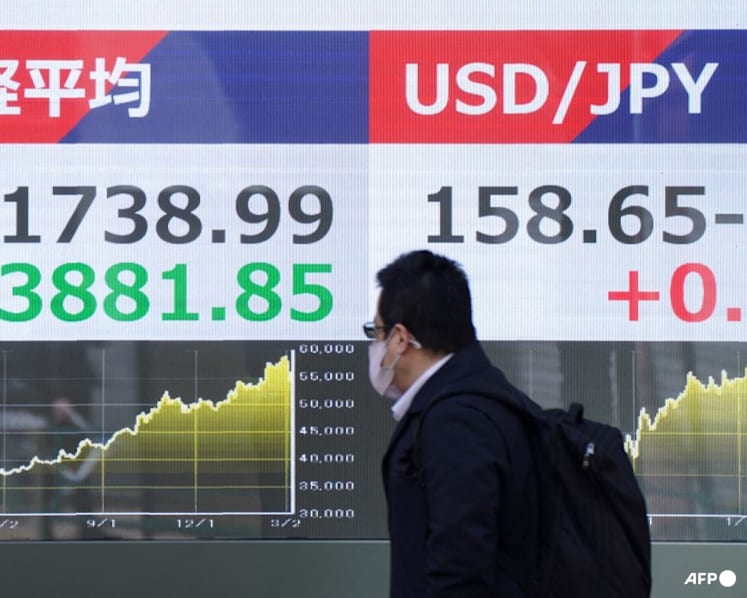
Electronic quotation boards displaying the Nikkei Stock Average (left) on the Tokyo Stock Exchange and the foreign exchange rate of the Japanese yen against the US dollar (right) along a street in Tokyo on Mar 9, 2026. (Photo: AFP/Kazuhiro NOGI)
HONG KONG: Asian stock markets plunged on Monday (Mar 9) as oil and gas prices soared on fears about supplies from the Middle East as the US-Israeli war against Iran continued into a second week with no sign of letting up.
Investors, already spooked by concerns over extended tech valuations and the huge spending on AI, ran for the hills as crude rocketed to its highest level since the Russian invasion of Ukraine in 2022.
Fears grew that the Middle East conflict could last for some time after US President Donald Trump said only the "unconditional surrender" of Iran would end the war.
He added at the weekend that the spike in prices was a "small price to pay" to eliminate Iran's nuclear threat, reiterating the White House's insistence that the rise is temporary.
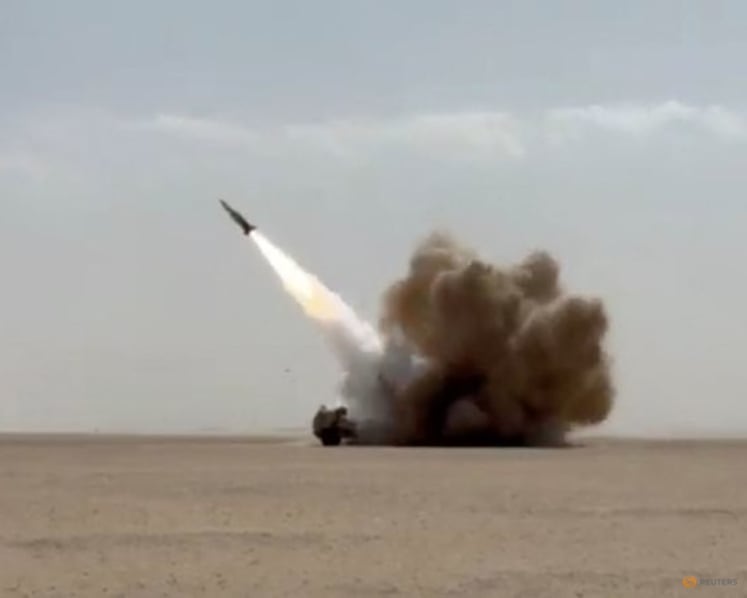
Both main contracts, which had surged more than a quarter last week, spiked as Iran carried out retaliatory strikes against crude-producing Gulf nations.
West Texas Intermediate - the main US oil benchmark - and Brent both jumped around 30 per cent to hit peaks just short of S$120 a barrel. European gas prices also soared 30 per cent on Monday.
Since the beginning of the war, WTI rose more than 75 per cent and Brent more than 60 per cent before easing on the G7 news.
However, the surge was pared as French officials confirmed a Financial Times story that finance ministers from the Group of Seven industrialised nations would discuss tapping emergency reserves to ease the supply strain.
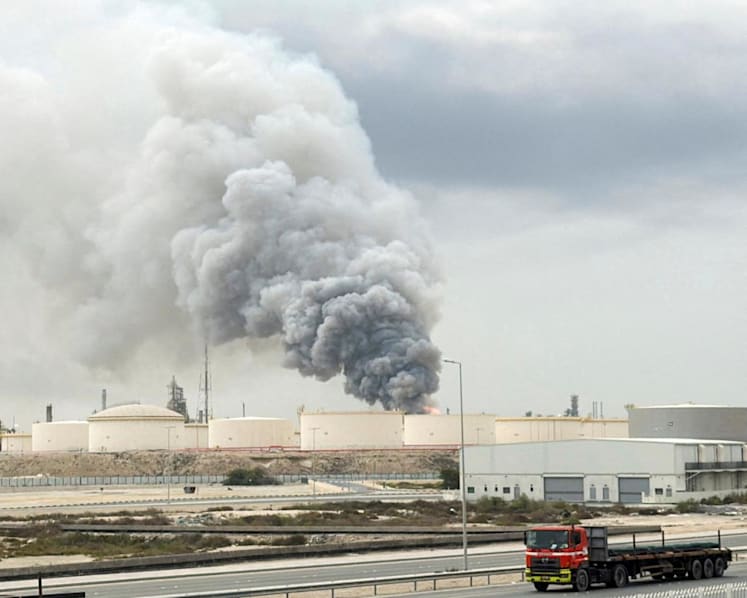
Attacks on oilfields were reported in southern Iraq and in the northern autonomous Kurdistan region, which forced a US-run oilfield to cease production, while the United Arab Emirates and Kuwait have started reducing output.
That came with maritime traffic in the Strait of Hormuz - through which a fifth of global crude and gas passes - halted since the war began on Feb 28.
"The global economy remains dependent on the concentrated flow of Mideast oil and natural gas through the Strait of Hormuz," noted Bruce Kasman, chief economist at JPMorgan.
"The near-term scenario is a near-term spike towards US$120 per barrel followed by moderation as the conflict soon subsides," he added.
"But absent a clear and decisive political resolution, Brent crude oil prices are expected to settle at an elevated US$80 per barrel through mid-year."
Such an outcome could cut global economic growth by an annualised 0.6 per cent for the first half of this year and raise consumer prices by an annual rate of 1 per cent, Kasman said.
He cautioned that a broader and sustained conflict could send oil well above US$120 a barrel and risk a global recession.
The prospect of high energy prices for a sustained period has fanned fears of a fresh spike in inflation that could hit the global economy while preventing central banks from cutting interest rates to support growth.
With the prospect of the global economy taking a blow from the crisis, equity markets extended last week's losses, though they pared some of the early retreat.
Seoul, which had been the best performer this year thanks to a tech rally, tumbled more than 8 per cent at one point before closing 6 per cent down, while Tokyo shed more than 5 per cent and Taipei fell more than 4 per cent.
Hong Kong, Shanghai, Sydney, Singapore, Manila, Bangkok, Mumbai, Jakarta and Wellington were also sharply lower.
China is another big oil importer, though it also has a huge stockpile of crude; its blue-chip index fell 2.3 per cent.
China on Monday said inflation had already picked up in February ahead of the current oil spike, with consumer prices rising 1.3 per cent on the year.
This is not necessarily a negative development, given that the country has long struggled with disinflation.
London, Paris and Frankfurt opened on the back foot.
"Stocks continue to face stiff headwinds, with markets in Europe and Asia, specifically Japan, more vulnerable in the short-term given that those are heavy energy importers, and with those markets having vastly outperformed the US year to date, until the Iran war begun," wrote Pepperstone's Michael Brown.
Related:
CENTRAL BANKS FACE INFLATION CONUNDRUM
The wave of market selling swept over Wall Street as S&P 500 futures shed 2.1 per cent, while Nasdaq futures dived 2.5 per cent.
Over in Europe, EUROSTOXX 50 futures and DAX futures both slid 3.2 per cent, while FTSE futures dropped 1.7 per cent.
In bond markets, the risk of rising inflation outweighed safe-haven considerations to shove yields higher globally.
Yields on 10-year Treasury notes rose 6 basis points to 4.204 per cent, up from a trough of 3.926 per cent just a week ago.
Interest rate futures slipped as investors feared the risk of higher inflation would make it harder for the Federal Reserve to ease policy, even though disappointing jobs numbers seemed to argue for stimulus.
Data on US consumer prices due on Wednesday is forecast to show the annual pace holding at 2.4 per cent in February.
The Fed's preferred measure of core inflation is out on Friday and is forecast to hold at 3 per cent, well above the central bank's 2 per cent target, and analysts see a risk of an even higher number.
The danger of energy-driven inflation has led markets to wager that the next move in rates from the European Central Bank could be up, possibly as early as June.
For the Bank of England, markets have shifted to pricing just a 40 per cent chance of one more easing, compared with two cuts or more before the Middle East conflict started.
Nervous investors sought the liquidity of dollars while shunning currencies from countries that are net energy importers, including Japan and much of Europe.
"Asia takes the brunt of the sharp escalation in oil prices and there are few places to run and hide," said Vishnu Varathan, head of macro research for Asia ex-Japan at Mizuho.
"The dollar has to be the one outperforming, given Japan and Korea's exposures here and the sharp pain that can be expected from Brent at US$107."
The dollar added 0.5 per cent to 158.64 yen, while the euro slipped 0.9 per cent to US$1.1514.
The Australian dollar, often sold as a hedge during periods of market volatility, skidded 0.9 per cent to US$0.6964.
Gold fell 1.8 per cent to US$5,075 an ounce, with dealers speculating that investors were having to book profits made on the metal's long climb to cover losses elsewhere.





