Commentary: US war on Iran forces Japan and South Korea to confront geopolitical realities
The two US allies in East Asia face a choice: cooperate on defence or make peace with China, says political science professor Robert Kelly.
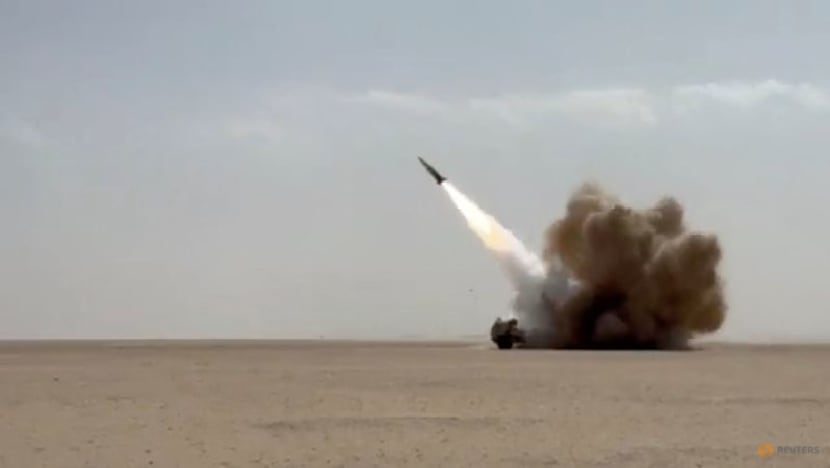
A screengrab from a video released by U.S. Central Command (CENTCOM) shows a missile being fired from an unknown location, released February 28, 2026, in this still image obtained from social media. CENTCOM via X/Handout via REUTERS

This audio is generated by an AI tool.


BUSAN, South Korea: The United States has embarked on yet another war in the Middle East. This has major ramifications for US allies in East Asia.
Washington has long sought to pivot to Asia and reduce its commitments in the Middle East. With its war on Iran potentially lasting a month or longer, it should now be clear that the pivot is not a priority for US President Donald Trump's administration. This enduring commitment to the Gulf overstretches America amid rising Chinese power in East Asia.
South Korea and Japan, America’s main allies in the region, now face a choice. They can cooperate to counterbalance Chinese military might and deter North Korean nuclear threats. Or they can consider appeasing China and North Korea to avoid a major conflict while their US partner is absent or heavily constrained.
JAPAN-SOUTH KOREA ALIGNMENT?
South Korea and Japan have long been “frenemies” despite their mutual alignment with America, ideological commitment to liberal democracy, and shared geopolitical opponents – China, North Korea and Russia.
Decades of post-Cold War American dominance allowed these two should-be allies to indulge their antagonism at the expense of cooperation. Protracted US involvement in the Middle East would end this reprieve from geopolitical pressures.
China’s nuclear and naval capabilities have expanded significantly over the past decade. Western officials have warned that China may move against Taiwan in the coming years, a claim Beijing rejects. The American ability to block Chinese action has declined – both as the US gets pulled into the Western Hemisphere and the Middle East by Mr Trump’s imperial ambitions, and as China’s military abilities improve.
Japan and South Korea increasingly face a situation where they either stand together or are bullied separately by China and North Korea.
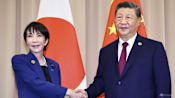

NEED FOR MORE DEFENCE SPENDING
As Chinese power rises and American power is diluted, South Korea and Japan will have to spend much more on defence than they traditionally have.
Seoul spends more (2.6 per cent of gross domestic product) than Tokyo (1.4 per cent of GDP) does. This is likely because South Korea directly abuts North Korea and its massive ground force.
Though some analysts say that both South Korea and Japan spend more on defence than official figures suggest, others argue that the US security blanket has facilitated their chronic underspending.
The US war in Iran illustrates why both must do more. It has been reported that US missile and missile interceptor inventories are running low because of heavy use in recent days. Rumours are circulating that the US will redeploy military assets from East Asia to the Middle East.
Further, the US lacks the ground force in East Asia necessary to contest the Chinese army should it successfully land in Taiwan. And US naval forces stationed in Japan are shrinking relative to China’s expanding fleet.
Japan and South Korea will need to expand their capabilities to keep pace with China and North Korea. Specifically, that means both will need to build more missiles for stand-off strike capabilities akin to what the US is now doing against Iran. Both also need to deepen existing missile defence systems to protect against Chinese and North Korean threats.
This is crucial for South Korea, as North Korea has declared its right to use nuclear weapons in a conflict. Japan will need a larger fleet to supplement the US Navy’s ability to operate in the East and South China Seas.
Finally, both need to develop logistical and intelligence-gathering depth, such as lift aircraft, spare parts stockpiles and satellite coverage. Both remain reliant on the overstretched US military for these services.
A FORK IN THE ROAD
Neither South Korea nor Japan’s populations have been prepared for this shift. Leadership in both countries have desperately sought to retain full US security coverage to avoid costly domestic rearmament shocks. Both have flattered Mr Trump to avoid a costly alliance breach.
But the rising costs of US military involvement elsewhere mean burden-shifting is coming to East Asia whether US allies want it or not. US Undersecretary of Defence Elbridge Colby has been communicating this to the region for over a year.
It is possible that the full bill of post-Iran War security will be unpopular with voters in South Korea and Japan. Instead of a costly arms race, which requires South Korea and Japan to steeply increase their defence budgets, segments of the public may favour seeking a separate peace with China or North Korea.
South Korea is more likely to consider this option than Japan. If Seoul seeks peace with Beijing, China will unambiguously dominate the region.
Japan’s population is unlikely to accept that. But South Korea might. The South Korean left is deeply suspicious of the US and Japan, whom it views through a post-colonial rather than alliance lens, and the left is now in power. It wants detente with North Korea and a commercial relationship with China, not confrontation.
As US power extends in the Western Hemisphere and the Middle East, less is left over for Asia. The Iran War makes this painfully clear.
East Asia’s democracies increasingly face a fork in the road which US power can no longer paper over: Either South Korea and Japan cooperate to forge a regional balance of power, or they accept and accommodate Chinese regional leadership. This will be the dominant question of their grand strategy debates over the next decade.
Robert Kelly is a professor of political science at Pusan National University. He writes a monthly column for CNA, published every second Monday.