Asia's EVolution: From chip design to first homegrown electric vehicle, Malaysia wants a seat at global EV table
Malaysia is betting on its role as a leading exporter of semiconductor chips and a rewriting of its industrial DNA to be a force in the global EV ecosystem.
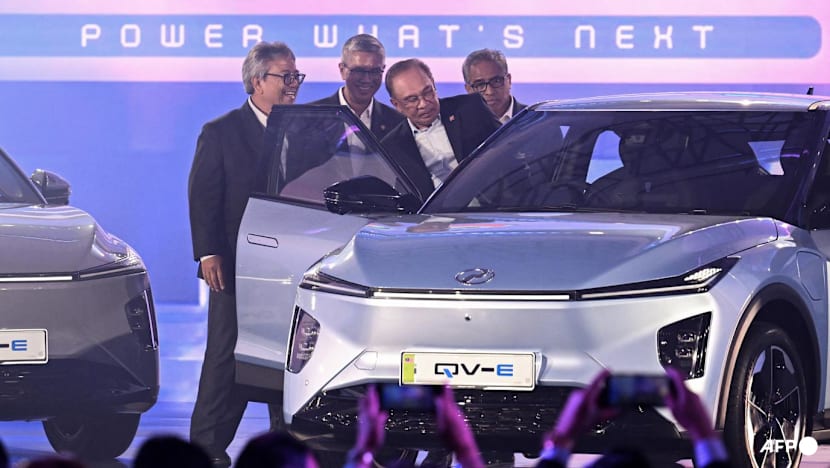
Malaysia Prime Minister Anwar Ibrahim (centre) gets into the country's first homegrown electric vehicle — Perodua's QV-E — during a launch event in Kuala Lumpur on Dec 1, 2025. (Photo: AFP/Mohd Rasfan)

This audio is generated by an AI tool.


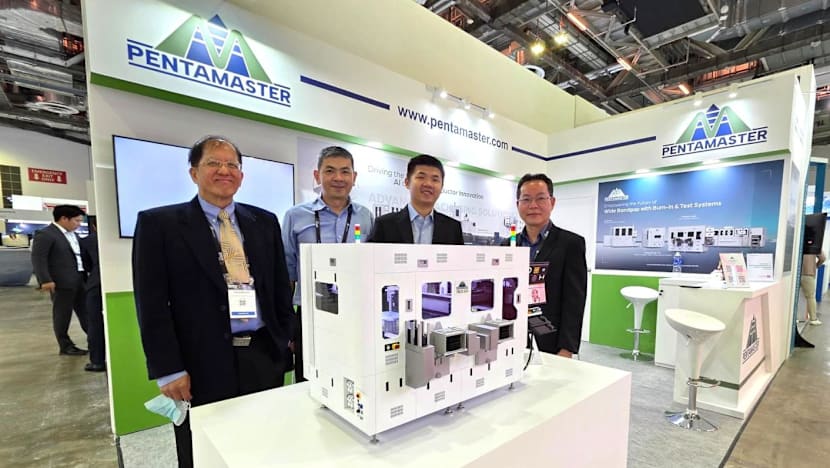
KUALA LUMPUR: The "Pentamaster" name may not be emblazoned on the hoods of the world’s leading electric vehicles (EVs). But without the Malaysian company’s specialised test equipment for the "brains" of these cars, rapid charging would not be possible.
Since 2016, the company has increasingly shifted to the testing of power chips – critical components in EVs and made of advanced materials like silicon carbide and gallium nitride – to ensure their quality and reliability.
“We make the equipment that test the semiconductors that go into EVs ... Most of the cars – the inverters, digital content that goes into the car – customers need them to be tested before the assembly process,” Pentamaster's non-executive director Leng Kean Yong told CNA.
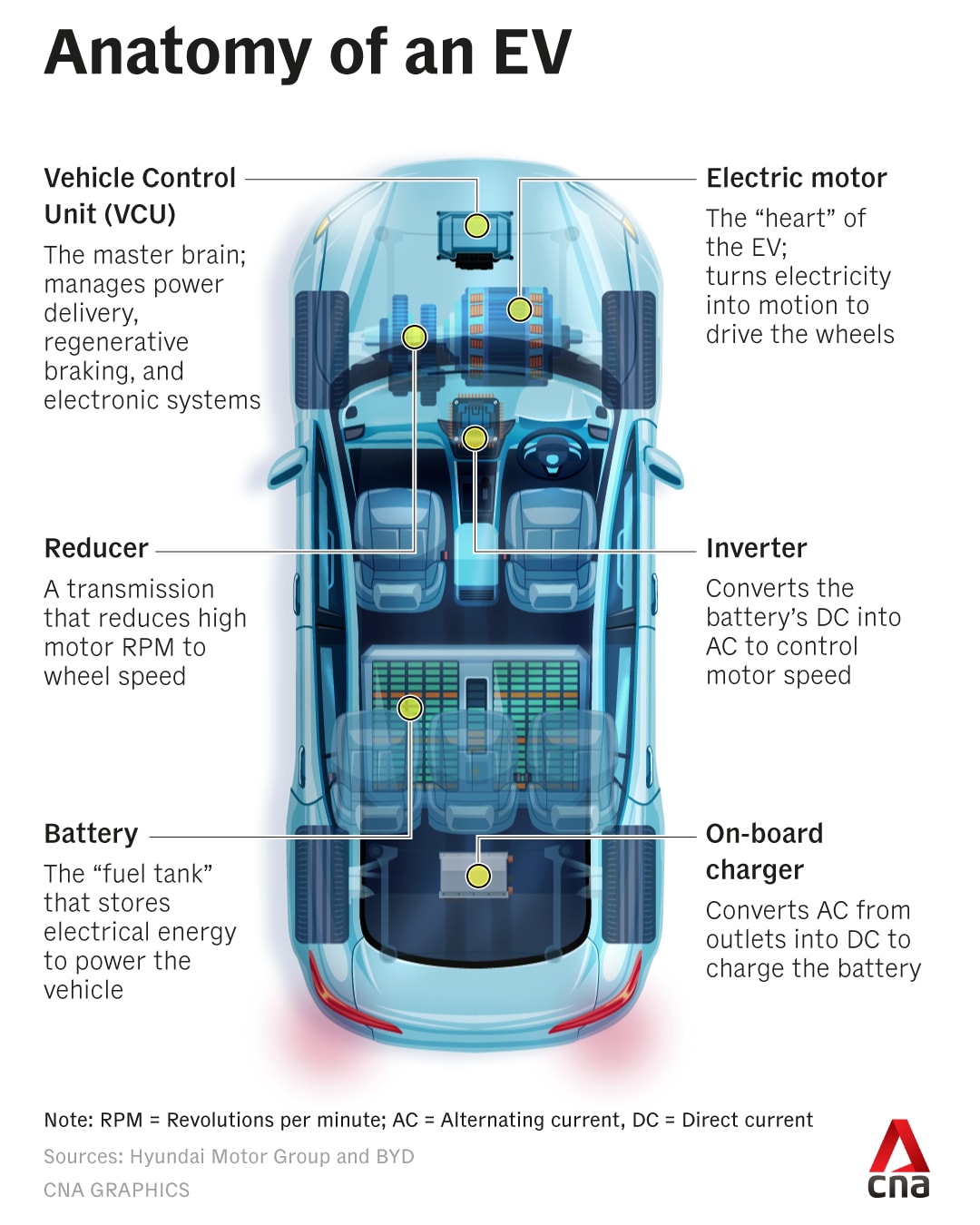
Inverters are devices that convert direct current from the batteries to alternating current for EV motors.





Pentamaster’s EV foray began in 2016 and its growth trajectory in the sector accelerated sharply around 2018, coinciding with China’s aggressive move to dominate the new-energy vehicle space.
As auto giants such as BYD scaled production, the demand for Pentamaster’s precision test equipment surged.
Leng describes Pentamaster's role in the EV supply chain as "small", but the Penang-based firm has solidified its status as a global powerhouse.
It ranks among the world’s top five manufacturers of specialised test equipment for EV power chips, which regulate the vehicles’ electricity flow.
From Penang to Johor, local and multinational firms have helped Malaysia emerge as an essential - albeit discreet - link in the global EV ecosystem.
As geopolitics and United States-China rivalry force a "China Plus One" shift among manufacturers to diversify supply chains and avoid tariffs and other trade sanctions, Malaysia, with its established electronics base, has made itself a safe and logical choice for companies making the world's most critical EV components, say analysts.
“Malaysia is an emerging alternative EV node. Its relevance comes from geopolitics and diversification,” said economist Doris Liew of the non-profit Institute for Democracy and Economic Affairs in Malaysia.
“Global firms increasingly want production options outside China, and Malaysia’s electronics base allows it to plug into specific EV segments. Policy backing under (the country’s) New Industrial Master Plan 2030 strengthens this positioning.”
The master plan serves as the national roadmap for transforming Malaysia’s manufacturing landscape, targeting emerging high-growth areas like the EV supply chain.

LEVERAGING ESTABLISHED SEMICONDUCTOR BASE
Malaysia accounts for 13 per cent of global semiconductor assembly, testing and packaging — the critical “back-end” process that ensures the reliability of every power semiconductor and sensor in an EV.
Malaysia is currently the world’s sixth-largest exporter of semiconductors.
Although the automotive sector has traditionally accounted for a smaller portion of Malaysia's overall semiconductor output compared to the computing and communications sectors, it has experienced the “largest recent growth in … share of chip sales,” said economist Tham Siew Yean of Universiti Kebangsaan Malaysia.
In a 2024 report, the Ministry of Trade and Industry said the semiconductor segment recorded RM655.13 billion (US$167 billion) in total trade, with RM387.95 billion in exports and RM267.18 billion in imports.
This was partly fuelled by rising demand for automotive electronics, particularly EVs, it said.
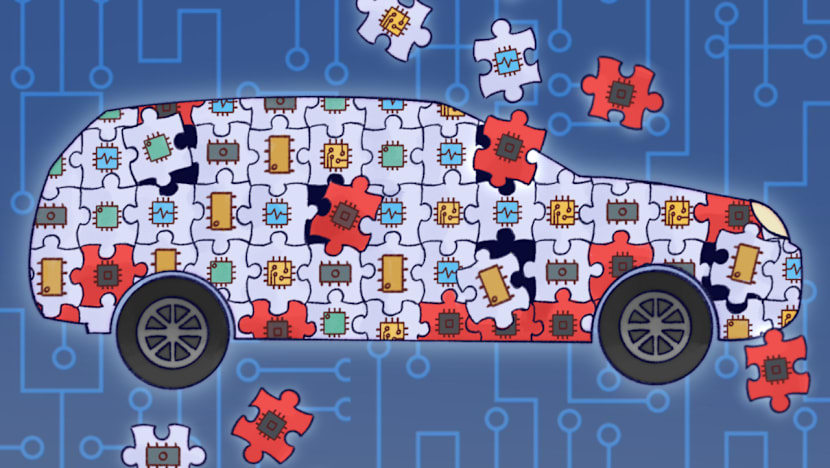
Wong Siew Hai, president of the Malaysia Semiconductor Industry Association told CNA the surge in global demand for EVs has catalysed the local chip sector.
A single EV can require up to 3,000 semiconductors — roughly triple the number found in traditional petrol cars — driving demand for Malaysia’s specialised power electronics, microcontrollers and automotive-grade sensors, he said.
According to Wong, Malaysia hosts six global semiconductor leaders such as Infineon Technologies, Renesas Electronics, STMicroelectronics, NXP Semiconductors, Onsemi and Texas Instruments, with a focus on automotive back-end operations.
These automotive-focused operations employ an estimated 25,000 workers, excluding supply chain roles, he said.
“The expansion in power semiconductor and automotive (integrated circuit) production has increased demand for skilled roles in engineering, advanced packaging, automation, quality assurance, supply chain management, and environmental, social and governance compliance,” Wong said.
Infineon Technologies, for instance, opened a €7 billion (US$8.04 billion) silicon carbide production facility in Kulim, Kedah in 2024. It aims to serve 30 per cent of the global market by 2030.
Silicon carbide is considered the “gold standard” for EV inverters due to superior charging speed and range. This is because, like gallium nitride, the material is able to operate at higher temperatures and handle much higher voltages and currents than traditional silicon-based semiconductors.
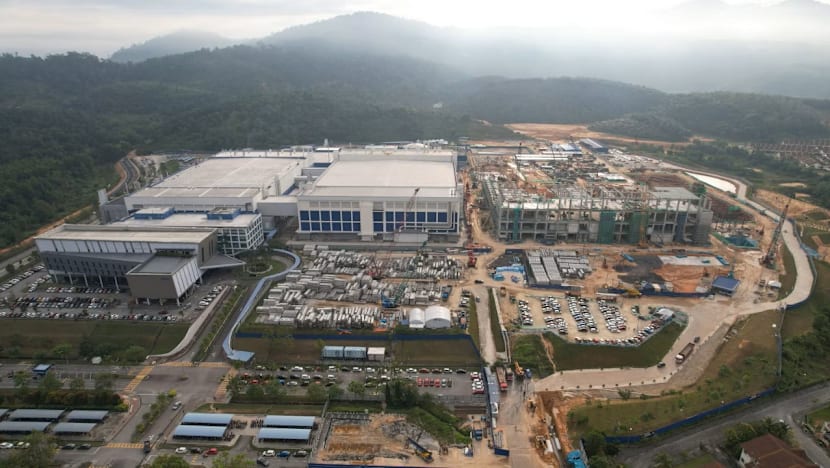
Infineon estimated that this expansion would create 4,000 high-value jobs.
At the opening of the facility’s first phase in August 2024, Malaysia Prime Minister Anwar Ibrahim said the “major investment” would locate the “world’s largest and most competitive silicon carbide power fab on our shores”.
It would create jobs, attract suppliers, universities and top talent, Anwar said, and “support Malaysia’s efforts to protect our climate by boosting electrification and increasing the efficiency of many applications, including electric cars and renewable energy”.
More companies, especially from China, are also setting up factories to build EVs in Malaysia.
This is seen as a response to policy changes this year, where the government ended tax exemptions for fully-imported EVs to incentivise domestic manufacturing.
Leading the charge is Chinese giant BYD, which is set to begin local assembly at its new RM1.3 billion facility in Tanjung Malim, Perak by the second half of 2026.
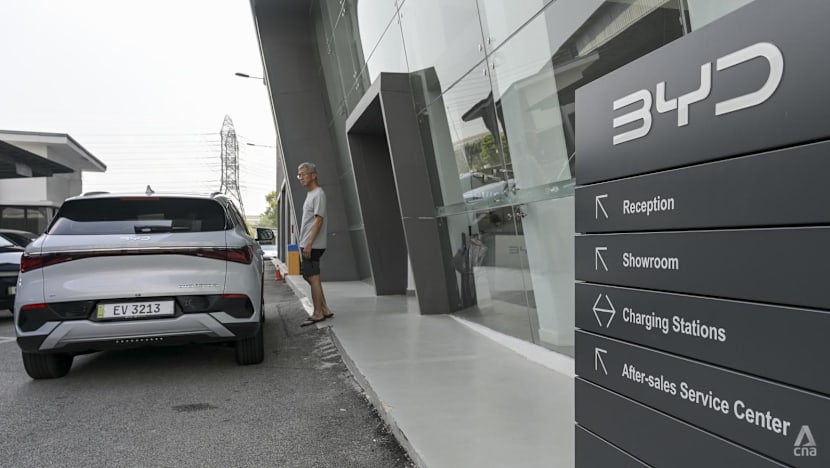
Tanjung Malim also houses the Automotive Hi-Tech Valley that aims to be an ecosystem of high-tech manufacturing and supply chains essential for advancing Malaysia’s new-energy vehicle as well as next-generation vehicle industries.
Chery and its premium off-road brand Jaecoo, meanwhile, have established a dedicated assembly plant in Shah Alam, Selangor while GWM (Great Wall Motor) and XPeng have partnered local manufacturer EP Manufacturing Berhad to assemble right-hand-drive models in Melaka for the Southeast Asian market.
In February, Zeekr also confirmed its plans for the local assembly of its models, making Malaysia the first market outside of China to assemble the vehicles.
Volvo, a pioneer in the EV space, began assembling the XC90 plug-in hybrid sport utility vehicle in Malaysia in 2016, marking the first time this model was produced outside its home country of Sweden.
While the move by EV manufacturers to set up bases in Malaysia is positive for the economy and employment, the EV manufacturing segment is still very small relative to the broader automotive industry, said the Malaysian Automotive Association (MAA).
Last year, 747,780 vehicles were assembled in Malaysia, of which 2,888 units – less than 0.4 per cent – were EVs, the MAA told CNA.
“This reinforces the point that EV manufacturing is not yet a major economic engine,” it said.
The current wave of EV investments is creating employment mainly in assembly-line work, distribution, sales, and basic manufacturing support, it added.
MOVING UP THE VALUE CHAIN
The next frontier in job creation will hinge on shifting from basic assembly lines to high-value roles in “deeper technology development and component manufacturing”, the MAA said.
Malaysian firms could, for instance, move into the high-stakes world of integrated circuit design, said Yong Kai Ping, chief executive of Selangor Information Technology and Digital Economy Corporation, a state-owned agency.
Integrated circuit design is the "intellectual" phase of interconnecting circuit elements to perform a specific desired function, such as extending the travel range of an EV.
“Besides the testing and packaging now, we want to design our own (integrated circuits). Because obviously it's more profitable (compared to back-end operations) and it is technology-intensive,” said Yong.
According to him, front-end processes, such as designing a chip's internal logic, offer profit margins as high as 50 per cent, nearly double that of traditional back-end operations such as assembling and testing the physical hardware.
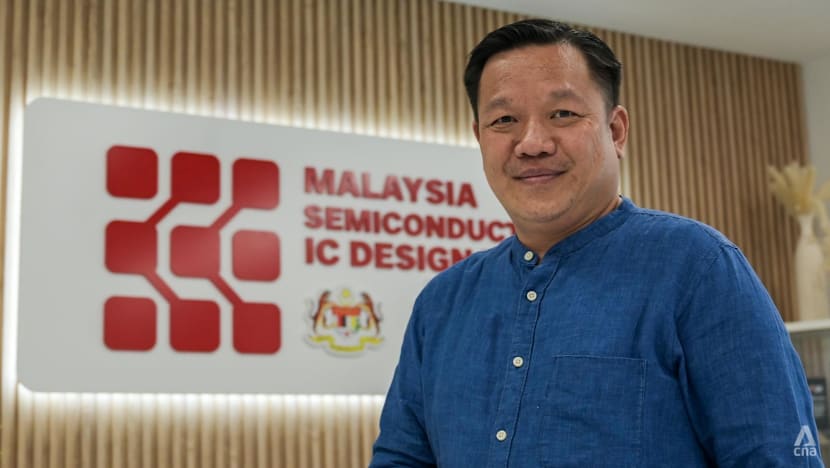
For the next generation of engineers, the incentive is even clearer: Salaries for fresh graduates in the front-end sector start at RM5,000, higher than the RM3,000 for those in back-end assembly.
Currently, Malaysia’s “front-end” ambitions are taking shape across the Puchong and Cyberjaya IC Design Parks located in Klang Valley.
These hubs are now home to 15 local firms.
The anchor tenant Maistorage is a subsidiary of Taiwan’s Phison, while other tenants include Malaysian semiconductor designer SkyeChip and ARM, a British company that specialises in providing semiconductor intellectual property cores and related technologies.
About five to 10 of these players are focused on the automotive segment, designing the power management and sensor chips required for the next generation of EVs.
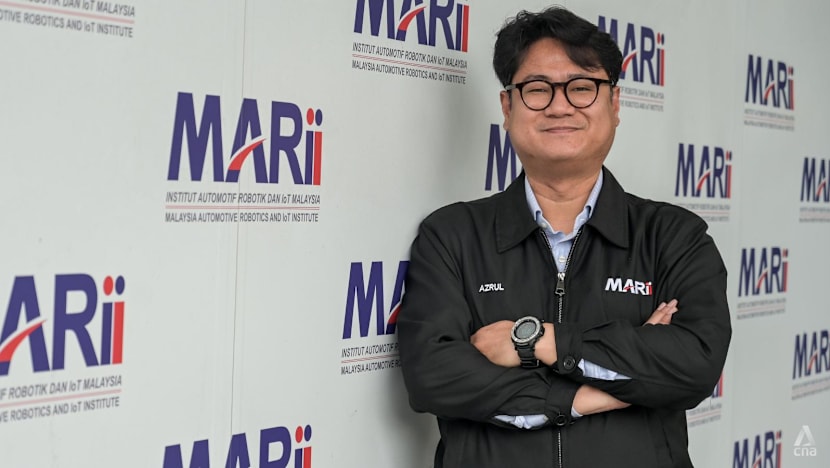
While foreign direct investment remains a vital engine for the economy, the real “win” for Malaysia lies in technology transfer, said Azrul Reza Aziz, CEO of the Malaysia Automotive, Robotics and IoT Institute, a key agency under the Ministry of Investment, Trade and Industry.
“For the automotive sector here, we are looking at the downstream industries,” he said, citing rare-earth mining company Lynas’ memorandum of understanding with South Korean permanent magnet manufacturer JS Link last July for rare-earth permanent magnet production in Malaysia, near its site in Kuantan.
Under the deal, they will collaborate on a 3,000 tonne-capacity neodymium magnet manufacturing facility. Such magnets are used in wind turbines and EV motors.
According to Azrul Reza, there are “two big components” when it comes to EVs – the battery and the electric motor, which converts electrical energy into mechanical energy to drive the vehicle.
“China controls these two items. When you control these two items, you control the value chain,” he said, adding that Malaysia’s target is to manufacture its own electric motors.
“We want to be the fourth or fifth force within the global ecosystem of EV.”
WILL PERODUA BLAZE THE TRAIL?
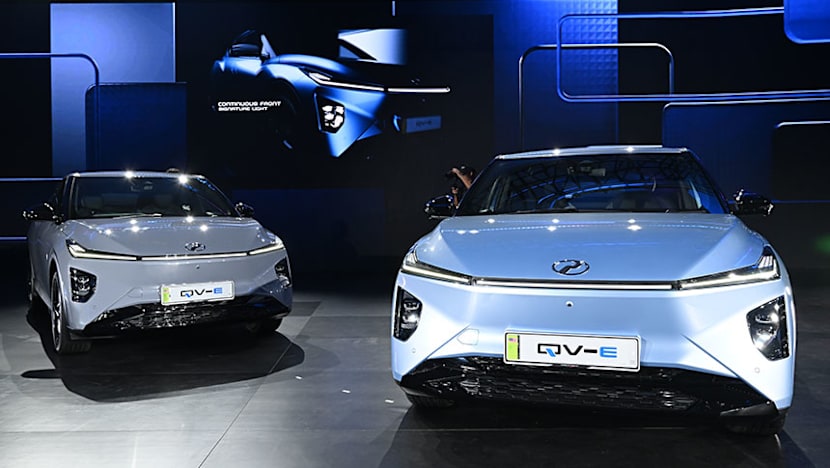
In a historic move away from its legacy of rebadging foreign car models, Malaysian carmaker Perodua recently launched the country's first homegrown EV — the QV-E (Quest for Visionary Electric), representing an RM800 million investment in local research and development and intellectual property.
Under the country's New Industrial Master Plan 2030, Perodua was designated the “local champion” to lead Malaysian automotive manufacturers in the development of a domestic EV ecosystem.
While the vehicle itself is priced at RM80,000, the battery is not included in this figure. Instead, owners must subscribe to a “Battery-as-a-Service” leasing scheme at RM275 per month.
This "unbundled" pricing model has faced a tough reception compared to Proton, Malaysia’s first national carmaker.
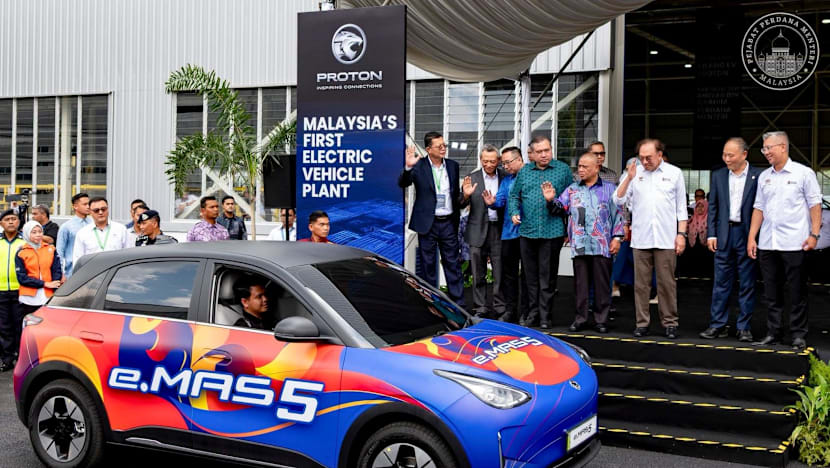
Leveraging its partnership with Chinese automotive conglomerate Geely, Proton launched the e.MAS 5 hatchback and e.MAS 7 sport utility vehicle using existing global platforms.
With a starting price of nearly RM60,000 — currently the lowest for any EV in Malaysia — the e.MAS 5 became the country's best-selling EV in January 2026 with more than 3,000 units sold.
It was among Malaysia's top five bestselling passenger vehicles in January 2026, marking the first time in the country's history that an EV has broken into the national top-five sales rankings.
While Proton has moved thousands of its EV units, the Perodua QV-E has secured only 205 bookings since its December launch.
Shahrol Azral Ibrahim Halmi, president of the Malaysian Electric Vehicle Owners Club, believes Perodua is “paying the price” for being a trailblazer by building a vehicle from the ground up rather than taking a shortcut through foreign technology.
Perodua’s EV ecosystem currently comprises 52 local vendors for the QV-E, with the target to reach 50 per cent localisation of parts by mid-2026 and 70 per cent by 2030, the company has said.
Despite the steep road ahead, Azrul Reza believes Perodua’s attempt could advance Malaysia’s industrial ambitions and help cultivate a new generation of Malaysian engineers and software developers.
“Behind the car are a few hundred engineers basically designing the car from scratch. That is something we have to be proud of,” he said.