







From 50% to 18%: US tariff cut brings relief - but challenges remain for India’s exporters
After almost a year of fear, policy uncertainty and lost orders, India’s exporters tell CNA the latest US tariff cut offers relief - but not clarity.
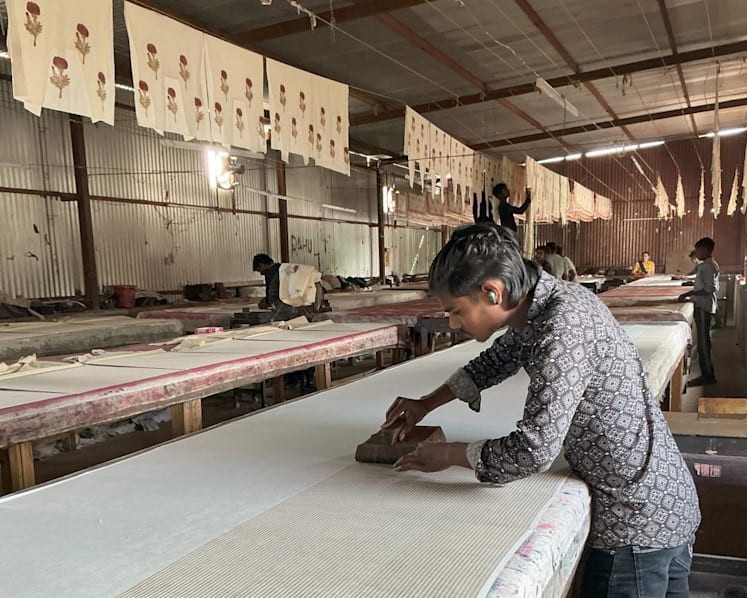
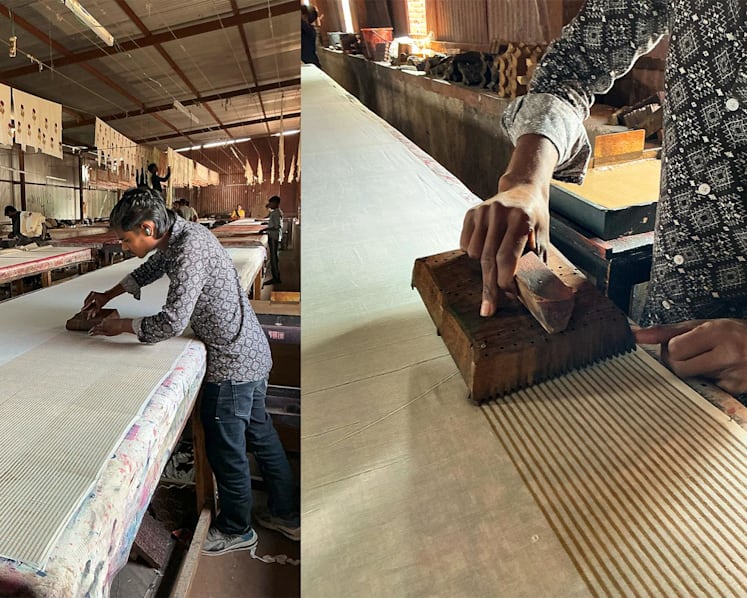
A textile worker at a block printing factory in Jaipur, India. (Photo: Loomkaari)

This audio is generated by an AI tool.


SINGAPORE: When a shipment of carpets from Panipat - an industrial city located north of Delhi - reached a port in the United States last October, it never made it to the shelves. Instead, the buyer rejected the order, leaving it stranded.
“One of my vendors had about 7,000 (carpets) ready for export to the US,” said Suchismita Gupta, an Indian trader who supplies home decor products to American clients. “Now the customer is not ready to accept it. The stock has remained stagnant for several months.”
Gupta said such losses are especially painful in business-to-business exports, where products are custom-made to a buyer’s specifications and cannot easily be resold.
With nearly 90 per cent of her business tied to the US market, she said the sharp rise in US import tariffs, from 26 per cent in April last year to 50 per cent in August, forced her firm to absorb soaring costs, leaving it “burning twice the amount of money” by October.
While there has been some recovery since, her business remains in the red.





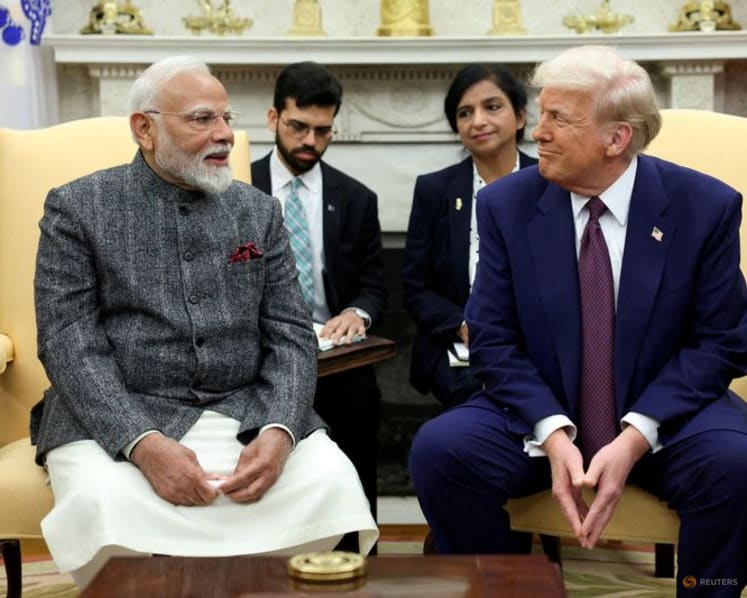
Gupta’s experience mirrors that of many Indian exporters who have endured a turbulent 10 months - from fear over US tariffs, to disappointment at limited support in India’s Union Budget 2026–27 and now cautious relief after President Donald Trump’s unexpected announcement on Monday (Feb 2) of a tariff cut to 18 per cent.
Together, this rollercoaster has left businesses scrambling to survive while waiting for clarity on the future of US-India trade.
For now, exporters told CNA, the US remains both their biggest opportunity and their greatest source of uncertainty.
INDIAN EXPORTERS SCRAMBLING TO SURVIVE
Indian exports to the US suffered a sharp contraction after Washington raised tariffs, followed by only a partial and uneven recovery.
Exports fell 37.7 per cent from US$8.8 billion in May 2025 to US$5.5 billion in September, according to data from Indian think tank Global Trade Research Initiative (GTRI). While shipments recovered partially in October and November, most sectors remain well below pre-tariff levels.
Electronics and gems and jewellery were among the few categories to show a meaningful rebound, helped by partial tariff exemptions - such as for smartphones - and strong seasonal demand for gems and jewellery, according to the GTRI report and industry experts.
In contrast, labour-intensive sectors such as textiles and garments, carpets, and food and agriculture products failed to return to earlier volumes, reflecting pressure on discretionary spending and intense price competition, the report said.
“Anecdotally, from what I have seen in our exporter profile and from talking to customers, there has been at least a 20 per cent fall in these labour-intensive segments,” said Srivatsan Sridhar, co-founder and CEO of Skydo, a cross-border payments platform.
To survive, exporters adopted a mix of defensive strategies.
Many absorbed tariff costs across the supply chain, sharply reducing their profit margins. Others diversified geographically, redirecting exports to Southeast Asia, the Middle East, Europe and Africa.
India’s shrimp exporters, for instance, increased shipments to Southeast Asia, Europe and Africa after US orders fell, narrowing the decline from about 25 per cent to around 10 to 15 per cent, Sridhar said.
Government data also pointed to a broader diversification of India’s export markets.
According to the Ministry of Commerce and Industry, export values to Spain rose 53.3 per cent from April to December 2025, while those to China climbed 36.7 per cent, Hong Kong 25.8 per cent, and the United Arab Emirates 7.5 per cent.
Data from October through December 2025 also showed a spike in exports to countries such as Sri Lanka, Vietnam, and Tanzania.
Some exporters also began routing sales through intermediary markets as US-based clients grew wary of placing orders directly from India amid high import tariffs.
Gupta, who runs home decor exporting business Loomkaari, said she began receiving more orders through her Canada-registered Etsy account than her India-based one after tariffs were raised.
However, she continued to ship the products directly from India, as shipping via Canada would have resulted in higher transport costs.

In industrial and speciality products, some US buyers have shifted production away from the US altogether.
Vaibhav Agarwal, an Indian exporter of menthol – an ingredient used in toothpaste, pharmaceuticals and food products – said several US-based multinational clients had moved manufacturing to Europe. This allowed them to import raw materials from India or China at lower tariffs before shipping finished goods to the US.
Agarwal said the menthol industry is labour-intensive and can be produced at scale only in India and China, but margins are thin, at about 5 to 10 per cent. “So even a 10 per cent tariff was enough to disrupt the entire industry,” he said.
India is the world’s largest exporter of menthol – which is derived from cornmint or peppermint plants.
For exporters, the lesson has been stark: relying too heavily on the US market can leave businesses exposed.
Indian exporters told CNA they are now planning to invest in brand development and regulatory compliance for the European market, though most admit that building demand there will take time.
Abhishek Sharma, owner of textile trading firm Fashinza, told CNA his company expanded aggressively into Europe, where the region now accounts for nearly 50 per cent of its business, up from less than 10 per cent before the US tariffs.
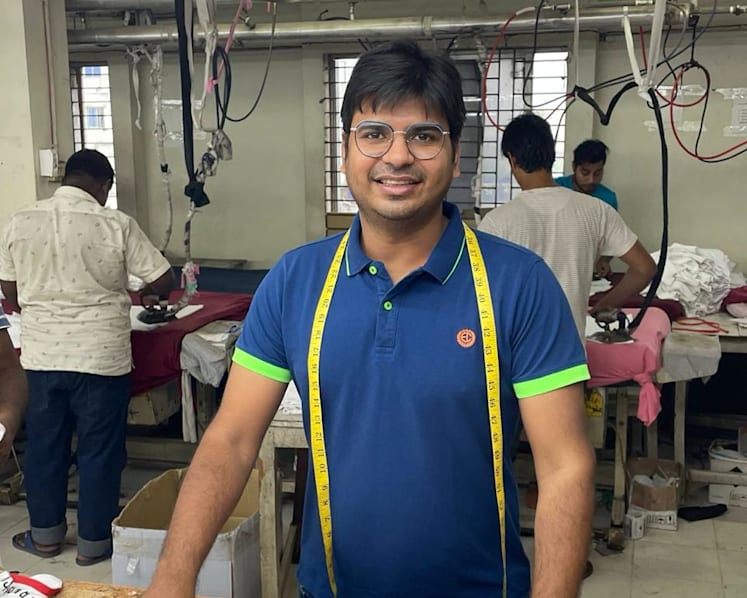
He said that 80 per cent of their revenue originated from the US, and following the tariffs, "everything abruptly collapsed”.
Gupta said Loomkaari is also focusing on Europe and Australia but cautioned that exporters face higher marketing costs, stricter quality controls and steeper shipping charges in Europe.
BUDGET INCENTIVES: A TEMPORARY BAND-AID ON A GAPING WOUND
The Indian government sought to cushion the impact of US tariffs in the Union Budget 2026 announced on Feb 1, by extending credit guarantees for micro, small, and medium enterprises (MSMEs), rationalising some input duties, and lengthening timelines for duty-free exports of finished goods.
While these measures may ease cash-flow pressures, industry experts told CNA they fall short of addressing the core issue: lost demand.
“The initiatives make it easier to do business, but the average business operator can’t really take too much advantage of them,” said Rohit Kumar, founder and chair of industry body India Trade Council (ITC).
“If we cannot keep our customers, that’s the problem at the end of the day. Buyers have to be able to purchase from us without paying a massive import duty,” he added.
Some exporters said they were unclear how the measures would make a difference on the ground.
“I could not really translate how much of it (the Budget) will actually help when it comes to the ground reality,” said Gupta of Loomkaari. “The government did not give us a roadmap.”
Since August, US buyers have increasingly required Indian suppliers to absorb tariff costs.
Pushkar Mukewar, CEO and founder of trade finance firm Drip Capital, said the initial tariff hike in April 2025 had limited impact, as US buyers and importers absorbed part of the cost.
“The real impact came when tariffs were raised to 50 per cent in August,” he said, adding that Indian exporters were forced to shoulder more of the burden, making them less price-competitive globally.
In response, many US clients shifted to placing smaller, short-term orders instead of large seasonal commitments, keeping volumes subdued, traders said.
Smaller exporters without sufficient access to credit or overseas diversification shut operations altogether, while others cut staff or closed production lines.
India’s textile hub of Tiruppur in Tamil Nadu was among the worst hit, with several garment units shutting down or scaling back sharply, according to exporters and local reports.
The US previously accounted for about US$2 billion to US$3 billion of Tiruppur’s exports, but this has fallen to “only a few hundred million dollars”, said Sharma of Fashinza.
Exporters warned that prolonged US tariffs risked lasting damage. “If the 50 per cent tariffs had continued, buyers would have developed alternate countries in their supply chain, and once they develop, it is always difficult to come back,” said Agarwal of Norex Flavours.
In some cases, that shift had already begun. Buyers - especially in textiles - began sourcing from countries such as Vietnam, Bangladesh and China, where tariffs were lower than on Indian goods.
Kumar said this was most evident among US buyers facing tight deadlines, who were “not willing to take a loss to support their Indian supplier”.
Exporters in China face US tariffs of about 47 per cent, while Vietnam and Bangladesh are subject to tariffs of about 20 per cent.
Many exporters told CNA they narrowly avoided a more permanent loss of US customers after Trump announced this week a cut in tariffs on Indian goods from 50 per cent to 18 per cent.
WHY THE US MARKET MATTERS
Despite the recent rollercoaster, the US remains irreplaceable for Indian exporters, industry experts and traders said. It is India’s largest trading partner, accounting for about 18 per cent of India’s total goods exports, according to the International Trade Council.
Traders described the US as the easiest major market to operate in, citing well-informed buyers, faster decision-making, bulk orders, and lower customer acquisition costs compared with fragmented markets such as the European Union (EU).
“Exports are a relationship business,” said Sharma of Fashinza, noting that long-standing US partnerships were paused, not dismantled, during the tariff shock.
He said he spoke to about five or six US customers immediately after Trump announced the tariff cuts, adding that they “were happy and started discussing India sourcing again”.
Exporters told CNA that US clients have reopened discussions on resuming larger orders, though most are waiting for formal confirmation and fine print before committing.
Several industry executives expect supply chains to return to pre-April 2025 US-India trade levels within weeks once a deal is finalised.
Details are expected to be clarified in a joint statement in the coming days, as the US-India trade deal is still being negotiated, India’s Minister of Commerce and Industry Piyush Goyal said on Feb 3.
By contrast, the EU represents a slower but strategically important long-term opportunity.
While the EU-India trade agreement announced on Jan 27 was well received, exporters cautioned that it could take six months to a year to translate into actual orders, given the need for EU parliamentary approval, regulatory compliance, and the bloc’s country-by-country complexity.
Finalised after 18 years of negotiations, the landmark free-trade pact will sharply cut or eliminate tariffs on most goods traded between India and the EU, improve market access, open up services sectors, and strengthen regulatory cooperation.
Under the deal, Indian exports such as textiles, leather, footwear, marine products, gems and jewellery, chemicals, plastics, and various manufactured goods are set to benefit from significant tariff reductions, while the EU will gain lower duties on automobiles, machinery, wines and spirits, chemicals, pharmaceuticals and select agricultural products.
According to Gupta of Loomkaari, the unique rules, languages, and buyer preferences of each EU country make achieving scale more challenging than in the US.
Consumer preferences differ too, she added.
“What sells easily in the US won’t necessarily appeal to a European customer,” Gupta said, noting that building a customer base there requires time and sustained effort.
For instance, US customers tend to prefer linen fabrics and neutral tones, while European buyers favour cotton, brighter colours and sustainable, eco-friendly products, with less emphasis on price.
“Since the US is an easy market, every Indian exporter wants to sell there,” she said.
“But with the EU-India trade deal, it opens up a much bigger market for Indian exporters.”
Like Gupta, many Indian exporters now see diversification as unavoidable.

The past year has shown that “more than the tariff, it is policy uncertainty that has created a problem in the mindset of businessmen,” said Agarwal of Norex Flavours.
He added that even a single political decision can disrupt months of production and planning, causing significant losses.
For Indian businesses emerging from months of fear, disappointment and cautious relief, the priority is clear: rebuild demand in the US while ensuring they are never this exposed again.





