Pricier than buses, cheaper than flights: How does Malaysia's JB-KL electric train compare to other options?
CNA’s Amir Yusof boarded the first northbound electric train from JB Sentral to Kuala Lumpur to find out.
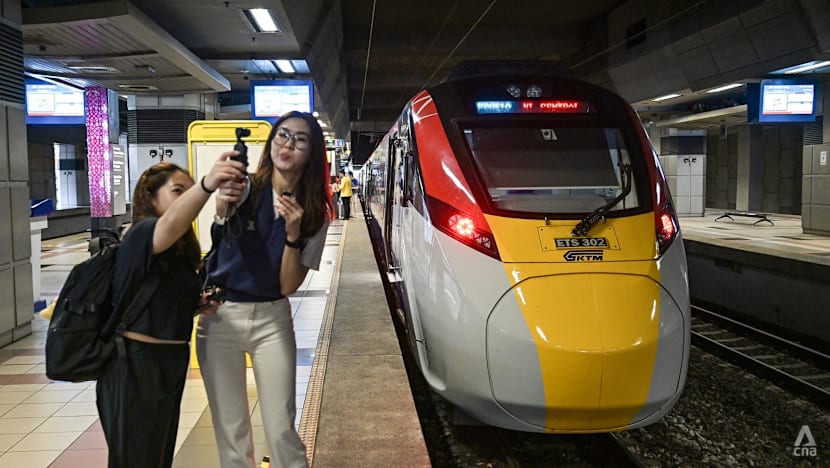
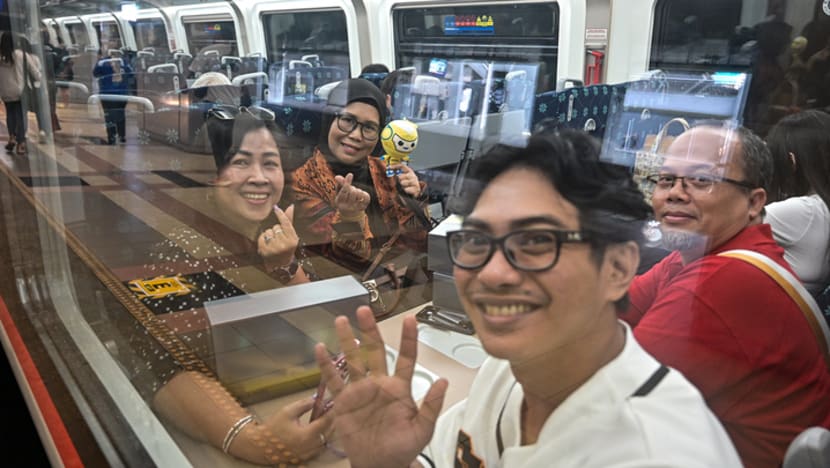
Passengers pose for photographs in front of the first Electric Train Service departing from JB Sentral on Dec 12, 2025. (Photo: CNA/Zamzahuri Abas)

This audio is generated by an AI tool.


JOHOR BAHRU: The mood at Johor Bahru (JB) Sentral train station on early Friday morning (Dec 12) was a mix of excitement and anticipation.
The Electric Train Service (ETS) was set to launch for members of the public, with departure scheduled at 8.40am.
At the station’s waiting area, there was fanfare as some commuters posed for photographs with the national rail operator Keretapi Tanah Melayu Berhad’s (KTMB) mascot Captain EJ - a train “driver” in a red and black superhero costume.

When the boarding announcement was made, passengers queued to scan their tickets and were given special mementos to commemorate the inaugural journey - wooden replicas of the train tickets.





But the star of the show for many was the new ETS train - sleek, modern and aerodynamic - sitting handsomely on the tracks, ready to ferry them on their maiden ride.
The ETS is an electric, double-track line that connects key cities in peninsular Malaysia including JB, Seremban, Ipoh, Kuala Lumpur (KL) and Butterworth.
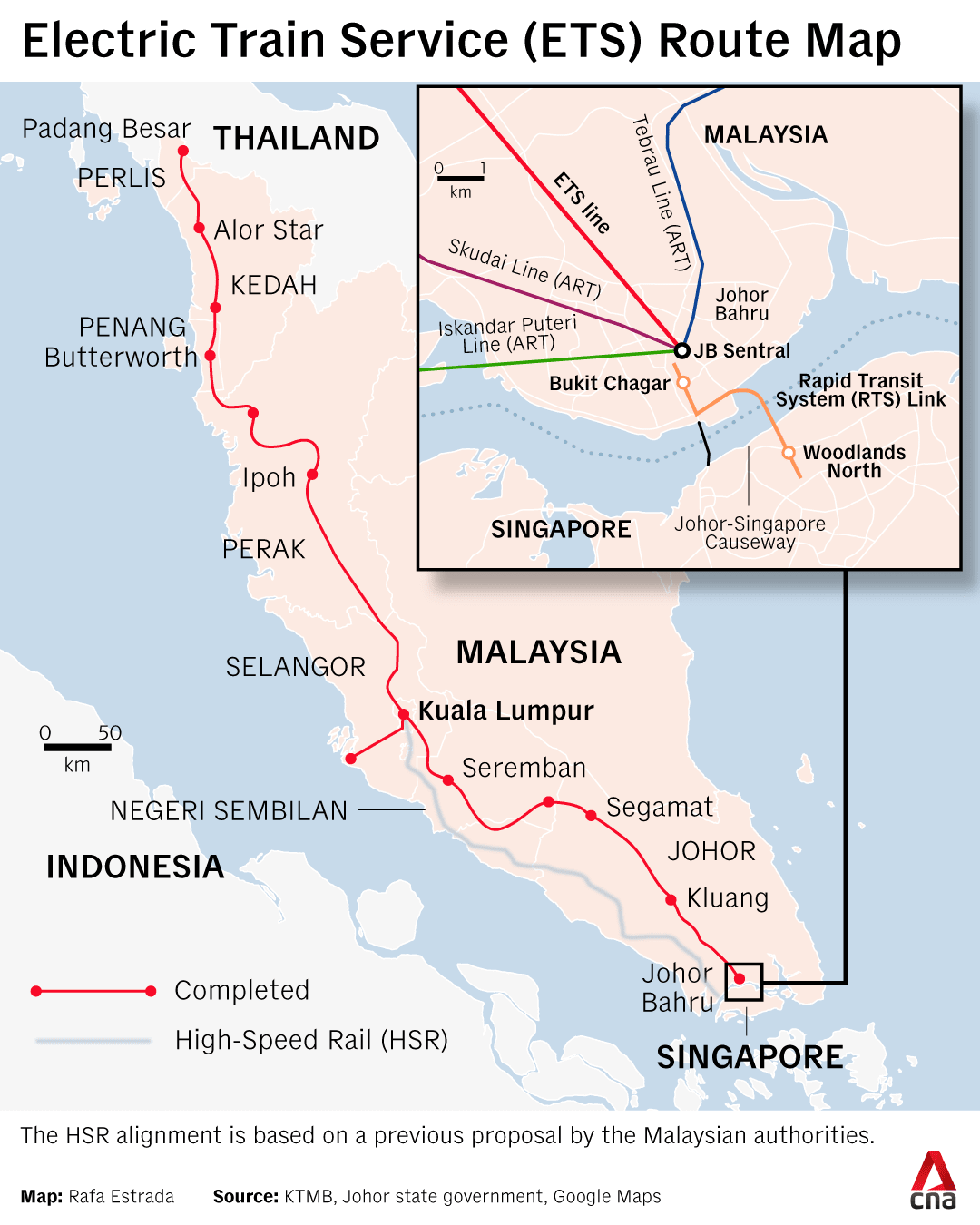
Its final phase involved linking the line to Johor Bahru, a key transport node that would allow the service to be accessible to travellers from Singapore.
Before this, rail passengers had to take the diesel-powered train from JB to Gemas in Negeri Sembilan, 192km away, before changing to an electric train to KL.
With Friday’s launch, they now take around four and a half hours to get from JB to KL, faster than the seven hours previously, but roughly similar to travelling by bus or car. Unlike with road travel, however, passengers can avoid traffic congestion and arrive directly in the city centre at KL Sentral.
PRICIER THAN A BUS, CHEAPER THAN A FLIGHT
A standard one-way ticket on the new route costs RM88 (S$28). That makes it pricier than most bus fares — in some cases nearly double — but still significantly cheaper than flying, at roughly a-third of the price of a domestic flight between the two cities.
Checks on the KTMB website showed that standard ticket prices range from RM88 to RM99, with costs higher during festive periods like New Year’s Day and Chinese New Year.
Demand appeared strong: Tickets for early services were snapped up quickly.
According to KTMB, tickets for the inaugural service from JB to KL were almost sold out on Dec 9, three days before departure, with only seats for people with disabilities left for purchase.
When buying my ticket on Dec 9, I could see the choice seats being snapped up in real time and scrambled to type in my details to complete the transaction.
Those keen on trying the ETS soon will have to plan ahead and book their seats as early as possible.
Travellers I spoke to said they found the prices reasonable, given the comfort and time savings.

“Previously, I took the bus and with the travel time, long-distance ride, and traffic jams, it took a lot longer,” said civil servant Mohammad Noor Syaaban Bin Khamis, 45.
Singaporean Joseph Woo, a rail enthusiast, said the tickets were “fairly priced”.
“I think it is good value because it takes you directly to key cities across the country - Ipoh, Seremban, KL - without the need to pass through airport security or customs,” added the 28-year-old.
RUSTIC LANDSCAPES EN ROUTE TO KL CITY CENTRE
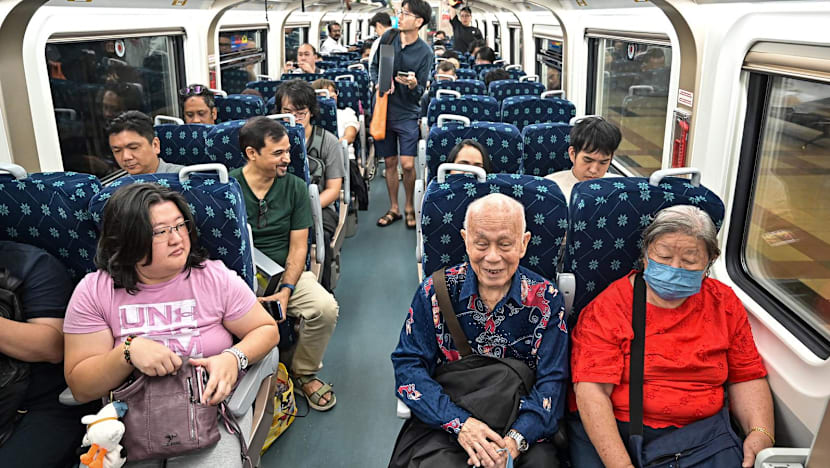
Inside the cabin, the experience feels more premium than the diesel-powered trains passengers are more familiar with. Seats are wide and cushioned, with individual charging ports, tray tables and sufficient legroom — features more commonly associated with flights.
However, the 2-2 seat configuration and relatively narrow train width meant the aisle was a squeeze to walk down.
When encountering someone coming from the opposite direction, the situation becomes too close for comfort.
At cruising speed, the ETS glides smoothly at around 140km/h, noticeably faster than the older diesel trains, which max out at 120 km/h.
There is less friction on the electrified tracks, meaning there is virtually no screeching noise from the train's movement.
The air-con in the cabin was strong - perhaps excessively so as I saw fellow passengers reaching for their sweaters and jackets within an hour of the journey. A screen at the front showed that cabin temperature was around 17 degrees Celsius.
The train offers other modern amenities: Clean toilets, a dedicated prayer room for Muslims, and a small café serving food like nasi lemak, nasi briyani and soft drinks.
Compared to the KTMB diesel trains that used to transport passengers between Singapore and Kuala Lumpur, this feels like a huge upgrade.
A quibble, however, is the long waiting time to buy snacks. I had to queue for 45 minutes to get a cup of coffee and a packet of nuts - perhaps KTMB can consider increasing the number of cafes across the cabins from just one presently.
The highlight of the journey wasn’t the speed or comfort — it was the scenery, an experience that differs from travelling by bus, car or plane.
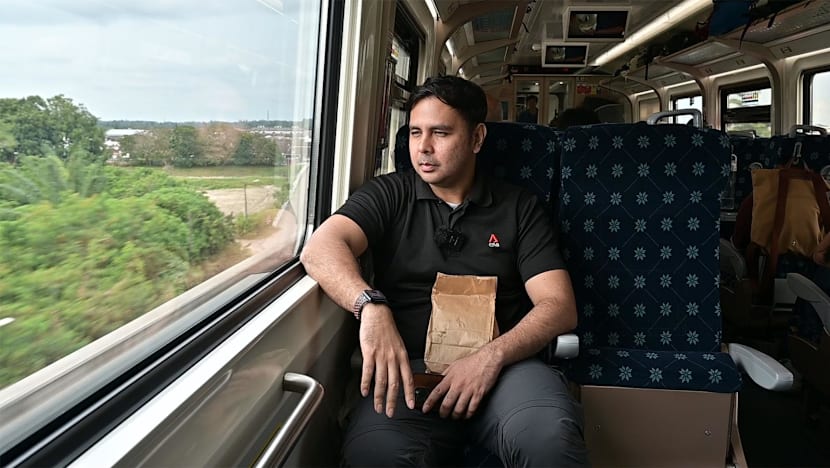
Instead of the asphalt of the North-South Highway, the train passes rustic kampungs, expansive rice fields and rolling mountain landscapes, offering glimpses of rural Malaysia that road travellers rarely see. It is a whole different vibe.
The train pulled into KL Sentral right on schedule at 1pm, and passengers disembarked after what many described as a pleasant and fuss-free trip.
Several travellers said they appreciated the lack of airport-style checks and the convenience of arriving directly at Kuala Lumpur’s central transport hub.
Those travelling via bus, for instance, may only disembark at Terminal Bersepadu Selatan, 15km from KL city centre.
Malaysian Leon Lee told me he had taken the ETS “many times” before Friday, stopping at the different cities along its route.
“I’ve even taken the train to Padang Besar near the Thai border. It’s comfortable and relaxing, and I don’t take flights anymore (for domestic travel),” said the 53-year-old, who boarded Friday’s train in Kluang in central Johor.
Still, not everyone feels the ETS is the most practical choice.
My colleague, visual journalist Zamzahuri Abas, acknowledged the ETS was a solid option but would still prefer to drive from JB to his hometown in Tapah, Perak.
“Driving allows me to travel point to point, and since my family travels with a lot of luggage, it’s just easier to utilise the car,” said Zamzahuri, who has three children.
This means the ETS has its work cut out trying to attract more passengers and to keep them coming back.
For now, day one has set a pretty promising benchmark.