analysis Asia
Beyond Air India’s losses: Why Indian airlines are struggling more than others, and sounding the alarm
Indian carriers are facing a sharper squeeze than many global peers as fuel costs, airspace disruptions, currency weakness and limited hedging leave them with little room to absorb shocks, say analysts.
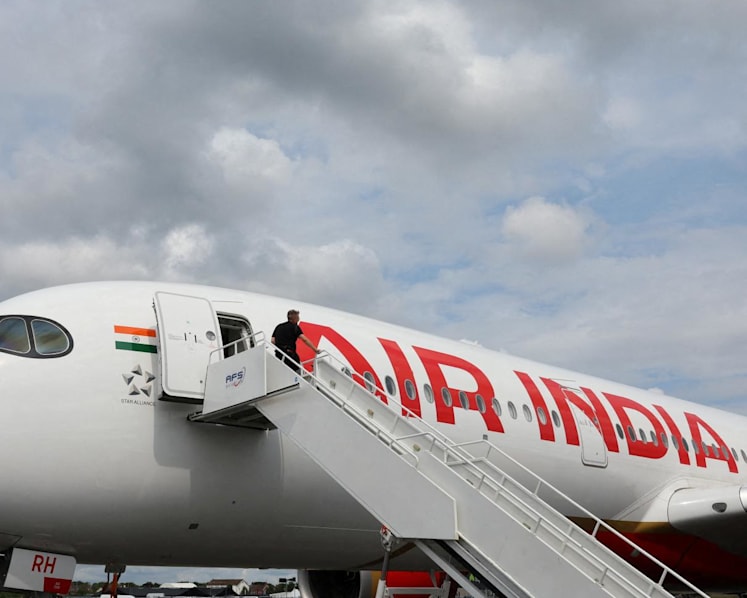
Branding for Air India is seen on an Airbus A350-900 at the Farnborough International Airshow, in Farnborough, Britain, July 24, 2024. (Photo: Reuters/Toby Melville)

This audio is generated by an AI tool.


SINGAPORE: The news last Thursday (May 14) of Air India’s losses doubling to more than US$2 billion in the latest financial year has raised questions over the mounting pressure on the sector, coming two weeks after India’s aviation trade body sounded an SOS to the government.
On Apr 26, the Federation of Indian Airlines (FIA), comprising Air India, IndiGo and SpiceJet, wrote to the government warning of severe financial stress driven by rising fuel costs and prolonged flight routes amid tensions in the Middle East. It sought a return to COVID-19 era cost caps on aviation turbine fuel (ATF) and a reduction or deferment in taxes.
Indian airlines are not the only carriers facing strain from the war in the Middle East. Southeast Asian low-cost carriers have cut roughly 20 per cent of flights compared to pre-crisis levels, or around 4 million fewer passengers per month, an analyst noted on May 18.
Yet apart from them, only the now-defunct Spirit Airlines, Frontier Airlines and Avelo Airlines in the United States and Nigerian airline operators have sought government intervention, according to Reuters and The Wall Street Journal reports.
Why are Indian airlines sounding an SOS when carriers across the world are dealing with the same war, the same fuel shock and the same uncertain skies?
IS INDIA MORE EXPOSED THAN GLOBAL PEERS?
Indian carriers have less room to absorb shocks, analysts said.
Fuel is the biggest pressure point. Indian airlines are more exposed to ATF costs than many global peers because jet fuel forms a larger share of their operating costs and is taxed more heavily in India, they said.
The FIA noted that ATF, after the Middle East shock, accounts for 55 to 60 per cent of operating expenses for Indian airlines, said Mayur Patel, regional commercial and industry affairs leader – Asia Pacific, Middle East and Africa, global travel data provider OAG.
That is structurally higher than many of its global peers, which is around 20 to 30 per cent of their expenses, said analysts.





Kinjal Shah, senior vice-president and co-group head at credit ratings agency ICRA, told CNA the Indian aviation industry is characterised by “high operating costs, intense competition and limited pricing power”, which constrains airlines’ ability to generate sustainable returns.
Those pressures have worsened with higher ATF prices, geopolitical disruptions and currency depreciation.
The disruptions include Pakistan’s ban on Indian carriers from its airspace since April 2025 and restrictions across the Middle East countries like Iran, Saudi Arabia, and other Gulf states, which have squeezed some of the busiest corridors linking India with Europe and North America.
At the same time, a weaker rupee has made dollar-linked costs such as fuel, aircraft leases and maintenance more expensive, even as most airline revenue is earned in rupees.
The Indian rupee has depreciated by about 6 per cent against the US dollar since the Middle East war began. The rupee has weakened as higher oil prices raised India’s import bill, while foreign investors pulled money from Indian stock markets amid global uncertainty and pressure from a stronger US dollar.
India’s airlines have asked state-run oil refiners to hold off jet-fuel price hikes for domestic flights until the Middle East conflict ends, Bloomberg reported on Tuesday (May 19), citing sources.
The refiners are reportedly considering the request.They have been selling jet fuel for domestic flights at about 105,000 rupees (US$1,086) per 1,000 litres, incurring a loss of 92,000 rupees for every 1,000 litres, sources told Bloomberg.
A recent ICRA report said ATF prices in India rose 18.2 per cent year-on-year and 9.2 per cent in April 2026 from a month earlier.
However, in comparison, the global average jet fuel price rose by almost 99 per cent, between the week ending Feb 27 and Apr 10, according to IATA-linked data cited by Cathay Pacific.
The reason for lower fuel jet fuel hikes in India is its Ministry of Civil Aviation capping domestic ATF price increases at 25 per cent per month.
However, while domestic fuel increases have been moderated by the government, there is no cap for international-route fuel for Indian carriers.
Despite the cushioning of domestic fuel prices, Indian airline companies have been feeling the pressure.
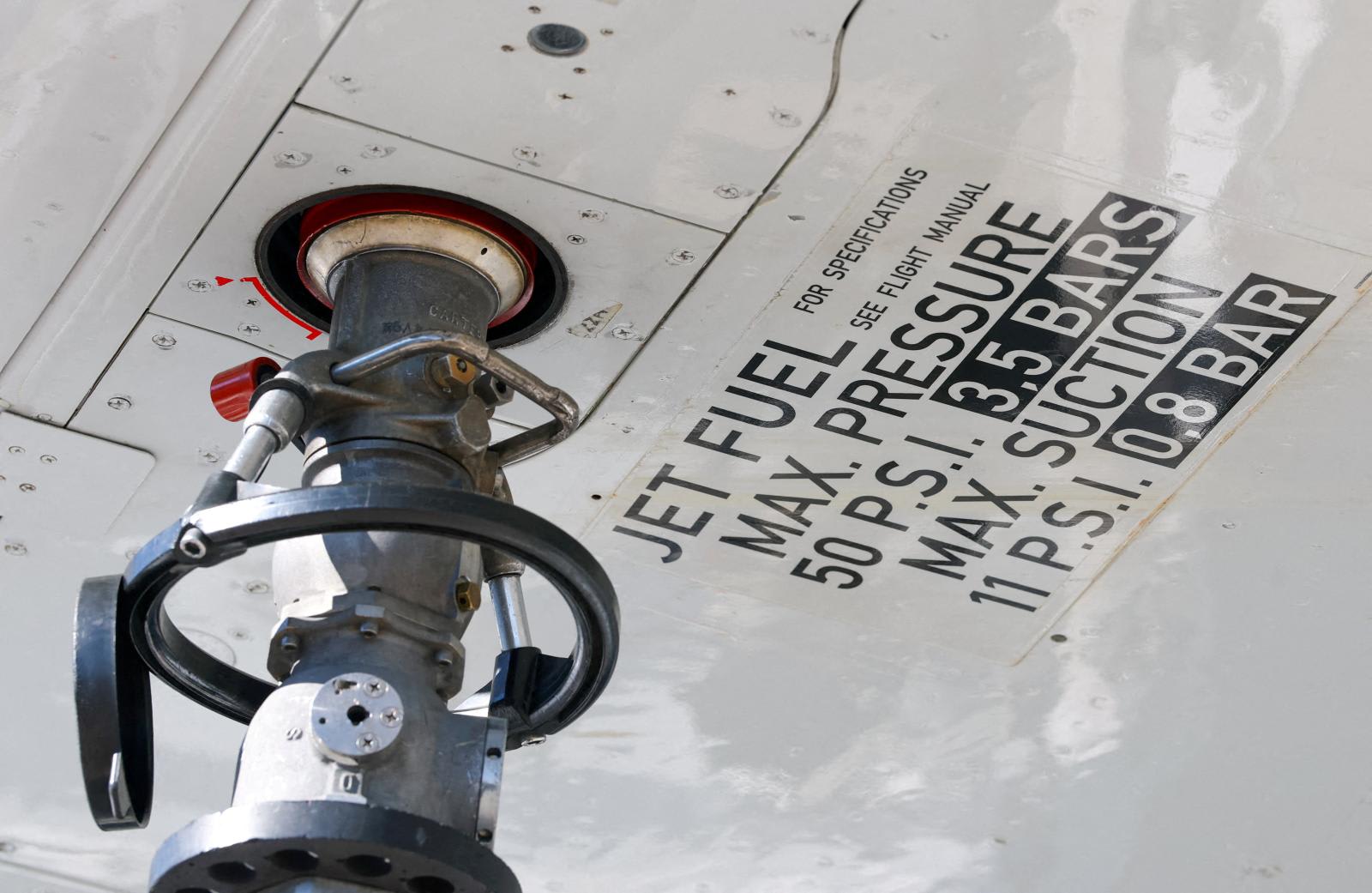
The fuel shock has exposed a gap in risk management by Indian carriers, analysts said. Many international carriers were able to absorb the initial jump in jet fuel prices because they had hedging programmes in place, said Patel.
Fuel hedging allows airlines to lock in future fuel purchases at pre-agreed prices, giving them some protection when market prices suddenly spike.
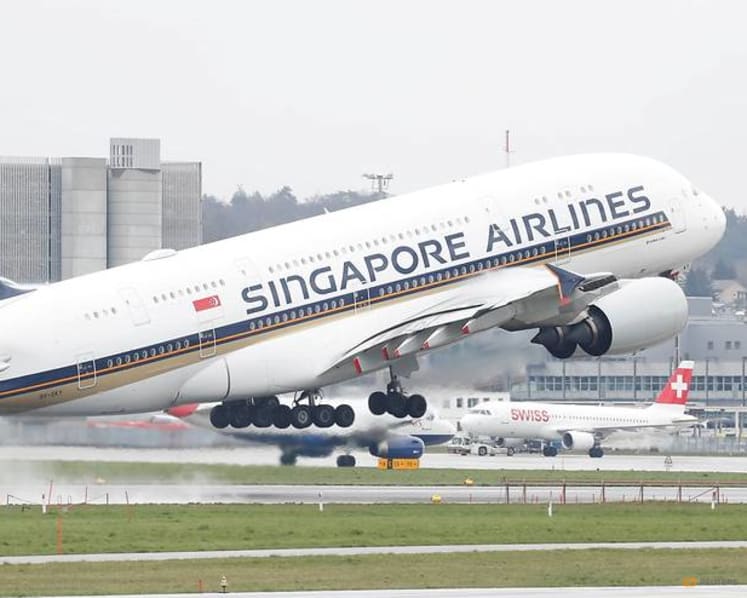
“(Hungarian carrier) Wizz Air, for example, had hedged 83 per cent of its jet fuel needs through March 2026 at between US$681 to US$749 per metric tonne, with 55 per cent coverage for the following year, giving it a meaningful buffer against the initial price spike. Singapore Airlines and Cathay Pacific operate a similarly disciplined multi-year rolling hedge programme,” said Patel.
Singapore’s low-cost carrier Scoot too had fuel hedges in place when the Middle East crisis hit, resulting in temporarily lower fuel costs.
Indian carriers, by contrast, absorbed most of the increase directly, Patel added.
He said it reflected a “lack of preparation”, though there were structural reasons why Indian airlines have historically not done such programmes.
They include overseas hedging instruments requiring regulatory approvals, and capital constraints as the airlines often lack the cash or treasury capacity to post as collateral and manage margin calls – a demand for additional funds from the airline.
Periodic government intervention in ATF pricing has also reduced the incentive for Indian carriers to hedge more, he said.
Still, hedging alone would not have fully insulated Indian airlines from a prolonged shock, especially given the sector’s tax disadvantage, weak rupee exposure and high dollar-denominated costs, Patel said.
Indian carriers face a tax disadvantage as ATF remains outside India’s Goods and Services Tax (GST) framework. This means airlines cannot offset the tax they pay on jet fuel against the tax they collect from ticket sales. As a result, fuel taxes become a direct cost to airlines, adding to their already-high operating expenses.
In addition, ATF is also subject to central excise and state-level value added tax (VAT), creating what analysts describe as a cascading, tax-on-tax effect.
This is one of the key reasons Indian carriers cannot absorb the same shock as better-buffered global peers, OAG’s Patel said.
Patel said the “most impactful” immediate reform would be bringing ATF under GST, which he said would “eliminate the cascading tax-on-tax problem and allow input credit recovery”.
India has not brought ATF under GST before. The main reason has been resistance from states, which rely on VAT from fuel as a revenue source, according to local media reports. But state governments have previously used VAT cuts on ATF as a temporary relief tool to lower airline costs, stabilise fares and encourage more flights.
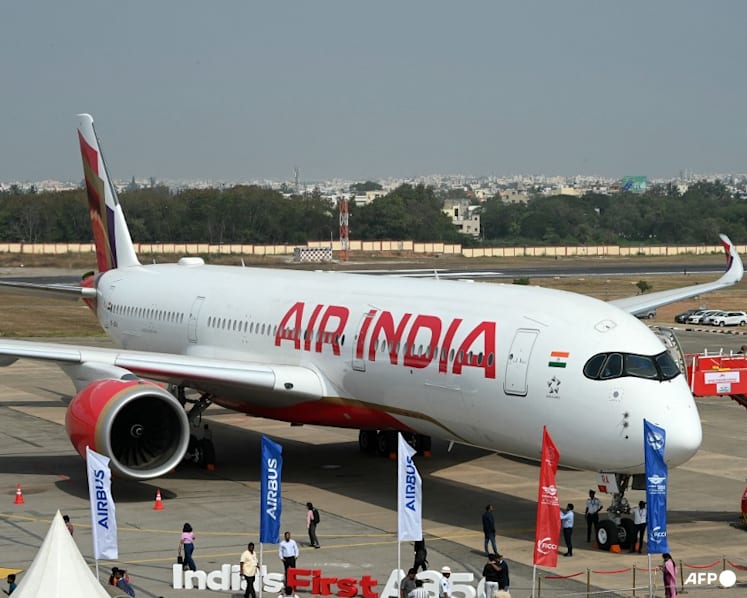
The weakness of the Indian currency is another drag. ICRA’s report estimates that 35 to 50 per cent of airline operating costs - including fuel, aircraft leases and maintenance - are US dollar-denominated, while revenue is largely earned in rupees. A weakening rupee therefore adds another layer of pressure.
The Indian rupee has depreciated by about 6 per cent against the US dollar since the Middle East war began, to 96.79 rupees per US$1 as of May 20, local media reported.
The Indian rupee has weakened by about 6 per cent against the US dollar since late February, underperforming several major Asian currencies. Over the same period, the Singapore dollar strengthened by 0.57 per cent and the Chinese yuan gained 2.75 per cent against the US dollar, while the Japanese yen and Korean won fell by a smaller 1.29 per cent and 3.64 per cent, respectively.
“A 1 per cent drop in the rupee cuts an airline's pre-tax profit by an estimated 5 to 6 per cent,” said Patel.
Route disruption has compounded the problem, say analysts. Airspace restrictions in the Middle East and the closure of flight corridors have forced rerouting of long-haul international flights, resulting in “longer flying times, higher fuel burn, and increased navigation and airport charges”, said ICRA’s Shah.
Pakistan’s closure of its airspace to Indian carriers since April 2025 has forced Indian airlines onto reroutes that added up to 4.5 hours on some long-haul services to Europe and North America, Patel said.
At the same time, airlines are dealing with grounded aircraft.
The ICRA report said 117 Indian aircraft were grounded as of February 2026 due to Pratt & Whitney engine issues and supply-chain challenges, accounting for 13 to 15 per cent of the industry fleet. That has raised airplane lease costs, forced carriers to use older leased aircrafts and reduced flexibility just as airlines need backup capacity, added the report.
Some analysts, however, say the Federation of Indian Airlines’ SOS could also be seen as lobbying.
Mark Martin, founder and chief executive of aviation advisory firm Martin Consulting, said Indian airlines are using the fuel shock to mask deeper operational weaknesses.
He argued that passengers are already bearing fuel surcharges and taxes through ticket prices, and that airlines should not be allowed to frame every loss as an external shock.
“They are trying to use this rise of fuel price as force majeure, so that they delay the loan repayments back to banks,” he told CNA.
Bloomberg columnist Javier Blas recently made a similar point about the global airline industry, warning that carriers in need of restructuring may turn fuel into a “handy scapegoat”.
But Patel said: “The lobbying function is real, but so is the underlying stress. Industry bodies almost never write letters like this unless they've run out of other options.
"In a rare show of solidarity, Air India, IndiGo and SpiceJet submitted a joint crisis appeal... Three competing airlines including the dominant market leader IndiGo signing the same letter is genuinely unusual. This isn't a routine budget negotiation.”
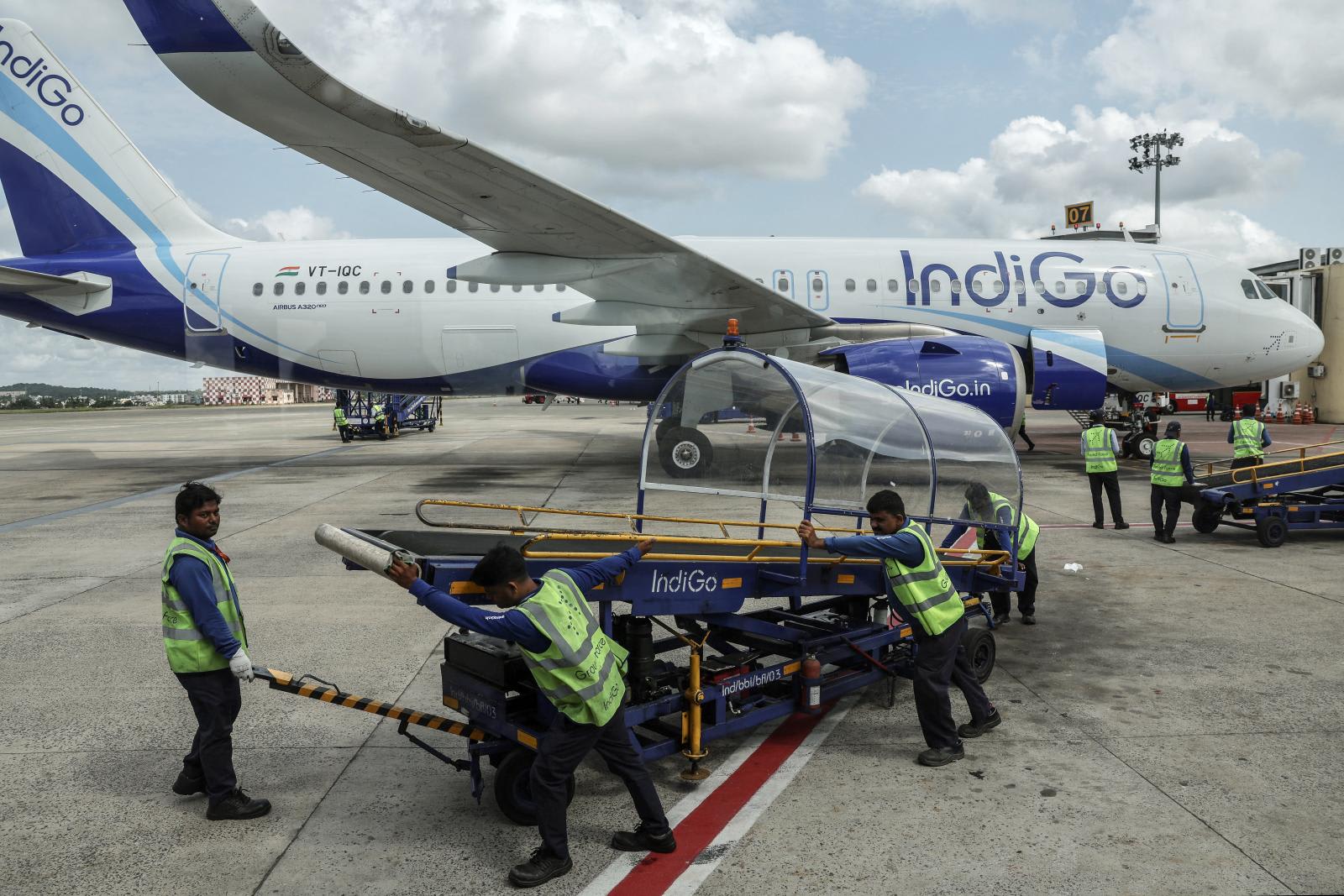
IS AIR INDIA’s LOSS REPRESENTATIVE OF THE SECTOR?
Air India's record loss for the financial year ended March 2026 may reflect the struggles of the country’s aviation sector, but it is far worse than its peers, analysts said.
This is because the airline – in which Singapore Airlines owns a 25.1 per cent stake – is in the middle of a complex turnaround. It is integrating Vistara after their November 2024 merger, modernising its fleet, dealing with legacy costs and carrying much greater exposure to long-haul international routes.
IndiGo - India’s largest and most profitable carrier in recent years - has yet to announce its Q4 and full year FY2026 financials, but analysts CNA spoke to expect it to report a Q4 loss.
Around 40 per cent of IndiGo’s international capacity is exposed to the Middle East, noted Ameya Joshi, founder of aviation analysis website Network Thoughts.
Besides, the airline has not been able to operate in growing international routes including Uzbekistan, Kazakhstan, Russia, and other countries in Central Asia, he said.
Network Thoughts’ Joshi said Air India’s losses are “not representative of the sector”. Instead, much of it is linked to airspace closures and large pre-delivery payments to support its aircraft orders.
Air India had ordered a total of 220 Boeing aircraft and 360 Airbus aircraft since 2023, according to an Aviation Week report in January.
Air India is the second-largest airline in India, with 3.6 million seats and a 14 per cent share of the market as of May, according to OAG data. Its low-cost domestic carrier, Air India Express, is the third-largest airline with 2.5 million seats.
OAG’s Patel noted that FY2026 was the first full year of consolidated results after Air India’s merger with Vistara - the airline formerly co-owned by Tata Group and Singapore Airlines - making the year-on-year comparison less straightforward.
Singapore Airlines has attributed Air India’s performance to a combination of geopolitical disruption, fuel costs and transformation-related expenses.
ICRA expects the Indian aviation industry to report a net loss of 110 billion to 120 billion rupees (US$1.1 billion to US$1.2 billion) in FY2026-2027. It also revised its outlook on the Indian aviation sector to “negative” from “stable” in March 2026, citing higher ATF prices, international airspace disruptions and continued rupee depreciation.
IndiGo remains in a stronger position than Air India. With a 52 per cent market share, it has stayed profitable in recent years but analysts expect pressure to show in its fourth quarter FY2026 numbers.
In May 2026, IndiGo operated 13.4 million seats, a 5 per cent increase from the previous year, as per OAG data.
As for India’s next-largest carriers SpiceJet and Akasa Air, analysts noted they are much smaller players, each with less than 5 per cent domestic market share and even smaller international exposure.
Patel, however, said SpiceJet is the airline most vulnerable to a controlled wind-down or forced consolidation if conditions do not improve, given its already strained balance sheet and limited safety net.
WHAT GOVERNMENT SUPPORT CAN HELP?
India’s airlines are more likely to reduce some flights or routes than stop flying altogether - at least for now, analysts said.
“Mass suspension is an extreme tail risk, but targeted capacity cuts are already happening and will deepen,” said Patel.
Joshi said Indian airlines traditionally adjust domestic flights between June and September because it is a weaker quarter due to the monsoon season in the country. But if the situation remains strained beyond September, the sector could face more serious challenges.
Fare hikes could weaken demand, with ICRA’s report noting that fuel surcharges of around 5 to 6 per cent of average fares could weigh on passenger traffic growth.
The government has already stepped in on several fronts.
Besides capping domestic ATF price increases, it reduced landing and parking charges for domestic airlines by 25 per cent for three months starting April 2026, and approved an emergency credit line guarantee scheme worth 50 billion rupees (US$519 million) for airlines facing liquidity constraints, said ICRA’s Shah.
She added that several state governments have also reduced the VAT on ATF. Maharashtra cut VAT to 7 per cent from 18 per cent effective May 15, while Delhi reduced it to 7 per cent from 25 per cent effective May 16.
A bigger structural fix would be to bring ATF under the GST framework but, even so, analysts said the industry will continue to be under pressure.
“While policy interventions such as tax rationalisation on ATF and continued liquidity support can provide incremental relief, they are unlikely to fully address the structurally high cost base and competitive intensity inherent in the Indian aviation market,” said Shah.