







Why India’s edtech reckoning could shape the next era of online learning
India’s online education boom is cooling as funding dries up and companies consolidate, but a new phase driven by artificial intelligence could reshape how millions learn and what they pay, say analysts and industry players.

This audio is generated by an AI tool.


SINGAPORE: For millions of students and working adults in India, online learning is a cheaper alternative to tuition and coaching classes - a way to prepare for exams, pick up new skills and improve job prospects.
These digital platforms are part of a sprawling education technology (edtech) market that is facing a sharp correction after years of rapid growth, following a surge in demand and investment during the COVID-19 pandemic.
What was once a fiercely competitive, cash-fuelled startup sector is now consolidating as companies race to remain viable, with the recent announcement that upGrad would acquire rival Unacademy - both well-known names - a case in point, say analysts.
Announced on Mar 15, the deal is structured as an all-stock transaction, with Unacademy valued at under US$500 million, far from its peak valuation of around US$3.5 billion in 2021, according to local reports.
“The upGrad-Unacademy transaction reflects a broader structural reset underway in India’s edtech sector rather than an isolated strategic move,” Neha Singh, co-founder of data analytics firm Tracxn, told CNA.
As companies recalibrate around artificial intelligence (AI) and more sustainable business models, observers said the sector’s next phase will test whether it can deliver reliable returns for investors while remaining affordable, accessible and delivering meaningful outcomes for learners.
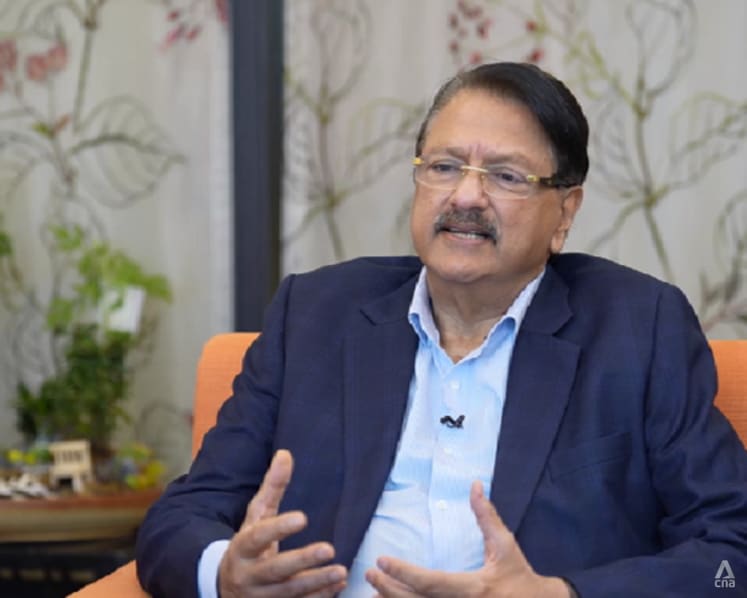
“Investors are now looking for more sustainable models rather than chasing growth at any cost.” Amit Somani, a partner at Indian venture capital firm Prime Venture Partners, told CNA.
SHIFTING FORTUNES
Edtech refers to the use of digital tools and platforms to deliver, enhance or manage teaching and learning - for example, apps that let students learn maths or science online.
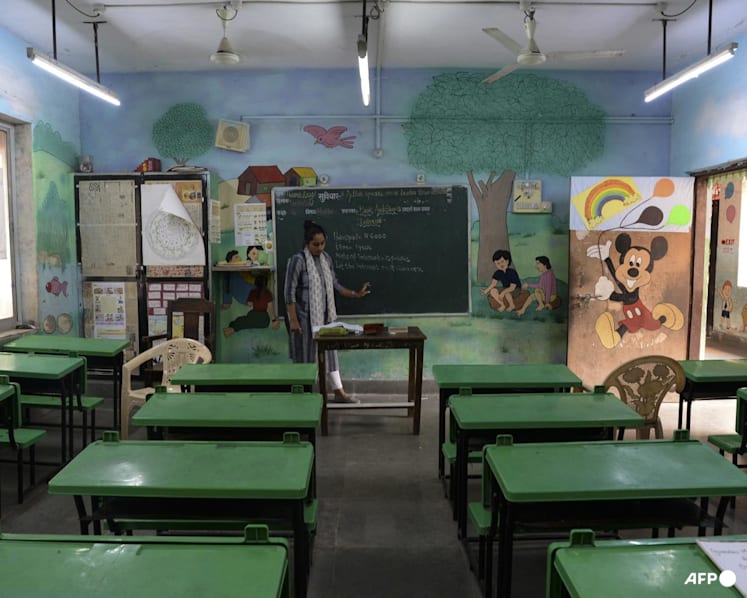
Indian edtech firms were among the biggest beneficiaries of the COVID-19 pandemic, when school closures and uncertainty around physical classes turbocharged digital adoption.





Funding into Indian edtech firms more than tripled in 2021, rising to US$4.3 billion from US$1.4 billion in 2020, while the number of funding deals also more than tripled, according to data from Tracxn and Inc42, a news and data startup.
That extraordinary period, however, also distorted expectations. Companies rapidly scaled headcount, marketing budgets ballooned and acquisitions were made at high valuations - all on the assumption that online learning would permanently displace traditional models, said experts.
Somani compared the boom to a “sugar rush”, saying the pandemic created a sharp spike in demand that pulled forward consumer behaviour, but the “crash” once schools reopened exposed deeper weaknesses.
As offline education returned in 2023, so did the realities of the Indian market: younger learners often need supervision, parents still trust physical classes and many online-first businesses struggle with engagement and course completion, analysts said.
At its peak in 2021, India’s edtech market attracted about US$4.3 billion from global venture capital (VC) and private equity firms, including Tiger Global, Qatar Investment Authority and Blackstone, according to data analytics firm Tracxn.
By 2025, that figure had fallen to just US$156.7 million - a more than 20-fold decline.
Avantika Tomar, analyst and partner of the education practice at EY-Parthenon India, told CNA the correction has hit hardest in segments where learners are too young to be self-driven.
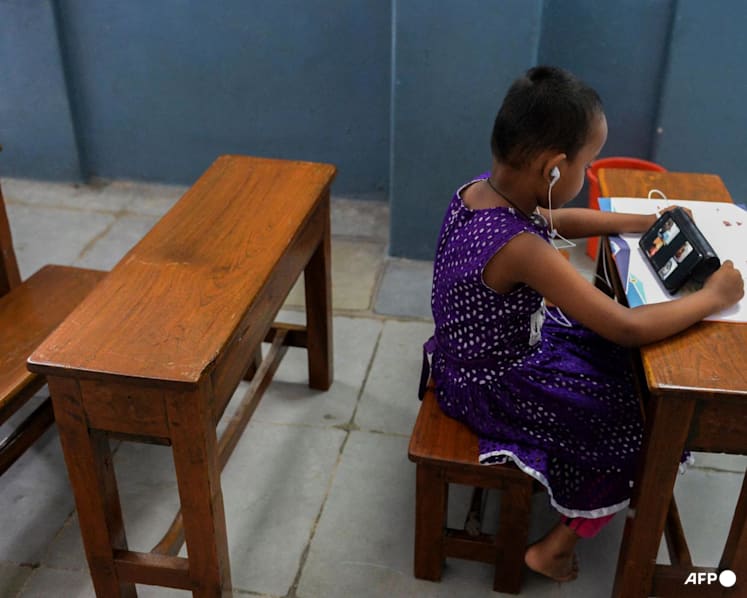
The kindergarten to Grade 12 edtech sector saw a 96 per cent decline in funding from 2021 to 2025, according to a report by Bengaluru-based consulting firm RAYSolute Consultants.
“To learn purely online, the learner needs to be self-motivated,” Tomar said. “No seven-year-old is self-motivated. A lot of your 10-year-olds, 12-year-olds are not.”
Tracxn’s Singh said the sector relied too heavily on aggressive marketing spend to expand online tutoring and test-preparation businesses, making customer acquisition costly and undermining sustainability.
The collapse of the largest player in the space, Byju’s, compounded the sector’s problems, said experts. They attributed Byju’s collapse to pandemic-era overexpansion, a growth-at-all-costs strategy, and governance and financial troubles as students returned to offline learning.
Once India’s highest-valued edtech startup at about US$22 billion, Byju’s entered insolvency proceedings in July 2024 after defaulting on payments, including sponsorship dues to India’s cricket board.

In November 2025, India’s Supreme Court rejected Byju’s plea to halt insolvency proceedings despite its settlement of dues owed to the cricket board. The court said the process must continue as a committee of creditors had already been formed.
Somani from Prime Venture Partners, which has invested in about eight companies in India’s edtech space, said investors largely stayed on the sidelines for close to a year as they waited for the industry to stabilise.
THE AI OPPORTUNITY AND REAL-WORLD LIMITS
Now, investors are looking for a different industry playbook - one built on sustainable unit economics, financial discipline and clearer outcomes for students, said experts.
Experts said India’s edtech opportunity remains large, given its deep yet fragmented demand.
The country is the world’s second-largest edtech market by funding, behind only the United States, according to research body India Brandy Equity Foundation, and it remains Asia’s largest market for education investment.
India’s education market was valued at between US$185 billion and US$195 billion in the financial year ended March 2025 and is expected to grow to between US$300 billion and US$310 billion by FY2030, according to a 2025 report by Bengaluru-based research consulting firm RedSeer Strategy Consultants (RedSeer). About 80 per cent of this market lies outside metropolitan areas and in tier 1 and tier 2 cities.
India’s online education market is projected to grow at a compound annual rate of about 26 per cent, rising from roughly US$6.8 billion-US$7.3 billion in FY2025 to US$21 billion-US$23 billion by FY2030, according to the RedSeer report.

Recent developments have sparked cautious optimism about a potential industry revival, with analysts highlighting the upGrad-Unacademy consolidation and local edtech firm Physics Wallah’s stock market debut in November 2025.
Physics Wallah was the first firm in India’s edtech space to go public since Byju’s slid into insolvency. It was valued at about US$5.2 billion on its IPO debut, although that has since eased to roughly about US$2.7 billion as of Monday (Mar 30).
Meanwhile, in posts on X, the founders of upGrad and Unacademy have described their deal as a consolidation play, bringing together complementary businesses in school learning, test preparation, higher education and upskilling, while betting on AI-led product innovation.
There is growing expectation of a new phase in India, with firms centred on AI and hybrid models to build more sustainable businesses, investors and analysts told CNA.
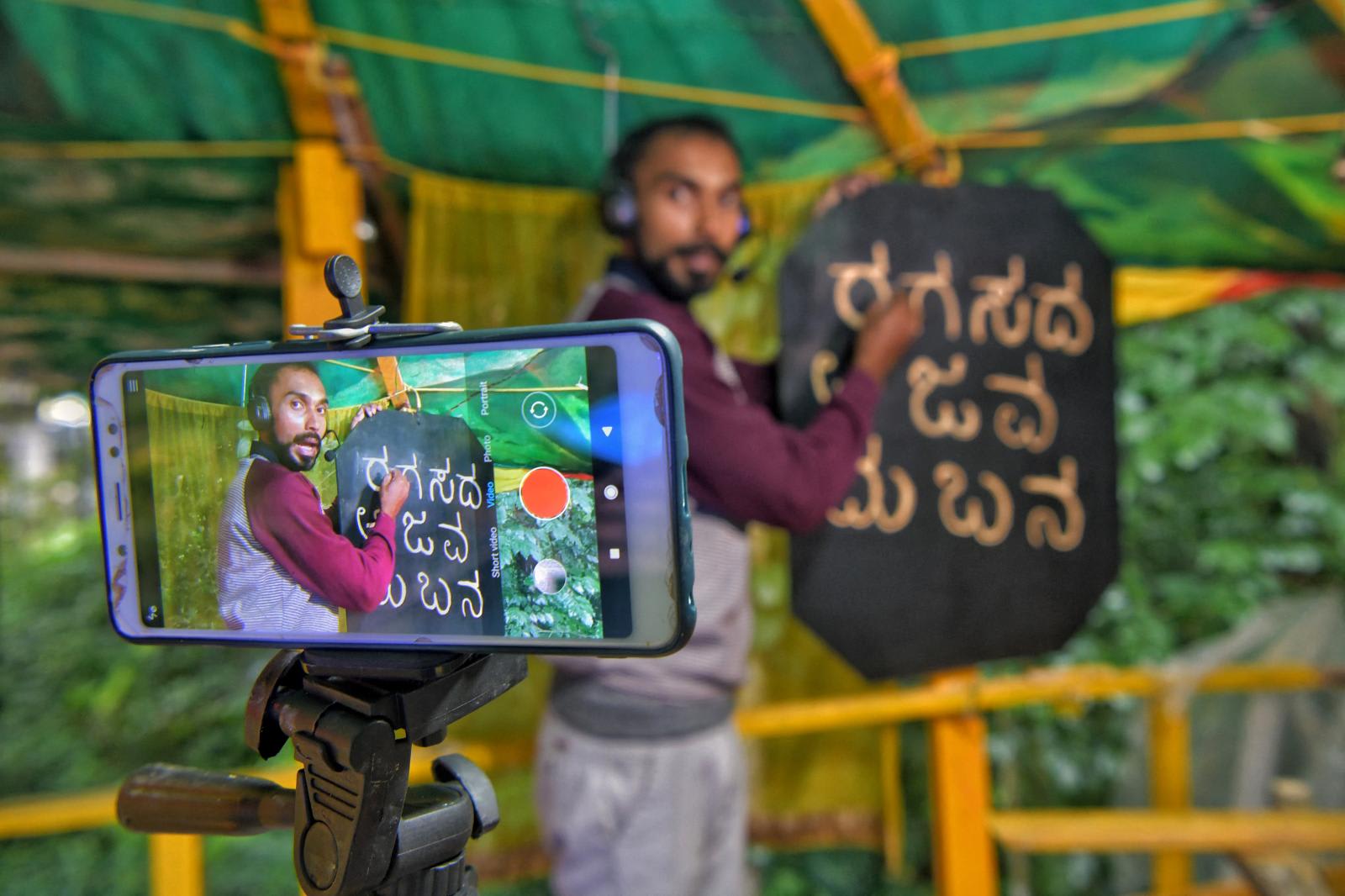
Somani said AI can “dramatically reduce the cost” of producing educational content, enabling companies to offer smaller, more affordable learning products.
In a price-sensitive market such as India, costs matter, noted analysts.
Pradeep Mishra, a parent interviewed by CNA, said online edtech is far cheaper than physical coaching centres.
His son Ishaan, a Grade 10 student, subscribed to Physics Wallah courses costing about 6,000 rupees (US$63.30) a year, compared with roughly 300,000 rupees (US$3,168) annually for an offline tutoring programme.
With Indian middle-class household incomes in metropolitan areas typically ranging from 1 million to 3 million rupees per year, offline coaching remains a significant expense.
Mishra added that affordability is even more critical in rural India, where many families cannot afford the fees of traditional coaching centres and instead see an annual online subscription of 5,000 to 6,000 rupees as a viable option.
However, EY-Parthenon’s Tomar said the companies most likely to attract capital are those meaningfully building with AI, rather than merely layering it onto legacy products.
She cautioned that it is increasingly difficult to distinguish genuinely AI-led firms from those simply using the label.
Yet even as AI enhances the digital layer through personalisation and faster doubt resolution, experts told CNA a fully online future is unlikely for edtech.
“Hybrid learning models are expected to remain the dominant approach,” said Singh from Tracxn.
Saurabh Mangrulkar, founder of Indian edtech firm Beep, told CNA that while AI can improve personalisation and conceptual understanding, it is unlikely to solve deeper issues such as student motivation.
He noted that completion rates for online courses in India are often low, hovering at around 30 to 40 per cent.
That reality is reflected in user experience.
Ishaan, the Grade 10 student,said he benefited from online videos and the ability to revisit lectures, but found live online classes difficult to sustain because, unlike in a physical classroom, there were “no restrictions” requiring him to stay seated and focused in one place, making distractions easier.
His father said the online learning model builds strong conceptual understanding at low cost, but has limits because “nobody is there to enforce” discipline.
This motivation gap - especially among school-age learners and in test preparation - helps explain why India’s edtech market continues to oscillate between online and offline models, said experts.


MAKING THE GRADE
The companies most likely to endure in India’s shifting edtech landscape are those that are outcome-driven, rather than simply content-heavy, analysts said.
Singh from Tracxn said more resilient firms are those tied to “clear return on investment for users” - such as securing jobs, gaining admission to top universities or achieving strong exam results.
Likely winners will also generate revenue from multiple sources and rely less on expensive customer acquisition by partnering with schools, colleges and institutions, she added.
Success also depends on pricing models suited to a market where millions cannot afford traditional coaching fees, analysts said.
Mishra, the parent whose son uses Physics Wallah, said the platform is “highly successful in remote areas” as many students lack access to coaching centres and the means to pay for them.
He added that children in smaller towns often lack a broadband internet connection and must ration limited mobile data, using it “very judiciously”, mainly for lectures.
Trust remains another critical ingredient, observers said.
In 2022, Byju’s was hauled in by India’s child rights watchdog after local reports alleged it used exploitative sales practices, including on poorer families.
In the aftermath, Byju’s told the watchdog it would introduce an affordability test before signing up customers, aimed at screening out families earning below about 25,000 rupees a month, according to local reports.
Yet, some firms still continue to use aggressive sales practices, said education activist Pradeep Poonia.
He recently encountered students who were sold a course in Germany by an upskilling firm without fully understanding the total costs, only to realise later the financial burden was far higher than expected.
“Many people get stuck in such traps,” he said, adding that some take on loans or multiple jobs to cope.
Somani, the edtech investor and partner at Prime Venture Partners, pointed to the importance of brand, certification and distribution of products to recognised schools and educational institutions.
Ultimately, he believes investor interest in the sector remains intact, albeit more cautious and selective - a view echoed by other industry players.
“Investors haven’t written off edtech (in India) … the market is massive and the demand for education isn’t going anywhere,” he said.





