







India’s top court weighs rules on stray dogs as bite cases surge
The country’s Supreme Court has reserved its verdict on petitions challenging its stray dog directives, as a debate intensifies over public safety risks and animal welfare.
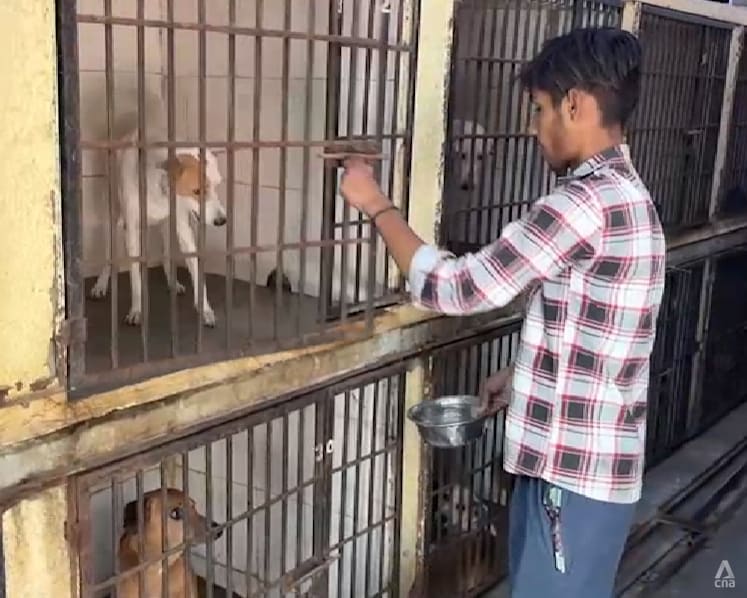
Capacity and shelter shortages remain a challenge in India, which has a stray dog population estimated at between 15 million and 60 million.

This audio is generated by an AI tool.


NEW DELHI: Months after India’s Supreme Court ordered the removal of stray dogs from public institutions such as hospitals and schools over dog bite concerns, it has slammed state authorities for failing to comply.
India’s apex court on Thursday (Jan 29) reserved its verdict on petitions seeking changes to its directives, as debate rages over how best to address public safety concerns while ensuring the animals are treated humanely.
Official data shows India recorded 3.7 million dog bite cases in 2024, a roughly 70 per cent increase from 2.18 million cases in 2022.
But critics say this data does not specify how many of these incidents involved strays.
Street dogs, a familiar sight on any busy road in India, are often cared for by neighbourhood residents.
But after a young girl in Delhi reportedly died from a dog attack last year, the Supreme Court stepped in with sweeping directives aimed at reducing such incidents.





In August, it ordered the capital’s government to remove all dogs from its streets and place them in shelters within eight weeks.
That order was later modified after pushback from animal rights groups.
Under the modified rulings, local authorities must clear stray dogs from public institutions and house them in shelters after sterilisation and vaccination.
But compliance has been patchy, drawing the court’s ire.
On Wednesday, it warned that states that provide misleading data – for instance, on the number of dog bites and sterilisation numbers – could face judicial action.
PUBLIC SAFETY VS ANIMAL WELFARE
For Mumbai resident Hariram Prajapathi, whose five-year-old daughter was bitten last year, the stricter controls are welcome.
The girl had stood up while playing and a dog lying next to her bit her out of the blue, Prajapathi recounted.
“When someone drives past these dogs, they chase them and bite them. If someone is walking past, they’ll bite. Local authorities should take such animals away from residential areas.”

Public health experts note that India accounts for around 36 per cent of global rabies deaths, with children and the elderly particularly at risk – a factor that has intensified calls for stronger stray dog management.
But animal rights advocates argue that the court’s directives have led to cruelty against community dogs and could make existing problems worse.
“Why are shelters a failure? Because they go against a dog’s nature. You cannot herd multiple unknown dogs altogether. They will fight, injure each other and kill each other,” said Ambika Shukla, trustee of advocacy group People For Animals.
“Those areas will become hotspots of diseases.”
Under India’s existing animal birth control rules, dogs are supposed to be caught, sterilised, vaccinated and then returned to the same area.
Animal rights advocates say if sterilised and vaccinated dogs are permanently removed from an area, unknown strays will move in, resulting in more instances of human-dog conflict.
Activists in Mumbai and Navi Mumbai have also staged protests, alleging that municipal authorities are picking up healthy, sterilised community dogs from the streets even as the Supreme Court is yet to issue its final verdict on the matter.
Some say politically motivated complaints and misunderstandings of the court’s remarks have led to harassment of animal caregivers.

IMPLEMENTATION CHALLENGES
Local authorities tasked with executing the court’s orders face logistical hurdles.
“Building shelters (to keep the dogs) is the first step,” said Vikram Niratle, head of a municipal veterinary department in Mumbai.
“Then you need to appoint doctors, you need staff to take care of the dogs, order supplies for feeding, order medicines. There’s a lot that will need to be done.”
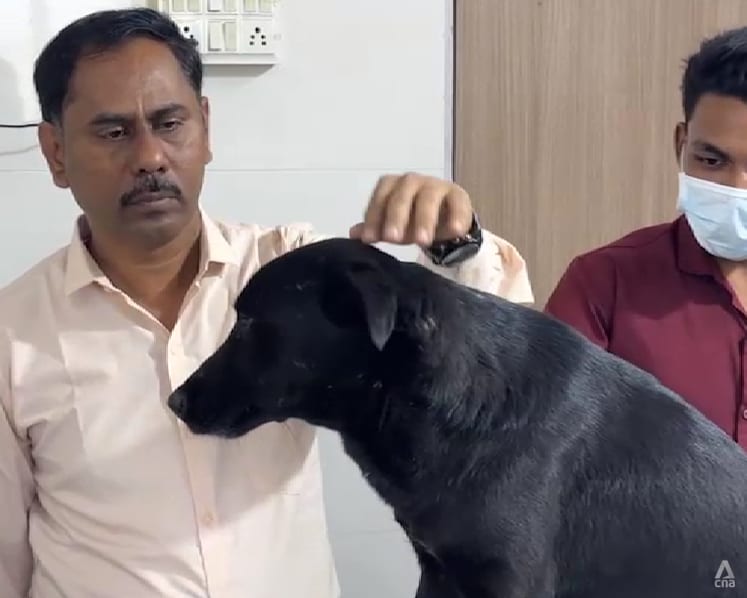
The New Delhi Municipal Council has announced plans to expand a shelter at an old veterinary hospital in Moti Bagh to house more than 500 strays.
But capacity and shelter shortages remain a challenge in a country with a stray dog population estimated at between 15 million and 60 million, with a million in Delhi alone.
Whatever the court ultimately decides, veterinarians like Niratle hope it will not come to choosing between treating animals humanely and keeping humans safe.





