'Sophisticated' and ‘thriving in secrecy’: What’s beneath Indonesia’s underground baby trafficking trade?
Lawyers and experts say a complex web of social and economic pressures, along with a widespread lack of understanding about legal adoption procedures, has contributed to a lucrative baby trafficking trade in Indonesia.

Across Indonesia, a hidden network of illegal baby trafficking is thriving, fuelled by social media, poverty, and legal loopholes. (Illustration: CNA/Rafa Estrada)

This audio is generated by an AI tool.


BANDUNG, West Java: After four failed fertility programmes at four different hospitals in the Greater Jakarta Area, Indah – not her real name – was in need of a break from doctor’s offices, blood tests and hormone injections.
It was 2023 and she found herself scrolling endlessly through social media, liking photos and videos of babies posted by Indonesian orphanages.
“I wasn’t really looking to adopt one,” the 42-year-old told CNA. “I just liked watching videos of them. They gave me joy.”
Then a little girl named Shinta – also not her real name – appeared on Indah’s feed. In the short clips posted by the girl’s orphanage, Shinta was always smiling wide, occasionally bursting into laughter when someone called her name.
“There was just something about Shinta. She was really smart. She was really confident,” Indah said.
“I could really imagine myself tucking Shinta into bed and reading her stories.”
Indah decided to contact the orphanage behind the posts, a decision she soon regretted. From the very first exchange, she was bombarded with questions about her income.
“The conversation felt cold and transactional,” she recounted.
“They wanted to know what my husband and I do for work, where we work, how much we make. Whenever I ask about Shinta and what her story was, they would redirect the conversation.”
The final straw came when an official asked if she and her husband were prepared to “compensate” the money the orphanage had spent raising Shinta – who at that point had not even turned one.
Indah asked how much. To which the orphanage official replied: “160 million rupiah”, which at the time was worth around US$11,000.
“I thought to myself: ‘This can’t be right’. ‘Is it normal for an orphanage to put a price on a child?’,” she said, adding that she immediately backed down.
Indah was right to be worried.
A complex web of social and economic pressures has contributed to a booming baby trafficking trade in Indonesia, with illegal syndicates often targeting hopeful parents through social media, experts told CNA.
Poverty remains the biggest driver, with many expectant mothers struggling to afford prenatal care, let alone the costs associated with childbirth and raising a child.
Adoption in Indonesia is meant to be free of charge. All orphanages should be registered and accredited with the Indonesian Ministry of Social Affairs.
The deep stigma around abortion, the strict conditions placed on terminating a pregnancy in Indonesia and a widespread lack of understanding about legal adoption procedures only serve to compound the problem, the observers added.
In July, police in West Java, West Kalimantan and Jakarta arrested 21 suspected members of a syndicate which allegedly sold at least 25 babies to families in Indonesia and overseas. Police said the syndicate has operated for at least two years and purportedly made at least US$16,000 per baby.
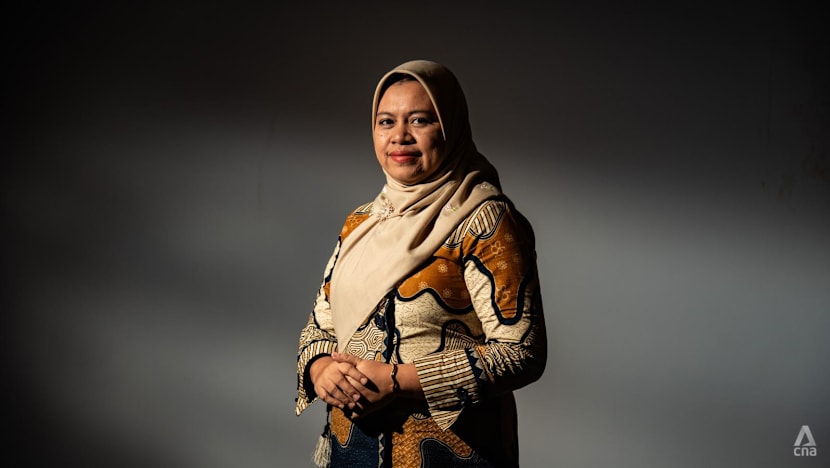
“The crime is becoming more and more lucrative and the tactics employed by these baby traffickers seem to be more and more sophisticated and their targets wider,” Ai Maryati Solihah, chief of the Indonesian Child Protection Commission (KPAI), a government agency, told CNA.
“In the beginning, we saw traffickers recruiting babies from around their respective areas but then we see inter-provincial trafficking and now international trafficking.”
Police have told CNA that they are in their final stages of their investigation into the July syndicate and all 21 alleged members can stand trial as early as January next year.
KPAI chief Ai said the orphanage which tried to solicit money from Indah is under KPAI’s radar but more evidence is needed before law enforcers can step in.
The child protection agency has dealt with 148 trafficking cases over the last five years. But experts warn that these cases may only scratch the surface and that it is impossible to know the true extent of the crime.
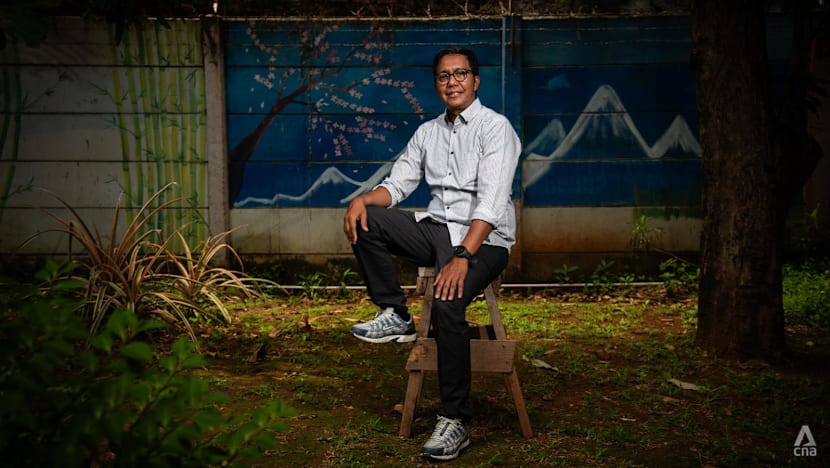
“These syndicates thrive in secrecy and they are very organised. The only way to bring down a syndicate is to find someone from the inside willing to cooperate with law enforcers,” Andi Rohandi from the lawyers’ association IKADIN told CNA.
In 2022, police in the outskirts of Jakarta arrested illegal orphanage owner Suhendra Abdul Halim who briefly gained social media fame for inviting women with unwanted pregnancies to leave their newborns at his Bogor “foundation”, which turned out to be unlicensed.
He was later convicted to four years in prison for selling at least 50 babies for 15 million rupiah (US$900) each.
Two years later, police raided Bali Luih Children’s Foundation on the outskirts of Bali capital Denpasar for buying and selling an unknown number of babies who were trafficked from various places in Java.
Some babies were “recruited” before they were even born, with their parents promised 45 million rupiah. The foundation’s owner I Made Aryadana is now serving a six year prison sentence.
Andi is representing 13 of the 21 suspects in the case cracked by the police in July. He believes tackling the issue goes deeper than just shutting down the networks.
“Even if you get a syndicate member to cooperate and you manage to dismantle one network, another seems to emerge with new tactics,” he said.


LOOPHOLE EXPLOITED
The adoption process in Indonesia is often lengthy and complex. To qualify, adopters must be a married couple between the ages of 30 and 55 and they must be able to demonstrate stable economic conditions.
Before anything can proceed, aspiring adopters must obtain written consent from the baby’s biological parent and submit it to the local Social Affairs Agency as part of their application.
If accepted, the agency grants a period of temporary custody, which lasts between six months and one year depending on the child’s age.
During this period, social workers may conduct home visits, interviews, background checks and regular observations to assess whether the child is receiving proper care. Only after these assessments are completed will they issue a recommendation letter for the couple.
All of the documents — from the biological parents’ consent to the social workers’ findings — must then be submitted to a court, which ultimately decides whether the adoption will be legally granted.
The court process – from the time the application is submitted – can take six to 12 months, which roughly mirrors the temporary custody period.
For aspiring parent Fina, who is unmarried, the requirements feel discriminatory.
“I was told from day one that the best I can do is apply for guardianship because adoption is only for straight couples who have been married for more than five years,” the 37-year-old, who asked not to use her full name, told CNA.
In Indonesia, adoption means a child’s biological parents relinquish all parental rights to the adopters, creating a permanent legal parent–child relationship for the adoptive parents.
Guardianship, by contrast, allows an individual to foster a child without altering the child’s legal parentage. The care is temporary, lasting until the child is 18 years old and legally old enough to make his own decision or until the birth parents are deemed fit to reclaim the child.
Fina ultimately decided not to pursue either adoption or guardianship. But that did not stop people from approaching her with offers.
“There were always people who said they could circumvent the regulations or speed things up as long as I paid a few million rupiah here and a few million there,” she said.
Ahmad Sofian, a law expert from Jakarta’s Binus University, said syndicates usually bypass these steps by forging various documents.
“Suddenly, the child has already been handed over to new parents (because) court decrees are issued using incomplete or even illegal documents,” he told CNA.
One of the most common tactics, Sofian explained, is forging a baby’s birth certificate to make it appear as though the adopters are the biological parents. This method is especially effective in rural areas, where home births are common and parents often neglect to register their child’s birth.
“If a baby is unregistered, anyone can claim the child is theirs using forged hospital records,” he said.
“There were cases where the midwives themselves were arranging the transactions and masterminding the whole scheme,” said KPAI chief Ai.
On Jul 31, the Yogyakarta High Court sentenced Jemitri Eka Lestari, a 44-year-old midwife, to seven years in prison. Her accomplice, fellow midwife Dunuk Mudjiasri, 77, received two years for supporting the operation.
Police say the pair, who were arrested in December last year for selling at least 66 babies since 2015, not only assisted with the deliveries but also forged birth records to list the adopters as biological parents.
Each baby was sold for 55 million to 85 million rupiah.
TRAFFICKING IN BROAD DAYLIGHT
Social media is making it easy for crime syndicates to find mothers looking to give up their newborns and people willing to adopt them.
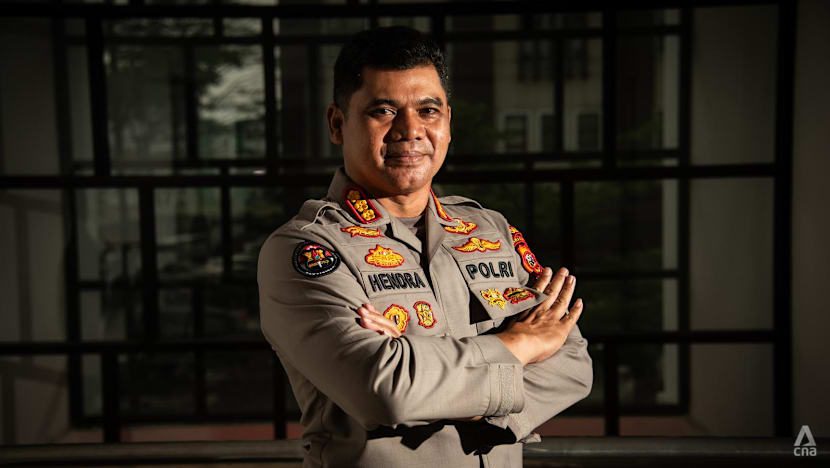
“There are accounts which recruiters use to pose as people looking to adopt,” said Hendra Rochmawan, a spokesman for the West Java police, who have handled a number of trafficking cases in recent years.
Across multiple platforms, countless groups and forums have emerged where mothers openly announce that they are seeking someone to adopt their baby — and where would-be adopters post their own requests.
The exchanges often feel blunt, stripped of emotion and reduced to brief and transactional notices.
“Looking for someone who’s about to give birth, preferably around the areas of Sragen, Solo and Klaten (Central Java),” wrote one user in a Facebook group called Rumah Adopsi Harapanku, which translates to My Hope Adoption Home.
When CNA viewed the now-deleted post in early December, it had 139 comments, including one that read: “Estimated due date November or December, baby is a girl,” and another: “Estimated due date December, Cilacap,” referring to a town near the border of West and Central Java.
Both comments had multiple replies from people expressing interest in adopting and saying they had sent private messages.
The KPAI and the Indonesian national police have said they are monitoring these groups closely.
But such exchanges are not limited to forums designed to connect adopters with expectant mothers. One foundation told CNA it had to lock its comments section because they believed traffickers were monitoring their social media posts.
“We got so many comments that went straight to the point: ‘How much?’ They don’t even say the word ‘adoption’ anymore,” said Irsal Yakhsyallah, owner of Nurul Iman Foundation, a tiny orphanage of just 25 children in West Java capital, Bandung.
“At first, we tried to ignore them, but the comments started attracting people who wanted to give up their child. To stop transactions from happening in our comments section, we decided to lock it.”
Even with the comments disabled, Irsal said the orphanage’s inboxes still receive messages from people asking to “buy” one of their children.
Among those who trawled through social media was Astri Fitrinika, a 26-year-old woman from Bandung who would later be identified by the police as an alleged key member of the syndicate police uncovered in July.
Astri allegedly created multiple personas to blend seamlessly into the online conversations. Sometimes she appeared as Fira or Desi and other times as either Annisa or Aisyah. With each identity came a new profile picture, a curated feed and a believable backstory as a young mother struggling to conceive a child of her own.
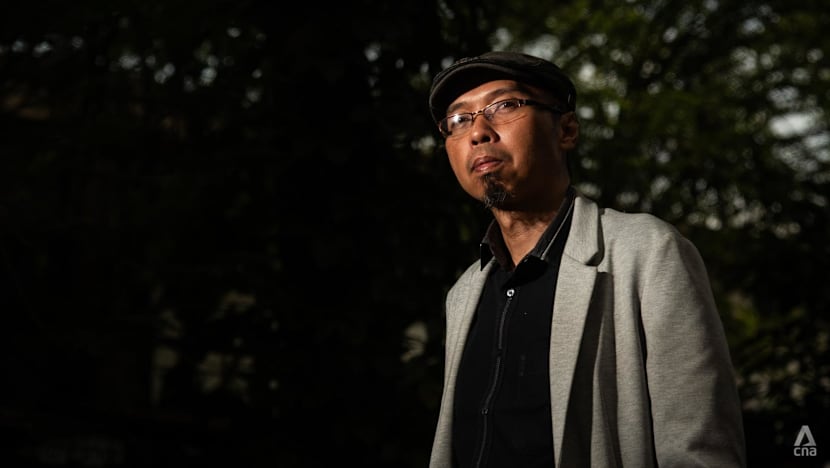
“Whenever she saw a mother with an unwanted baby, (Astri) would slide into their direct messages offering to take the baby and give the love and care that the child needs,” Astri’s lawyer, Andi, told CNA.
To sweeten the deal, Astri would allegedly offer to pay 15 million rupiah to cover the delivery cost.
Astri, along with 20 other suspects, is now in police custody and has been charged with child trafficking, an offence which carries a maximum sentence of 15 years in prison.
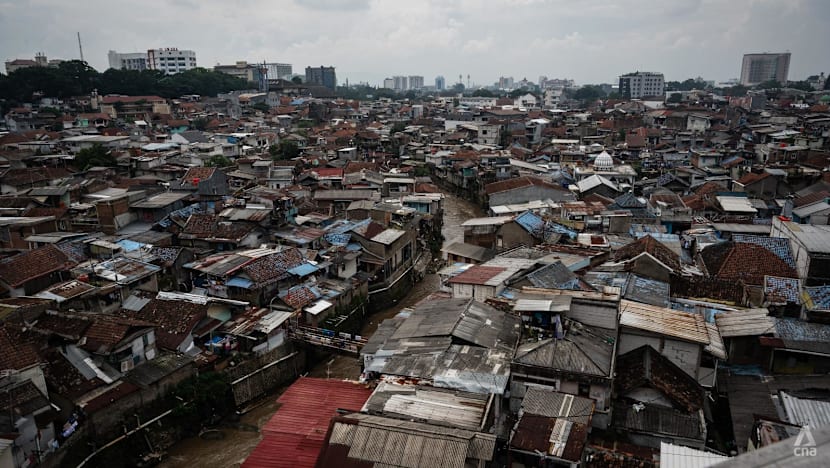
Such money can be enticing to low-income families in a country where, as of March, 23.8 million people live on less than 20,000 rupiah per day, according to the Indonesian Bureau of Statistics.
“Sometimes they already had four or five children by the time they got pregnant. Sometimes they simply do not have the money to give birth. Several of the women we’ve assisted eventually chose adoption because their child was born as a result of sexual violence,” Sri Mulyati, chairwoman of the women’s rights advocacy group, Sapa Institute, told CNA.
“So we have to look at the broader context that led these women to make such decisions.”
Abortion in Indonesia is only legally permitted in very limited circumstances – for victims of sexual violence or when a pregnancy poses a serious threat to the mother’s life. Even then, the procedure is only allowed up to 14 weeks of gestation.
“These strict conditions, combined with deep social stigma, leave many women with unwanted pregnancies feeling trapped and vulnerable to exploitation by traffickers,” Sri said.
And sometimes women are forced to give up their babies to paying traffickers by their husbands, fathers or brothers who saw the unwanted child as a way to make a quick buck, she added.
“When it comes to decision-making within the family, women are often in a weak or disadvantaged position,” Sri said.
GREED THAT EXPOSED A NETWORK
The syndicate Astri allegedly belonged to was ultimately brought down because one of the fathers who had sold his baby felt cheated by her. The father, a recently unemployed man who already had four children, filed a police complaint against Astri on Apr 23.
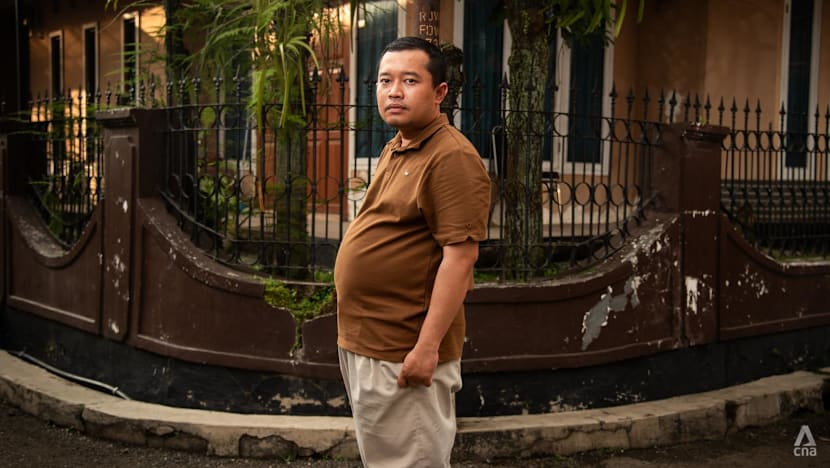
“He was promised 15 million rupiah, but what he received was only enough to cover the mother’s medical expenses,” said West Java police spokesman Hendra, adding that the father received around half of the promised money.
“When he asked for the rest of the money, the perpetrator had already disappeared with the baby.”
“It was greed that finally brought down this syndicate.”
Police spent the next three months untangling the group’s operations.
Investigators found that most of the babies were born in and around Bandung, before being moved to safe houses in Jakarta and Pontianak, the capital of West Kalimantan. There, members of the syndicate would advertise them to potential buyers — including clients overseas.
For babies destined for foreign buyers, the syndicate forged birth records to list traffickers as the biological parents, enabling passports and travel documents to be issued.
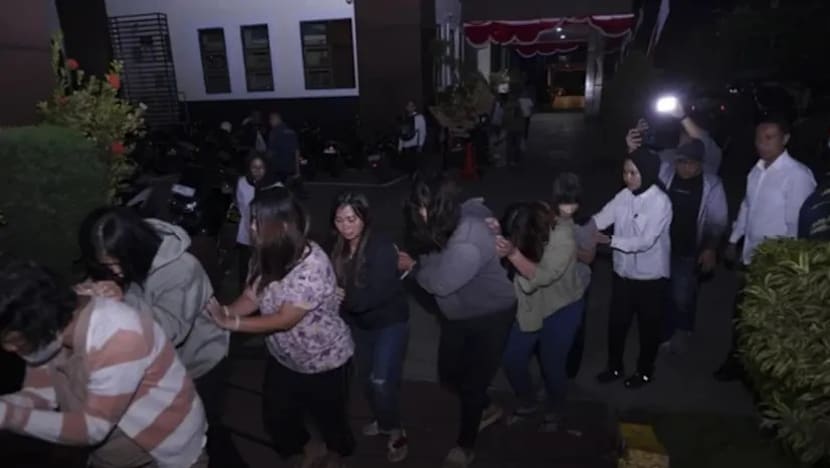
On Jul 14, police began launching raids across Bandung, Jakarta, and Pontianak. They rescued six infants from various locations and arrested 21 suspects, including alleged recruiters, transporters, brokers, safe-house caretakers and document forgers.
The suspected ringleader, Lie Siu Luan, 69, known to her crew as Lily, was arrested at Soekarno Hatta Airport in Jakarta on Jul 18 as she was returning from overseas. One broker and one recruiter are still on the run.
Authorities seized documents and records suggesting that the syndicate had trafficked at least 25 children, including 15 who had already been sent to Singapore.
But investigators believe this figure may be just the tip of the iceberg.
Lawyer Andi said one of his clients has admitted to trafficking between 40 and 50 babies since joining the alleged syndicate in 2023, and she was just one of four recruiters.
West Java police spokesman Hendra said investigators have questioned officials from a civil registry’s office in Pontianak which issued birth certificates based on fraudulent documents supplied by the syndicate.
Police have also questioned the owner of a small private clinic where several of the babies were born. The clinic, located in a working class housing complex on the southern edge of Bandung, is just a few minutes walk from Astri’s listed address.
It is also not known if Lily had contacts in Singapore or if the adopters were fully aware that the babies were allegedly trafficked.
“We are hoping all this shall be revealed in court. Whatever the court finds, we will use it to investigate the case further,” Hendra said.
THE PRICE OF A CHILD
The Bandung case revealed just how lucrative the trade can be with ringleaders standing to make millions of dollars a year from selling infants.
The profits are so enticing that some syndicates are now willing to resort to kidnapping to keep up with demand.
On Nov 3, a four-year-old girl was kidnapped from a park in Makassar, South Sulawesi only to be found five days later thousands of kilometres away in the Sumatran province of Jambi.
In that short time, the child had reportedly been sold three times to agents in Jakarta and Jambi, with the final price reaching 80 million rupiah.
Four people have been arrested in connection with the case, including married couple Adit Saputra and Meriana who told police they have allegedly sold a total of 10 children since August.
Such cases not only reveal the sophistication of these trafficking syndicates, but also a deeper, more pervasive problem: Many Indonesians simply do not understand how legal adoption is supposed to work and are unaware that no money should ever change hands.
“There is a reason why the process is lengthy because assessments and careful considerations need to be made to make sure the child’s rights and best interests are protected,” said law expert Sofian.
“But there are criminals who prey on people’s ignorance and impatience.”
As the 2022 and 2024 cases have revealed, these criminals are sometimes the very people who should know the law and uphold the system: Foundation owners.
“Orphanages receive government grants, private donations, and in some cases international support which is enough to cover their operational needs without charging adopters, so there is really no excuse for them to engage in such transactions,” Sofian said.


Yet there are signs that these practices persist, and KPAI says it continues to receive reports of orphanages soliciting payments.
“When confronted, they always deny it,” KPAI’s Ai told CNA. “But these allegations keep coming, and it creates confusion and mistrust in the community.”
And the consequences ripple far beyond the bad actors accused. Ethically responsible orphanages are also affected.
“We have had prospective adopters backing out because of the recent cases not wanting to take chances. We had to face more scrutiny from benefactors demanding our finances to be audited because of these cases,” said Miska Ramadhani, the owner of Baitul Yatim orphanage on the outskirts of Jakarta.
“I worry that if the trade persists it will affect legitimate orphanages’ ability to operate and provide safe spaces for vulnerable children,” she said.
Experts say Indonesia still has a long way to go before illegal adoption and baby trafficking can be eradicated.
The system for issuing birth certificates needs far tighter oversight to stop it from being manipulated by syndicates looking to obscure a baby’s background and origin, they say.
“Meanwhile regulations surrounding abortion, currently restricted to cases of sexual violence or life-threatening pregnancies, needs to be overhauled because the strict limits often leave women with few safe alternatives,” Sri of the advocacy group, Sapa Institute, said.
Experts also noted that baby trafficking offenders are rarely punished with the maximum penalty of 15 years in prison.
“There should be no justification or excuse for the actions of those involved in illegal adoption, (particularly) those operating out of orphanages,” law expert Sofian said.
“No matter what their reasoning is, and even if they have done good for some children, engaging in illegal adoption, falsifying documents, and severing a child’s ties to their origins are still crimes.”
For aspiring mother Indah, the investigations, the arrests, and the headlines have been difficult to watch. Each new case brings her back to the smiling little girl she once saw on her social media feed – Shinta.
“I often wonder what would have happened if I had made a different choice,” she said, referring to the orphanage’s request that she “compensate” the money it had spent raising Shinta.
Indah, who is now saving up for her fifth fertility programme, knows she did the right thing by walking away.
In the months after that encounter, Indah checked the orphanage’s social media feed from time to time. But as of mid last year, Shinta was no longer appearing in any of the posts.
“I hope it means someone has adopted her,” Indah said. “I hope she’s safe. I hope she’s happy.”