Suspected Indonesian syndicate members accused of trafficking babies to Singapore attend first court hearing
The judge postponed the trial by a week to allow some defendants to get a lawyer.
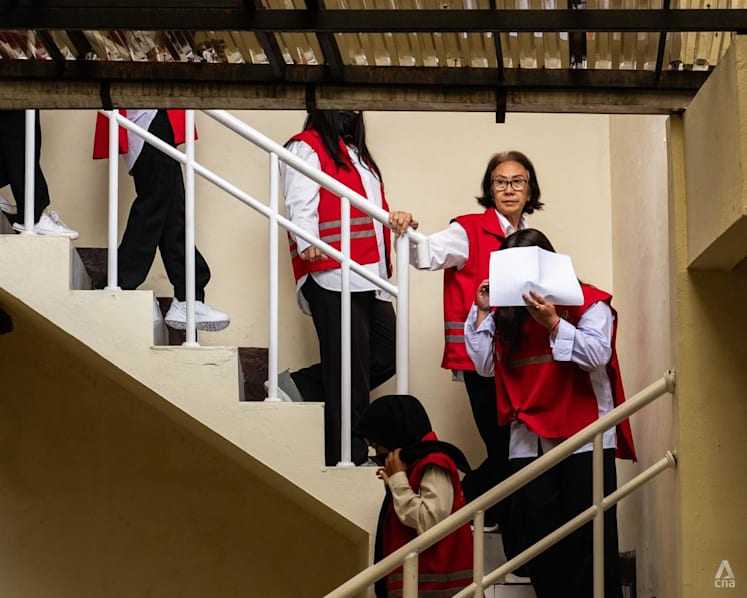
Members of a suspected baby trafficking syndicate emerge from a holding cell at the Bandung District Court in West Java, Indonesia, for their first court appearance on Mar 31, 2026. (Photo: CNA/Wisnu Agung Prasetyo)

This audio is generated by an AI tool.


BANDUNG, West Java: Nineteen members of an alleged trafficking syndicate accused of selling dozens of babies to families in Indonesia and Singapore appeared in court for the first time on Tuesday (Mar 31).
It was supposed to be the start of their trial, but presiding judge Gatot Ardian Agustiono postponed proceedings by a week for some of the accused persons to get lawyers. No charges were read during the session, which lasted less than 30 minutes.
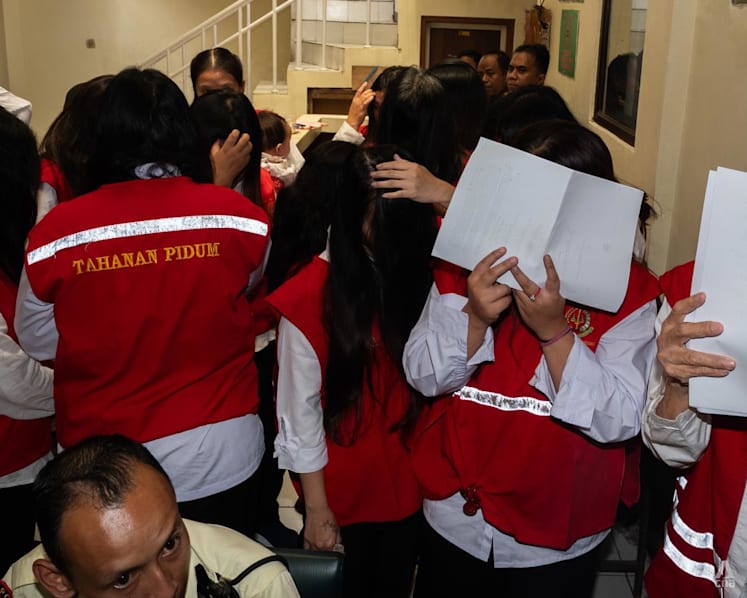
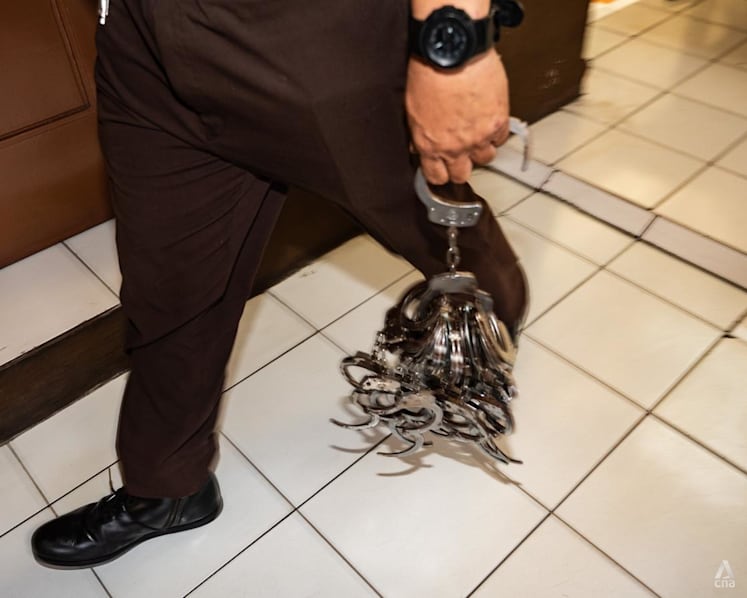
The defendants, comprising 18 women and one man, arrived at the Bandung District Court in West Java at 9.15am local time in an armoured prison van wearing handcuffs and standard-issue white shirts and red vests.
As they were escorted to their holding cells, several defendants kept their heads down while others covered their faces with masks.
The 19 of them were tried together, forcing court clerks to rearrange the seating arrangement in the small court room to accommodate the defendants, their lawyers, prosecutors and the media.
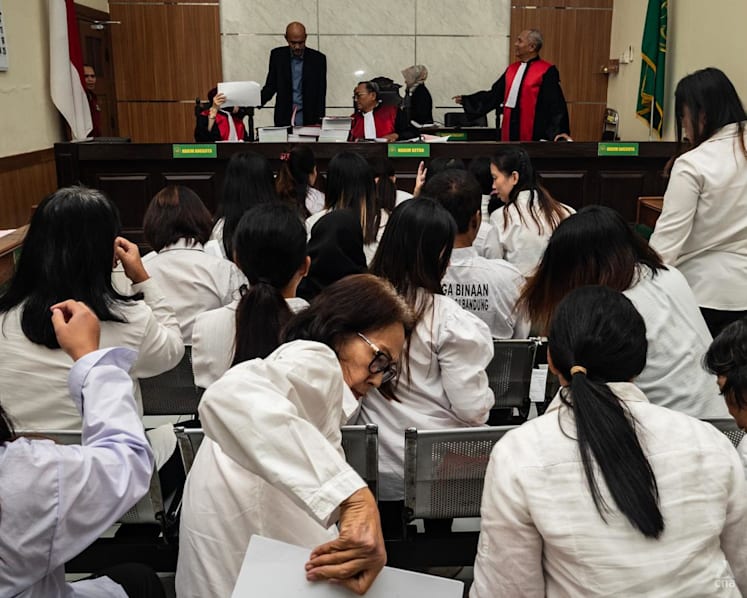
Explaining his decision to postpone the trial by a week, Judge Gatot said: “Since the maximum penalty is more than five years, all defendants must be represented by legal counsel. For those without legal counsel, the court will appoint one for you.”
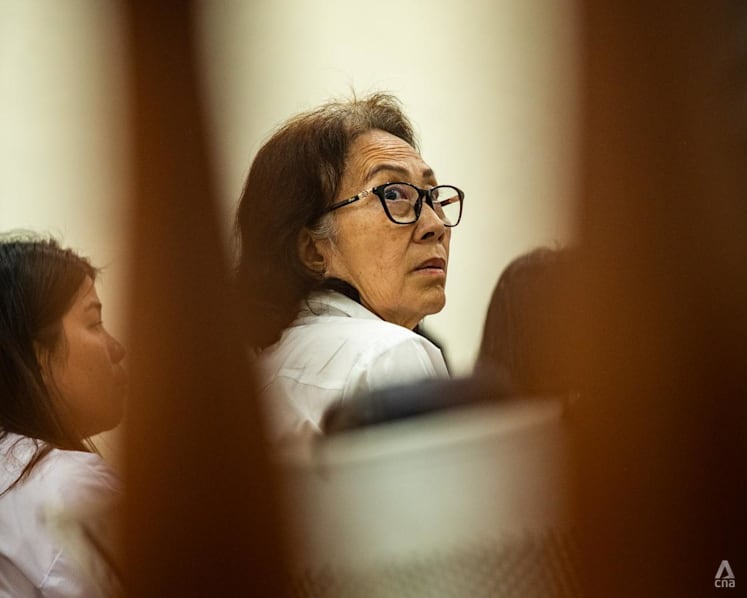
Only four defendants were represented by lawyers on Tuesday. They included Lie Siu Luan, also known as Lily, the 70-year-old suspected ringleader.
Sukanda, the lead prosecutor for the case, told reporters his team respected the court’s decision to postpone proceedings.
“The defendants are facing a maximum sentence of eight years, nine years and even 12 years (in jail) because they played different roles in the case. We understood why the judges decided to give time for the defendants to lawyer up, given the seriousness of the charges,” he said after the hearing.

Sukanda who, like many Indonesians goes by one name, said the defendants were accused of violating Indonesia’s Human Trafficking Law and Child Protection Law. Some of them allegedly acted as recruiters, transporters and brokers, while others allegedly acted as safe-house caretakers, and document forgers, he said.
Sukanda declined to reveal some details before the indictment was officially read before the court, but confirmed that the defendants are accused of selling dozens of babies to potential adopters in Indonesia and Singapore.
“The babies were first offered to Singaporean couples because they could get more money. Those whom they could not sell to Singapore (were) sold to Indonesian parents. Those without a buyer were given up to an orphanage,” Sukanda said.
He did not disclose how much money the syndicate allegedly made from the scheme.

To evade scrutiny at immigration checkpoints and convince adopters that the process was legitimate, some syndicate members allegedly posed as the babies’ birth mothers or relatives. The children’s origins were purportedly concealed through forged birth certificates and other falsified documents.
“Some babies reached Singapore from Batam (by sea) and some through Soekarno-Hatta airport (near Jakarta),” Sukanda said.
The alleged syndicate members were arrested in mid-July last year during a series of near-simultaneous raids across Bandung – where most of the babies originated – as well as Jakarta and Pontianak, the capital of West Kalimantan, where the infants were kept in safe houses while in transit.
Two additional suspects remain under police investigation and have yet to stand trial, while three other alleged members of the syndicate are still at large, according to West Java police spokesman Hendra Rochmawan.
Baby trafficking has made the news in Indonesia and Singapore in recent months.
In Indonesia, many expectant mothers struggle to afford prenatal care and the costs associated with childbirth and raising a child.
According to the World Bank, around 60 per cent of Indonesia’s population – or 171.9 million people – lived on less than US$6.85 a day in 2024, the World Bank’s poverty line for upper-middle income countries like Indonesia.
Experts have told CNA that while poverty remains the biggest driver of the trade, the problem is compounded by deep social stigma surrounding abortion and widespread misunderstanding of how the legal adoption process works.
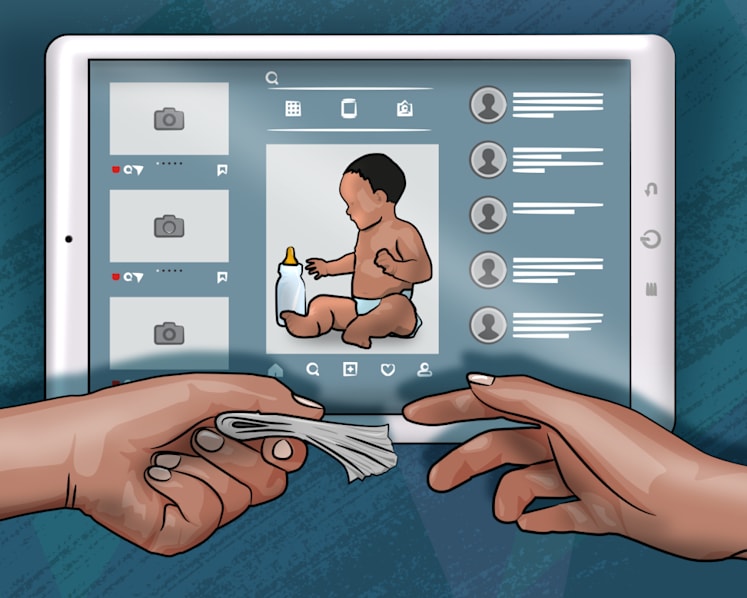
Social media has further enabled the trade, allowing syndicate members to connect directly with potential birth mothers and adopters across provinces and even national borders.
Documents and records seized by the Indonesian authorities suggest the syndicate had allegedly trafficked at least 25 children, including 15 who had already been sent to Singapore, authorities in Singapore have said.
Singapore's Minister for Social and Family Development Masagos Zulkifli said in February that agencies were working closely with the relevant Indonesian authorities on the matter.
“When the facts are clearer, the Ministry of Social and Family Development will review whether existing adoption processes should be enhanced,” he said in a written response to a parliamentary question.
In January, Singapore’s Minister of State for Social and Family Development Goh Pei Ming said the country was working closely with relevant agencies to ensure all inter-country adoptions comply with strict legal requirements at home and in the babies’ countries of origin.