Record low rupiah weighs on Indonesians as costs rise, imports slow
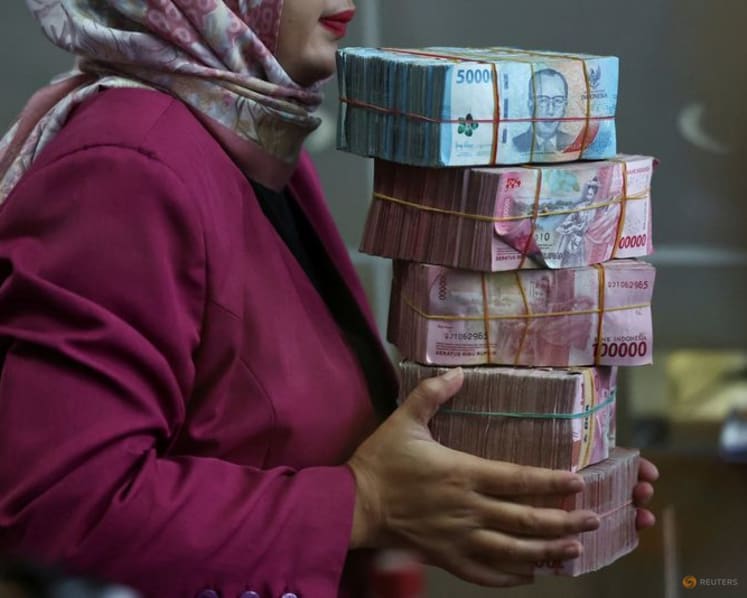
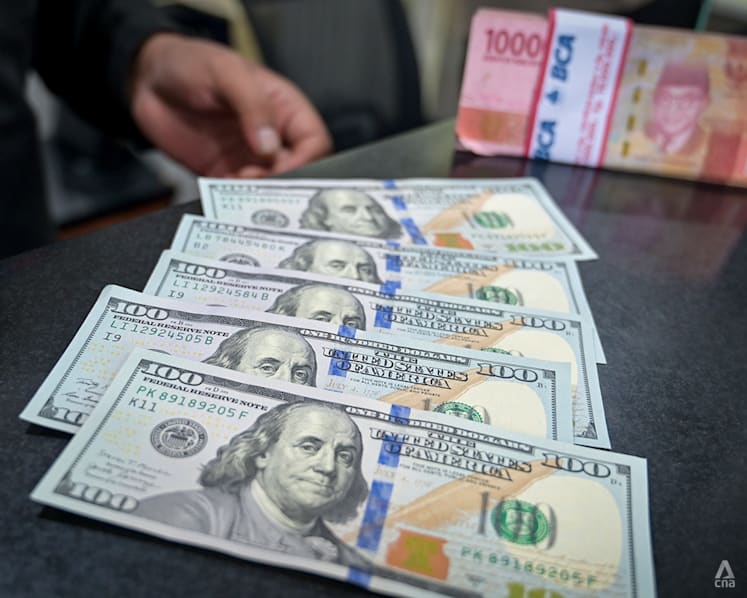
Indonesia’s rupiah hit a record low against the US dollar earlier this week, even as other regional currencies have strengthened. Experts point to domestic concerns weighing down the rupiah, including waning confidence in policy making and central bank independence.


This audio is generated by an AI tool.




SINGAPORE: Indonesian logistics entrepreneur Ilham Mualif is facing some big business changes.
The 52-year-old, whose firm handles German, Korean and Chinese imports of vehicle parts, has seen his profits shrink as foreign imports to his company fell by between 15 and 20 per cent since the start of the year.
Ilham said a weakening rupiah has prompted overseas suppliers to delay orders and raise prices on shipments already en route to Indonesia.
And while some of the higher import costs have been passed on to the Indonesian automotive buyers, his company’s freight revenue has also declined as import volumes dropped.
Ilham is a logistics provider for Indonesian automotive firms placing overseas orders.
“We felt the situation was bad enough that we had to cut and tighten expenses and postpone all our expansion plans,” Ilham said.
He is among several Indonesians CNA spoke to who are feeling the brunt of the rupiah’s decline, as the weaker currency squeezes household spending and dampens foreign imports across the country.
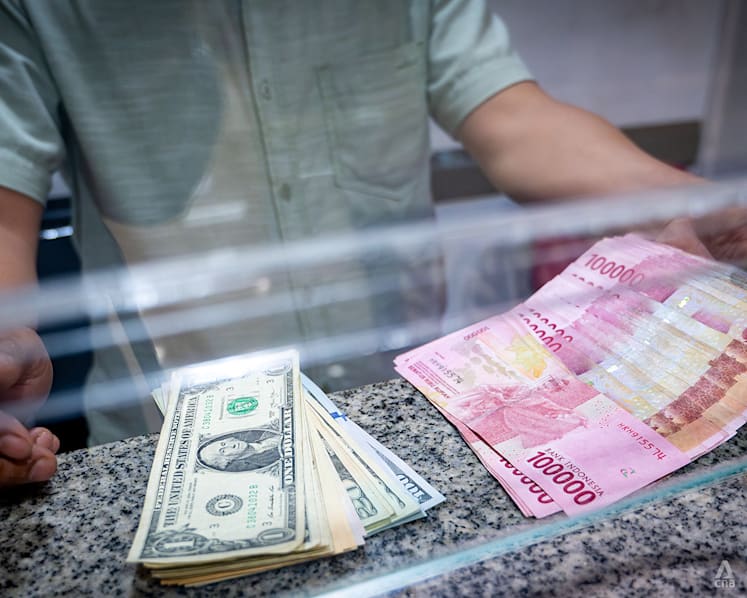
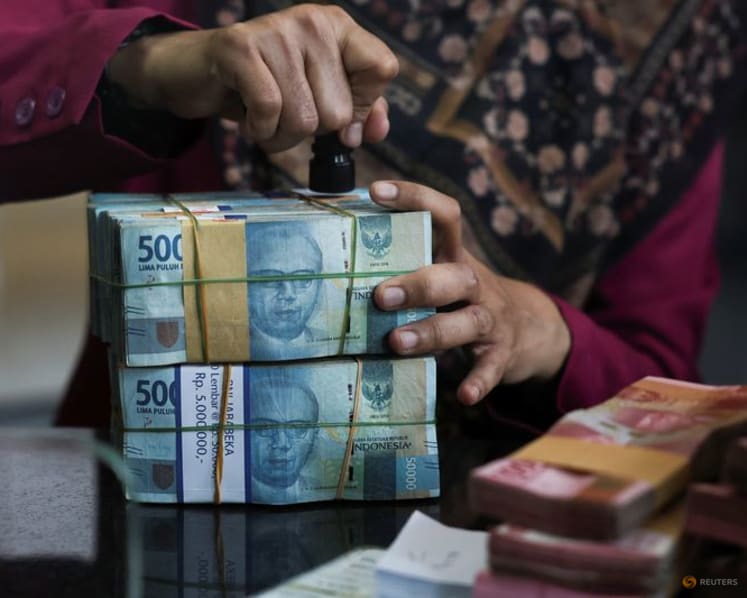
Indonesia’s rupiah hit a record low against the US dollar on Tuesday (Jan 20), trading at 16,985 per dollar based on spot exchange rates according to Reuters, surpassing the previous low of 16,957 recorded in April last year. The US dollar value against the rupiah was US$0.0000590, according to spot exchange rates by Bloomberg.
The currency has fallen nearly 2 per cent so far in January after dropping 3.5 per cent in 2025, placing it among the worst performing emerging Asian currencies.
The rupiah was at an all-time low since its weakest in June 1998 when it plunged from 2,800 to 16,800 per US dollar during the Asian financial crisis.






While a weaker currency could boost tourism, with visitors telling CNA that they are encouraged to upgrade their travel plans in Indonesia, businesses and economists warned that the benefits may be limited.
“Depreciation cannot be effectively leveraged as an opportunity for tourism, as it often triggers price volatility and domestic economic uncertainty,” said Eko Listyanto, deputy director at the Institute for Development of Economics and Finance (INDEF) in Indonesia.
DOMESTIC CONCERNS WEIGH DOWN RUPIAH, SQUEEZING HOUSEHOLDS, IMPORTERS
Beyond global pressures including geopolitical tensions and the United States tariffs, experts point to domestic concerns weighing on the rupiah, including rising government debt, slowing economic growth and waning confidence in policymaking and central bank independence.
The recent nomination of President Prabowo Subianto’s nephew as deputy governor of Bank Indonesia, the central bank, also sparked controversy and apprehension amongst investors, according to media reports.
“The governance of policies in Indonesia, and how the government manages fiscal matters and concerns over the independence of Bank Indonesia have raised alarm among investors,” said Mohammad Faisal, the executive director of Jakarta-based think tank Center of Reform on Economics (CORE) Indonesia.
“This has affected capital flows and in turn put pressure on the rupiah.”
Meanwhile, other regional currencies have strengthened.
The Thai baht has gained about 1.3 per cent against the dollar so far this year, while Malaysia’s ringgit reached its strongest level against the greenback in more than four years in December last year.
Economists CNA spoke to said the weaker rupiah is likely to have adverse impacts on both households and businesses, given Indonesia’s reliance on imports, such as food commodities and manufactured foods, eroding purchasing power.
“A weaker rupiah makes imported goods more expensive, reducing purchasing power and thereby, affecting business performance,” said Mohammad Faisal of CORE.
Bhima Yudhistira Adhinegara, executive director of think tank Center of Economic and Law Studies (CELIOS), said that some Indonesians may also scale back overseas spending, particularly on education and property.

Those CNA spoke to were not just cutting on overseas costs, but also scaling back at home.
As he manages losses at his logistics company, Ilham has not only slashed spending on a recent trip to Singapore to visit relatives, but also cut back on household spending and non-essential purchases such as electronics, focusing instead on daily necessities.
“My family is trying to save more. For example, last time they used Grab Food or ate outside, now they are trying to reduce it,” he said. "Demand is slow in Indonesia, people are not buying things.”
Mary Hutagol, 52, a housewife in North Sumatra’s capital Medan, said that she saw grocery prices for rice, sugar, cooking oil, fish and meat increase gradually by 30 per cent to 45 per cent since December. She has resorted to buying less.
“I started growing vegetables and rearing fish to eat at home which saves me about 30 per cent monthly. All the residents can do it,” she said
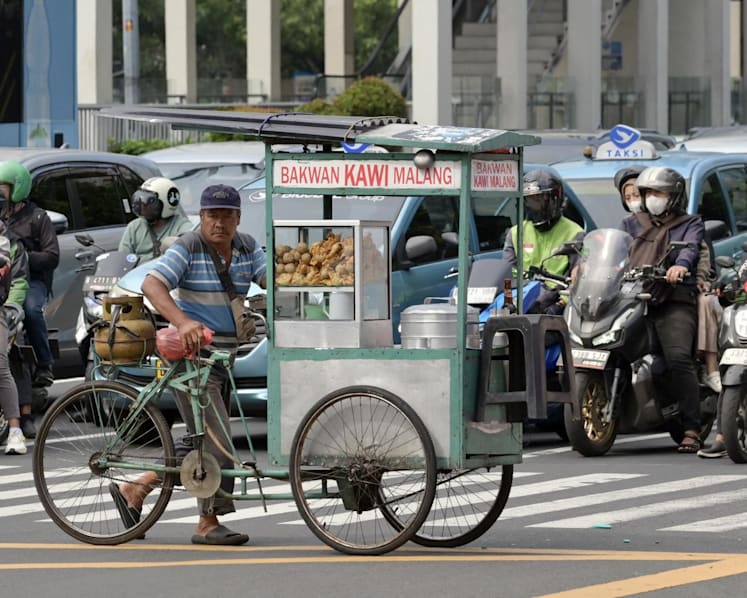
Indonesian graphic design freelancer Abigail Nathania said that she cancelled vacation plans with friends, is eating out less and has unsubscribed from monthly gaming and music streaming services to save costs.
The 24-year-old who lives in Tangerang, a city on Jakarta’s western border, feels anxious about the weakening rupiah as her income has “always been tumultuous”.
“I’ve been considering adjusting my rates for freelance work and recalculating my income in relation to the rising expenses,” she said. “With the weakening currency, I’m pivoting to look for a job with more stability.”
Nathania hopes to save up for university overseas although she worries that tuition fees will be more expensive.
“I’m even more set on going overseas so that I can start working there and earn more for my family,” she added.
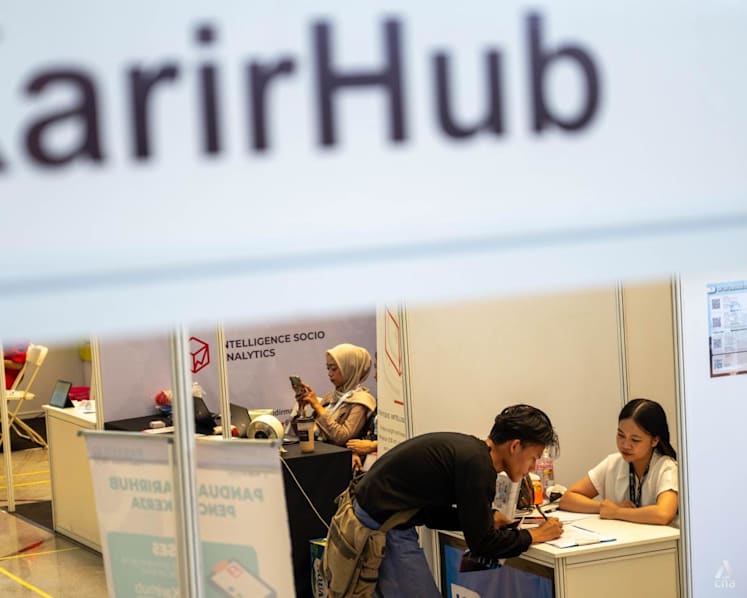

While consumers feel the squeeze, some businesses said they have long factored currency volatility into operations.
Teck Way Chia, a Singaporean sales manager at the Singaporean branch of an international freight company, said that Indonesia’s historically weak rupiah has led to delays on Indonesian imports for over a decade, but global exports helped cushion the impact.
“When the rupiah is weak, importers’ buying power is less so they import less. But the impact is not so bad because we handle the world market,” Chia said, adding that his firm avoids trading in rupiah, relying instead on the US dollar and Singapore dollar.
Ilham, the owner of the logistics business, also trades in US dollars to avoid the weak rupiah’s impact.
Kafi Kurnia, a marketing consultant for agriculture produce, said that importers and retailers often absorb part of the higher costs to protect consumers, resulting in thinner margins.
“Importers today already understand the trend … we have been communicating closely with our exporters,” Kafi told CNA.
“For instance, with Hari Raya coming up and our focus is on dates, we try to ask exporters for discounts or extension of payment terms,” he added.
Dates are a traditional Ramadan gift in Muslim cultures, often eaten to break the fast.
Kafi noted that besides the weakening exchange rate, sales for agriculture imports are also dependent on other factors such as the unpredictable weather and seasonal demand.
With the upcoming Hari Raya and Ramadan season, businesses expect demand for imported dates to be unaffected despite higher prices, said Kafi who is also the former head of Indonesian Association of Fruit and Vegetable Importers and Exporters.
“It is impossible for people here not to consume dates with the festive season coming up,” he said.
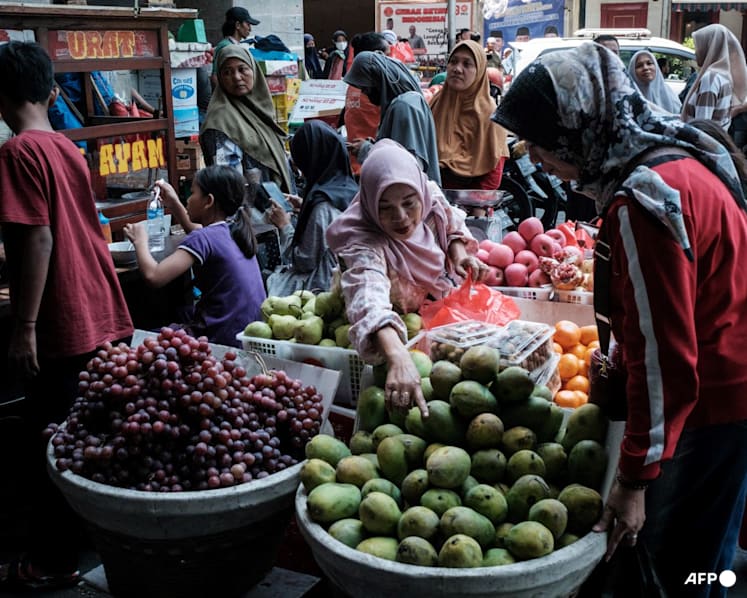
Imported oranges may also see higher prices with the weakening rupiah, with strong demand for oranges imported from countries like China and the US likely to cause a 10 to 15 per cent decline in sales, said Kafi.
But with Chinese New Year approaching, Kafi said, sales will not drop as significantly as 50 per cent as “people will definitely buy them”, given their cultural significance and associations with luck and wealth.
Teguh Boediyana, an executive director for the Indonesian Meat Processors and Distributors Association, also echoed this sentiment, adding that businesses in his association are familiar with the exchange rate adjustments and are experienced in dealing with currency movements.
In the meat import sector, government policy plays a bigger role than currency movements, he said.
The Indonesian government has set a total quota of 297,000 tonnes for 2026, but only 30,000 tonnes have been allocated to private importers, a sharp drop from 180,000 tonnes last year, according to the Jakarta Globe.
The bulk of imports has instead been assigned to state-owned firms.
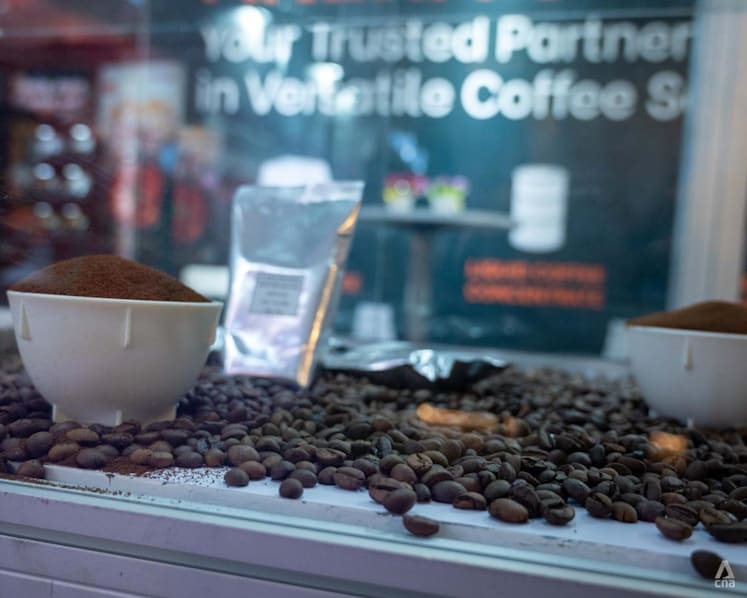
Meanwhile, exporters of several commodities, particularly Arabica coffee, experience price and volume increases when the rupiah weakens, said Bhima of CELIOS.
“Other agricultural exports, including rubber and fisheries, are also positively impacted, as selling prices are lower in export markets, making them more competitive,” he added.
Mohammad Faisal of CORE Indonesia, said that exporters should expect increases in production and logistical costs despite lower tariffs compared to regional neighbours. These increased operational costs may be borne by consumers.
“The final price at the consumer level might be still less competitive because the original price may be more expensive because of these factors,” Faisal said.
“This is a problem that needs to be solved by the Indonesian authorities,” he added.

WEAKER RUPIAH COULD BOOST INDONESIA’S TOURISM APPEAL
But while a weaker rupiah has squeezed households and some businesses at home, it is drawing foreign visitors, making Indonesia a more attractive destination, said regional travellers.
Singaporean Melody Gibson enjoys short getaways in Bintan and often travels to other parts of Indonesia for its culture and depth of experiences.
Last year, the 31-year-old senior marketing and sales manager paid less than S$800 (US$623) for a four-day stay in a hotel villa in Bintan with three friends, including food and shopping expenses. Gibson feels that she “got a lot more” than other places for the amount paid.
With the rupiah’s fall to record lows, she is even more eager to return.
“It actually makes me want to plan more trips there,” she said. “The weak rupiah allows me to upgrade accommodation, spend more on experiences, dining, wellness activities or simply travel more comfortably without significantly increasing my budget.”

Economists told CNA that the local tourism sector may see more international tourists visiting popular destinations like Bali, although the sector could see rising operating costs.
Mohammad Faisal of CORE Indonesia, warned that domestic air travel remains expensive and high logistical and transportation costs, particularly domestic transport costs, may add to tourism operational costs.
Malaysian Yoganantha Kanagasabi, 30, is planning an eight-day trip to Bali next month and said that the weaker rupiah will not significantly affect his spending.
“To be honest, the thought of having a stronger currency has tempted me to spend a bit more than my intended budget,” Kanagasabi said.
“But considering the currency exchange across (the board) and how items, services, transport in Bali itself is way higher than other parts of Indonesia, in a bigger picture I perceive my expenditure hasn't (been) affected all that much,” he added.
Sutrisno, a manager at Ginza Textile Batam who, like many Indonesians, goes by one name, said business has picked up over the past year as the weakening rupiah makes shopping in Batam cheaper for foreign visitors.
He added that more than half of his customers are now Singaporeans, many of whom cross over on weekends for affordable tailoring.
“We do hope that from the government’s side, the tourism sector will be developed further so people will spend more money here,” he added.
Bhima of CELIOS stressed the urgency of tourism promotion and improvements to tourism infrastructure.
“Recently, tourists have complained about traffic jams and flooding when visiting Bali. Flights options are also still limited compared to tourist destinations in Vietnam and Thailand,” he added.
Last month, Indonesia’s Meteorology, Climatology and Geophysics Agency issued an extreme weather alert for the Bali province from Dec 11 to 18 last year, after heavy rain triggered flooding on the Bali west coast.


STABILITY MATTERS, SAY ECONOMISTS
Eko, the economist at INDEF, told CNA that even in the tourism sector, it is preferable for the rupiah to remain stable rather than weaken.
“Although a weaker rupiah makes spending cheaper for foreign tourists, Indonesia also imports many products like fuel and food so import-driven inflation will also increase,” he said.
Indonesia Finance Minister Purbaya Yudhi Sadewa pledged on Tuesday to uphold the independence of the central bank, amid lingering fears over government interference in monetary policy.
“I will not squeeze the central bank to finance our development programmes ... although the rupiah has weakened, in percentage terms it is only a small amount, so the system should already be accustomed to this," he said, adding that the impact on the economy was minimal.
However, experts pointed to several recent events that could have shaken investors’ confidence and impacted the rupiah’s stability.
Earlier this week, presidential spokesperson Prasetyo Hadi announced that Prabowo had nominated his nephew, Deputy Finance Minister Thomas Djiwandono, as one of three nominees to join the central bank's board of governors.
Djiwandono’s nomination came amid growing concern about the central bank’s independence as the government seeks more support for ambitious economic targets.
Markets were also reportedly stunned in September when Prabowo abruptly removed Indonesia’s influential finance minister Sri Mulyani Indrawati.

Bhima of CELIOS said that the widening state budget deficit has also raised concerns about the central bank’s fiscal discipline.
The government reported a budget deficit of 2.92 per cent of GDP in 2025, which is among the widest in more than two decades and just shy of Indonesia’s deficit cap of 3 per cent.
Erwin Gunawan Hutapea, an official from the central bank, said that Bank Indonesia will remain active in the market to ensure the rupiah exchange rate moves “in line with fundamental values and sound market mechanisms”.
Last year, Prabowo had ordered a 256 trillion rupiah (US$15.76 billion) budget cut for ministries and state agencies, along with a 50 trillion rupiah reduction in central government transfers to regional administrations.
Bhima of CELIOS projects the rupiah to weaken to the range of 17,300 to 17,500 against the US dollar over the next six months.
Mohammad Faisal of CORE said that while uncertainty remains high, it may be possible to keep the rupiah below 17,000 since the central bank has “enough reserves to stabilise the rupiah”.
Bank Indonesia had US$156.5 billion in foreign exchange reserves at the end of 2025, close to an all-time high.
“What needs to be done by Prabowo and his government is to defend the rupiah, to bring it back to where it was a month ago,” Kafi, the consultant for agriculture produce, told CNA.
“If it can be defended below 16,500 (per US dollar), then we can breathe easier.”