Indonesia’s green gold: Coastal farmers reap benefits of booming seaweed industry
Seaweed has become one of Indonesia’s most valuable commodities, but despite strong production, it lags in processing capacity, limiting its ability to capture higher-value returns.
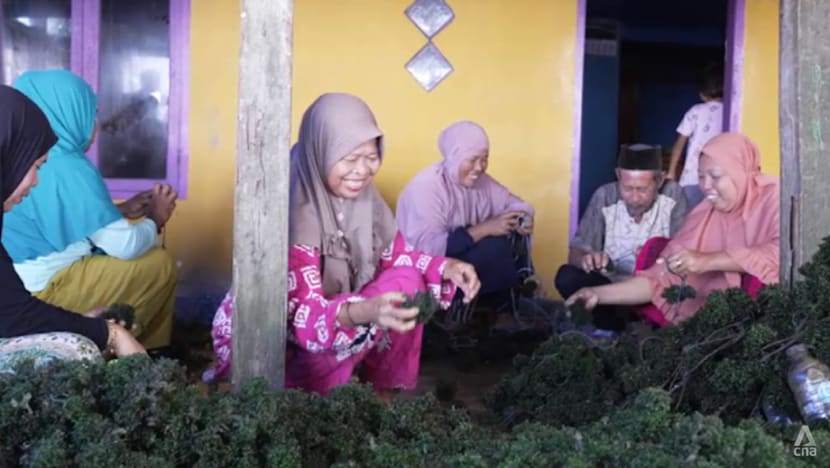
Farmers attach seaweed seedlings onto ropes, which will later be suspended from floats anchored offshore, forming a vertical farm to grow seaweed.

This audio is generated by an AI tool.




SOUTH SULAWESI: Bobbing gently on her sampan, Salmawati reaches for a plastic water bottle floating nearby.
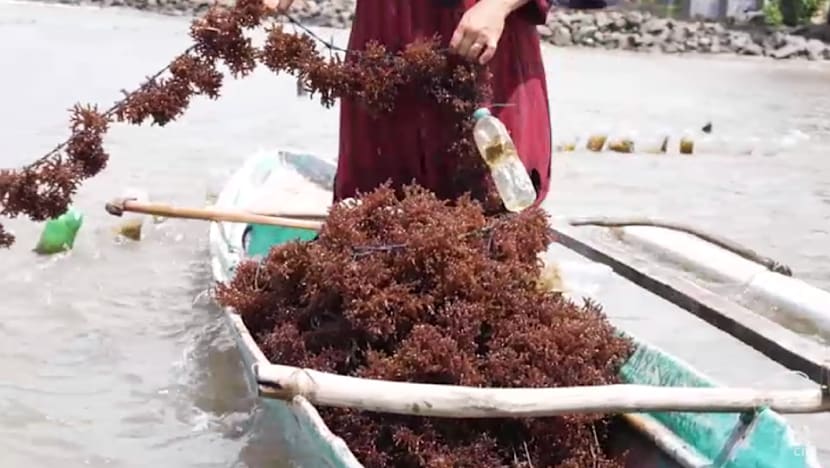
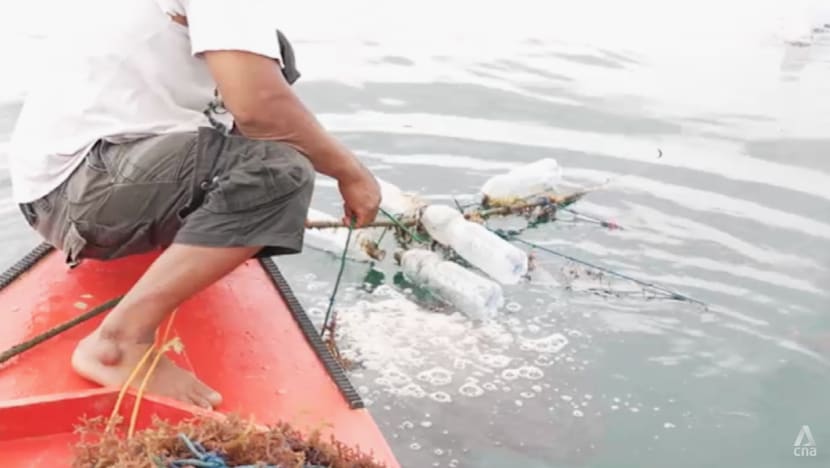
The improvised buoy is attached to a long rope trailing beneath the surface. As she pulls it in hand over hand, clusters of reddish marine algae emerge from the water, one after another, glistening in the sun.
It has been a good harvest season. Each trip, the 37-year-old returns to shore with her boat filled with what Indonesians have dubbed “green gold”.
Like many Indonesians, Salmawati goes by a single name. She is among about 3,000 residents of Punaga village in South Sulawesi, where most livelihoods depend on the sea.
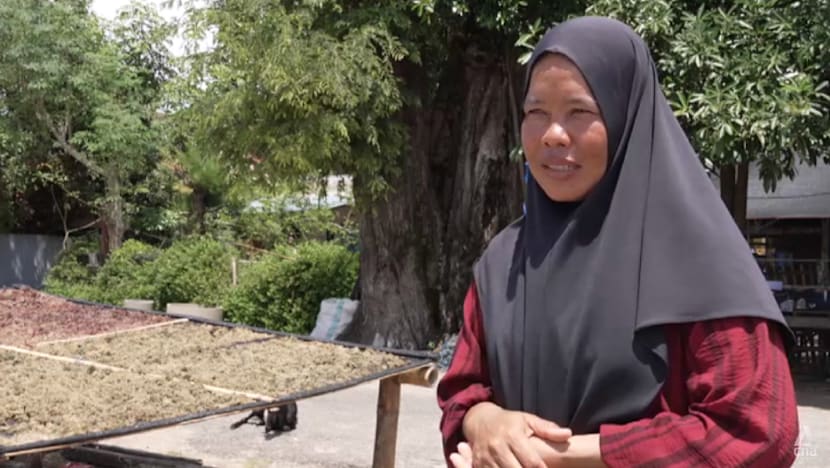
The third-generation seaweed farmer considers herself fortunate – her cultivation plot is located just 50m from shore, sparing her the longer journeys her fellow villagers must make out to sea for the same harvest.
“My father was a seaweed farmer too, back in the 2000s. The economy has changed a lot since then,” she told CNA.
“(Selling) prices back then were very low compared to today – that's why farmers here mostly work with seaweed now.”
Indeed, seaweed cultivation has transformed Punaga. The modest coastal village has seen rising incomes and visible improvements in living standards for small-scale farmers.
“Many residents used to live in rundown houses. But thanks to this extraordinary seaweed cultivation, many now have beautiful, well-maintained permanent stone houses,” said village head M Syarifuddin Sore, adding that dozens of families have even earned enough to buy cars.
But the work is labour-intensive and far from guaranteed.
In a strong season, 10kg of seedlings can yield up to 70kg of dried seaweed. In a poor season, the same amount may produce as little as 3kg.
Seedlings cost about US$0.30 per kilogram, while seaweed sells for around US$1.30 per kilogram.
The cultivation process is painstaking. Farmers attach seedlings onto ropes, a task that can take up to 10 hours per tonne and sometimes stretches over several days depending on scale.
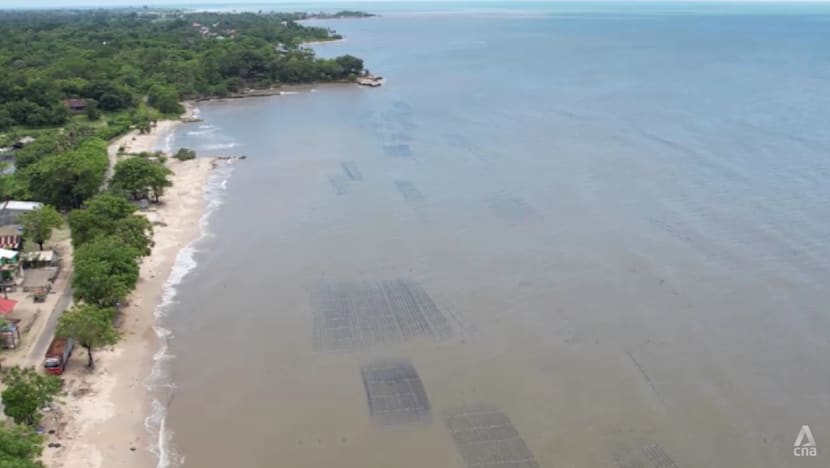
The seeded ropes are then suspended from floats – usually discarded plastic water bottles – anchored offshore, forming a vertical farm that maximises space in shallow coastal waters.
SOUTH SULAWESI LEADS PRODUCTION
South Sulawesi is Indonesia’s top seaweed-producing province.
In 2024, Indonesia produced 10.8 million tonnes of seaweed, with more than 4 million tonnes coming from South Sulawesi alone.
But while supply is usually abundant, prices are volatile and heavily dependent on global demand.
“Three years ago, my boss had seven countries on his client list and shipments were constant,” said N Sijaya, a middleman who links small producers to larger markets.
“Now, we only have China.”
CHINA DOMINATES SEAWEED PROCESSING
From January to October last year, Indonesia’s seaweed exports generated more than US$260 million. Over 80 per cent of those exports went to China, its top market for the past decade.
Chinese firms primarily import dried raw seaweed and process it into higher-value by-products. One of the most commercially significant is carrageenan – a gelling, thickening and stabilising agent extracted from red seaweed and widely used in food, cosmetics and pharmaceutical products.
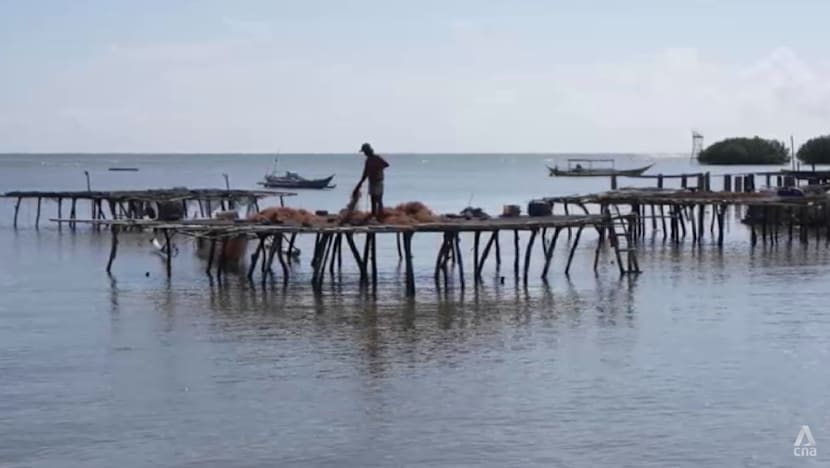
Before seaweed can be transformed into carrageenan, it undergoes rigorous quality testing to assess viscosity, gel strength, pH levels and moisture content. Food-grade carrageenan must also comply with strict microbial safety standards.
China’s dominance in global seaweed processing is also evident in South Sulawesi, where Chinese manufacturer BLG has established a processing facility.
INDONESIA LACKS PROCESSING SKILLS
Industry players say Indonesia lags behind processing powerhouses such as China and Japan due to limited investment in research and development.
“Our shortcoming in the domestic industry is that the R&D allocation is extremely small. Maybe because we come from a tradesman background and this is an entirely different industry,” said Mursalim, secretary general of the Indonesian Seaweed Association.
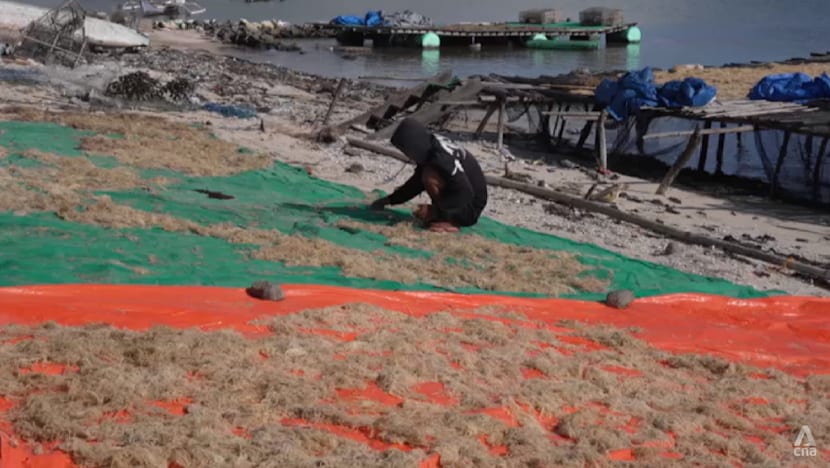
He said Indonesia must learn to develop higher-value products by researching how seaweed can be incorporated into existing food and beverage formulations.
The Indonesian government says that currently, only 11.65 per cent of the nation’s total seaweed cultivation potential has been utilised.
Such heavy reliance on raw exports dominated by one market poses long-term risks, and authorities are pushing to build a fully integrated seaweed sector.
“All this while, there has been no added value to the raw materials,” said M Ilyas, head of the South Sulawesi Maritime Affairs and Fisheries Agency.
“If we could process seaweed ourselves, including turning it into carrageenan for pharmaceuticals and other industries, this would add value to South Sulawesi.”
Arman Arfah, chairman of the Association of Indonesian Seaweed Farmers and Managers, added: “Our view is that the seaweed industry is attractive, especially with the government's downstreaming initiatives. What's left is to synergise and connect the different phases of this ecosystem.”
OVER RELIANCE & PRICE VOLATILITY
At seaweed processor Asia Sejahtera Mina, diversification is a priority.
Currently, 90 per cent of the firm’s exports go to China, with the remainder sold to Vietnam, the Philippines, Chile and Spain. The company is hoping to increase those exports, and is exploring other markets like the United Kingdom.
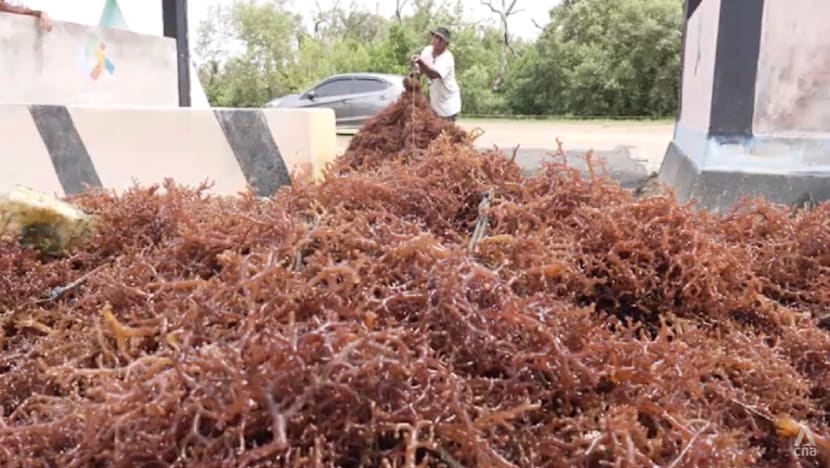
Operations manager Triwiyanti said fluctuating prices and inconsistent raw material quality remain key challenges.
“We’re hoping that China won’t be the only market we supply to (in the future),” he said. “Also, we need high-quality raw material to avoid increasing our processing costs, so that's a challenge.”
Selling to a wider range of countries will help businesses lower the risks that come with over-reliance.
“Europe might be slightly more attractive than China because there are too many similar factories in China, so (the prices are too) competitive,” said Ronny Djaya Tunggal, director of seaweed processing firm Giwang Citra Laut.
SUSTAINABILITY CHALLENGES
As Indonesia seeks to maximise the potential of its fast-growing seaweed sector, sustainability has emerged as a key concern.
In many farming areas, single-use plastic bottles are used as buoys to keep cultivation lines afloat at optimal depths. Over time, these bottles degrade and contribute to marine pollution.
To address this, the government has introduced a pilot project promoting a more durable longline system.
Farmer Ruslan is among the first group to receive buoys made of high-density polyethylene, a strong, chemical-resistant and recyclable thermoplastic.
“It's more durable than a regular float which lasts just two or even just one harvest before it's destroyed. This can last for years,” he told CNA.
“Also, it doesn't rotate in the ocean. Bottles spin when they get hit by waves and get tangled in the seaweed, but this one doesn’t. So, it's better.”
Authorities say the initiative is part of a broader effort to promote environmentally friendly cultivation and improve farmers’ knowledge about plastic waste.
“This isn't just about replacing or recycling the plastic buoys,” said Ilyas.
“More importantly, it's about transformation (of) the farmers' knowledge about plastic as an ocean pollutant and the need to reduce it.”
For now, the programme distributes the polyethylene to only one area in South Sulawesi.
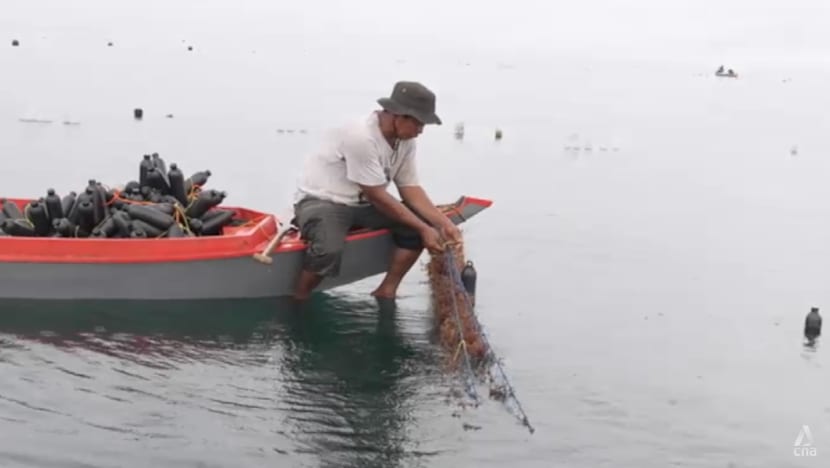
Environmental groups say wider consultation with farmers is needed to identify practical alternatives to improve the cultivation process.
“It's important to invite the community, the seaweed farmers, to discuss solutions to replace plastic bottles,” said Slamet Riyadi, public engagement head at the Indonesian Forum for Environment in South Sulawesi.
“In some areas, farmers already use alternatives such as old sandals or coconut husks.”
Authorities are also exploring the development of seaweed nurseries to ensure a stable supply of high-quality seedlings that can fetch better prices.
While funding remains a challenge, industry players say these efforts are crucial to securing a more sustainable and resilient future for Indonesia’s “green gold”.