‘Kamikaze drones’, laser systems: Malaysia to boost defence industry amid ‘uncertain security realities’
The new National Defence Industry Policy aims to reduce Malaysia’s reliance on foreign security and defence technology and bolster long-term domestic industrial capacity.

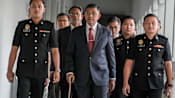
Malaysia's Defence Minister Mohammed Khaled Nordin at the launch of the National Defence Industry Policy on Jan 21, 2026. (Photo: Facebook/Khaled Nordin)
KUALA LUMPUR: Malaysia will develop “kamikaze drones” and laser systems, as part of a series of projects under its national defence policy reforms.
Its latest National Defence Industry Policy (NDIP) is a long-term plan to reduce reliance on foreign security and defence technology and bolster domestic industrial capacity, said Defence Minister Mohamed Khaled Nordin.
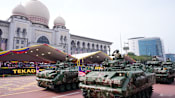
Key projects include a locally-developed satellite, which will take over defence services after the ongoing contract expires in 2029, the production of loitering munition systems, or “kamikaze” drones, and the development of a laser defence system.
Other initiatives include the production of passive radar systems and development of defence simulators.
Under the plan, the government will mandate at least 30 per cent of local content for defence purchases.
Maintenance, repair and overhaul (MRO) work must be carried out by local companies, except during the warranty period, with contracts subject to termination if companies fail to demonstrate innovation, cost efficiency and increased local capabilities.
Malaysia aims to build local expertise in the assembly, repair and manufacture of various weapon systems, said Khaled at the policy's launch on Wednesday (Jan 21).
“The policy marks a strategic shift to ensure public defence spending translates into long-term industrial capability, resilience and sovereignty, rather than continued dependence on external parties,” said Khaled.
“The world today faces increasingly complex, fragile and uncertain security realities, and Malaysia can no longer rely fully on others to guarantee its security and defence," he added.
Malaysia does not aim to produce a complete weapons system in a short period of time, but by developing local components and services, Malaysian companies can significantly participate in the defence industry supply chain, Khaled was quoted as saying by Bernama news agency.
Malaysia’s 2026 defence budget is RM21.74 billion (US$5.4 billion) – a 2.9 per cent increase from 2025 – of which RM6 billion is earmarked for acquisition of armed forces assets and equipment.
The defence minister said several pillars would determine the NDIP’s success, including sustained budget support, stronger institutional leadership, the development of new technologies and strengthening research and development (R&D).
“Large allocations to the defence ministry each year would be a loss if they are not fully leveraged to develop a self-reliant, sustainable and resilient domestic defence industry,” Khaled said.
STRONGER DEFENCE INDUSTRY COUNCIL
The NDIP also aims to strengthen governance and institutions in the sector, in line with the government’s pledge to crack down on corruption and misbehaviour following recent scandals.
At his ministry’s annual budget allocation event on Jan 12, Khaled had called corruption a “cancer” and slammed an “erosion of credibility” caused by the scandals.
Two former top military personnel were charged in court this week: Malaysia’s former armed forces chief Nizam Jaffar with receiving almost US$190,000 in bribes and misappropriating the Armed Forces Welfare Fund, and former army chief Muhammad Hafizuddeain Jantan with money laundering.
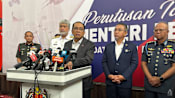
Khaled hopes to empower the Defence Industry Council to serve as the central coordinating body to align procurement, industrial development and national defence needs. The council was reportedly set up in 1999 to oversee the development of the local defence industry and comprises government officials and members from the private sector.
A stronger council is needed to provide strategic direction, ensure coherence across agencies and prevent fragmented decision-making that had previously crippled defence development, he said.
This is essential due to the scale of defence procurement, policy complexity and public funds involved, he added. “This is about building an ecosystem that is complete, comprehensive and mutually reinforcing.”
Meanwhile, the Industrial Collaboration Programme (ICP) – which ensures that foreign companies participating in government tenders contribute to the local economy and employment – will be enforced more aggressively to prioritise local companies capable of leveraging high-value technology, Khaled said.
A new defence industry portal will provide a platform for ICP applications, R&D grants and technology offerings to the defence sector.