Malaysia weighs targeted fuel subsidy cuts for higher-income groups as costs surge
The country is now looking at spending up to RM6 billion monthly to keep subsidies in place and avoid passing costs directly to households.
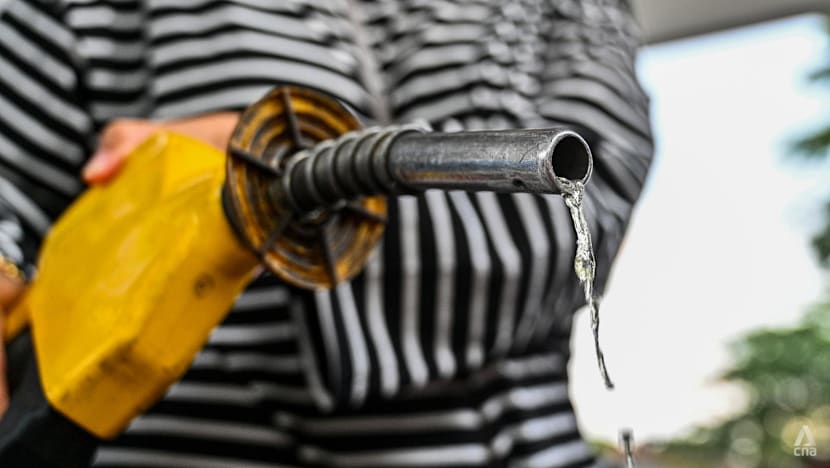
The Middle East conflict has driven up fuel prices worldwide. (Photo: CNA/Zamzahuri Abas)

This audio is generated by an AI tool.




KUALA LUMPUR: Malaysia may begin scaling back fuel subsidies for higher-income groups as early as next month, said its Economy Minister Akmal Nasrullah Mohd Nasir, as it grapples with rising costs driven by volatile global oil prices.
The review comes as the government’s monthly subsidy bill surged to about RM6 billion (US$1.5 billion) as of April, prompting policymakers to consider shifting towards more targeted support.
Malaysia expects the supply of fuel and other critical materials to remain uncertain for months, if not years – even if the ongoing conflicts in the Middle East are resolved, Akmal told CNA on Tuesday (May 5).

“It’s very volatile now. That's why the estimation will go up on a weekly basis,” he cautioned.





He said the initial projections of about RM3 billion in subsidies per month when the Middle East crisis escalated in March have since risen significantly.
The sharp increase has put pressure on public finances and raised questions over how long the government can continue shielding consumers from higher fuel prices.
BALLOONING FUEL BILL
Malaysia is now looking at spending up to RM6 billion monthly to keep the subsidies in place and avoid passing costs directly to households.
For now, authorities have pledged that fuel supply will remain intact through next month. The federal government has maintained a RM1.99 per litre ceiling price for subsidised RON95 fuel for all Malaysians, regardless of income.
Before the Middle East conflict broke out, the government initially planned to cut RON95 fuel subsidies for Malaysians in the top 15 per cent of the country’s income group.
But last September, it said it accepted the “trade-off” of not maximising the savings, acknowledging that Malaysia faced cost-of-living pressures.
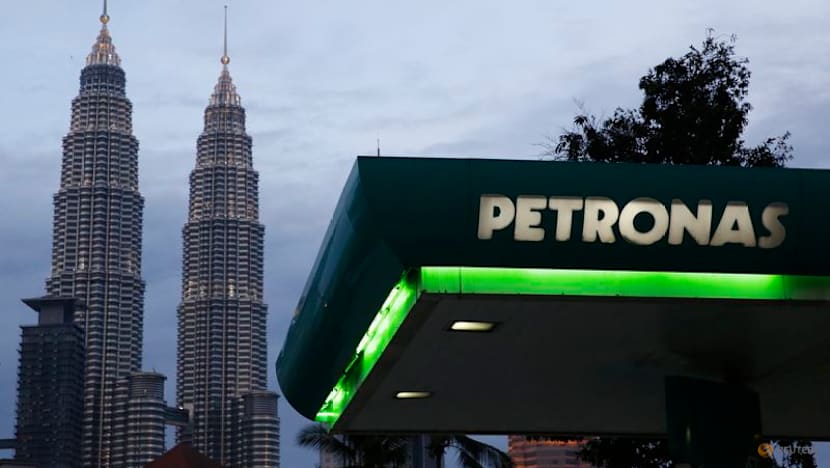
State energy firm Petronas is now working to secure sufficient supply, said Akmal, noting that clearer plans for the months ahead are expected by mid-May.
He signalled that the government intends to narrow subsidy coverage, allowing wealthier Malaysians to absorb higher fuel costs.
“As we move along, I think we should even be more targeted to ensure the masses still enjoy the benefit, to ensure the cost remains stable,” he added.
“We can allow some segments in society to pass the cost to … those who can afford it at the higher levels.”
Such a move would mark a significant change in Malaysia’s subsidy framework, which has long been criticised for benefiting higher-income groups disproportionately while straining government finances.
PUSH FOR ENERGY DIVERSIFICATION
Alongside subsidy reforms, Malaysia is stepping up efforts to diversify its energy mix to reduce reliance on imported fuels amid soaring oil prices.
Biodiesel is a key focus, allowing the country to leverage its large palm oil industry as part of a longer-term strategy to cushion against global energy market swings.
Currently, only about 1.3 million tonnes – or 6.5 per cent – of its roughly 20 million tonnes of annual palm oil production is used for biodiesel, according to the Malaysian Biodiesel Association.
Akmal added that existing biodiesel facilities are underutilised, pointing to room for expansion.
Despite these efforts, he cautioned that global energy markets are likely to remain unstable for an extended period, even if geopolitical tensions ease.
“It may take more than 18 months for the world to recover. In fact, things may not recover as we wish,” he said, adding that many countries will need to adapt to prolonged uncertainty in energy markets.
“Maybe there is no normal – it’s a new normal. So we do not know what will happen after this.”