analysis Asia
Can Malaysia afford to keep subsidising fuel amid energy crunch caused by Iran war?
Continuing entrenched petrol subsidies may undermine Putrajaya’s long-term fiscal health but cutting them could provoke significant backlash against Prime Minister Anwar Ibrahim’s government, say experts.

This audio is generated by an AI tool.




KUALA LUMPUR: Malaysia cannot afford to keep fuel prices artificially low indefinitely, as global conflict and surging crude prices pushes the national subsidy bill to a breaking point, analysts have told CNA.
But reducing fuel subsidies carries political risks, with potential backlash looming as Prime Minister Anwar Ibrahim’s administration gears up for possible early elections.
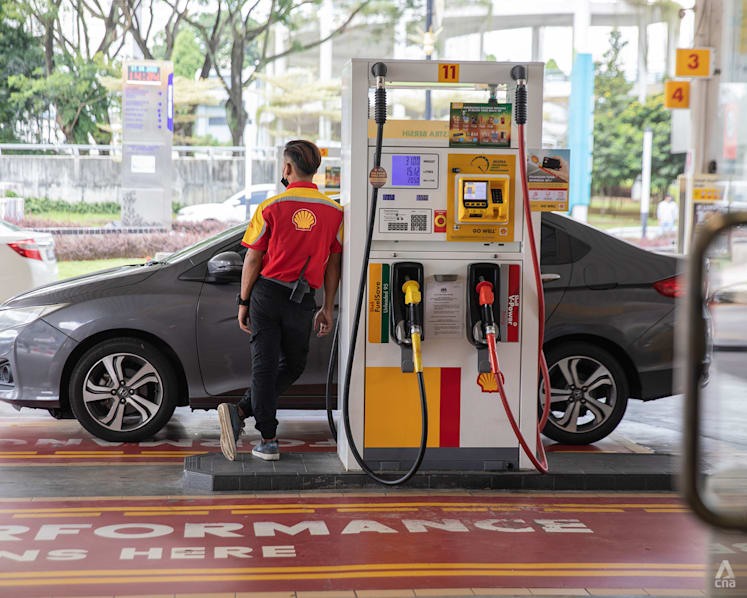
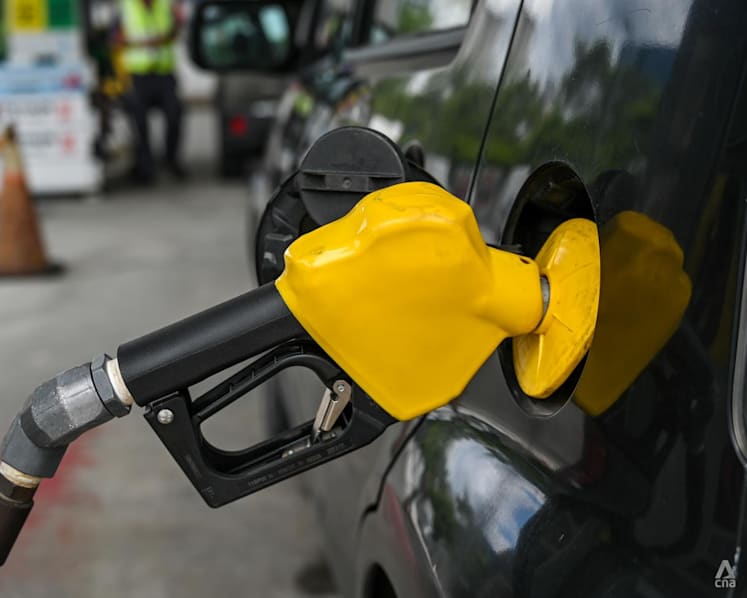
While the federal government has maintained a RM1.99 (US$0.50) per litre ceiling price for subsidised RON95 fuel, Malaysia has become a regional outlier; unlike most of its Southeast Asian neighbours that have allowed pump prices to rise in tandem with global trends.
Also unlike most other Association of Southeast Asian Nations (ASEAN) states, Malaysia has a special status as an oil producer which has long enabled deep subsidies, cementing cheap fuel as an entrenched staple of life.
But Putrajaya is grappling with a monthly subsidy burden that is now estimated at RM4 billion a month, the Finance Ministry said on Thursday (Mar 26). That figure has ballooned from the RM3.2 billion that was previously revealed by Second Finance Minister Amir Hamzah Azizan just two weeks prior on Mar 13.
The RM3.2 billion allocation mentioned by Amir Hamzah includes RM1.2 billion meant for diesel subsidies. Prior to the Iran war, Malaysia’s subsidy for RON95 petrol for eligible Malaysians and diesel in January cost RM700 million a month previously.
RM470 billion had been set aside for Malaysia’s budget this year, although these sums include components that the government has typically not used in a budget sum as they go beyond the usual operating and development expenditures, which would be RM419.2 billion for 2026.
At its current rate, a RM4 billion monthly fuel subsidy would consume nearly 12 per cent of the nation’s yearly operating and development expenditure.
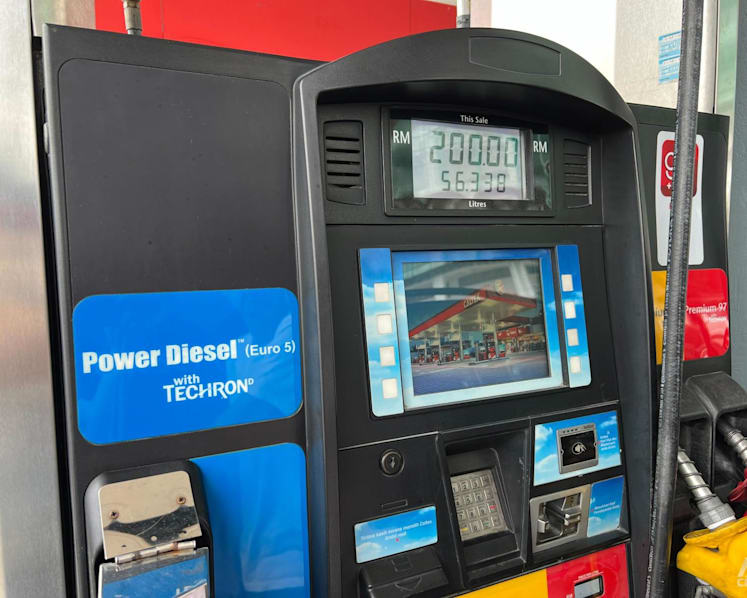
While Anwar announced on Thursday some measures to deal with the issue such as reducing the monthly allocation of subsidised RON95 petrol for eligible citizens from 300 litres to 200 litres from April, economists say this would not fully resolve the fiscal burden faced by Malaysia.
Economist Sedek Jantan of IPP financial advisers in Malaysia said that while such moves improve the targeting of subsidies, they do not address the fundamental issue of pressures on government coffers.
“As long as the subsidised price remains fixed at RM1.99, the government continues to absorb the bulk of global price increases. In that sense, the policy manages distribution, but not the underlying cost pressure, and a more sustainable approach would still require gradual price adjustment alongside targeted support.” he said.
Sedek, however, acknowledged that the matter is politically sensitive, as even a gradual increase above RM1.99 per litre may trigger dissatisfaction, particularly among middle-income groups.
“We also understand that some states are heading into elections soon, which adds an additional layer of political constraint. However, the bigger risk is delaying reform. The longer prices are kept artificially low, the more costly and disruptive the eventual adjustment will be,” he said.
The current Melaka state government’s term ends in December 2026, while the current Johor state government’s term ends in April 2027. This means their state elections are due by February 2027 and June 2027, respectively.
The conflict in the Middle East has seen Brent crude surge past US$100 per barrel for the first time in years as the closure of the Strait of Hormuz chokes off nearly a fifth of the world’s oil supply. This is well above the levels seen for most of the past two years, when prices generally hovered between US$70 and US$85.
In its 2026 economic outlook that was issued last year, the Finance Ministry had stated that it expected the average price of Brent crude oil to be around US$70 per barrel.

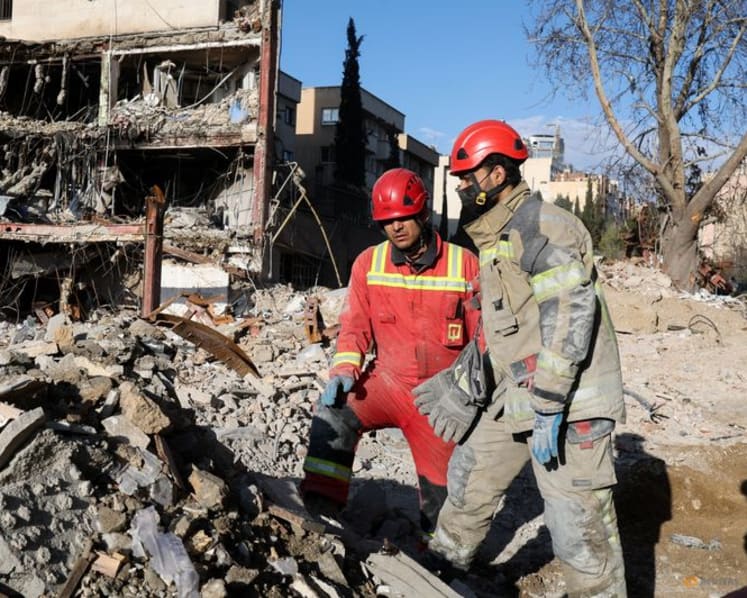
While severe fuel shortages have triggered a state of energy emergency in the Philippines and caused disruptions in Thailand, Laos, Cambodia, and Vietnam, Malaysia remains stable.
Anwar has said previously that the nation’s fuel reserves are secure until May, shielding the domestic market from the physical shortages gripping some of its neighbours.
FISCAL DEFICIT COULD UNDO MALAYSIA’S ECONOMIC PROGRESS
Economists told CNA that funding fuel subsidies could ultimately offset the positive efforts of the Anwar government in promoting sustained economic growth and reducing national debt.
They added that funding inflation by expanding government spending and deficits can impact economic growth and even contribute to broader inflationary pressures over time.
Lee Heng Guie, executive director of the Socio-Economic Research Centre told CNA: “Malaysia has been making progress in terms of reducing its debt ratio but this shock is a setback to its plans.”
Malaysia's fiscal deficit was 3.7 per cent in 2025, continuing a downward trend from a peak of 6.4 per cent in 2020. It was 4.1 per cent in 2024.
The government ultimately aims to bring it below 3.0 per cent by 2030.
According to various estimates, Malaysia's economy is projected to grow by 4 to 5 per cent in 2026, one of the highest in the region.
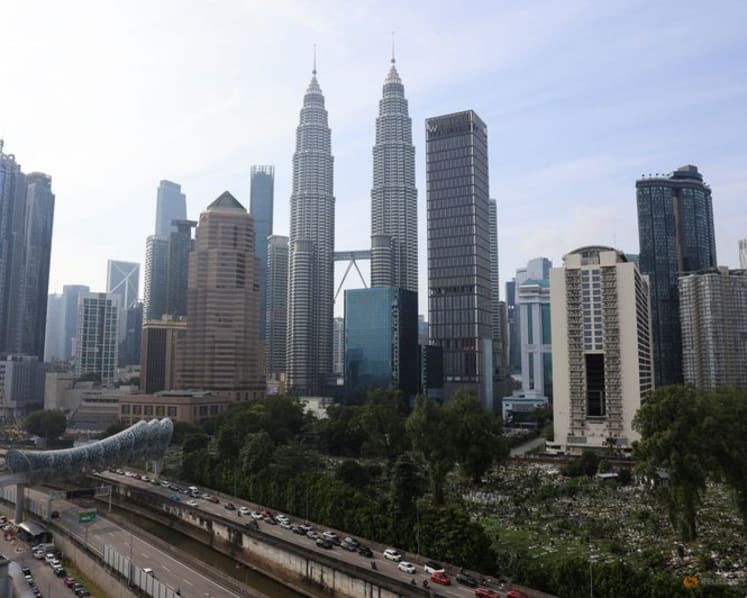
However, Lee posited that the country’s growth estimates would be hampered if Malaysia were to continue this level of spending for the next three to four months.
“Businesses will pass over the cost increases to consumers and ultimately this will slow growth,” he said.
Sedek said that while the government’s response to the recent oil price surge has been effective in cushioning households in the near term, particularly through targeted measures such as BUDI95, the broader policy stance is becoming increasingly difficult to sustain.
The BUDI95 programme was introduced at the end of September last year to ensure that RON95 petrol subsidies benefit only eligible Malaysians, while curbing leakages to foreigners and commercial entities.
Under the scheme, Malaysian citizens aged 16 and above with a valid driving licence can purchase up to 300 litres of RON95 petrol per month at the subsidised price of RM1.99 per litre. This was before Anwar’s announcement that the limit was reduced to 200 litres.
“It creates a rising fiscal burden as global oil prices climb, effectively shifting the cost of adjustment onto the government’s balance sheet,” said Sedek.
Sedek noted the reliance on subsidies and targeted relief reflects a set of “low-hanging fruit” policies that are quick to implement but limited in addressing deeper structural vulnerabilities.
He added that more critically, the policy was weakening the sense of urgency at the household level for Malaysians to reel back their finances.
“Although the Prime Minister has urged Malaysians to be more cautious in their spending, that signal is not fully translating into behaviour, as many consumers remain insulated from the real impact of the US–Iran conflict on global oil prices.
“This creates a clear policy disconnect. By suppressing price signals, the current approach delays necessary demand adjustment, weakens incentives for efficiency, and entrenches subsidy dependence,” said Sedek.
He added: “The policy response continues to rely on short-term stabilisation rather than institutionalised reform. This points to a broader issue of consistency in policy execution.”
Amir Hamzah had previously said that the Malaysian government is in a strong position to absorb the higher costs due to the various fiscal reforms and consolidation measures implemented over the past three years.

Sedek shared this view, but asked if Putrajaya should deplete its hard-earned fiscal buffers to maintain the current subsidy regime or prioritise the growth.
"This will have an effect on our economy: impacting the currency in the short term, the debt-to-GDP ratio in the medium term, and our credit rating over the long term," he said.
Malaysia continues to boast some of the lowest fuel prices in the world, second only to Brunei within the Southeast Asian region.
Vehicles that run on petrol make up the majority of vehicles in Malaysia, while diesel vehicles are mainly used for commercial purposes.
In the latest weekly update by the Finance Ministry, fuel prices in Peninsular Malaysia continued their upward trajectory for the fourth consecutive week. RON97 rose to RM5.15 per litre, while unsubsidised RON95 reached RM3.87.
Diesel prices in the peninsula also saw a sharp increase to RM5.52 per litre, a contrast to East Malaysia, where diesel remains capped at the subsidised rate of RM2.15.
Since June 2024, the price of diesel has been floated in Peninsular Malaysia while East Malaysia still enjoys subsidies as diesel-powered 4x4 vehicles are considered a necessity because of the rugged terrain there.
Speaking on Thursday, Anwar said that under the new enforcement measures for East Malaysia, diesel purchases will be subject to per-transaction caps: 50 litres for private cars and light transport, 100 litres for public and goods vehicles under three tonnes, and a maximum of 150 litres for heavy vehicles exceeding three tonnes.
"This is to guarantee and ensure that supplies remain available and can be distributed fairly and sufficiently to everyone. Without these adjustments, we are concerned that there will be a tendency for hoarding and smuggling, as has been detected previously," said Anwar.
COULD ANWAR CALL FOR ELECTION TO MANAGE POLITICAL COST?
Observers suggest that it is inevitable that the government would have to scale back on RON95 subsidies in the short term if the war rages on and global oil prices stay at the level they were at or continue to increase.
And this is likely to have political repercussions for the government.
Oh Ei Sun - the principal adviser at the Pacific Research Center of Malaysia - told CNA that the main obstacles for removing the subsidies are two-fold.
“One is a socioeconomic one, namely Malaysia being still very much a developing country where traditional fuels play a huge role in the livelihood of much of its population. If subsidies are removed, they will be hard put to lead a decent life.
“The other is of course a political one, namely if you reduce or remove a longstanding subsidy scheme, you will be punished to an extent in the ballots,” he said.
Oh noted that the increase of fuel prices back in 2006 was one of the causes that partly led to Barisan Nasional (BN) suffering electoral losses in the 2008 elections.
Back then, the Abdullah Ahmad Badawi administration had increased the price of diesel by 23 per cent to RM1.58 per litre and petrol by 19 per cent to RM1.92 per litre.
In a 2007 news report by Malaysiakini, Ahmad Badawi was reported to have told the United Malays National Organisation (UMNO) assembly that there was a need to restructure subsidies.
"We cannot continue like this. The subsidy should be given to those who need it," he was quoted as saying.
For the first time in history, BN lost its two-thirds majority in March 2008 at the federal level as well as in the states of Selangor, Perak, Penang, and Kedah.
While the Anwar government grapples with rising oil prices, the opposition coalition has pounced on the issue.
Perikatan Nasional secretary-general Takiyuddin Hassan for one questioned the difference in diesel prices between East Malaysia and Peninsular Malaysia, saying that such a large price gap risks creating perceptions of unfairness.
“This situation demands a transparent and honest explanation to prevent confusion and negative perceptions among the people,” he said in a statement on Thursday.
Machang Member of Parliament Wan Ahmad Fayhsal Wan Ahmad Kamal, who was sacked from Parti Pribumi Bersatu Malaysia but remains in the opposition camp, told CNA that he believes based on ground feedback that Malaysians were “largely unhappy” with Anwar’s decision to lower the quota for RON95 subsidies from 300 litres to 200 litres.
“The people seek accountability and data-based evidence from the government to ensure that the RON95 subsidies are fair … and continue to aid the lower and middle income,” he said.
Wan Ahmad Fayhsal also urged the government to convene a parliamentary session in the short term so that this matter could be debated in the legislative assembly.
Political analyst Adib Zalkapli noted that Malaysia currently remains broadly supportive of the government’s handling of the Iran War, citing a recent Blackbox survey which states that around 50 per cent of those polled are satisfied.
However, he noted that 70 per cent of respondents expressed concern about rising energy and fuel costs resulting from the conflict, which points to a fragile level of public support that depends on how effectively Putrajaya manages the economic fallout.
Adib, who is managing director of advisory firm Viewfinder Global Affairs, posited that the fragility could mean that perhaps Anwar’s government could call for elections in the short term before the impact is fully felt among Malaysians.
He told CNA: “It is best for the government to call for elections before the full impact of the war hits Malaysia, and that means before the government has to increase the price of subsidised petrol.
CNA previously reported that Malaysia could head to the polls as early as this year amid shifting political currents that have created the potential for Anwar to seek a renewed mandate ahead of schedule.
Malaysia’s 16th General Election is not due until February 2028 but multiple sources within government and political circles told CNA that groundwork is quietly being laid for a possible election in the second half of 2026.
Adib pointed out that the window for a “flight to safety election” due to the Iran War is narrow, and that polls could be held as early as in the next couple of months.
Furthermore, he added that the reduction of quota for RON95 is a way for the government to provide a soft landing for the people before increasing the price of subsidised petrol.
“It’s like a gentle reminder that RON95 is not going to stay cheap forever,” he said.
The rollout of the targeted RON95 subsidy in late 2025 saw the government adopt a broad “citizen-only” model. This move granted the RM1.99 per litre rate to all citizens, including the high-income group that Anwar had previously vowed to remove from the subsidy pool.
WHAT ELSE CAN MALAYSIA DO?
Besides reducing quota and subsidies for RON95, experts also suggested other solutions Malaysia could adopt.
Lee the economist told CNA that Malaysia has to resort to alternative energy sources because while it is an oil-producing country, it has been a net importer of oil since 2022.
Lee added that Malaysia exports crude oil to countries like Japan, South Korea and Australia but it imports refined petroleum products in greater quantities due to high local demand for automobiles and industries.
He outlined that 69 per cent of Malaysia’s imported oil comes from Gulf countries like Saudi Arabia, Oman and the United Arab Emirates, and hence it too is impacted by prolonged closure of the Straits of Hormuz.
“Assuming the Straits of Hormuz remain closed, and there are delays in obtaining the petroleum, we need to find contingencies,” said Lee.
He cited how Malaysia can consider buying from alternative sources like Canada, South Africa, Latin America and the Balkan area, where petrol is reasonably priced, but the trade off may be higher transportation costs and longer shipping times.
Sedek said that fuel prices should be gradually aligned with global levels to restore proper market signals, rather than kept artificially low.
He, however, said that the government should move towards gradual price adjustments above RM1.99, rather than a sudden removal, while simultaneously strengthening targeted support mechanisms for lower- and middle-income households.
Sedek added that subsidies should be restructured to be more dynamic, allowing prices to adjust in line with global conditions instead of remaining fixed.
He also suggested that support should shift away from one-off, broad handouts like blanket "one-off" RM100 towards targeted, income-based assistance.
“That way, vulnerable households are protected without straining public finances. Ultimately, the goal is simple: manage the cost of living today, but avoid creating a bigger fiscal problem tomorrow,” he said.