Malaysia eyes rail links to strengthen role in Europe-Asia trade
As global shipping faces disruptions, the country is positioning itself as a transit hub linking Asia and Europe.
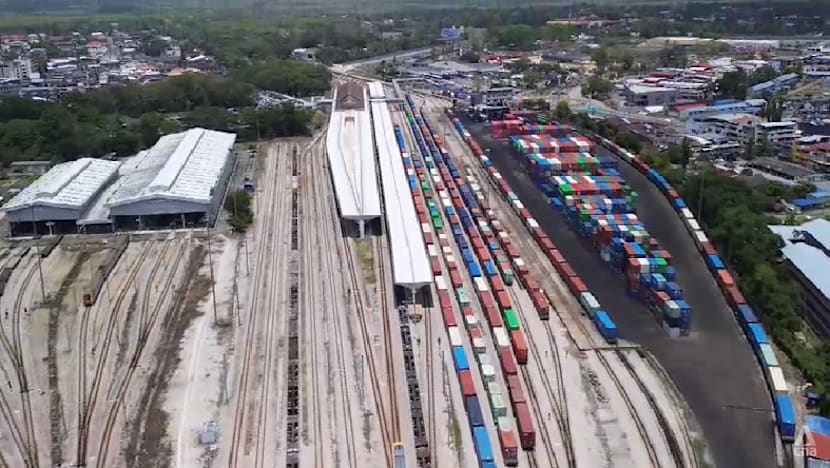
Interest in rail transport through Malaysia has picked up, with the Perlis Inland Port near the Thai border seeing a rise in enquiries from exporters.

This audio is generated by an AI tool.




KUALA LUMPUR: As rising geopolitical tensions disrupt traditional maritime routes, logistics players are pushing for a shift towards rail transport as part of a broader, multi-corridor trade strategy.
In Southeast Asia, Malaysia is positioning itself as a key node connecting the region via rail with Central Asia and Europe.
At the heart of this ambition is the Perlis Inland Port, located near the Thai border.
Operated by Mutiara Perlis, the facility is emerging as a complement to maritime routes by offering an overland alternative for cargo movement across the region and beyond.





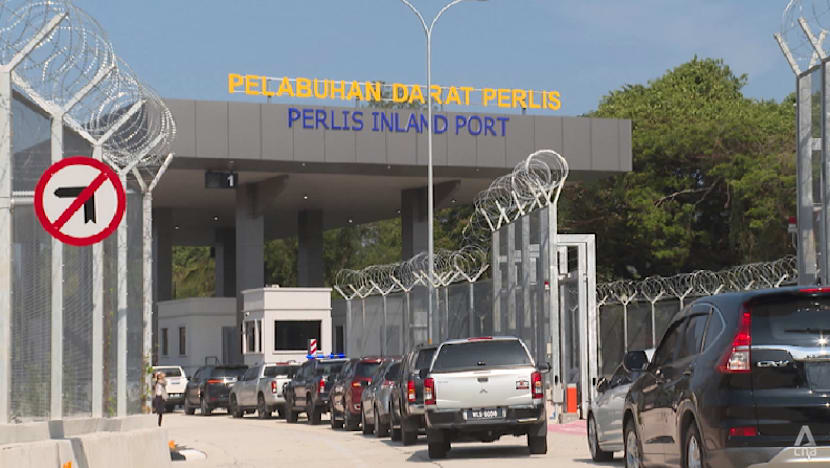
“When people look at Malaysia, people only see our marine ports, but then we are actually connected via rail all the way to Europe,” said Wan Zaheed Wan Mohamad, group managing director and CEO of Mutiara Perlis.
“So why don't we enhance that connectivity? With our development at the border, we are adding more capacity so that cargo can also do a stopover in Malaysian ports and continue the journey to … Central Asia, for instance, to send our palm oil.”
Such routes have gained attention as companies look for alternatives to maritime shipping, especially after disruptions caused by conflicts in the Middle East, including attacks on vessels in key waterways like the Strait of Hormuz.
“I think that's the way forward for all the players, global shipping lines. They need to have alternatives. They need to have a multipronged strategy, because things will not be the same. There will be war after another. We never know. It's a new normal,” Wan Zaheed added.
RAIL LINKS EXPANDING ACROSS ASIA
Malaysia’s rail connectivity has been strengthened by the launch of the ASEAN Express in 2024, a cross-border freight service linking Malaysia to China via Thailand and Laos.
The service forms part of a broader regional rail network that connects to China’s system and extends westward through the Eurasian Land Bridge.
This includes the so-called “middle corridor”, which passes through Central Asian countries, Azerbaijan and Georgia, before linking to Europe via Turkiye.
Interest in rail transport through Malaysia has picked up in recent months, with Perlis Inland Port seeing a rise in enquiries from exporters.
“Our commodity, palm oil, is very popular. We have received requests for quotes from Perlis, via truck or rail in Thailand, all the way to Kazakhstan,” said Wan Zaheed.
Although rail freight is more expensive than sea transport, it offers a significant advantage in speed. Shipments to Europe can arrive up to two weeks faster compared to traditional maritime routes.

CHALLENGES HOLDING BACK GROWTH
Despite existing infrastructure, rail connectivity across the region has yet to reach its full potential.
Operational hurdles remain, including differences in rail gauge standards between countries, as well as varying customs procedures across borders.
“It’s not just physical connectivity, it’s also institutional connectivity,” said Wan Zaheed, pointing to uneven implementation of frameworks like the ASEAN Single Window, which aims to streamline cross-border trade documentation.

CAPTURING SHIFT IN TRADE FLOWS
Malaysian authorities are preparing for a possible shift in global trade patterns.
Transport Minister Anthony Loke said last week that the country’s ports must be ready to handle increased cargo volumes that may be diverted from major Middle Eastern hubs.
“Our ports must seize the opportunity and be ready to handle more cargoes that usually pass through Jebel Ali, Khalifa Port, Salalah Bay and Muscat,” he said.
With traditional shipping routes under pressure, Malaysia is turning to rail as it seeks to carve out a bigger role in the flow of goods between Asia and Europe.