What’s fuelling Malaysia’s temple land disputes and does Anwar face ‘no-win scenario’?
Land disputes over “illegal” temples are resurfacing long-standing questions of identity politics, and putting Prime Minister Anwar Ibrahim under fire, say analysts.
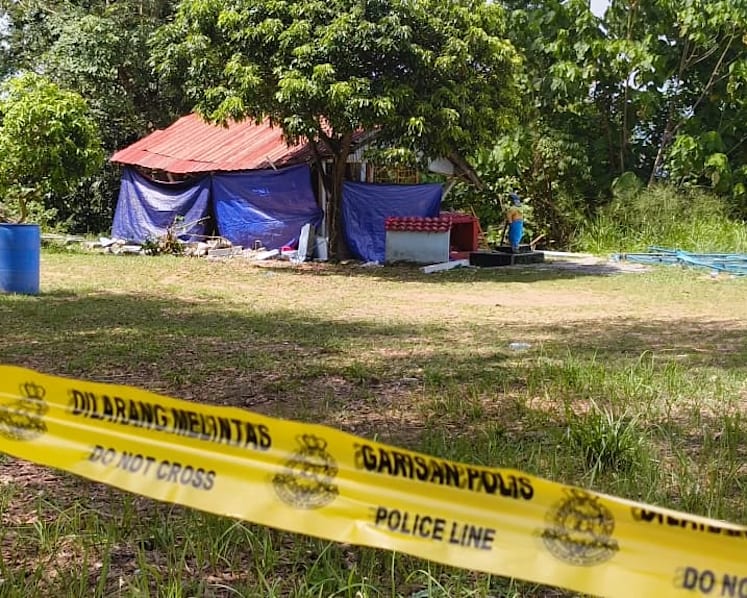
The damaged Sri Uchimalai Muniswarar Temple in Rawang, Selangor, cordoned off by police on Feb 23, 2026. Following the relocation of its deities, the remaining structure was entirely cleared by the landowner in the early hours of Feb 25, 2026. (Photo: CNA/Rashvinjeet S Bedi)

This audio is generated by an AI tool.


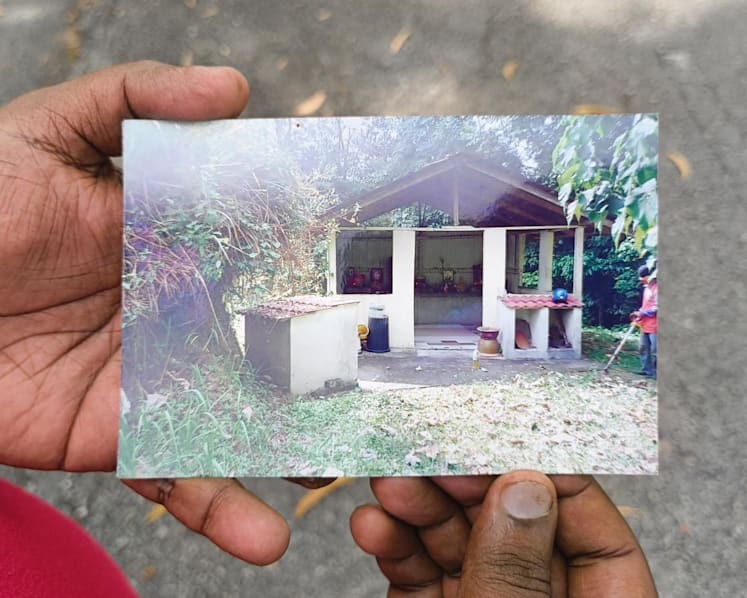
KUALA LUMPUR: For 40-year-old business owner R Arindran, the Sri Uchimalai Muniswaran Temple was more than a hilltop shrine in Rawang, Selangor. It was the centre of his world.
He does not know when the temple was built or who built it, but he remembers the daily ritual as a schoolboy of balancing on the back of his father’s motorbike as they navigated the red earth path through a sea of green landscape, the only “road” to reach the shrine.
His late father - a rubber tapper - became a caretaker of the site in 1995. In those days, the temple served the rubber tappers who worked in the estate, seeking guardian deity Lord Muniswarar to protect them from the dangers of the wilderness, which Arindran said included snakes and black leopards.
But today, he is the one looking to try and protect the guardian deity.
When CNA visited the site on Feb 23, a bright yellow police line had encircled the structure after a self-styled enforcement group allegedly took a backhoe to its walls earlier that month without informing local authorities or engaging temple management.
Four men were arrested, and put under investigation for mischief, trespass, damage to a place of worship and acts likely to breach the peace. A backhoe used in the demolition was seized, but the men have since been released after their remand application by the police was denied by the Shah Alam court.
And in the early hours of Feb 25, a group of men armed with shovels and sledgehammers among other things demolished the entire structure under the watch of the police.
Videos of the demolition of the temple were widely shared on social media.
Arindran managed to save four statues of deities, which he said were temporarily stored in his brother’s lorry while he searched for a more permanent home for them.
“I am not angry but I feel heartbroken about what happened,” he told CNA on Feb 23.
“I respect other people's place of prayer and I wished there was respect for the temple as well.”
Arindran acknowledged that the land the temple is located on does not belong to him or the temple, but claims that the owners of the land - the Kubra Foundation - should have gone through a court process instead of demolishing the temple.
The foundation reportedly sought the men’s assistance to clear the unauthorised structure, stating that the land was earmarked for a housing development project aimed at the underprivileged.
The demolition of the temple by civilians was also criticised by several activists, saying the manner it was handled could trigger more serious social tensions and undermine communal harmony.





CNA has contacted the Kubra Foundation, an Islamic-based non-profit organisation that works on humanitarian issues, for comment.
In a press statement on Feb 16, the foundation said that it was the rightful owner of the land and had gone through various processes to get the temple to vacate the plot and followed every step of the legal process, including holding negotiations and issuing multiple notices seeking them to vacate the land.
The foundation also said that as the legal titleholder, it had the responsibility to prevent acts of “syirik” (polytheism) from occurring on its property. It had given the temple until Feb 24 to clear the structure from the land.
This incident is the latest flashpoint in a recurring issue that is sensitive in multiracial and multireligious Malaysia, posing a potential challenge to political leaders.
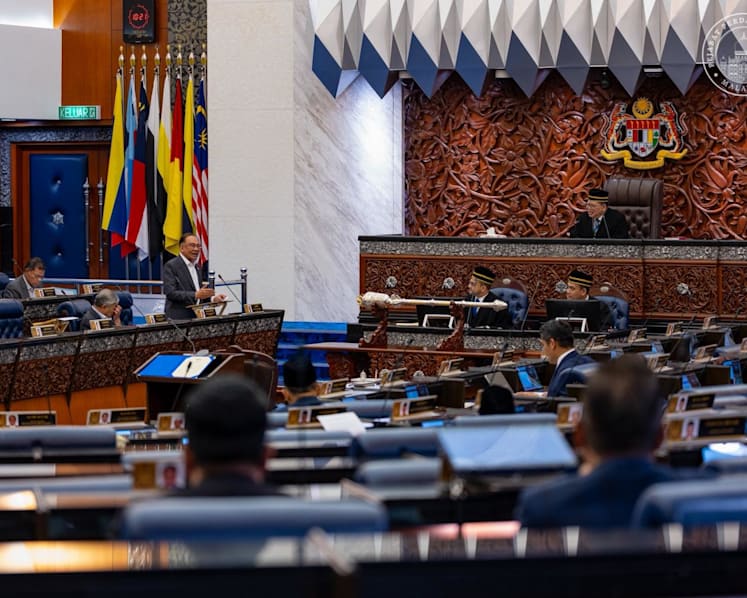
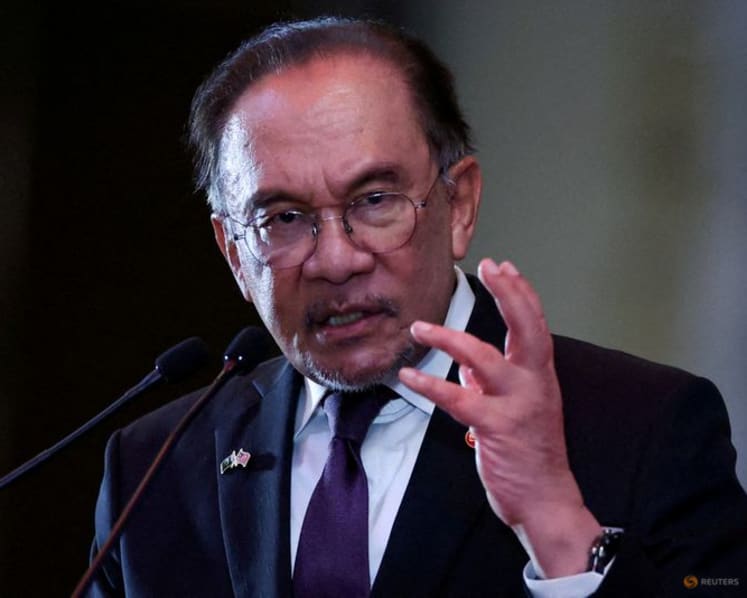
Just weeks earlier, on Feb 9, Prime Minister Anwar Ibrahim was reported to have said that local councils had the prerogative to remove any illegal houses of worship.
“I do not allow houses of worship that do not abide by the rules, and local councils have been given the authority to clear out areas not owned by such temples so that this issue can be resolved properly,” Anwar was quoted as saying by The Star.
But Anwar had also said that the public should not take the law into their own hands.
Political observers have said that the issue is a very delicate one for Anwar who has been on the firing line from both sides of the divide.
Syaza Shukri, a political scientist at the International Islamic University Malaysia (IIUM), described the current situation as a "no-win scenario" for Anwar, saying that he is trapped in a precarious political situation.
Ethnic Indians make up about seven per cent of the Malaysian population, most of whom are believed to have voted for Anwar’s Pakatan Harapan (PH) coalition in the last election.
“If he goes too harsh with the law then he risks alienating non-Malays who we know are the core supporters of PH. They might feel Anwar and his Madani principles do not apply to non-Malays,” said Syaza, referring to the Anwar government’s Civil Malaysia slogan.
“But if he is too lenient then the opposition would politicise it to say Anwar and his government prioritise non-Malay communities and this ‘proves’ their claim that PH in government threatens Malay rights,” she added.
WHY PROBLEMS ARISE
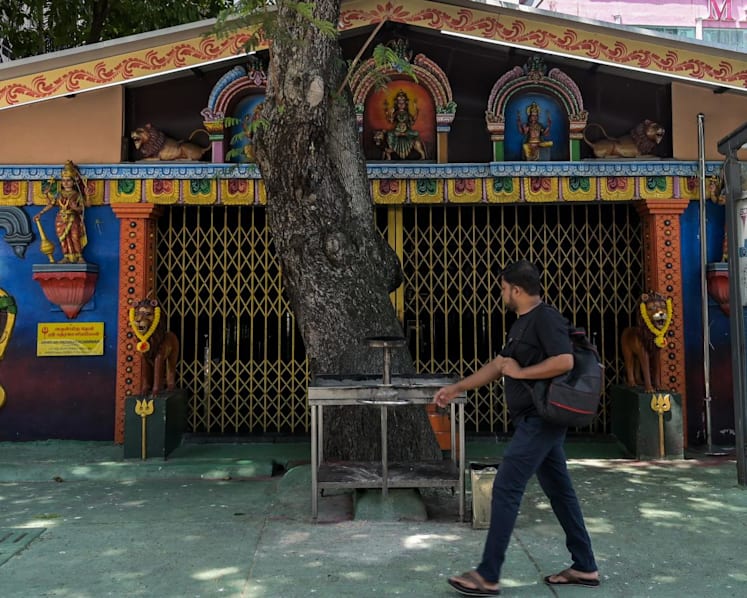
Advocates for temple rights argue that the issue is a century-old legacy of the colonial plantation system, predating the formation of Malaysia.
Many temples, often established during the British era, lack legal title to their land, leading to disputes when estate land is later sold or redeveloped, deputy chairman of the Socialist Party of Malaysia S Arutchelvan told CNA.
He said that while temples should not be built arbitrarily and must be regulated, labelling all of them as trespassers or illegal was incorrect and unfounded.
He said that estate temples especially were historically supported by plantation companies, which provided spiritual escape for workers under the British employers and then later local employers.
He said these temples were built on private plantation land, where land titles are not held by the temple committees.
This was similar to temples located near hospitals, railways, or roadsides, many of which were built decades ago by Indian labourers who constructed roads, railways, and other infrastructure.
“These early workers built temples at worksites for safety and spiritual assurance, believing they warded off supernatural threats.
“Then, these temples were in remote areas, on low-value land, unnoticed. Now, due to urbanisation, they appear to be in city centres, on roadsides, or in towns,” he said, adding that worshippers were typically labourers and estate workers.
He said that obtaining land approval was difficult and many temples now sit on private or state land under the 1965 Torrens System, a land ownership system governed by the National Land Code, that makes property rights clearer.
“The Torrens System recognises land owners, not who came first,” said Arutchelvan.
This collision between registered title and decades of history was illustrated last year in the heart of Kuala Lumpur, when the century-old Dewi Sri Pathrakaliamman Temple became a national flashpoint after being ordered to relocate to make way for a proposed “Madani Mosque”.
The matter was eventually resolved when the temple agreed to move to an alternate site provided by the local authority. The landowner - textile retailer Jakel group - also agreed to bear the cost of the relocation.
In January, the government said it had gazetted a new site just 50m away, allowing the temple to remain in the vicinity of the area while the mosque project proceeds on the original lot.
Unlike its previous location, the new site has been officially gazetted as a Non-Muslim House of Worship site.

While precise data remains elusive, activist Arun Dorasamy told CNA that a 2015 survey by Malaysian Hindu Sangam - a Hindu rights organisation - identified 2,251 temples nationwide.
Some 70 per cent, or 1,577 sites, are unregistered.
In Selangor alone, 178 temples are registered and 416 are unregistered, he said.
However, these figures stand in stark contrast to the numbers provided by the Selangor government.
According to a statement from the Selangor Palace on Feb 10, the state government had identified 687 unauthorised Hindu temples as of January of this year - comprising 388 built on government land and another 299 on private property.
“The number of unauthorised temples is high compared to the Hindu Indian population, which makes up approximately 11.3 per cent of Selangor’s population,” read the statement.
The president of the Hindu non-governmental organisation Malaysia Hindu Dharma Mamandram, Rishi Kumar Vadivelu, told CNA that the building of temples is in the DNA of Indians, especially the Hindus.
“There is a saying in Tamil that you shouldn’t live in a place where there is no worship or no temple. The temple is a place where people unite and come together. It is a matter of faith.
"Our ancestors who came here from India would build temples where they worked and that's why you can see temples near train tracks, hospital or mining areas," he said, although he acknowledged that some temples had been built arbitrarily recently.
He said that engagements were currently being initiated with Buddhist and Taoist counterparts, as well as ethnic Chinese political stakeholders to work collectively on the issues.
“This is an issue that affects many people of various faiths, and not just the Hindus,” he said, adding that they were pushing for a meeting with Anwar for a solution to the issue.
A LONG-STANDING CYCLE OF DISPUTES
Advocates fighting for the temple issue point out that it has been going on for decades.
Rishi Kumar said that the current standoff is merely the latest chapter in a long-standing cycle of religious land disputes.
He pointed to an incident in 1978 in the town of Kerling, Selangor, where a string of temple desecrations by a group of people ended in at least five people dying after being attacked by those guarding the temple.
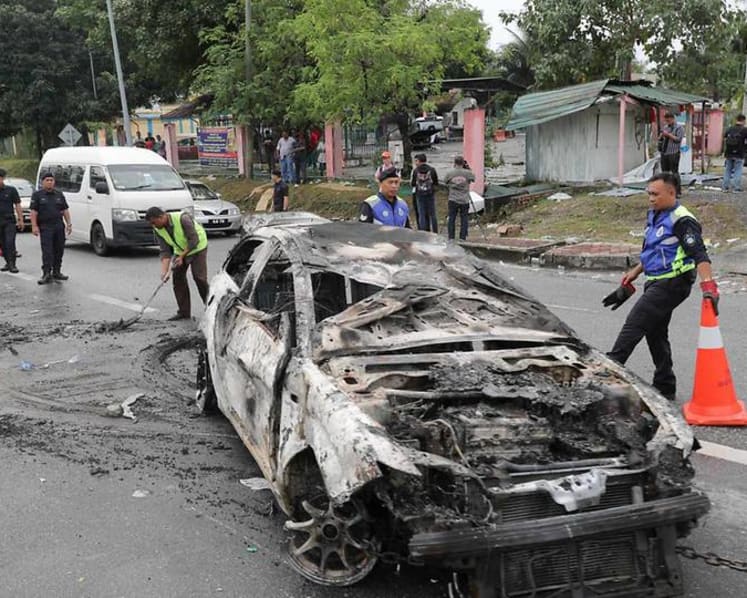
In 2018, the Sri Maha Mariamman temple riots in Subang Jaya, Selangor, saw a dispute over a developer-led relocation escalate into a riot, ultimately resulting in the death of a firefighter. Until now, no one has been charged in connection with his death.
Arun alleged that a specific group of “agenda movers” is deliberately demonising Hindu temples to cultivate a polarised environment and this time, social media is the primary engine of that hostility.
The backhoe used for the demolition of the Sri Uchimalai Muniswaran Temple was originally purchased for RM45,000 (US$11,555) following fundraising online by a group called Tanah Malaya.
On its webpage, the group said they managed to fundraise more than RM131,000 in a month through the selling of merchandise, including t-shirts, fridge magnets and keychains.
"Even if, in this world, they want to use this backhoe as evidence and a witness to punish us - God willing, through the blessing of every cent you contributed, this backhoe will instead stand as witness and proof of our steadfastness in defending justice and preventing evil for us in the hereafter!" it said on its webpage.
The group has almost 30,000 followers on its Facebook page which features frequent aerial “reports” using drones that identify specific Hindu temples which they claim are illegal.
While some have also questioned the presence of Chinese shrines and roadside altars, most of the attention has been focused on Hindu temples and shrines.
These include temples that are located in many of the country’s hospitals, some way before Malaysia’s independence.
Many of those involved in these groups insist their intent is strictly legal, not religious—arguing that they are targeting “illegal structures” regardless of their purpose, rather than the communities that worship within them.
On the forefront of the battle against “illegal temples” is Tamim Dahri who calls himself a “land activist”. He was one of the four people involved in the backhoe incident in Rawang.
CNA has reached out to Tamim, who has almost 120,000 Facebook followers, for comment.
James Chin, a professor of Asian studies from the University of Tasmania, said that the issue was being manufactured by two types of right-wing elements - Islamic non-government organisations and the members of youth wings of political parties.
“They are using this issue to rally the ground. This is an issue they know they can win, because no Muslim will support the building of temples, especially if you frame it as an issue of legality. But it goes back to identity politics,” he told CNA.
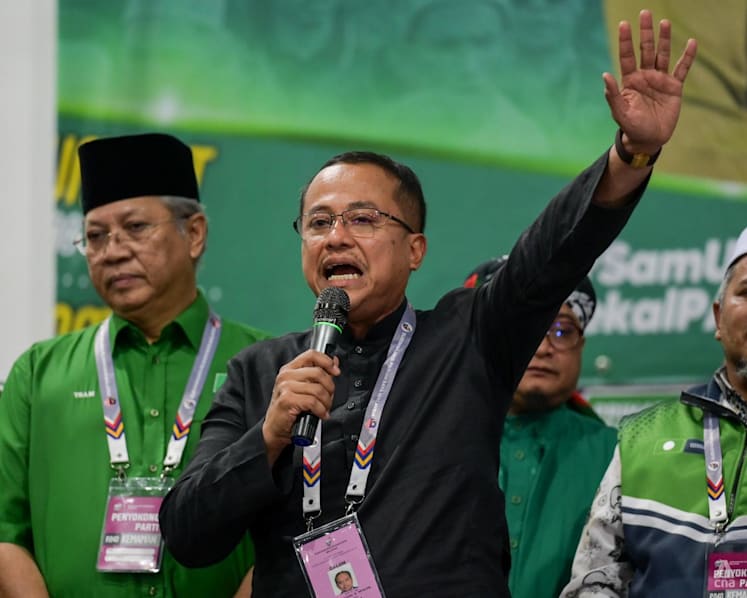
Among the political figures who have defended the actions of Tamim is the information chief of opposition Parti Islam Se-Malaysia (PAS) Ahmad Fadhli Shaari, who said that the activist’s actions were necessary to uphold the “rule of law”.
Fadhli also challenged his own Perikatan Nasional (PN) ally from Parti Gerakan Rakyat Malaysia, questioning if he would remain as patient if his own private land were “encroached” upon by illegal structures.
Gerakan deputy president Oh Tong Keong had urged the government to take legal action against the four individuals involved in the incident involving the backhoe, saying that their actions were deeply offensive.
While it is a multiracial party, the majority of Gerakan members are ethnic Chinese.
MOVING FORWARD
Policy commentator Liyana Marzuki, who used to work in the government as a lawyer, called for a Houses of Worship Act. There is no such act now.
She said that such a law would not be intended to tear down any place of worship but to ensure they are regulated, well-managed, and no longer a source of conflict between citizens.
She believed the issue has dragged on for decades due to delayed enforcement, inconsistent actions, and the failure of local councils and relevant agencies to resolve problems at the earliest stages.
Liyana said that such an Act would require the approval from local council for construction or conversion of buildings into houses of worship while construction without approval would be liable to court charges.
“As long as there is no clear legal framework, these same issues will keep on repeating. Every decade, we return to the same polemics. It becomes emotion against emotion, community against community, when the root cause is a systemic gap in enforcement,” she said in a Facebook post on Feb 18.
She cites the Singaporean model as a benchmark, where the Urban Redevelopment Authority designates specific land parcels as Place of Worship zones.
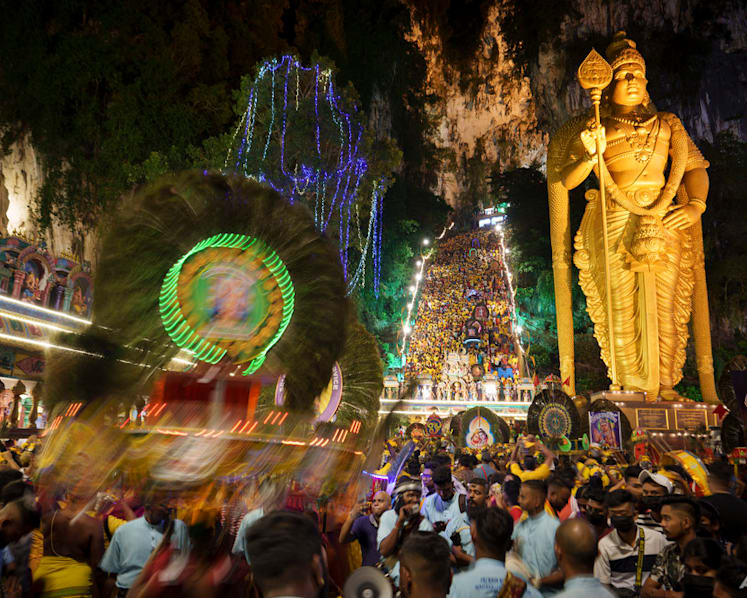
In response to the escalating disputes, a National Hindu Temples Steering Committee was established in Malaysia this month.
The committee said its mandate is “not to arbitrarily register temples but to help them identify the most appropriate and legally compliant pathway towards regularisation”.
The committee's primary objective is to assist temples facing regulatory hurdles by implementing a four-colour classification system - green, yellow, orange, and red - depending on their status.
For instance, green category temples are those considered “fully regularised” and possess complete legal documentation while those in the red category are those that have no documentation, approvals or agreements from landowners.
The committee has also requested a six-month moratorium on demolishing temples without proper authorisation to allow for proper verification, engagement and exploration of solutions.
When it comes to estate land, Arutchelvan of the Socialist Party of Malaysia highlighted the critical role of the Estate Land Board (ELB) - a state-level regulatory body - in disputes.
He said that under the National Land Code, landowners cannot reclassify agricultural estate land for development without ELB approval - a process usually overseen by the state’s top leadership.
He believed this mechanism is often bypassed or influenced by lobbying, allowing developers to move forward with projects while leaving long-standing temple relocation issues unaddressed.
“Years later, these temples became flashpoints of dispute. In our experience, the chief minister or state executive committee should ensure housing, schools, and temple issues are resolved before land-use conversion is approved,” he said.
But not all land disputes end in demolition; some developers choose to coexist.
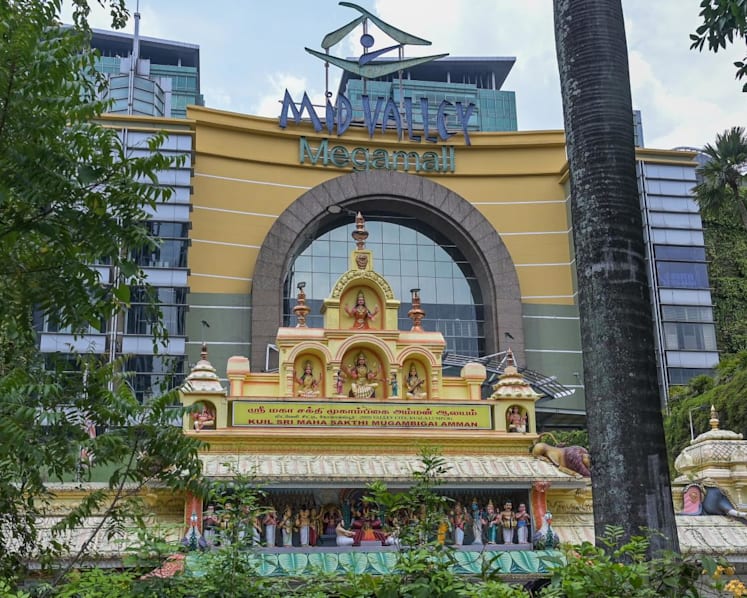
The "Mid Valley Model" stands as a landmark case where IGB Corp integrated the Sri Maha Sakthi Mohambigai Amman Temple into the architecture of the mall, which is located in Kuala Lumpur.
In its Kulai township development, IOI Properties relocated the 1950s-era Dewi Sri Nagakanni Alayam Temple to a new location 1km away, effectively doubling the temple's land area in the process.
“These models prove that progress doesn’t have to mean erasing history. You can develop a city without tearing out its soul,” Arun said.
BALANCING ACT FOR ANWAR
While observers maintain that firm political will is essential to break this decades-old issue, some argue that Anwar could have handled the matter better.
Chin believed that Anwar mishandled the issue at the start and said that while the premier seems to have backed off and is taking a more neutral tone now, the damage has already been done.
“The big question is if he did it deliberately. The election is coming and he has to be more right wing,” he said in reference to Anwar’s green light for local councils to demolish illegal temples.
Malaysia’s next general election is due by early 2028.
Chin also believed that all sides, including Indian-based parties, would play up the issue, and because both sides would gain from it, a political solution was very unlikely.
Syaza said that while the government could treat it as a strictly legal issue, it is also about whether the Hindu community feels they truly belong in the country.
“It becomes political when the issue suddenly arises when these temples have been around for so long. There must be a better way to mediate. Now it has become a political issue because it has been framed as zero-sum by all sides,” she said.
She believed that Anwar was trying to find a balance to the issue but given that it involved religion, this proved to be difficult.
“Trying to find the middle ground, allowing actions but also reminding people to follow the law and not take matters into their own hands, leads to both sides dissatisfied.
“I think it is good that he calls to avoid unnecessary confrontation. This signals awareness that enforcement is insufficient and that it takes time. But also because he knows what’s at stake. If it is not resolved soon, this issue could turn into a wider narrative of grievances,” she said.
As for Arindran, the caretaker of the temple in Rawang, his priority is securing a permanent site for the new temple. However, despite verbal assurances from officials that a plot is still being located, he has yet to receive any written documentation about the matter.
“I want to do things the right way,” he said.