analysis Asia
‘Best choice’ as Malaysia opposition pact PN’s new chairman, but ‘many challenges’ await Dr Sam
Ahmad Samsuri Mokhtar - the newly appointed chairman of Malaysia’s opposition coalition Perikatan Nasional - has his work cut out for him, say analysts.


This audio is generated by an AI tool.


JOHOR BAHRU: The question of who will lead Malaysia’s main opposition coalition into the next General Election and challenge Prime Minister Anwar Ibrahim was potentially answered when Perikatan Nasional (PN) named Parti Islam Se-Malaysia (PAS) vice-president Ahmad Samsuri Mokhtar as its new chairman.
The appointment of the Terengganu chief minister - a former aerospace engineering lecturer - on Sunday (Feb 22) effectively positions PAS as the leading party in control of PN and Ahmad Samsuri as the coalition’s likely prime ministerial face ahead of polls that must be held by February 2028.
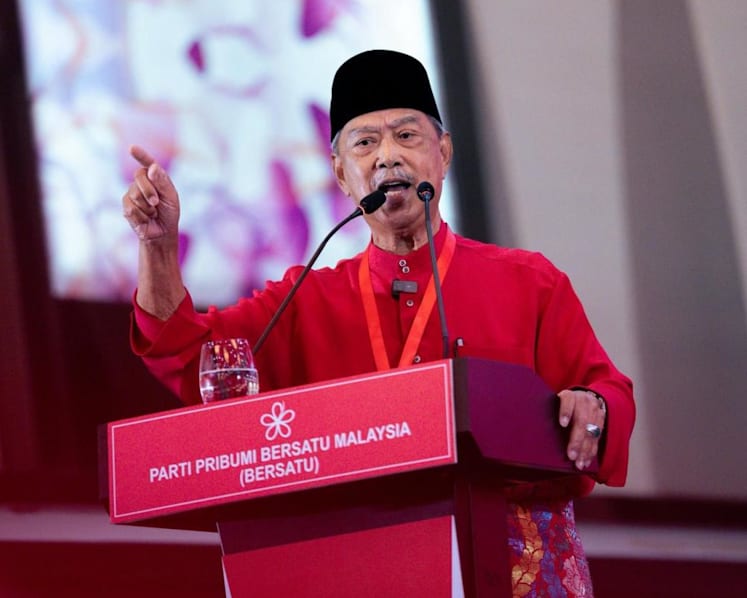
Ahmad Samsuri, 55, better known by his moniker as “Dr Sam” in reference to his academic credentials, replaces former prime minister Muhyiddin Yassin of Parti Pribumi Bersatu Malaysia (Bersatu) at the helm of the coalition.
Analysts say the move signals a strategic recalibration by PAS, the dominant force within PN, to project a more technocratic and less polarising image beyond its conservative Malay-Muslim base.
PN’s main components are Bersatu and PAS, while minority-centric parties Parti Gerakan Rakyat Malaysia and the Malaysian Indian People’s Party (MIPP) are considered minor players.
Previously, the coalition’s leadership and prime ministerial candidate have come from Bersatu, which provides the coalition's secular-nationalist bridge.





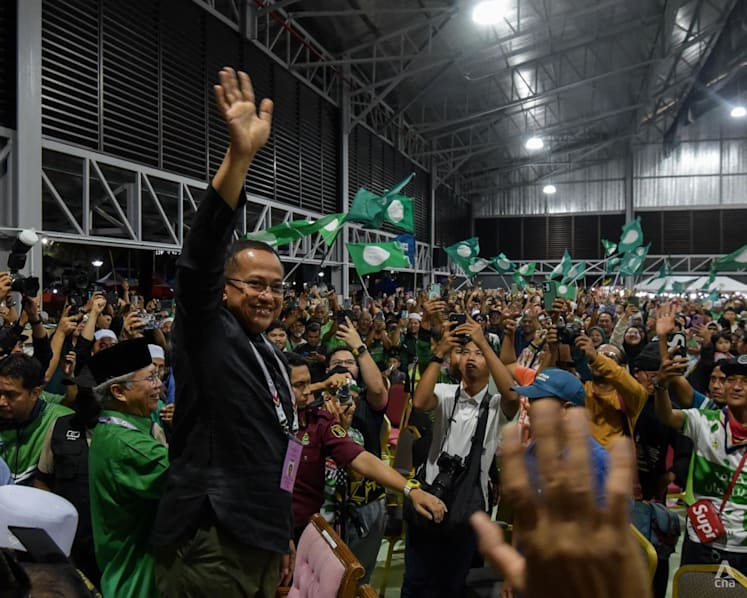
Unlike many of Malaysia’s combative political heavyweights, Ahmad Samsuri is known to be soft-spoken and measured. His professional background and administrative track record - including delivering a clean sweep for PAS in Terengganu in the 2023 state elections - have bolstered his reputation as a capable technocrat rather than a firebrand ideologue.
His elevation, however, has been long in the making.
Since 2022, Ahmad Samsuri has increasingly been positioned on the national stage beyond his state role. During the December 2023 by-election for the Kemaman federal seat, senior PN leaders, including Muhyiddin, openly hinted that the Terengganu chief minister’s candidacy was a “stepping stone” for a future prime ministerial bid.
Yet his first test as PN chairman will not be electoral - it will be internal.
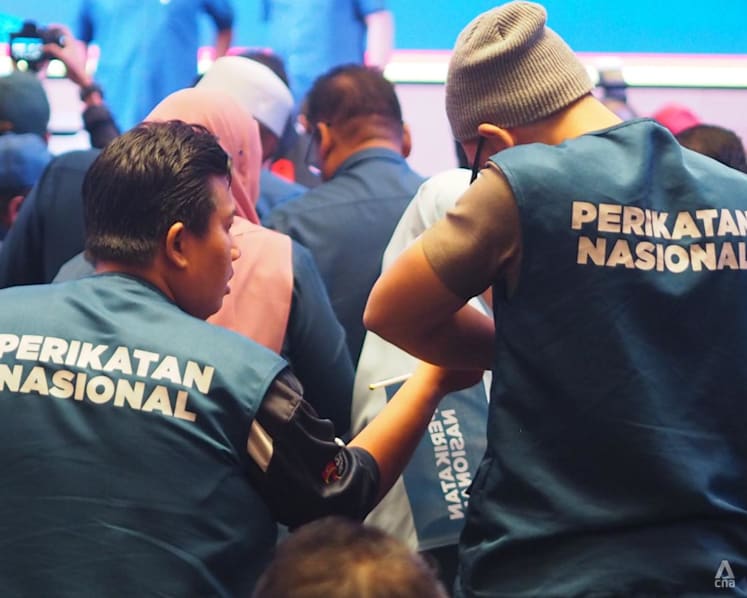
Ahmad Samsuri takes over amid deep fissures within Bersatu, PAS’ key coalition partner. His appointment came just days after a dramatic rupture between Bersatu president Muhyiddin and his former deputy Hamzah Zainudin.
The fallout escalated when Hamzah said that he was once Muhyiddin’s staunchest ally but following his expulsion from Bersatu, declared himself the latter’s “number one enemy”.
Although leaders aligned to both camps have publicly endorsed Ahmad Samsuri’s elevation, analysts describe his appointment less as the rise of a commanding coalition figure and more as a carefully brokered compromise among uneasy partners seeking to contain further instability.
Complicating matters further, Ahmad Samsuri is not PAS’ top decision-maker. He ranks behind party president Abdul Hadi Awang and deputy president Tuan Ibrahim Tuan Man in the party hierarchy, a dynamic that could limit his room for manoeuvre, say experts.
Political scientist Syaza Shukri of the International Islamic University Malaysia said the appointment is as much about optics as authority.
“We know Dr Sam’s appointment has more to do with optics. They want to present someone who can garner electoral support from beyond PAS’ electoral base,” she told CNA.
“His appointment is also considered a compromise in the sense that he is acceptable to all component parties.”
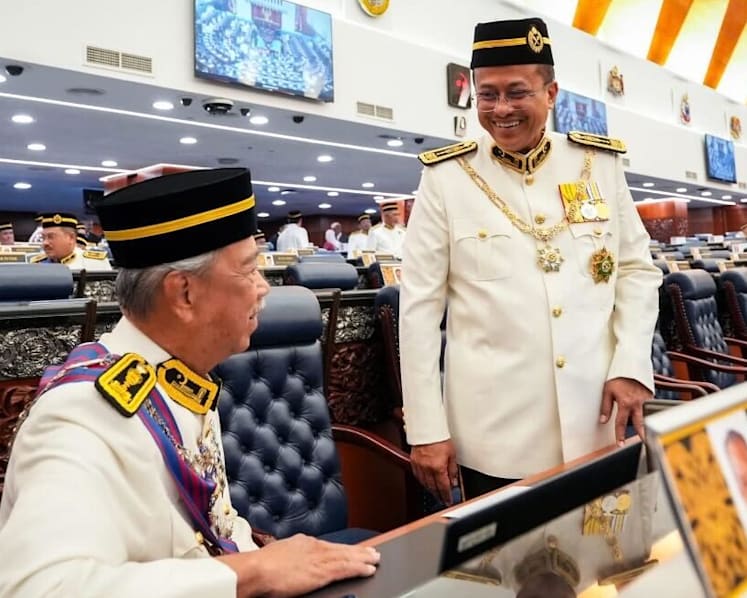
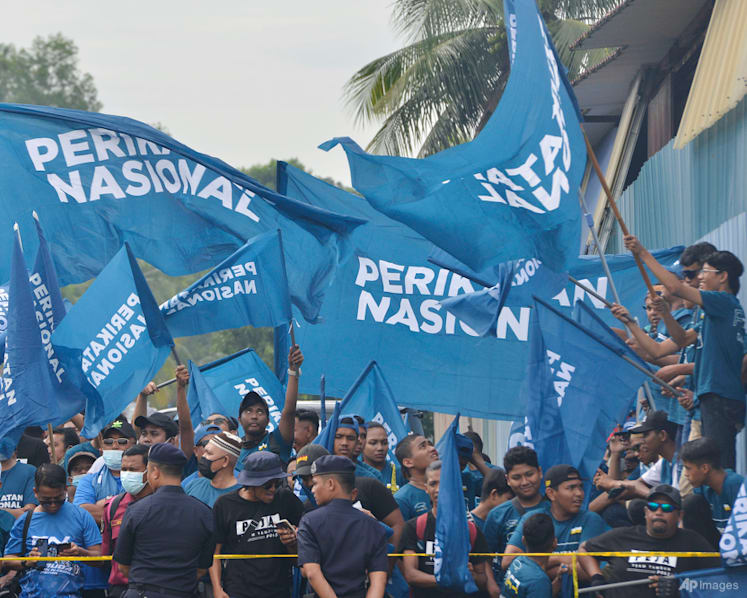
WILL THE OPPOSITION STAND BEHIND DR SAM?
For all the symbolism surrounding Ahmad Samsuri’s elevation, the key question is whether he can consolidate authority within the coalition and expand PN’s electoral map.
PN has long struggled to win over non-Malay and urban voters, largely due to its conservative positions on gender roles, LGBTQ issues, alcohol and gambling, as well as its longstanding push for hudud, or Islamic criminal law.
The coalition's ideological posture has entrenched scepticism among minority communities, especially since PAS remains the largest individual party with 43 seats in Parliament’s lower house of 222 members.
Post-GE15 analyses by think tanks such as Ilham Center and Merdeka Center show that support for PN among Chinese and Indian voters hovered in the single digits to low teens. In contrast, backing among Malay-Muslims stood at roughly 60 to 70 per cent nationwide.
That disparity has shaped PN’s post-election calculus. The coalition’s leadership broadly recognises that without inroads into constituencies with sizable non-Malay voters, its path to forming the next federal government remains narrow.
Against this backdrop, some analysts view Ahmad Samsuri’s rise in the coalition leadership ranks as a strategic recalibration.
Unlike several PAS leaders known for combative ethno-religious rhetoric, the Terengganu chief minister has cultivated a more technocratic and policy-focused image. He has spoken assertively on fiscal federalism, publicly arguing that Terengganu deserves greater petroleum royalty allocations from Putrajaya, positioning himself as a state advocate.
“The best choice (for a prime ministerial candidate from PAS) is therefore Dr Samsuri, who is a technocratic figure acceptable to various demographics,” said Yusri Ibrahim, a lecturer at Universiti Malaysia Terengganu.
Machang Member of Parliament Wan Ahmad Fayhsal Wan Ahmad Kamal, who was recently sacked from Bersatu, told CNA that Ahmad Samsuri is a “credible choice” to head the coalition and expressed confidence he would unify component parties.
Wan Ahmad Fayhsal is one of 19 MPs who are said to be aligned to Hamzah. The group issued a statement on Sunday in support of Ahmad Samsuri’s appointment.
“He’s the vice president of PAS, his stature as chief minister of Terengganu and coming from a technocrat background would help to consolidate Perikatan Nasional in facing voters in the upcoming General Election,” the former deputy minister of youth and sports told CNA.
Yet, optics alone may not be enough.
Political observers caution that Ahmad Samsuri lacks the national stature and negotiating weight of figures such as Muhyiddin and Hamzah. Hamzah, a former home affairs minister, is currently the opposition leader in Parliament though he remains coy about the status of the position following his ousting from Bersatu.
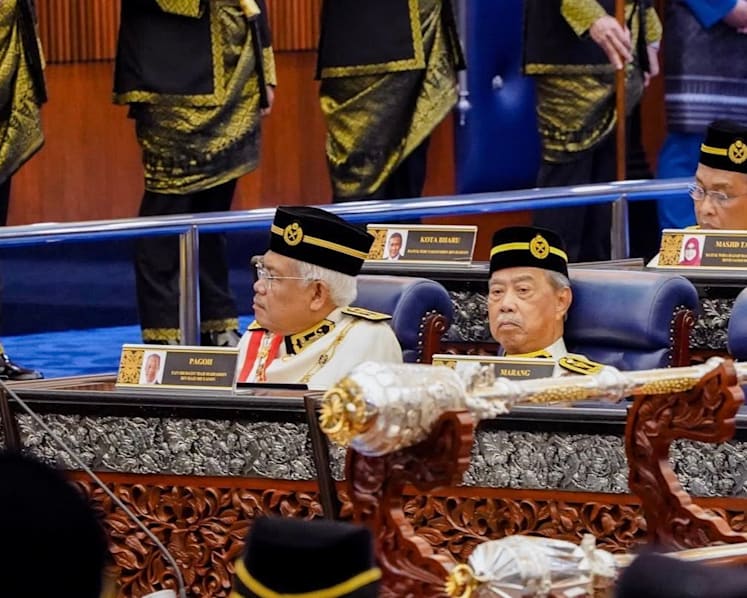
By contrast, Ahmad Samsuri has never led PAS or PN at the federal level.
“I do not see an easy path for Dr Sam,” Yusri told CNA. “He will face many challenges and is likely to struggle to stabilise PN’s organisation. The internal clash within Bersatu is severe and difficult to heal, especially in the short term.
“Relations between PAS and Bersatu have (also) been deeply hurt during the crisis and will not be easily resolved.”
Yusri was referring to the political upheaval in Perlis in December, when eight state assemblymen, five of whom were from Bersatu, withdrew support for a PAS chief minister in a move widely seen as orchestrated by figures aligned with Muhyiddin.
The fallout deepened mistrust between the coalition’s two largest parties and ultimately preceded Muhyiddin’s resignation as PN chairman.
Ahmad Samsuri’s rise may also reverberate within PAS itself, a party long characterised by a delicate balance between its ulama (clergical) faction and its professional technocratic wing.
With party president Abdul Hadi’s ill health limiting his role and deputy president Tuan Ibrahim viewed by some analysts as more of a party operator than a national coalition leader, Ahmad Samsuri emerged as the compromise candidate.
But compromise can carry risks, analysts said.
“In my view, this appointment will further heat up tensions between the ‘ustaz’ (religious leaders) faction and the professional faction within PAS,” Yusri said. “It would not be surprising if there were moves after this to remove Dr Sam from PAS’s top leadership hierarchy.”
Ahmad Samsuri, a former political secretary to Abdul Hadi, is widely regarded as the PAS president’s protégé.
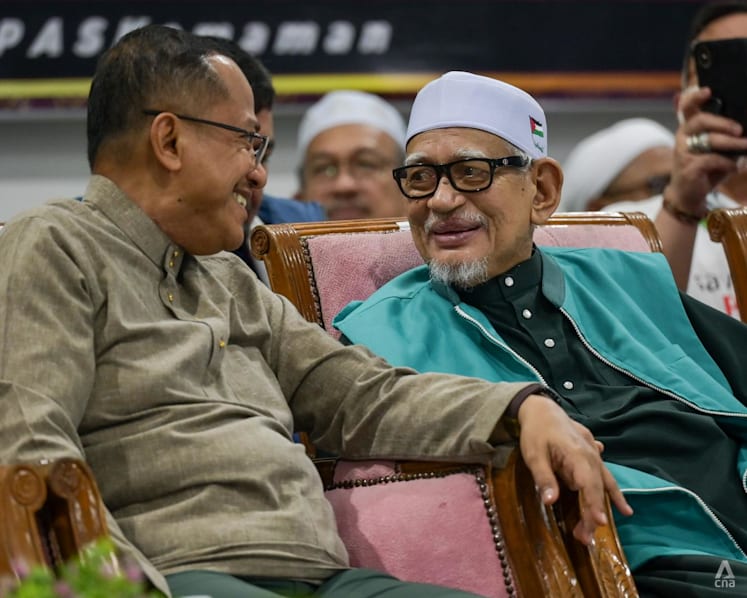
His steady rise within the party has often been linked to that close relationship, a dynamic that fuels speculation that he may serve more as a consensus frontman than an autonomous power centre.
Political scientist Syaza described the appointment as PN chief as somewhat unusual.
“He is not seen as that senior in the party, even though he is chief minister of Terengganu,” she told CNA. “There is also concern that he may simply represent Abdul Hadi’s interests.”
WILL PAS' ASCENDENCY WORRY ANWAR?
Ahmad Samsuri’s appointment underscores the reality that PAS is now firmly in the driver’s seat within PN.
Despite winning more than double Bersatu’s parliamentary seats in 2022, PAS had until recently ceded the coalition’s top leadership role to Muhyiddin in part due to the party’s tacit recognition that some of the Malaysian public, including non-Muslims, would be more willing to accept Bersatu’s leadership at the federal level.
That arrangement has now flipped, and for Wan Ahmad Fahysal, this is something the former Bersatu man told CNA “has been longstanding” and a development he “welcomes”.
“It is high time for PAS to lead Perikatan Nasional due to Bersatu's own misdeeds where Muhyiddin clearly failed to showcase his leadership in managing internal conflict which has spilled over to Perikatan Nasional, even having rift with PAS over Perlis and many other matters,” he said.
Yet analysts say PAS’ consolidation within PN is unlikely to trigger a dramatic recalibration from Anwar’s Madani government.
From the outset, Anwar’s unity administration has walked a careful centre-right line, conscious of Malay-Muslim sensitivities. It cancelled a music festival following a same-sex kiss controversy, maintained firm positions on religious matters, and moved cautiously on reforms championed by the Democratic Action Party (DAP), such as recognising the Unified Examination Certificate (UEC) that could provoke conservative backlash.
The UEC is a certificate equivalent to the A-Levels offered at independent Chinese-medium secondary schools in Malaysia. It is not yet recognised by the federal government for qualification of public sector jobs and university entrance.
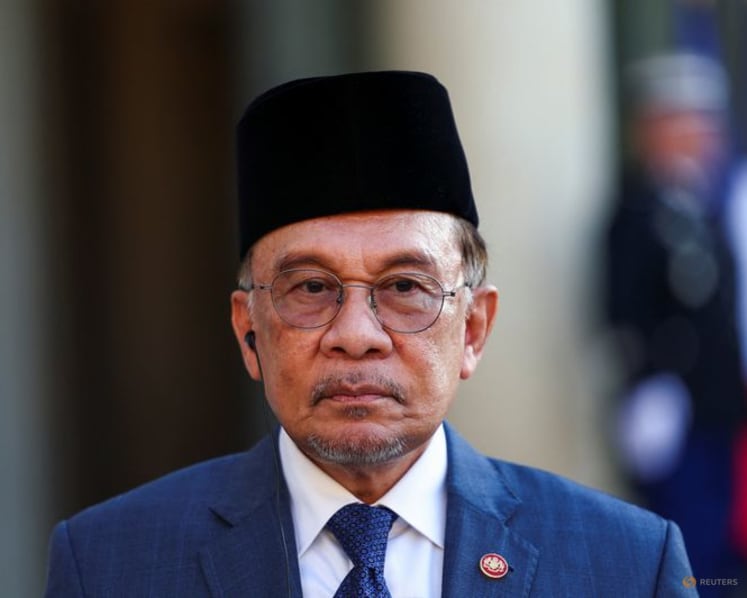
Political observers argued that Anwar is unlikely to escalate into an overt ideological confrontation with PAS. Strategically, the prime minister understands that winning over hardline conservative voters is improbable. The more pressing task is to retain moderate Malays while consolidating minority support.
Analysts also cautioned against overstating the electoral impact of PAS’ formal ascendancy.
Azmi Hassan, senior fellow at the Nusantara Academy for Strategic Research, said that PN may already have reached its “ceiling” among Malay voters.
“The appointment of Dr Sam as head of PN will not add any value in terms of adding votes among the Malays as this has reached the saturation point. What they need now is support among non-Malays,” he said.
“Yes, Dr Sam is a professional. He is not a cleric, and his views are more moderate. But Malaysians know that the person behind these decisions is Tuan Guru,” Azmi added, referring to PAS president Abdul Hadi. “They believe he will ultimately call the shots.”
If PAS’ leadership is unlikely to significantly expand minority support for PN, the more consequential battlefield may lie elsewhere.
Analysts suggested that the sharper contest for the Malay vote bank will be between PN and Anwar’s coalition partner United Malays National Organisation (UMNO), a Malay nationalist party seeking to reclaim ground lost in 2022. Rather than shift further right, Anwar may instead rely on UMNO to blunt PN’s appeal in rural and conservative constituencies.
Political scientist Syaza dismissed suggestions that Anwar would pivot further toward conservatism in response to PAS’ rise.
“Some say that Anwar would now turn more conservative, but I disagree,” she told CNA. “Anwar has always been consistent in the sense that he is centre-right. I don’t think he would go any more right because it wouldn’t benefit him.
“He and PH could never win over conservative Malaysians, and I think they know that. If anything, the Madani government would probably lean on UMNO to contend with the PN in Malay seats.”