‘Shame, anxiety, and fear’: The psychological toll of online sexual violence in Indonesia
A spate of recent scandals involving alleged online sexual harassment at Indonesia’s universities has ignited the debate over women’s safety as activists and policymakers push for change.

The rise in online sexual violence cases is influenced by pornography and media content that objectifies women’s bodies, an analyst told CNA. (Photo: iStock/davidf)

This audio is generated by an AI tool.




JAKARTA: Allegations of sexual harassment involving students from various Indonesia universities have sparked public outrage across the country and scrutiny over women’s safety in the digital space.
First, law students from the University of Indonesia (UI) were suspended on Apr 16 after screenshots went viral online chat group conversations containing vulgar remarks, the objectification of women’s bodies, and obscene jokes targeting at least 20 students and seven lecturers.
The university said an internal investigation is underway, in coordination with the government and the police.
The incident sparked a wave of other allegations.





Following the UI case, 16 students from the Mining Student Association at the Bandung Institute of Technology were suspended, after a viral video of their traditional music group Orkes Semi Dangdut performing a song titled “Erika”.
The song plays on the negative stigmas associated with young widows in Indonesian society as potential husband stealers with vulgar lyrics objectifying women’s bodies and depicting sexual relations.
Bogor Agricultural University this week also sanctioned 16 students allegedly involved in a chat group containing conversations that demean women, two years after the incident purportedly happened in 2024.
Posts on X showed them making comments about women’s bodies, with prospective group members even required to rate women considered the most "gacor", a slang term implying sexually attractive or desirable.

Indonesia passed its sexual harassment law - the Sexual Violence Crime Act - in 2022, a decade after the bill was initiated by Indonesia's National Commission on Violence Against Women in 2012.
The law criminalises sexual violence, including electronic-based sexual violence, while focusing on providing victim protection, rehabilitating perpetrators and creating a violence-free environment.
Penalties for electronic-based sexual violence could include a jail term of up to four years and a 200 million rupiah (US$11,591) fine or could be up to six years jail and a 300 million rupiah fine if there is intent to extort, coerce or deceive victims.
The Indonesian Education Monitoring Network (JPPI) recorded 233 cases of violence in educational environments during the first three months of this year, nearly half of which were sexual violence.
According to JPPI, cases in educational environments have been on the rise, from 285 cases in 2023 to 573 cases in 2024 to 641 in 2025.
Amid intensifying public debate, analysts shared with CNA the potential influences behind such behaviours, the psychological impact on victims, and what is needed to drive change to protect women from sexual harassment online.
MALE SEXUAL FANTASIES
At 14, Indonesian Neca, 22, was texting a male schoolmate she liked on Instagram.
She shared her account password with another male classmate, hoping he could read their texts and help her come up with things to say. Instead, he impersonated her, sending sexual messages to the boy without her consent.
The recent University of Indonesia graduate, who asked to be identified only by her nickname, later cut off her male classmate’s access, but continued receiving sexual messages from the boy she liked.
“I told him that I was not comfortable with it. Although he would say sorry, he continued repeating the same behaviour,” Neca told CNA.
For nearly three years till she was 17, he sent her messages requesting intimate photos and asked her to engage in sexual activity with him, while often commenting on her body and saying he wanted to kiss her.
Although she repeatedly expressed discomfort and turned down his requests to send intimate photos, she eventually felt pressured to send a photo of herself in a tank top without a bra.
Screenshots from their conversation circulated around school - though she was unaware how the conversations were leaked - and boys at school started sexualising her in their conversations.
Another male classmate also asked her to send photos and videos of herself.
“During that period, I cried almost everyday,” she said.
“I kept blaming myself for what I did … I once tried to hurt myself because I thought I could move the pain from my chest."

Nur Hasyim, founder of Aliansi Laki-Laki Baru, an Indonesian social movement encouraging men to participate in ending violence against women, said that such cases of sexual violence are not separated from toxic masculinity norms, which “positions men as superior to women”.
He pointed out how entrenched this mindset is, to the extent that it transcends social hierarchies, as the perpetrators, who are university students, resort to objectifying their female lecturers' bodies.
These conversations often take place on online platforms, which are arguably more conducive to such “groupthink”.
"That ideology is so deeply ingrained that even the status of being lecturers does not change how they view women. They still see even female lectures as (sexual) objects."
Neca told CNA that she never reported her experience to anyone, fearing she would be blamed for her actions in a “very conservative society”.
Musni Umar, a sociologist and adjunct professor at the Asia E University Malaysia specialising in Indonesia, said that the rise in online sexual violence cases is influenced by pornography and media content that objectifies women’s bodies.
"All of this can be seen on social media, which no one is able to fully control," he said.
According to Musni, such conversations do not stop at the verbal level, but can become a "gateway" to physical sexual violence.
"It is not always just talk. In many instances, they end up wanting to act on it," he said.

Catarina Asthi Dwi Jayanti, a clinical psychologist at the Santhosa Mental Health Center in Indonesia, explained that the desire for recognition and social acceptance within peer groups can dull perpetrators’ empathy towards others, particularly in cases of harassment towards women who become objects of sexual fantasy.
Catarina also pointed to the possibility of moral disengagement among perpetrators, a condition in which an individual’s internal moral standards appear to be switched off. This may result in the perpetrator seeing a victim as deserving of harassment, or reduced to an object or category.
Catarina added that these dynamics may become more complex among adolescents and young adults, when personal identity is still developing.
"This is why individuals who are usually empathetic can end up laughing at harassment and even taking part in it," she explained.
Even so, she stressed that not all adolescents and young adults will fall into such patterns.
"Those who have a stronger sense of self ... who place ethical values as a key part of their identity, or who have support from other environments, tend not to engage in similar behaviour," she said.
How other Southeast Asian countries are tackling online sexual harassment
Southeast Asian nations have reported rising rates of online sexual harassment, and some have ramped up legislative response, including efforts to offer quicker legal pathways for victims and removing sexually harmful online content.
Here’s a look at the situation in some countries.
Malaysia
In Malaysia, reported sexual harassment police cases rose over 60 per cent from 522 in 2023 to 872 in 2025.
Malaysia’s Anti-Sexual Harassment Act, enacted in 2022, created a tribunal for victims to seek quick, affordable redress without a lawyer but was only established in 2024.
Since its formation, 86 complaints have been recorded, including 50 sexual harassment complaints, according to local media reports. The tribunal also said in 2025 that “a number” of complaints involved online or digital elements.
In March 2024, Malaysia also proposed an e-filing system to allow victims outside the country to lodge sexual harassment complaints with the tribunal.
In its 2024/2045 annual report, the Women’s Aid Organisation in Malaysia recorded a rise in technology-based harassment cases, which more than doubled from 92 to 251 between 2024 and 2025.
Thailand
Thailand's amendments to its criminal code took effect on Dec 30, 2025, criminalising not only physical sexual harassment but also online and verbal harassment.
Penalties for “basic sexual harassment” - defined as sexual conduct causing distress, embarrassment, or fear - include a jail term of up to one year and a fine of up to 20,000 baht (US$619) or both.
On Jan 26, the government also expedited a judicial process enabling online sexual harassment victims to obtain court orders to suspend and remove obscene online content through a “Take it down” button.
This was followed by the Thai Criminal Court ordering the removal or suspension of more than 380,000 illegal website links in the first three months of 2026, surpassing the total recorded in 2024.
Philippines
In March this year, the Philippines government alongside the Philippine Commission on Women proposed amendments to its Safe Spaces Act enacted in April 2019, aiming to address technology-facilitated gender-based violence and close existing legislative gaps.
The commission stressed that abuse is evolving, with many cases occurring through digital platforms, with proposed amendments expanding coverage to groups such as student interns and trainees not explicitly covered by the law.
From 2012 to 2025, Philippines' Foundation for Media Alternatives mapped 738 cases of online gender-based violence in the country through media reports. Young women of 18 years old and younger reportedly made up the majority of victims.
Vietnam
Unlike its regional neighbours, Vietnam has no standalone sexual harassment law, with protections falling under a 2021 Labour Code but limited to the workplace where sexual harassment is prohibited but not criminalised: employers are legally required to define sexual harassment and act on complaints. The law also does not cover online abuse.
In April, Vietnam approved a national programme on preventing gender-based violence for the next five years, expanding victim-centered support services within its cities and provinces which will run at least five community-based safe shelters in each province tailored to local needs.
All identified victims are expected to access at least one support service by 2030.
The programme also plans to establish inter-agency coordination mechanisms in 60 per cent of his localities to prevent and address sexual violence.
A 2021 UN report found that about 11.4 per cent of Vietnamese women had experienced sexual harassment at some point in their lives". In a 2016 report, non-profit ActionAid found that 87 per cent of Vietnamese women and girls have encountered sexual harassment in a public place.
"A SAFE SPACE TO HARASS"
Tunggal Pawestri, a women’s rights activist and gender consultant at the Humanist and Social Innovation Foundation in Indonesia, said that verbal sexual harassment often shifts in digital spaces, particularly in private group chats.
Perpetrators feel more at ease making vulgar remarks because the interaction takes place in a closed setting.
"They develop the illusion that what happens in online spaces does not carry the same consequences as in offline settings. In reality, it is just as disrespectful, degrading, and harmful," she said.
Tunggal stressed that what is often dismissed as humour, both online and offline, still falls under verbal sexual violence. Domestic understanding of violence also remains limited, where harassment without physical injury is not taken seriously.
"We are raised in a culture that tends to define violence, especially sexual violence, very narrowly. Because there are no physical wounds or visible marks, verbal harassment is often not regarded as violence," she said.
A Malaysian victim's account and an expert's take on regional gaps
A technology and media expert and an online sexual harassment victim, both from Malaysia, shared their perspectives with CNA, pointing to possible gaps in detecting online sexual harassment in the region.
Nuurrianti Jalli, a visiting fellow at the ISEAS-Yusof Ishak Institute, said that online sexual harassment consistently outpaces response, pointing to gaps in regional laws amid the rise of artificial intelligence (AI) and nature of online platforms.
She cautioned that closed or encrypted platforms, such as Telegram, WhatsApp and Discord, can make detection and enforcement harder and allow abusive content to spread faster than takedown mechanisms can respond.
With AI's rise, Nuurianti also stressed a possible worsening climate, pointing to increased vulnerability for women compared to the pre-AI era where harassment was based on pre-existing intimate photos.
“Synthetic generation removes that precondition. Any woman or girl with a public photo anywhere online is now a potential target,” she said.
“Platforms and courts have to adjudicate authenticity before they can adjudicate harm, and most are not equipped to do that at scale.”
Nuurrianti urged for court-based takedown processes across the region, such as Thailand’s new sexual harassment law, and to clearly make AI-generated sexual images illegal, similar to what Singapore’s 2025 Criminal Law amendments are proposing.
She highlighted that online sexual harassment is not only widespread but still underreported across the region, with higher reported figures in countries like Singapore reflecting stronger research and reporting systems rather than higher incidence.
However, she said, a cultural shift is also important.
“The UI case matters not because the behaviour was new but because the response was," she said.
“Female students publicly confronted the perpetrators at a faculty forum and demanded accountability.”
A 25-year-old graphic design executive in Malaysia shared her experience encountering online sexual harassment while looking to rent a property on a local real estate platform.
After arranging for a virtual viewing, a landlord on the platform asked for her phone number to continue the discussion on WhatsApp. That was when things took a bad turn.
“When he said he wanted to ‘enjoy my body’, my heart immediately dropped. Then he said, ‘Before you rent my unit, let’s play first. Can?’” she recounted to CNA.
“When he said that, I was texting him during work. I ended up walking out of the office with teary eyes, my heart racing, and my face feeling hot and flushed,” she added.
After blocking his number and reporting the incident to the platform, she was told that the landlord and the listing were fake, though her uneasiness persisted. She did not make a police report nor inform her parents out of fear that she may be blamed for what happened.
The incident made her more cautious when approaching landlords, sticking only to female ones, and she no longer goes for physical viewings alone.
“I (would) advise (other women) to prioritise viewing units from female landlords whenever possible,” she said.
“If there is absolutely no choice and the landlord is a man … they should bring at least two guys with them for safety.”
LASTING PSYCHOLOGICAL SCARS
Drawing on her experience as a gender consultant who frequently supports sexual violence survivors, Tunggal said that the effects of harassment can leave a lasting imprint.
"These victims experience lifelong psychological distress and may find themselves thinking, ‘Why is it so easy for me to be belittled, to be degraded?’ They feel diminished not only as women, but as human beings," she said.
Psychologist Catarina explained that verbal objectification can shape how women perceive themselves in the long term, with victims seeing themselves through the lens of others.
"This leads to the internalisation of objectification, resulting in self-directed body shaming, perfectionism about appearance, or even Body Dysmorphic Disorder, an excessive preoccupation with perceived physical flaws," she said, adding that victims can also become dependent on external validation.
Catarina aded that risks can escalate into more serious conditions if experiences recur, including a higher likelihood of depression and anxiety disorders, while affecting relationship-building.
"(Victims may) struggle to trust the opposite sex, feel that relationships are judged purely on physical appearance, or withdraw from relationships altogether," she said.
Years on from her experience of online sexual harassment, Neca still approaches romantic relationships cautiously, in fear that she would face the same patterns of pressure, manipulation and disrespect.
She has also joined an advocacy group at her university that provides support for sexual harassment victims.
“He’s living a good life (now), while I’m still trying to put mine back together piece by piece,” she added.
“Sometimes it affects my sense of trust, I tend to overthink people's intentions now and it's definitely harder to fully feel safe.”
Reynitta Poerwito, an Indonesian clinical psychologist from Eka BSD Hospital, described how the effects of online sexual harassment on young people often run deeper than what is immediately visible, with victims dealing with overlapping emotional responses.
"What I often see in practice is a mix of shame, anxiety, and fear. Some start having trouble sleeping, find it hard to focus, or keep replaying the experience in their mind. Many also blame themselves, even when it’s clearly not their fault, and begin to withdraw socially," she said.
Reynitta also observed that past harassment can affect whether someone can assert themselves, or be comfortable to speak up or set boundaries.
For perpetrators, Reynitta said that people rarely grow out of harmful behavioural patterns easily,
“If I speak from what I see in practice, this is rarely just ‘a phase’ that people outgrow on their own,” she explained, noting that a person’s relationship with boundaries, empathy, and power tends to take shape early in life.
“Over time, they can start to carry a quiet belief: this is okay … this is how I get what I want. And slowly, other people’s discomfort becomes less visible to them, less important.”
For her, addressing the behaviour early is not about punishment alone, but about creating an opportunity for change.
“It’s about catching them at a point where they can still learn, still shift, still develop empathy in a meaningful way before those patterns become much harder to change.”

STANDING WITH THE VICTIMS
Minister for Women’s Empowerment and Child Protection Arifatul Choiri Fauzi said there is a need to strengthen education raise awareness of the Sexual Violence Crime Law from an early age.
Active engagement with students is also essential to ensure that prevention messages are delivered in relevant and effective ways among university communities.
Echoing this, Tunggal, the women’s rights activist and gender consultant, stressed that efforts to address gender-based violence cannot rely on a single approach.
The first intervention, she said, is structural change within the education sector, to stop reproducing narratives positioning men as superior to women but instead begin integrating values of equality early on.
She added that gender equality education must be continuously reinforced at every level and not be a one-off initiative.
In addition, she said educational institutions must be willing to set firm rules against violations.
"And (regarding sexual violence) there must be a clear warning from the outset, that when you do this, then you are out. We do not want to have these kinds of students."
Such clarity helps establish ethical standards that leave no room for tolerance of misconduct, she added.

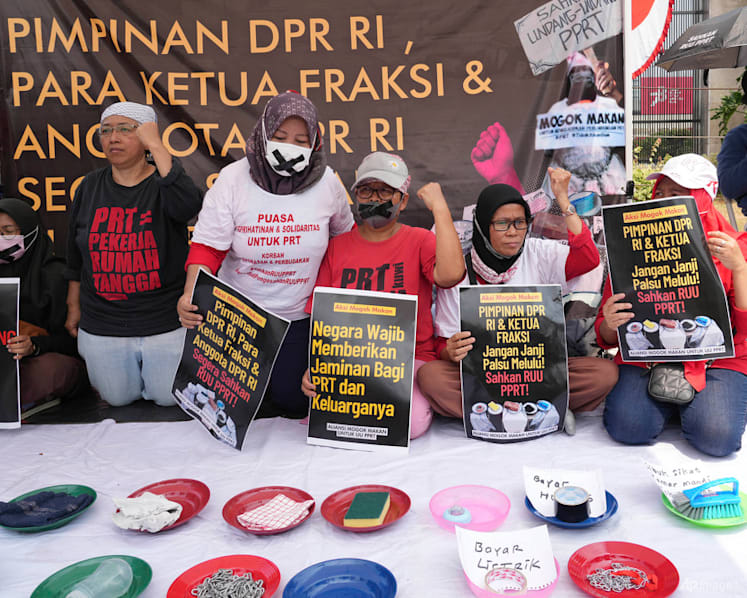
The second intervention, she said, relates to law enforcement, which must truly uphold justice for victims, with the Sexual Violence Crime (TPKS) Law still facing challenges, from enforcement to the understanding of authorities.
The third intervention, she added, is cultural change, which is equally important, particularly the role of men.
"We hope more men will speak up, and that this is not seen as a women’s issue, but as a human issue."
"I think there needs to be more men who are not ashamed, not afraid, or hesitant to call out their friends (who make sexually harassing remarks), instead of just staying silent or laughing along. Because if they do that, they are also enablers," she said.
Meanwhile, Nur Hasyim of social movement Aliansi Laki-Laki Baru stressed that educational institutions should serve as spaces to open up conversations about different forms of violence, but he believes this potential has not been fully utilised.
"For example, discussions about sexual violence should not only take place on university campuses, but even in earlier educational settings such as junior high and senior high schools," he said.
Nur Hasyim also encouraged speaking up within one’s own circles, both offline and online, despite the considerable risk of backlash.
"I have experienced it myself when speaking out against the objectification of women, people would say, 'Ah, don’t be so serious," he said.
"So within social circles, there needs to be men who are brave enough to speak up. Otherwise, these views will continue to persist and will not be seen as a problem."