‘Hardcore fans’ of Proton in UK, Australia hoping for brand’s return, but Malaysian carmaker has other plans
Proton enthusiasts are keeping the brand alive in the United Kingdom and Australia, but the Malaysian automaker says its focus is on regional markets.
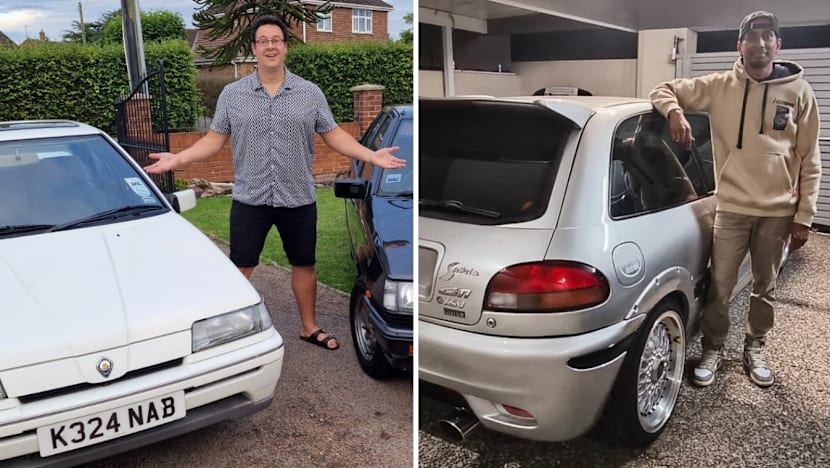
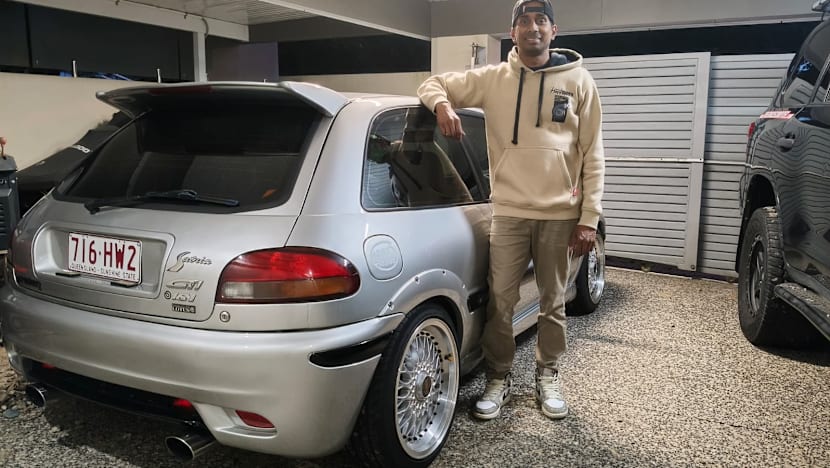
Briton Jon Coupland (left) with his Proton Saga/Iswara and Australia-based Kugan Gnanasegaran with his Proton Satria GTI. (Photos: Jon Coupland, Kugan Gnanasegaran)

This audio is generated by an AI tool.


KUALA LUMPUR: In 2018, Briton Jon Coupland was browsing the website of a local car marketplace at his home in Lincolnshire in northeast England when he saw a 1990 sedan by Malaysian automaker Proton selling for 700 pounds (US$948).
Growing up with a car mechanic father, Coupland had developed an interest in buying “weird and unusual” cars, and this particular model piqued his interest.
“I'd never seen one before. It was quite cheap … but I thought I really liked the styling of that. I literally got in my car straight away, drove 30 minutes to a town called Skegness to where it was and bought it that night,” he told CNA.
Coupland brought the Proton Saga 1.5 SE LE home and soon found himself going “down a rabbit hole” of learning more about the brand.





“I started realising that it was big in the United Kingdom very early on, and then now, most of them have disappeared,” he said.
“The people that have still got Protons are those that have either had them from new or are using them as a cheap runaround, and they don't get looked after,” added Coupland, 35, who quickly became a die-hard Proton fan and then proud owner of 11 more cars from the Malaysian brand.
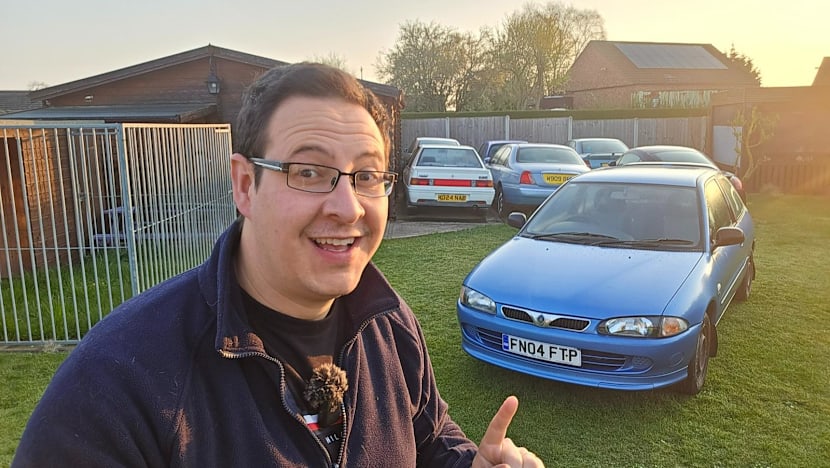
Proton enthusiasts like Coupland in mature markets such as the UK and Australia are calling for the company to make a comeback, given remnants of a small but loyal following and how they feel the brand could compete there again with the right models and strategy.
In automotive terms, mature markets like the United States and Europe prioritise electrification and premium technology, while emerging markets like South Asia and Latin America focus on smart and affordable cars for first-time buyers.
But while Proton acknowledged its “brand affinity” in the UK and Australia, it told CNA its priority remains on strengthening its position in “regional and high-growth markets”.
“The focus is not just on entering new markets, but ensuring long-term sustainability and competitiveness in each market we operate in,” Proton International Corporation chief executive officer Edmund Lim said.
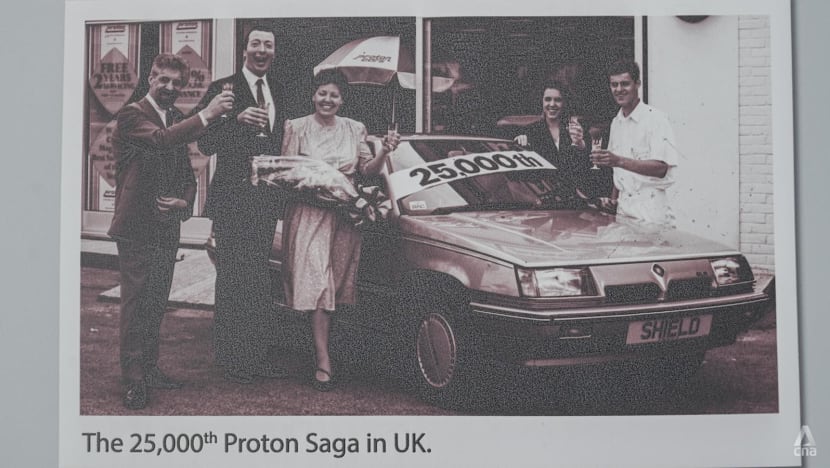
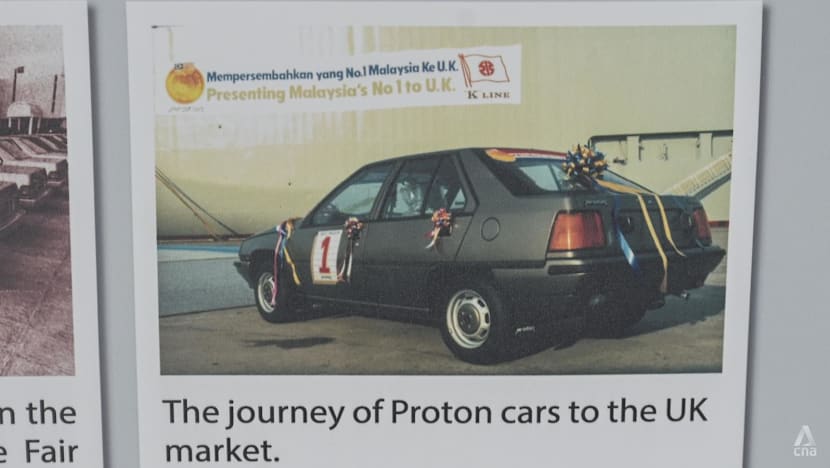
Proton launched in the UK in 1988, notably becoming the fastest-growing new car franchise there by 1992 with annual sales reaching 15,000 units.
The company saw success there in the 1990s for its affordable and reliable cars based on older Japanese technology.
But amid declining sales, stiffer competition and difficulty meeting tighter European Union emission regulations, Proton quietly exited the UK market in 2014.
According to a UK online database that tracks car registrations in the country, around 1,300 Protons remained on the road as of end-2025, or less than 1 per cent of the roughly 140,000 Protons sold in the UK.
A few of them belong to Coupland.
The same night he bought his first Proton, Coupland decided he wanted to become a “champion” for the brand in the UK. The police detective bought different models over the years, spending about 10,000 pounds including restoration costs.
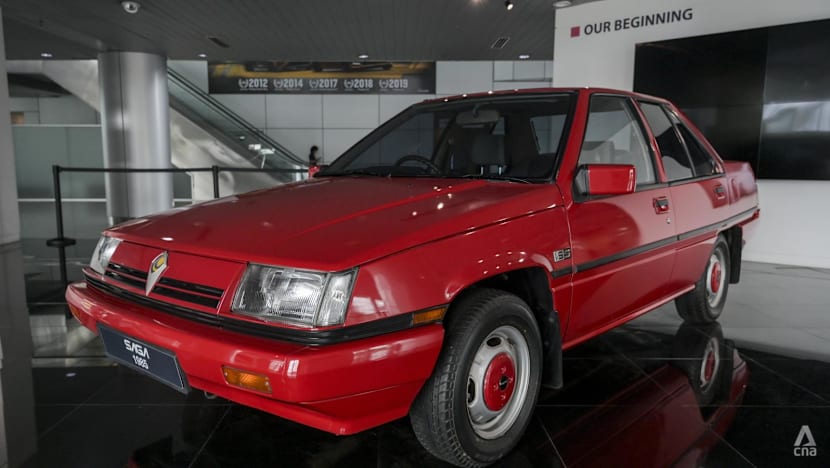
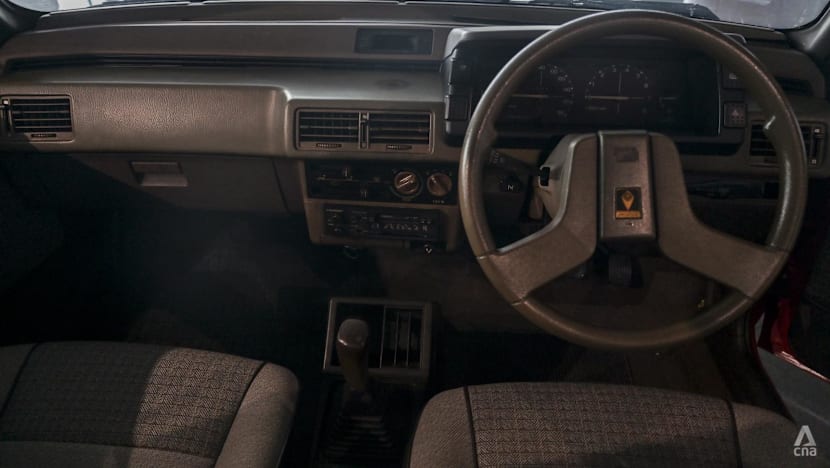
Coupland currently owns 12 Protons, including four Satrias and a 1985 Saga "Black Knight" edition, which won the top award at a prestigious classic car show in 2021.
His latest piece? A Wira bought in February this year. “It's very comfy to drive and actually very well built,” he said.
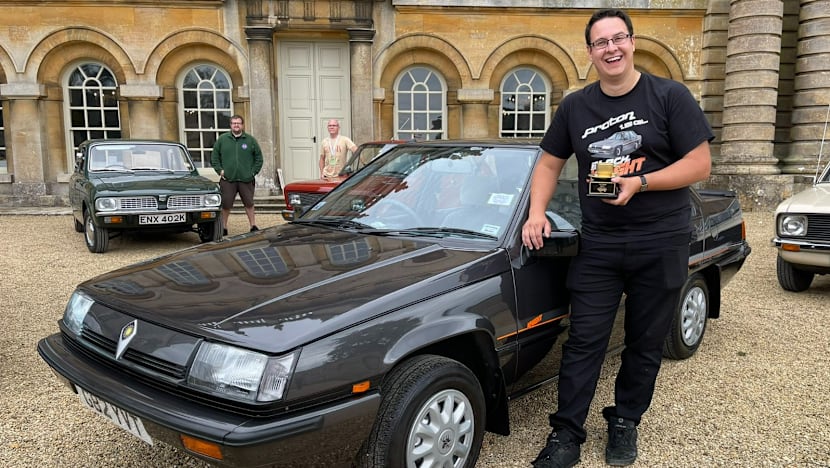
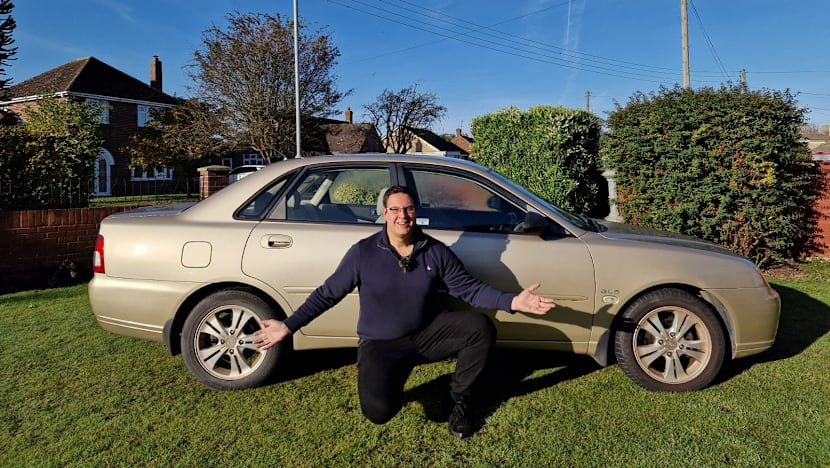
Coupland maintains his Protons with his father, brings them to exhibitions, and runs a YouTube channel called Jon Coupland Cars, where he showcases his collection to more than 23,000 subscribers.
By around 2010, Proton was struggling in the UK, Coupland said, noting that newer models like the Gen-2 and Savvy “didn’t really hit home” given their lack of Japanese technology and tougher competition in the compact car segment.
“People that were buying Protons in the 90s were typically older people … They were dying with their Impians and Wiras, and nobody was continuing it, which was a shame,” he added.
“I would love for them to bring Proton back.”
PROTON FOCUSING ON “REGIONAL” MARKETS
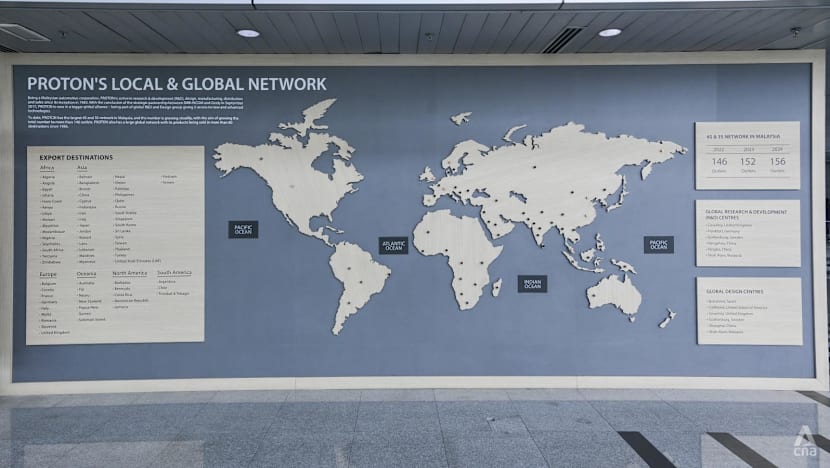
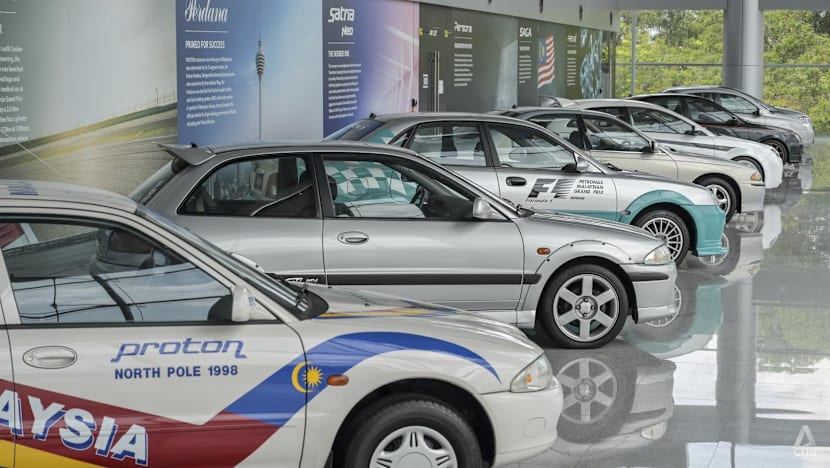
During its heyday in the 2000s, Proton models were present in 64 countries globally, including in Europe, Oceania, North America and South America. There are no reported figures on the total number of cars it exported to these countries then.
Today, it exports to 18 markets across Southeast Asia, South Asia, Africa and the Middle East, including Brunei, Bangladesh, Pakistan, Egypt, South Africa and Kenya, among others.
Proton said in a statement in July last year that since 2020, it had exported more than 20,000 cars, making it the leading exporter of vehicles from Malaysia.
Proton achieved its target of exporting 6,000 units across international markets in 2025 having set up a dedicated export arm that year to spearhead overseas expansion efforts, and is aiming to double that figure in 2026 before hitting more than 60,000 units by 2030.
“Overall, we believe we are on the right trajectory, with the focus not just on volume growth, but sustainable and scalable expansion,” said Proton’s Lim.
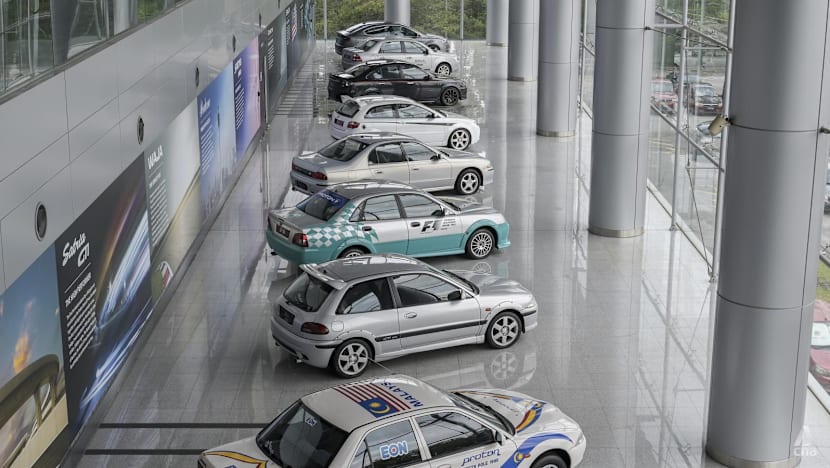
According to Lim, Egypt is currently Proton’s largest export market, supported by the launch of local assembly operations there in September 2024.
Proton’s completely knocked down (CKD) exports to Egypt is estimated to contribute 16,000 units to the company’s total export volume from the fourth quarter of 2024 to the end of 2026, generating a revenue of RM570 million, Malaysia's Ministry of Investment, Trade and Industry previously said.
A CKD car is a vehicle imported as separate parts and assembled in the destination country, rather than being imported as a completely built up (CBU) unit.
In 2017, Chinese automaker Geely bought a 49.9 per cent stake in Proton and revitalised the then-flailing brand through technology sharing and launching several Geely-based new models.
DRB-HICOM, a Malaysian government-linked company dealing in automotive manufacturing and services, owns the rest of Proton.
DRB-HICOM and Geely have also collaborated to launch the Automotive High-Tech Valley (AHTV) in Perak, serving as the manufacturing base for Proton's electric vehicle (EV) lineup and a hub for new energy vehicles and intelligent mobility.
“Achieving the longer-term aspiration will also be supported by synergies with Geely’s export commitments and production activities at AHTV, helping strengthen overall plant utilisation and export growth,” Lim said.
Malaysian automotive industry analyst Hezeri Samsuri said Proton should focus on exports to continue growing as a company, suggesting a need to venture out of Malaysia’s relatively small market to boost profits.
On May 6, Proton said it sold 67,298 cars globally in the first four months of 2026, while increasing its market share in Malaysia to 26.4 per cent of total industry volume.
But Proton is second behind fellow national automaker Perodua, which maintains the biggest market share in Malaysia at 43.9 per cent as of end-2025, based on internal estimates.
“Proton has to focus more on aftersales (service) and branding for overseas markets. They are using Geely’s products, which are already of global standards,” Hezeri told CNA.
However, he cautioned that mature markets like the UK and Australia are flooded with new Chinese automotive brands offering “better and more affordable” products.
“Proton on its own can never go into those markets, but if Geely wants to use Proton there, it would be great because Proton has been there before and is still known as a product that provides vehicles with good suspension,” he added.
ENTHUSIASTS WANT TO SEE PROTON COMEBACK
Coupland, the Proton collector in the UK, said the brand’s presence there is kept alive by “a few hardcore fans”.
Some use performance models like the Satria in drag races or time trials, while others take less valuable models to “destruction derbies", where drivers race and crash older vehicles on oval dirt or tarmac racks.
“And then there’s me,” Coupland said, adding that he does not know many other Proton collectors in the UK.
He recently became administrator of the Proton owners’ club UK Facebook group, which has just under 10,000 members.
“What I see from the Malaysian community that watches my videos … is that a lot of the comments are, ‘Oh, Proton sold out to the Chinese. It's not the ethos of Proton anymore; it's all Geely rubbish’,” he said.
“I personally would like Proton to come back to the UK with the ethos that they had, in that ‘we're making our own national car’.”
While Coupland admitted he would rather drive an internal combustion engine car like the turbocharged Proton Satria GTI, he said he does not have a problem with Geely or EVs in general.
“If Proton could come back with exciting new things in the UK, I would be all up for that. But I've never driven a modern Proton, so I don't know the honest answer,” he said.
“So am I going to get angry (if) it's a cookie cutter Chinese EV? No, not until I've driven one.”
Meanwhile in Australia, an IT professional who imports Proton spare parts as a side business told CNA the brand retains a “healthy cult following” Down Under despite exiting in 2017.
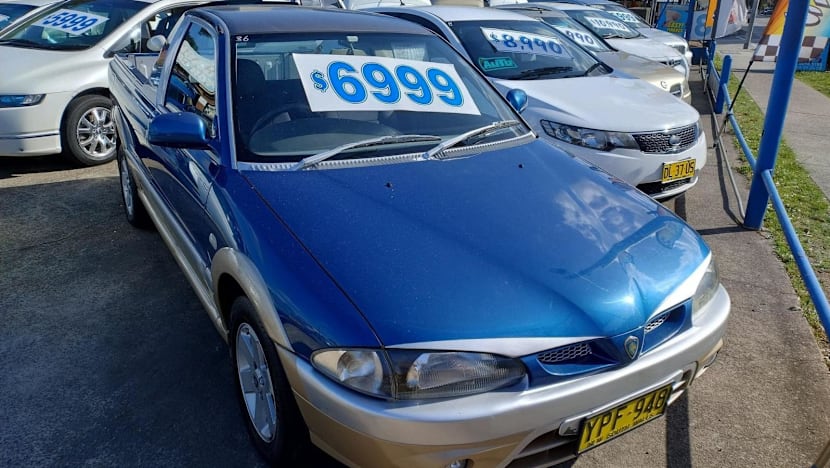
Kugan Gnanasegaran, a Malaysian who moved to Australia in 2010 and is now a permanent resident there, said some Asians living in the country are enthusiasts of the Satria GTI, while Australians prefer the Proton Jumbuck, a kind of car-based pick-up truck.
Known as utes (utility vehicles), these cars are popular in Australia because they combine transportation and off-road capabilities with modern passenger car comforts.
Proton launched in Australia in 1995 and sold just 1,226 of its cars in the first year, with sales steadily growing in the next few years, according to a 1999 report by the Australian Financial Review newspaper.
It was the Jumbuck ute, however, that proved to be the brand’s most successful model in the mid-2000s, said an article by Australian automotive publication CarExpert.
The Jumbuck was axed in 2009, but Proton still had some cards to play like the S16 sedan - briefly Australia’s cheapest car - and its next-generation Prevé and Suprima small cars, as well as the Exora multipurpose vehicle.
Despite the new products, Proton sales could not recover to their height of 2,336 cars in 2007.
“With sales slumping to just 182 units in 2016 and stricter emissions regulations enacted locally, Proton closed up shop in 2017 and has yet to return,” the CarExpert article said.
The models Proton were producing at the time - the S16, for instance - were “not the best-looking” cars, said Gnanasegaran, 45.
“I think that they were trying to use the same marketing strategy as they were in Malaysia (at the time) - people wanted fuel economy; they didn’t care how the car looks,” he said.
“Whereas here, looks is one thing, and then the other thing is performance as well.”
There is no publicly available data on the number of Protons left on Australia’s roads, but enthusiasts estimate the surviving fleet is only a small fraction of the roughly 35,000 units originally sold.
A Facebook group for Australian Jumbuck enthusiasts has 5,100 members, while a Satria GTI group has more than 8,500 members, Gnanasegaran said, though he feels numbers in the latter could be inflated by Malaysian members.
“It's more of a cult following, I would say. The people who know them love them, and the people who don't know them, they’re kind of like, ‘What is this?’” said Gnanasegaran, a former racecar driver who owns a Satria GTI in Australia.
Gnanasegaran believes Proton made its name in Australia in the performance heritage space with cars like the Satria.
“When it comes to car culture in Australia, it's very performance oriented. So if they bring something that can compete (with Japanese brands) in terms of performance handling in that space, then they can most probably make a comeback,” he said.
The brand should collaborate with automotive journalists to promote its comeback, he said, although he does not think Proton’s latest EVs will prove popular in Australia, a huge country with remote areas and a high level of range anxiety.
“So if Proton wants to bring back the Satrias - the Neos or the R3 - and they bring it back for a limited run, they'll most probably sell up,” he added.
To boost its appeal in international markets, Hezeri, the Malaysian automotive analyst, said Proton could export cars with “better ride and handling”, something he described as the brand’s “real forte”.
“Proton is also active in motorsports and that can be a bonus too - (it could export) a sportier version of Geely’s products, for example,” he said.
PROTON MINDFUL OF “INTENSIFYING” COMPETITION
Regardless of the international market, Proton acknowledged its target of scaling beyond 60,000 export units annually by 2030 is “ambitious”, though it insisted this is “underpinned by a clear and structured long-term strategy”.
Lim, the CEO of Proton’s international arm, said drivers of the brand’s export strategy include the expansion of CKD operations in key markets, increased production capability from its new EV plant in Perak, and the introduction of new models including sport utility and new energy vehicles.
“At the same time, we are mindful of challenges such as regulatory and homologation requirements (for safety, performance and environmental standards), currency fluctuations, logistics complexity, and intensifying competition across global markets,” he said.
Moving forward, Proton’s strategy is to deepen its presence in existing markets while expanding into high-potential regions such as Southeast Asia, Central Asia and Africa, Lim said.
The company intends to compete by offering a “strong balance of value, safety, ride and handling, and increasingly, technology and design”, he said, citing its use of a fully-owned “modular architecture” platform to develop cars in different segments that meet global standards on future technologies.
“What we are building for Malaysia is increasingly designed to be globally competitive, allowing us to leverage the same strengths across both domestic and export markets,” he said.
As for potentially returning to the UK and Australia, Lim said Proton will “continue to monitor opportunities and remain open to future possibilities where there is a strong business case”.


Perhaps there could be some lessons closer to home.
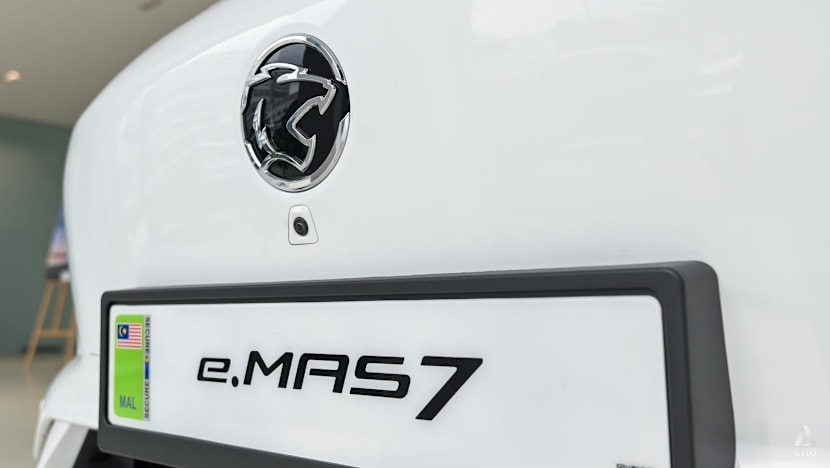
Proton’s latest comeback in a mature market is in neighbouring Singapore: More than a decade after its exit in 2014, the company started selling its Geely-based e.Mas 7 EV in the Republic in September last year, followed by the smaller e.Mas 5 in May.
A total of 220 Protons remain on Singapore’s roads as of end-2025, down from 510 as of end-2022.
According to Singapore’s Land Transport Authority (LTA), 42 new Proton vehicles were registered in 2025 and another 88 were registered in the first four months of 2026. The LTA classifies new registrations of Protons under Geely.
Proton said it exported 224 cars to Singapore in 2025.
CNA has contacted Vincar Group, the authorised distributor of the e.Mas series in Singapore, for comment.
VILLAGE CHAMPION?
Nevertheless, the Malaysian automotive analyst Hezeri feels Proton can hit its export targets if it can figure out how its international markets are shared with Geely.
“Geely at first promised Proton would be their hub for the right hand drive market but it seems that Geely has started doing its own CKD,” he said, referring to how Geely’s EX2 - the basis for Proton’s e.MAS 5 - is locally assembled at a plant in Indonesia for sale there.
“Perhaps Geely can rely on Proton to supply the components required for the right hand drive market.”
In the bigger picture, Hezeri suggested that the Malaysian government should be “stricter” with its national car companies and strongly encourage exports, or pull “certain advantages” they currently enjoy.


For example, the government recently introduced a policy that requires imported CBU EVs to have higher minimum thresholds in terms of cost, insurance and freight value, as well as power output.
Effective Jul 1, the move is the latest in a series of protectionist policies designed to shield national carmakers Proton and Perodua and the jobs they create from a deluge of cheap Chinese EVs, but risks angering consumers looking for more affordable yet quality options.
While having a “little protection” - like lower taxes for local brands - is acceptable, Hezeri said Malaysia needs to push for an open market to help its automotive industry attract more foreign investors and be more robust against global shocks.
“If not, Proton and Perodua will remain as jaguh kampung, and this will have a negative effect on Malaysian’s automotive industry,” he said, using a Malay phrase to describe someone who is a champion in their village, but fails to compete on a larger stage.
“Being a champion in your own country brings nothing, and it is the major reason why Malaysia had to sell nearly half of (Proton) to a foreign company.”