analysis Asia
Dispute over Chinese EV giant’s plant exposes Malaysia’s auto hub dilemma
A reported standoff between BYD and Malaysia’s Ministry of Investment, Trade and Industry (MITI) over strict manufacturing conditions has left the Chinese automaker’s RM1.3 billion Tanjung Malim assembly plant in limbo.
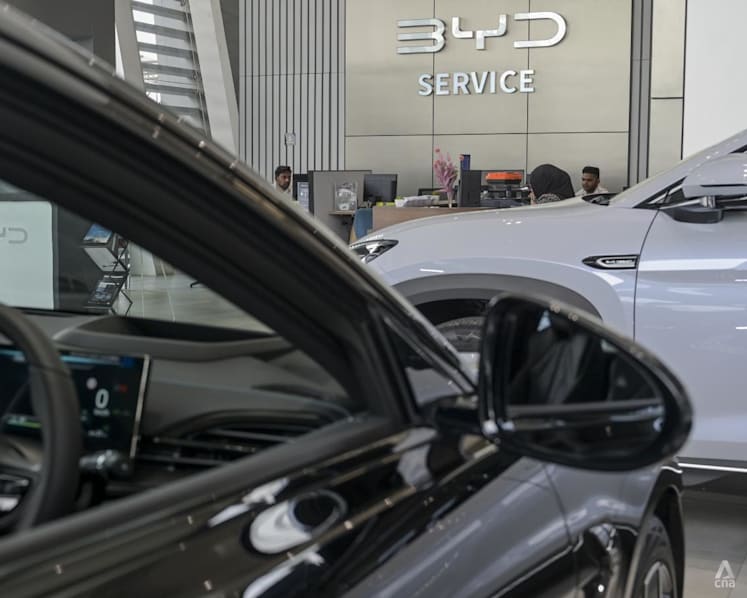
BYD's service centre and sales gallery in Shah Alam, Selangor. (Photo: CNA/Fadza Ishak)

This audio is generated by an AI tool.


KUALA LUMPUR: Malaysia’s move to impose conditions on Chinese electric vehicle (EV) giant BYD’s planned local assembly operations has cast a spotlight on a broader dilemma: how to pursue the country’s ambitions of becoming a regional automotive hub without undermining domestic carmakers, suppliers and jobs.
Analysts say the reported disagreement between Malaysia and BYD has raised questions over whether the country can attract major foreign EV investments while maintaining long-standing protections for its national automotive industry - a sector built around local vendor networks and industrial policies developed over decades.
At the centre of the standoff are conditions set by Malaysia’s Ministry of Investment, Trade and Industry (MITI) for BYD’s proposed assembly plant in Tanjung Malim, Perak.
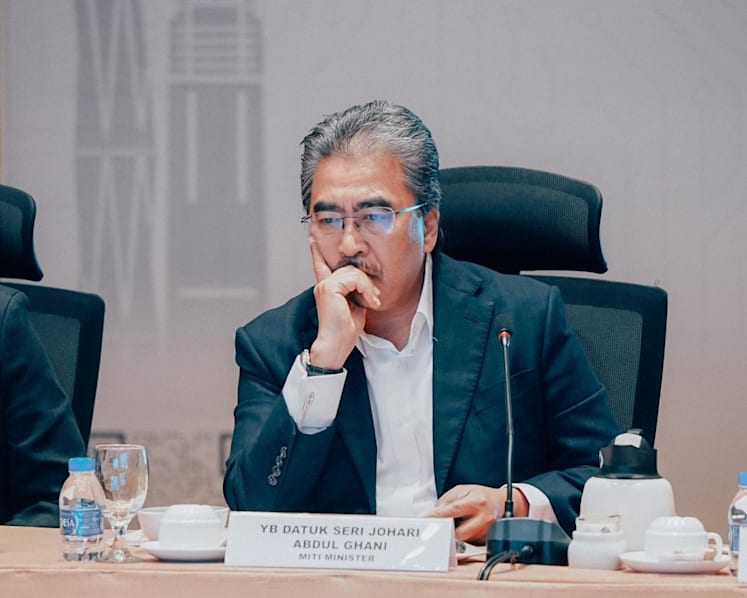
Malaysia’s Minister of Investment, Trade and Industry Johari Abdul Ghani told business news portal The Edge in its Mar 30 edition that BYD has been unable to agree with the ministry’s terms.
This includes that it exports at least 80 per cent of the cars produced in Tanjung Malim and price the remaining 20 per cent for domestic sales reportedly at above RM200,000 (US$49,500) a unit.
“These were the terms they couldn’t agree on. We have to protect our auto industry,” he was quoted as saying.
In a statement on Mar 31, MITI denied its policies were protectionist, but acknowledged they were designed so that “local assembly focuses on higher-value segments, preserving market space for national players like Proton and Perodua while still offering affordable EV solutions”.
However, it added that the minimum sale price “allegation is inaccurate”, as that for locally assembled electric vehicles by international carmakers was set at RM100,000.
MITI asserted that the policies are designed to create "deep local value, technology transfer and sustainable jobs" rather than act as a barrier to entry.





BYD had announced in August last year that it was set to begin local assembly at a new RM1.3 billion (US$320 million) facility at the KLK Tech Park in Tanjung Malim by the second half of 2026.
BYD had been earmarked to be the anchor tenant at the KLK Tech Park, with its first phase of operations initially set to occupy 150 acres.
“This commitment is not only about delivering innovative products, but also about investing in the future of Malaysia’s EV ecosystem — from local assembly, to talent development, and electric mobility,” said Liu Xueliang, the general manager of BYD Asia Pacific Auto Sales Division, in a press release on Aug 22.
While the site at KLK Tech Park has already been cleared of its former oil palm trees and prepared for development, the actual construction of the BYD assembly plant is unknown.
In response to CNA’s queries on the company’s plans and whether it is re-evaluating its Malaysian investment, a BYD spokesman said: “We have no further comment at this time.”
Analysts said that while Malaysia’s policies aim to protect its automotive supply chain and ensure that the EV transition does not disrupt its existing industrial ecosystem, they may deter large-scale international car manufacturing investments.
“Stricter conditions can raise the threshold for investment and delay or reshape specific projects. But Malaysia remains an active destination for automotive investment, particularly for firms willing to align with its industrial policy objectives,” said Jamil Ghani, a doctoral candidate at the Nanyang Technology University’s S Rajaratnam School of International Studies (RSIS).
“The policy question is how to manage the pace and structure of market entry, so that competition can take place without destabilising the broader ecosystem,” said Jamil, whose doctoral research focuses on Chinese foreign direct investment in the region.
BYD “NOT SINGLED OUT”, SAYS MITI
In its Mar 31 statement, MITI said its approach is “not protectionist but developmental” and is underpinned by the National Automotive Policy’s Next-Generation Vehicle vision and the country’s New Industrial Master Plan 2030.
Under these goals, Malaysia seeks to move beyond basic assembly into higher-value activities such as advanced manufacturing, engineering and technology transfer to become a regional production and export hub for Next Generation Vehicles.
MITI said investments by automotive firms without “clear export commitments or localisation plans” bring limited benefits and make it harder to achieve “deep and sustainable localisation”.
The ministry said its framework is meant to encourage “long-term, high-value commitment” from investors.
It said that both BYD and another Chinese automotive maker Chery had been granted interim manufacturing licences last year in September and June respectively.
The licence granted to BYD was on the basis of an export-oriented production profile, with a majority of output destined for international markets to leverage Malaysia’s free trade agreements and regional supply chains, MITI added.
“These conditions are not unique to BYD but reflect a consistent approach applied to all new automotive investments in Malaysia beginning September 2025 (except those using existing local assembly facilities).”
In line with this, MITI mandated “additional conditions” on BYD’s licence as follows: domestic sales limited to 10,000 units per year, which corresponds to 20 per cent of BYD's total projected production capacity.
“This is a pro-export condition aimed at ensuring that investment contributes to Malaysia's trade balance and global supply chain integration. It is not a restriction on total production but a strategic measure to encourage export orientation,” said MITI.
It added that the conditions were non-discriminatory and are applicable equally to all high-volume automotive assembly projects regardless of brands and countries of origin.
“This is designed to ensure local assembly capacity moves toward sustainable, higher-value market segments and to avoid displacement of the established vendor ecosystem. BYD is not singled out, the same condition applies to any new CKD (complete knock down) entrant,” it said.
A CKD vehicle is imported in parts and then assembled by Malaysia, while a CBU (completely built-up) vehicle is imported fully built and ready to drive.
MITI added that it “remains genuinely open” to Chinese automotive investment, saying that as of December 2025, out of 34 foreign automotive brands in the market, 14 are Chinese brands including BYD, Chery, Jaecoo, Jetour and Haval.
Chery has pledged an RM2.2 billion investment over five years for a 200-acre assembly plant in Hulu, Selangor, with plans to manufacture EV, hybrid, and internal combustion engine (ICE) cars.
“We are confident that once completed it will create high-value job opportunities, house a cutting-edge R&D centre, expand vehicle exports to neighbouring countries, strengthen Selangor’s role through a robust supply chain, and solidify Malaysia’s position as a leading automotive hub in ASEAN,” said Chery’s international president Zhang Guibing in a press release in Feb last year.
In Feb this year, Zeekr - Geely’s premium EV unit - also confirmed plans to make Malaysia its first market outside of China to assemble its vehicles.
Reports indicate that Zeekr vehicles will be locally assembled at Proton’s EV plant within the Automotive Hi-Tech Valley in Tanjung Malim.
MITI also noted in its statement that Malaysia’s national carmakers Proton and Perodua support an ecosystem of more than 700,000 employees, while contributing approximately 4 per cent of Malaysia's GDP annually.
“The depth of their localisation is not incidental; it is the result of decades of deliberate investment,” it said.
MITI noted that in 2025, the Perodua-Daihatsu joint venture had a localisation rate of over 75 per cent, while Proton-Geely joint venture reached 76 per cent.
Localisation refers to the percentage of a vehicle’s parts and development that actually originates within the country.
Related:

PROTECTING ITS INDUSTRY
Market experts told CNA that the government is trying to protect national carmakers while balancing wider industry interests.
Vincent Lau, head of equity sales at Kuala Lumpur-based online trading firm Rakuten Trade, said Malaysia has long sought to “protect local incumbents”, noting that Proton leads EV sales in the country “precisely because of its affordability”.
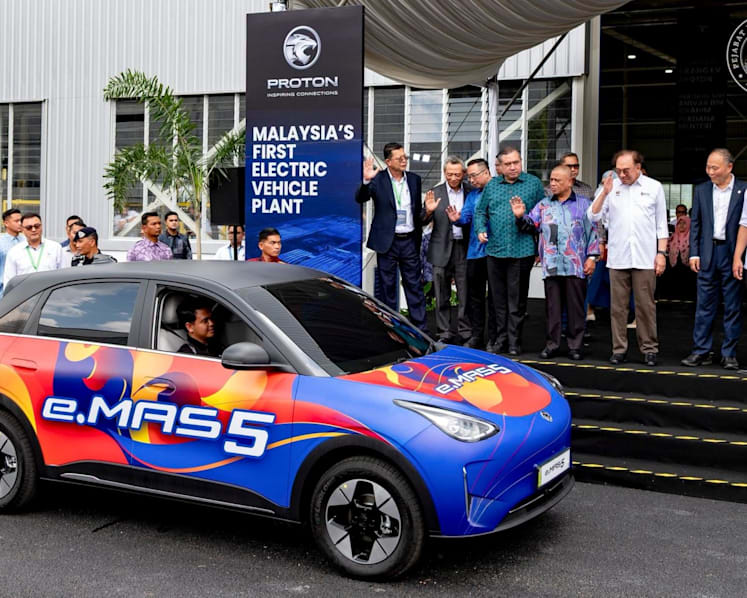
He was referring to Proton’s e.MAS 5, which starts at nearly RM60,000, making it the cheapest EV in Malaysia. Official government data shows it was the country’s best-selling EV in the first three months of the year, with 6,701 units sold.
While sold under the national badge of Proton, the e.MAS 5 is not a homegrown development but is a rebadged version of the Geely Galaxy E5.
Chinese automotive conglomerate Geely owns a 49.9 per cent stake in Proton.
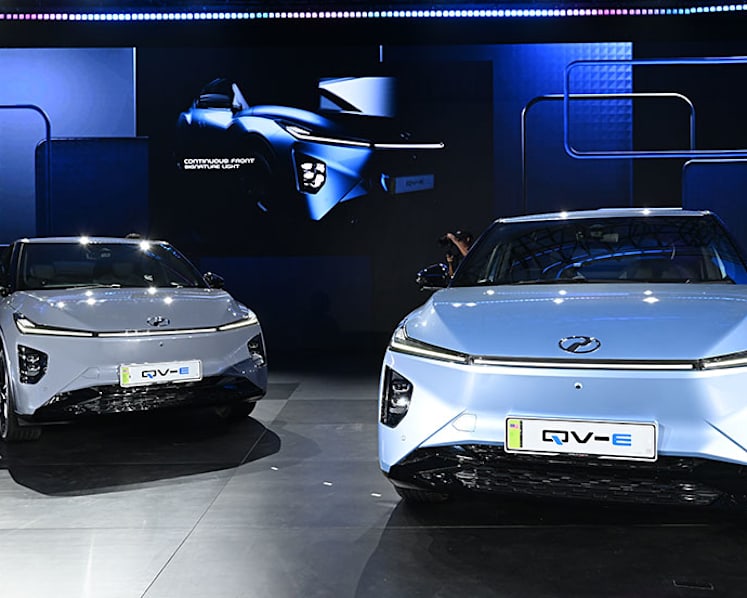
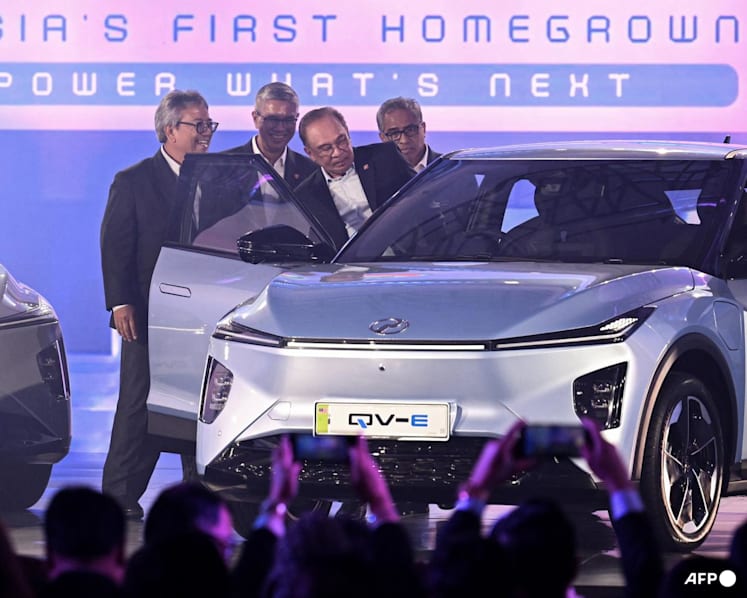
Meanwhile, the country's first homegrown EV, the Perodua QV-E (Quest for Visionary Electric), has secured only 12 registrations this year.
While it has an RM80,000 entry price, the model utilises a “Battery-as-a-Service” subscription model that requires an additional monthly leasing fee of RM297 for nine years, making the total price of the car at about RM112,000.
Perodua president Zainal Abidin Ahmad had said that the company was facing production problems with the car, citing suppliers that did not meet quality standards.
In comparison, BYD sold 14,407 imported vehicles in Malaysia last year, while for the first three months of this year, it has sold 2,261 units, according to official government data.
As of Jan 1 this year, the minimum price for all new imported vehicles in Malaysia, including EVs, was set at RM250,000.
Previously, this minimum price was RM100,000, a move that MITI said was a deliberate, time-limited measure designed to stimulate consumer demand and build EV familiarity in the market.
BYD’s cars in Malaysia are currently priced between RM100,000 for the entry-level Dolphin and approximately RM192,000 for the top-spec Seal, although these prices apply to stock imported before the new 2026 regulations took effect.
Lau said that while Malaysia is open to investments, it does not want automobile companies to bring everything in “lock, stock, and barrel”.
“They want local sourcing for things like windscreens and parts to create a spin-off for our vendors,” he said.
RSIS’ Jamil also said that the Malaysian government had concerns that BYD cars would flood the car market, and this was reflected in how MITI’s policy had been designed.
“The underlying issue is scale. Companies like BYD operate at very large production volumes and are able to compete aggressively on price,” he said.
He said this was driven not just by economies of scale but also by “substantial state support”, noting that BYD reported receiving more than 12 billion yuan (US$1.75 billion) in China’s government subsidies in 2025, which boosted its ability to cut costs and expand overseas.
From a policy standpoint, he said, the concern is that such foreign players could pressure existing manufacturers, suppliers and service networks before they have time to adjust.

MALAYSIA’S STANCE MAY DETER FOREIGN FIRMS
As far as consumers in Malaysia are concerned, analysts said that they would be deprived of choice and cheaper options such as the BYD Seagull and BYD Dolphin cars.
Shahrol Azral Ibrahim Halmi, president of the Malaysian Electric Vehicle Owners Club, told CNA that consumers are frustrated with protectionist policies that have made foreign cars much more expensive.
“Some people are saying that consumers have been subsiding the automotive industry in Malaysia for the last 40 years and are asking for how much longer they will have to continue doing so,” he said.
While he understands that the government is guided by the policies to protect local industries, there is also an urgent need to increase EV adoption in the country.
“The war in Iran has shown that Malaysia is dependent on imported fossil fuels, and from an energy security point of view, it would make sense for us to prioritise EV adoption. This issue is not going to go away in a matter of months,” he said.
For market observers, BYD is likely to take its manufacturing ambitions elsewhere if conditions were not relaxed.
Automotive strategist Bill Russo told CNA that Chinese manufacturers like BYD are highly pragmatic and move quickly.
“They will invest where policy frameworks support scale, speed, and cost competitiveness - and will step back where conditions impose structural constraints…If the regulatory environment compromises their core model, they redeploy elsewhere,” said Russo, who is the CEO of Automobility Ltd, a strategy and investment advisory firm.
Russo said that from a global strategy standpoint, the policy requirements weaken the rationale for BYD to set up manufacturing in Malaysia, pointing out that the company has established regional export bases in Thailand and Indonesia, where scale, supplier ecosystems and policy alignment are stronger.
“Forcing Malaysia into an export-heavy role creates redundancy rather than complementarity. Typically, automakers localise production to serve domestic demand first, then use excess capacity for export. Reversing that logic adds risk and reduces efficiency,” he said.
Russo said that BYD’s vertical integration - a strategy where the company produces nearly 75 per cent of its components in-house, including batteries, motors, electronic controls and automotive-grade chips - gave it cost and speed advantages.
A study by UBS investment bank that was published in 2023 estimated that 75 per cent of the BYD Seal is manufactured in-house, while the internal production rates of the Tesla Model 3 was 46 per cent and Volkswagen ID.3 was 35 per cent.
Russo said that while localisation is possible, it must happen gradually as supplier capacity improves, warning that setting the bar too high too early could make operations “economically unviable”.
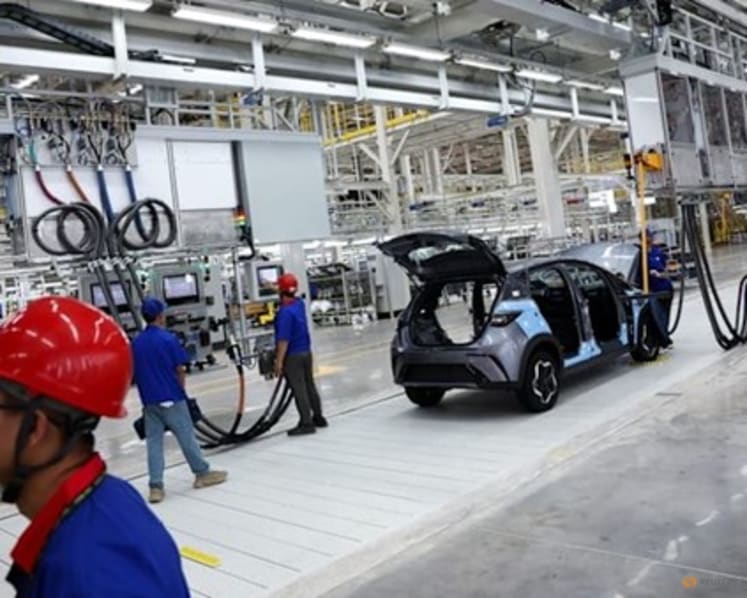
Shahrol concurred with Russo and said that it would not make sense for BYD to use local vendors with its vertical integration model.
“This is what gives them the competitive edge to keep costs low and the ability to crank up so many models quickly,” he said.
Shahrol believes that there is a high chance that BYD could move its planned manufacturing out of Malaysia, saying that many other countries are eager to court the company.
He also questioned the transparency of the current pricing structure, pointing to the Wuling Bingo - manufactured at a Tan Chong Motor facility in Malaysia - which retails from RM67,000.
While synonymous with the Nissan franchise in Malaysia, Tan Chong Motor is a diversified multinational automotive group with integrated operations spanning vehicle assembly, manufacturing and distribution.
“Why do cars by BYD have a RM100,000 price floor?” said Shahrol.
That said, Malaysian automotive analyst Hezeri Samsuri told CNA that investment incentives are often tailored to individual brands, a long-standing practice accepted by legacy carmakers.
He said established players understand that government policy is often shaped by broader nation-building goals while some newer entrants would appear more indifferent to such policy.
“Why build one of the largest car carriers in the world, capable of transporting 7,000 to 9,000 vehicles across oceans, if the focus is purely on exports rather than CKD operations?,” Hezeri said in reference to BYD which has its own ship carriers that can transport cars from China to other parts of the world.
In its Mar 31 statement, MITI said that the government’s longer-term strategy for making EVs more accessible and affordable to Malaysians is local manufacturing and assembly, “not perpetual CBU (Completely Built-Up) imports”.
“Nevertheless, MITI is currently reviewing the ‘floor price’ policy to further strengthen local assembly activities while ensuring that CBU vehicle pricing is driven by market forces.”
CNA has reached out to MITI for more information, including whether it would hold further discussions with BYD.
Hezeri said Malaysia has built its automotive ecosystem around national carmakers, which control over 60 per cent of the domestic market, leaving less than 40 per cent for foreign brands.
“Malaysia now faces a clear choice: either allow national brands to dominate the domestic market, or liberalise the market further - giving these brands the space to grow beyond Malaysia while allowing fairer competition at home,” he added.