10 hours and 1 surgeon: The quiet hero of Indonesia’s train crash tragedy
He was supposed to head home after a night out with his family but Muhammad Iqbal El Mubarak ended up coordinating efforts to save the lives of those trapped in a devastating train accident.
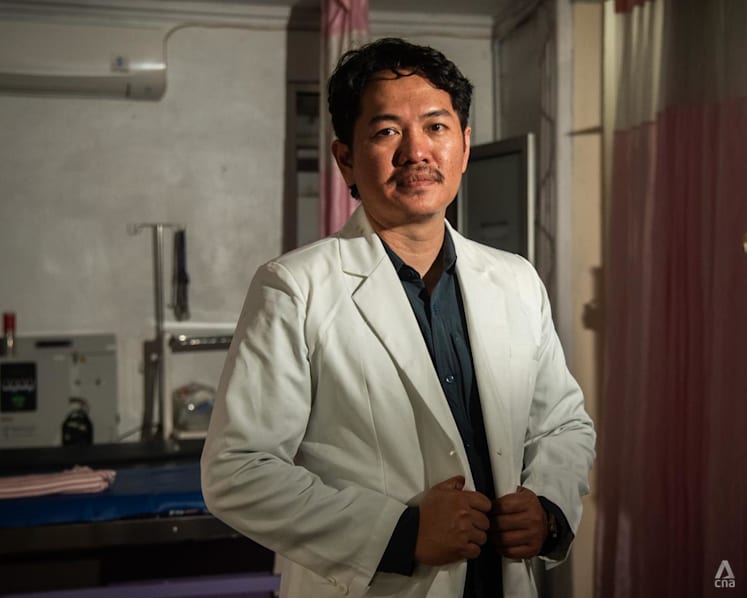
Muhammad Iqbal El Mubarak, a general surgeon, volunteered in the rescue of trapped victims in the Apr 27, 2026 train crash in Bekasi, Indonesia which killed 16 people. (Photo: CNA/Wisnu Agung Prasetyo)

This audio is generated by an AI tool.


JAKARTA: After a long shift and an evening out with his wife and two teenage daughters at a shopping mall in East Jakarta, Muhammad Iqbal El Mubarak was looking forward to going home and getting some well-deserved rest.
But as his car exited the parking lot, the 41-year-old surgeon’s wife alerted him to social media posts about a train accident that had happened around an hour previously, some 30 minutes away at East Bekasi station.
There seemed to be many casualties, she said.
It was Monday, Apr 27, and the train would have been packed with commuters heading home from work, Iqbal thought. He pictured the station already descending into chaos with injured passengers, panicked families, overwhelmed paramedics and rescuers struggling to cope.
Without much hesitation, he changed course. With his wife and daughters still in the car, he drove straight to the station, knowing emergency responders would need all the help they could get.
“There were so many people but most were just standing there not knowing what to do,” said Iqbal. “I had to step in.”
By the time he arrived, it was already 11pm, around two hours after the crash.





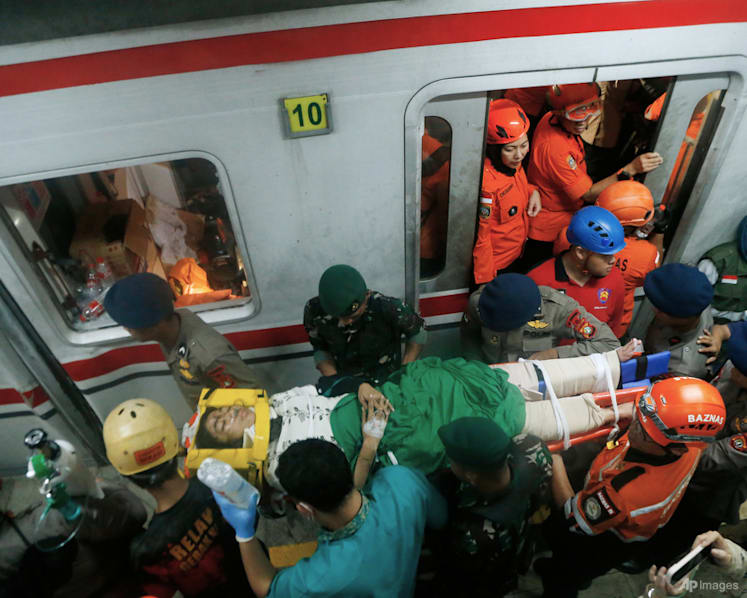
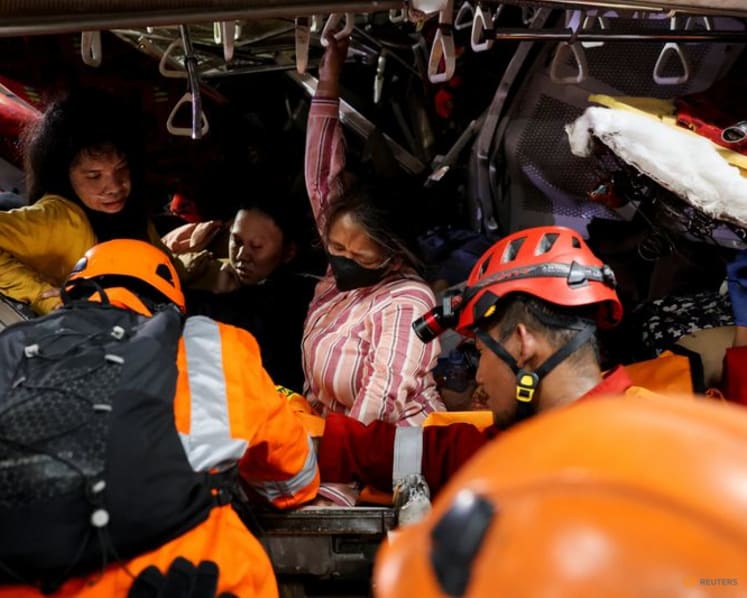
No one appeared to be coordinating the medical teams arriving from different hospitals, Iqbal told CNA later. He said it was unclear who was triaging victims or assessing the severity of their injuries. No one seemed to be keeping track of available medical equipment and supplies.
As a surgeon with two decades of experience volunteering in disaster zones across Indonesia and abroad, Iqbal was recognised by local media and senior officials as a critical figure in the rescue effort of five victims who were trapped in the mangled metal wreckage of the commuter train’s all-female carriage.


Iqbal said he worked to keep trapped victims hydrated and prevent them from going into shock. He also made the decision to sedate some of them so rescuers could free them without causing unbearable pain.
And a month after the disaster, his role in the rescue has thrust him into the Indonesian media spotlight and gained recognition from authorities.
“Iqbal was instrumental in keeping the victims alive while rescuers worked to free them,” Desiana Kartika Bahari, chief of the Jakarta Search and Rescue Office who led the operation that night, told CNA.
“He was directing the medical teams on site and (he) stayed until the last person was evacuated in the morning.”
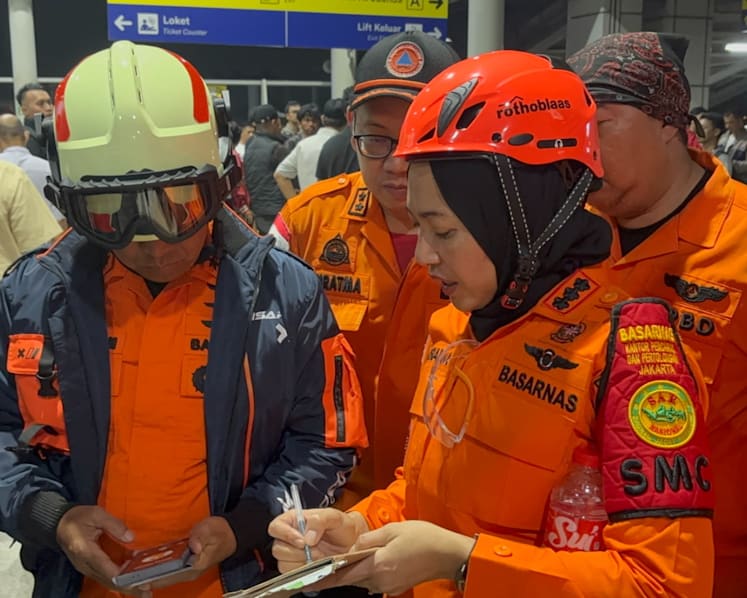
The first victim, 26-year-old Nurul, was evacuated at 4.17am, more than seven hours after the crash, according to authorities. The fifth and final trapped victim, Endang Kuswati, 41, was rescued at 7.25am.
Fifteen people died that night. Another victim, 25-year-old Mia Citra Rumaisha - one of the five people Iqbal helped rescue - succumbed to her injuries two days later.
A RACE AGAINST TIME
The accident began when an electric taxi reportedly stalled at an unmanned level crossing near the station. At 8.48pm, the vehicle was struck by a commuter train travelling from east to west.
As news of the collision spread, crowds gathered along the tracks while another commuter train travelling in the opposite direction was instructed to remain at East Bekasi station.
A third train - an express service travelling from Jakarta to Surabaya in East Java - slammed into the stationary commuter train, crushing passengers in the packed women-only carriage at the rear.
Rescue chief Desiana said the impact was so severe that the diesel-powered locomotive tore some 10m into the crowded commuter train, crumpling its metal body and trapping passengers inside.
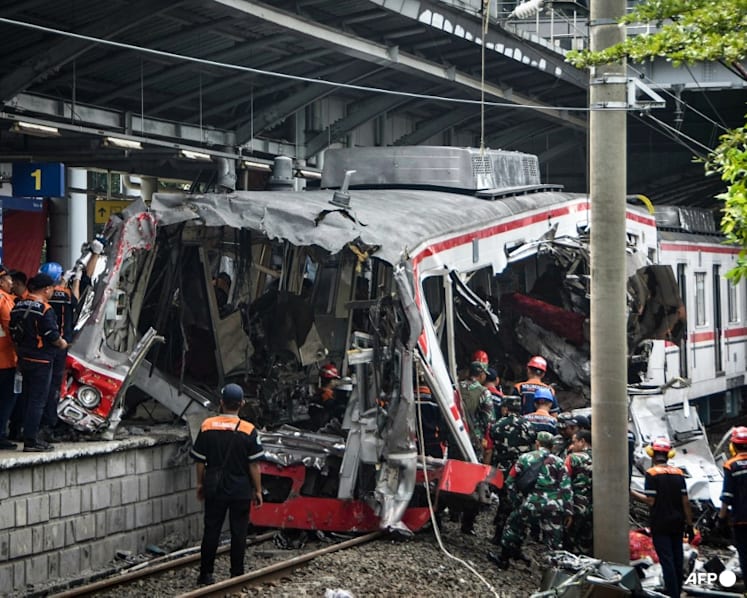
Rescuers had to cut through a number of windows using hydraulic shears and spreaders to free dozens of passengers, leaving the five who were pinned down by the crumpling wreckage. There were electric sparks, dust and debris everywhere, Desiana said, while the air was hot, humid and reeking with the smell of diesel from the locomotive.
“We first had to clear away all the dangerous debris that could collapse on them. That was our priority. At the same time, we worked slowly and carefully, freeing the victims one by one by releasing the metal that was ... trapping their legs,” Desiana said.
As rescuers worked to free the trapped victims, Iqbal noticed their conditions beginning to deteriorate.
“(The victims) started becoming drowsy. Some were no longer responsive,” the general surgeon told CNA. “Their blood sugar levels were dropping, so I asked volunteers to find sweets and candies for them.”
Paramedics fitted the five victims with oxygen masks and administered intravenous fluids to prevent dehydration, while also making it easier to inject painkillers and other medication.
Authorities meanwhile tried to bring down the stifling heat inside the crushed carriage by channelling air from several electric fans through a fire escape chute they borrowed from a local fire department, according to Desiana.
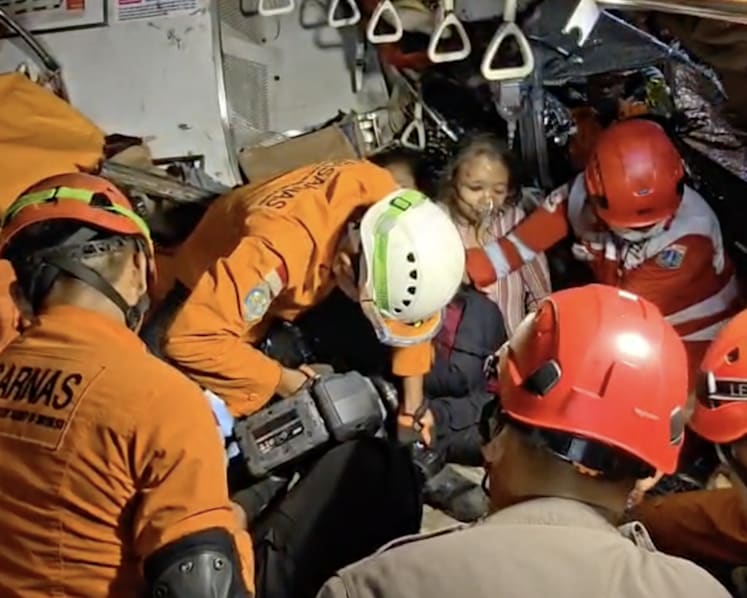
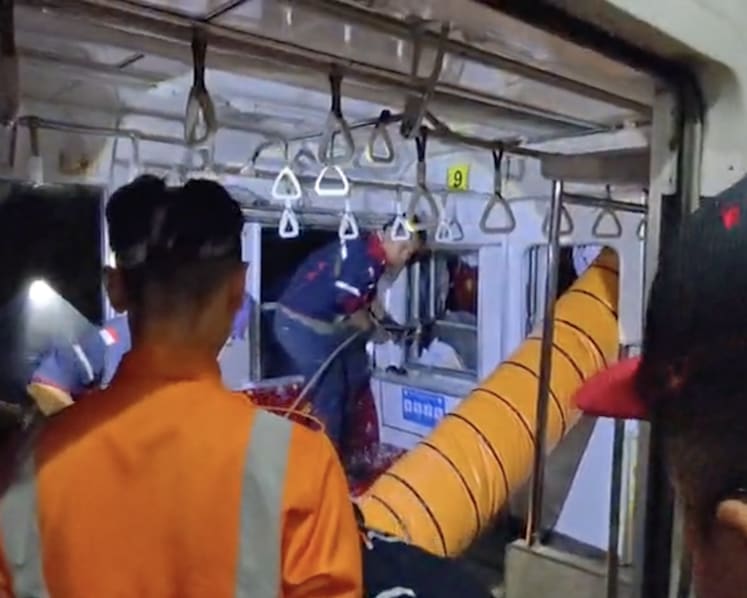
As the rescue effort dragged on, Iqbal began to worry that they were running out of time - especially if the trapped victims had internal injuries requiring urgent medical attention.
“Every time rescuers tried to move them, they were in so much pain and would instinctively resist,” he said. “That’s when I realised we needed to sedate them. First, so they would not have to endure the pain for much longer. Second, so their bodies could relax and rescuers could pull them out more easily.”
Iqbal said he went to each victim one by one to seek permission to administer general anaesthesia before carrying out the extraction.
The plan worked. One by one, the victims were freed from the wreckage.
Only then were Iqbal and his family, who had spent the entire night waiting in the car nearby, finally able to return home and rest.
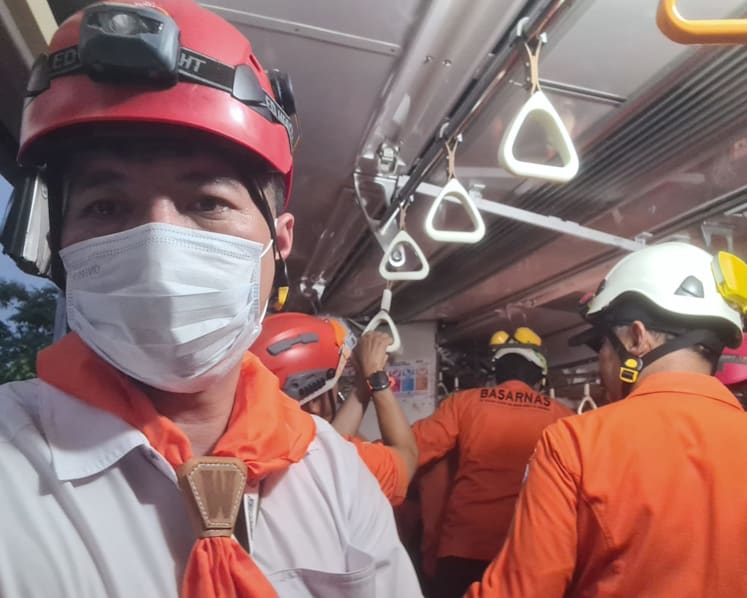
“THE MACGYVER OF THE MEDICAL WORLD”
Iqbal said having to spend the night at a disaster scene instead of heading home came as little surprise to his wife and daughters.
Over the years, they had seen him repeatedly leave at odd hours to respond to emergencies, natural disasters and humanitarian crises across Indonesia and other countries, including Bangladesh, Turkey and Gaza.
That sense of duty, he said, was shaped early in his medical training at Syiah Kuala University in Aceh.
When Iqbal was a student there, the province was still reeling from the devastation of the 2004 Indian Ocean tsunami, one of the deadliest natural disasters in modern history, which killed more than 170,000 people in Indonesia alone.
Many of the professors and doctors who trained him were either survivors themselves or had worked through the catastrophe – recovering bodies and treating patients with limited resources - or both.
“They taught us that being a doctor is not only about working in hospitals,” Iqbal said. “It is about being present when people are suffering the most.”
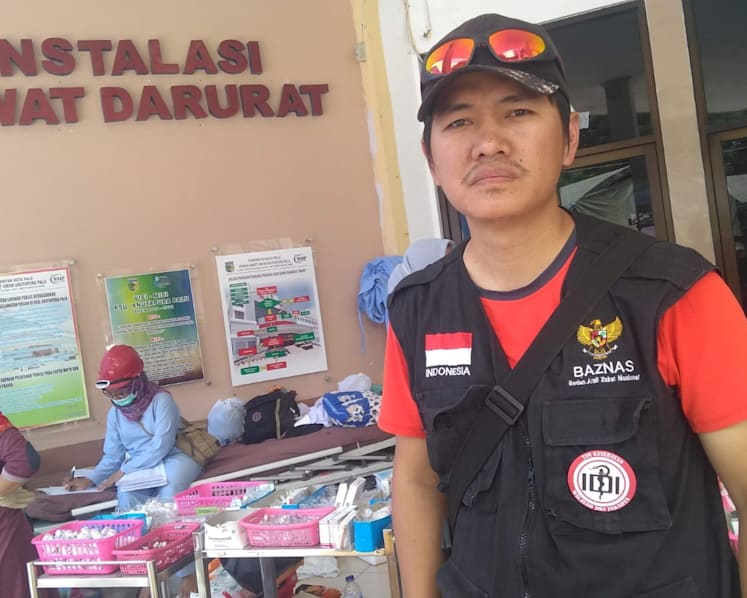
Even as a medical student, Iqbal said he volunteered to be on the frontline of nearly every disaster relief effort he could join.
His first deployment was during the 2006 Yogyakarta earthquake, which killed more than 5,000 people and injured tens of thousands more.
“I was still a student at the time, so all I could really do was clean wounds with antiseptic and apply bandages,” he recalled.
Since then, Iqbal has continuously upgraded his skills, taking courses in rock climbing, mountain rescue and emergency evacuation techniques.
He eventually specialised as a general surgeon, a discipline he describes as “the MacGyver of the medical world,” referring to Angus “Mac” MacGyver, the fictional television character known for improvising solutions in impossible situations.
ROOM FOR IMPROVEMENT
Police charged the driver of the electric taxi which caused the initial crash with negligence, which carries a maximum sentence of six months in prison. The driver, identified only by his initials RRP, was reportedly new to the job and had little experience driving automatic vehicles.

Meanwhile, the Indonesian Transportation Safety Committee (KNKT) is still trying to determine why the express train was allowed to be on the same track as the stationary commuter train and why the moving train failed to brake in time.
During a parliamentary hearing on May 21, KNKT chief Soerjanto Tjahjono revealed that the long-distance train had been about 1.3km away when the initial collision occurred, giving the conductor sufficient distance to stop.
One possibility, he said, is that the driver of the express train missed the warning signal because the train was running three minutes ahead of schedule. By the time the warning lights were activated, the train was reportedly passing through a brightly lit area, potentially obscuring the signal.


Another possibility is that communication delays between different rail operators slowed the warning process. In Indonesia, commuter trains and long-distance trains are overseen by separate control systems and supervisors.
When an incident occurs, “(commuter) train controllers have to report to their supervisor first who then relay the information to the (express train’s) supervisor who then contacts the conductor,” Soerjanto told the hearing as quoted by local media platform Detik.
The way the evacuation was handled also needed improvement, authorities said.
Rescue chief Desiana said search and rescue teams only learned of the crash through a WhatsApp group some 20 minutes to 30 minutes after the accident occurred.
“Fortunately, one of our teams happened to be just 10 minutes away,” she said.
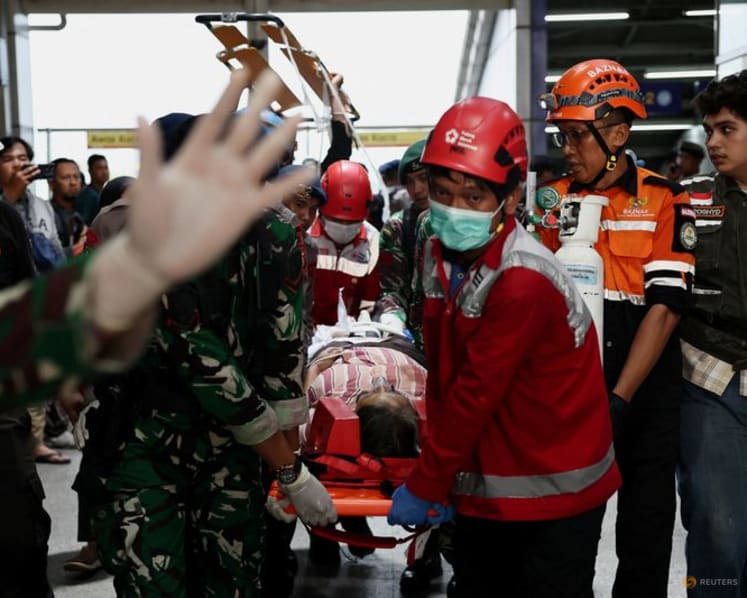
Desiana added that authorities should also have done more to restrict access to the station platform during the rescue operation.
“We understood that many people genuinely wanted to help, but most ended up obstructing the rescue effort,” the Jakarta rescue chief said.
“Our extrication work kept getting interrupted because the area was so crowded. People were tripping over our power cables, causing our equipment to shut down.”
Iqbal also said there was much room for improvement.
“Many paramedics came but there was no one to lead them. We temporarily had a shortage of medication because no one was communicating what these victims needed and what the paramedics should be bringing to the scene,” he said.
“We need emergency doctors and trauma surgeons to take charge in mass casualty situations like this. Unfortunately not many are willing to come to accident scenes or disaster areas and volunteer.”
For Iqbal, the crash underscored a larger problem facing Indonesia’s healthcare and disaster response system.
“This incident is a reminder that Indonesia needs more experienced and skilled doctors who are ready to be deployed at a moment’s notice wherever they are needed,” he said.
“If there can be a shortage of experienced doctors during an accident in a densely populated city like Bekasi, imagine the situation in remote villages and isolated areas.”