analysis Asia
As the UN's High Seas Treaty takes effect, what does it mean for Southeast Asia?
A landmark United Nations treaty governing the high seas has entered into force on Saturday (Jan 17), reshaping how international waters are protected and managed. For Southeast Asia, the new pact brings new opportunities and challenges.
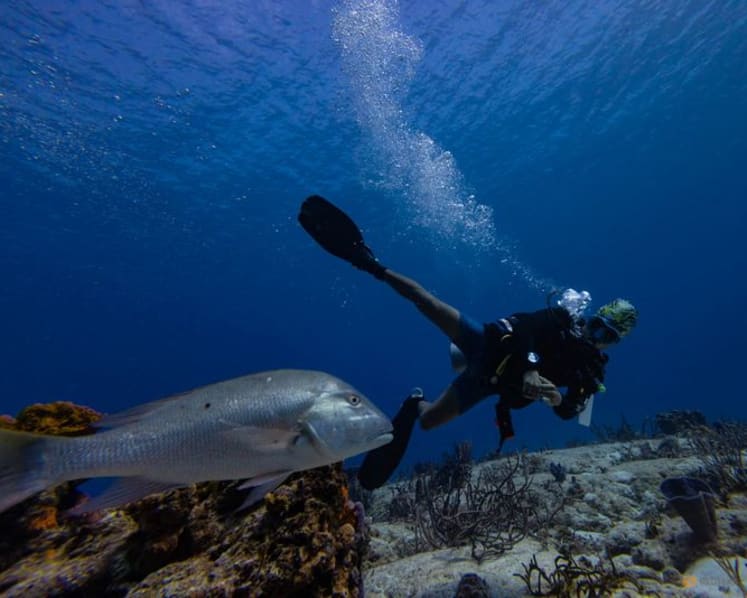
A diver swims through a coral reef near the Island of Cozumel, Mexico on Jun 27, 2024. (File photo: Reuters/Carlos Barria)

This audio is generated by an AI tool.


BANGKOK: For as long as time, the deepest, darkest and most mysterious corners of this blue planet have largely stretched beyond the reach of international law.
The biodiversity and resources of the high seas - from migratory fish stocks and largely unexplored deep-sea ecosystems - have long existed in a legal grey zone, exploited by some and protected by few.
The high seas refer to the parts of the open ocean that lie beyond any country’s exclusive economic zone, as well as the seabed outside national continental shelves. This covers nearly half the surface of the Earth and nearly two-thirds of the entire ocean.
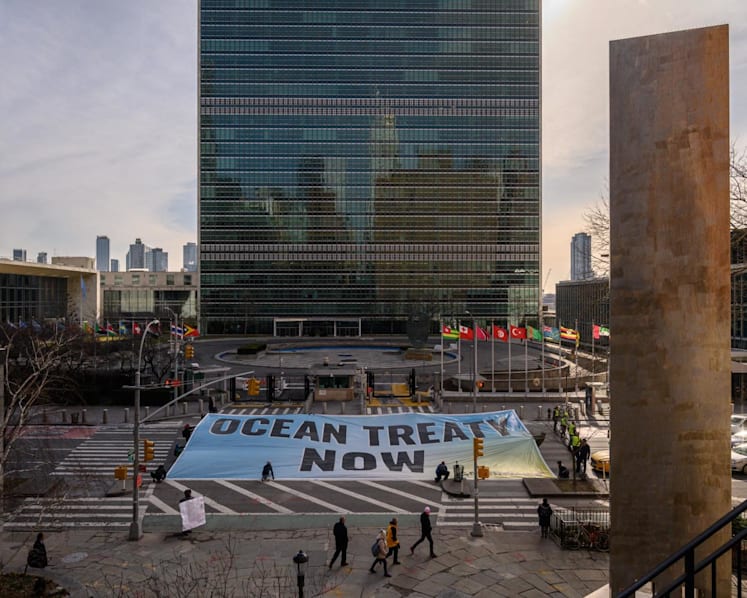
After nearly two decades of campaigning and negotiations, for the first time, from Saturday (Jan 17), a treaty now aims to safeguard the deep blue.





A landmark United Nations deal commonly referred to as the High Seas Treaty or BBNJ was ratified by 60 nations in September.
After the required 120 days, the treaty has now become international law and has been ratified by 83 nations and signed by a further 62, who are in various stages to reach ratification. Among those on board are major maritime powers, including China, Japan, multiple European nations, but notably not the United States.
In Southeast Asia, seven countries are parties to the treaty: Indonesia, Singapore, Vietnam, Cambodia, Laos, Philippines and Timor-Leste. Malaysia, Thailand and Brunei are signatories while Myanmar has not agreed.
It sets a path to fundamentally rewrite ocean protections; before its legal enforcement, less than 1 per cent of the high seas was fully or highly protected under existing laws.
Major governance gaps have extended across most of the globe. Now, the agreement applies to all high seas and deep seabeds across the globe.
“It is, in itself, globally, a landmark moment for ocean protection,” said Maeve Nightingale, the regional coordinator for the coastal and marine programme at the International Union for Conservation of Nature (IUCN) Asia, told CNA.
“This kind of global outlook now allows us to have a framework that can serve global oceans.”
Observers expect the framework to turn years of diplomacy into practical rules: legal pathways to protect international waters, a new approach to environmental impact assessments, sharing benefits from ocean discovery and marine genetic resources and helping countries build the skills and technology needed to manage the oceans.
Aspects of activities like commercial fishing, shipping, deep-sea mining and seabed exploration, marine scientific research and collecting marine organisms for genetic material used in pharmaceuticals, cosmetics or biotechnology will all fall under the BBNJ agreement.
“We'll have procedures. We'll have regulations that countries need to follow. So it's a huge thing,” said Nichanan Tanthanawit, Global Project Lead for Ocean Justice at Greenpeace.
It will also intersect with and complement a patchwork of other international frameworks and agreements on adjoining maritime issues. A key goal is to build momentum towards a global commitment to protect 30 per cent of the world’s land and oceans by 2030, under the Kunming–Montreal Global Biodiversity Framework.
Without rules for the high seas, that goal would be practically impossible. The treaty allows countries to establish marine protected areas (MPAs) in international waters for the first time. An MPA is a designated section of the ocean where human activities are managed or restricted to protect ecosystems and biodiversity.
“In a way, it's laying down a pathway where, if we're setting these global commitments, we now have a clear, legally-binding opportunity to make them happen,” Nightingale said.
SOUTHEAST ASIA’S SHARED GOALS
For Southeast Asia, observers said the new pact also promises new tools, the potential for more scientific knowledge, increased access to oceans data and capacity building and financing.
Many Association of Southeast Asian Nations (ASEAN) states are biodiversity-rich, highly reliant on fisheries for protein and jobs and still building scientific and enforcement capacity.
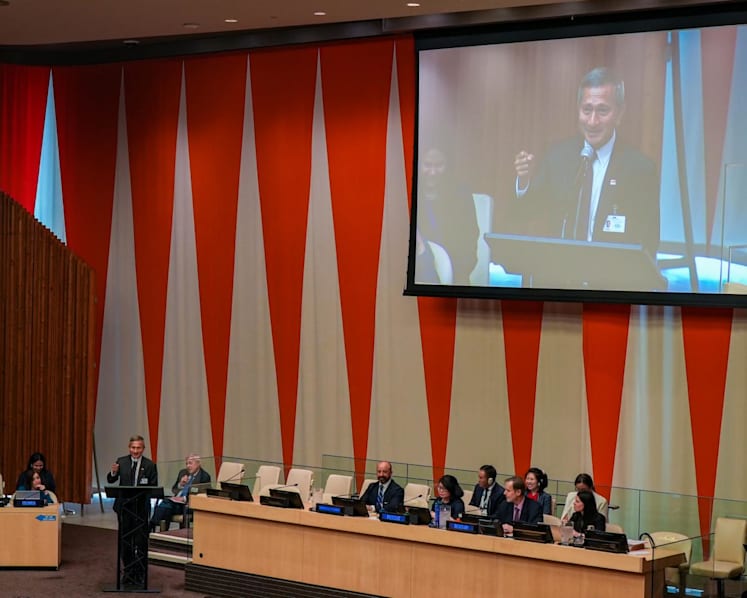
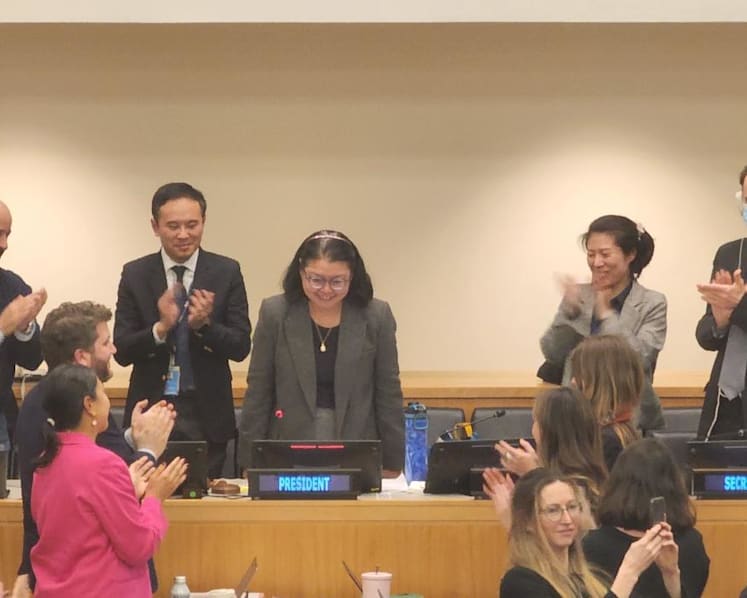
The region is surrounded by the ocean, said Rena Lee, Singapore’s Ambassador for International Law and president of the Treaty negotiations, raising the stakes for involvement and leadership on high seas issues, even as many countries understandably focus first on coastal waters, where most fishing activity and community livelihoods are concentrated.
“What happens far out in the high seas, in the Pacific or Indian Ocean or even in the Atlantic, does have an impact on what happens in our near shore waters, in the coastal waters,” she said. “And what we do in our waters has an impact on the areas beyond national jurisdictions.”
Even landlocked nations like Laos have ratified the agreement, a reflection, Lee said, of regional keenness to tap into open science and the transfer of technology, which the treaty provisions for.
Migratory fish, ocean currents and climate processes are part of a single, fluid system. That ecological connectivity means high-seas governance can have direct effects on coastal fisheries, food security and the “blue economy” plans of ASEAN states, said Rizza Sacra-Dejucos, Asia Regional Coordinator of the High Seas Alliance.
Those might include sustainable fishing, marine tourism, aquaculture or offshore energy.
“We cannot talk about the blue economy without talking about a sustainable ocean economy, and about the high seas,” she added, giving an example of highly-valued commercial species like tuna, which migrate in international waters.
“Protecting these waters is very essential so that we maintain a balanced ecosystem where these species can thrive and eventually continue to support coastal communities,” she said.
For ASEAN, the experts said it could be an opportunity for better regional cooperation. But internal dynamics, varying maritime priorities and institutional capacities means a unified regional front is not assured, Nightingale said.
“It's very hard to find those sort of common agendas and collaborative objectives. But yes, of course, the door stands open for ASEAN to play that leadership role,” she said.
She described Indonesia as having had a pivotal influence in advancing the high seas agenda to this point.
Sacra-Dejucos added that Singapore had acted as a “bridge builder” for stronger regional cooperation and the Philippines “very vocal as a champion” for MPAs.
One practical way Southeast Asian nations could advance a shared goal would be to push for an MPA in nearby international waters.
Under the treaty, acting collectively would provide greater ecological impact, political weight and practical benefits than acting alone.
Tanthanawit said she had seen firsthand the type of environment, seemingly in the middle of an ocean expanse, that could receive critical global protection in the years to come.
She spent a month travelling to and from the Saya de Malha Bank in the Indian Ocean in 2024. It is a vast, shallow underwater plateau that scientists believe could be the largest seagrass meadow in the world, despite its remoteness and being barely visible from the surface.
It is considered a strong candidate as a future high-sea MPA.
“In a remote area, you didn't expect so much life underwater. And you see sea grass that looks like a football field,” she said. “It was quite an experience to be able to witness that.”
SUCCESS IN A STORM?
The treaty’s entry into force has been widely seen as a rare example of effective multilateral cooperation at a time of deep geopolitical strain.
“It is not only hope for the ocean,” Sacra-Dejucos said. “It also offers hope for multilateralism, especially in these times of political chaos.”
The realities of uneasy global politics hang over the high seas too.
China has taken a strong leadership role and announced on Saturday that it would join Belgium and Chile as a bidder to host the BBNJ Secretariat.
“China has attached great importance to the conservation and sustainable use of the ocean. Building on this, China is ready and able to make still greater contributions to the BBNJ Agreement,” China’s Minister of Foreign Affairs, Wang Yi, said in a statement issued alongside the bid on behalf of the city of Xiamen.
China’s marine economy has become a trillion-dollar sector, and it has made massive investments in ocean science and research infrastructure.
The treaty’s provisions would not solve any disputes over the South China Sea but could have indirect impacts on claimant states, which include China and several ASEAN countries.
Nations would sit on the same BBNJ decision-making bodies, where negotiations on MPAs, environmental impact assessments and scientific cooperation are set to take place.
By contrast, the United States has yet to ratify the treaty, leaving questions over how fully the world’s largest maritime power will engage with several pressing issues.
Turning the treaty into tangible outcomes for the high seas will require vast amounts of financing, credible institutions and early, practical cooperation, said observers.
Lee said that coordinating efforts among the many parties will be crucial for the treaty’s early success.
“I think it's important that for a treaty of this nature, we should aim for universal participation. There's a lot of promise, but there are a lot of challenges as well,” she said.
“I think so many people are really excited about the agreement entering into force, and we need to make sure that we can build systems and mechanisms and processes that will be efficient, effective and accessible to everyone.”
The financing architecture is being built and parties are working towards the first conference of the parties - or COP - similar to the types of major summits that take place for climate change and biodiversity every year.
Nightingale said there is a “huge feeling of celebration,” tempered by recognition that there is still a long road ahead to implement the treaty.
While the agreement is legally binding and was crafted by lawyers and negotiators, she agreed that the real challenge now lies in turning it into something that works in practice.
Questions remain over financing, institutional set-up and coordination with existing ocean governance bodies, all of which will shape how quickly and effectively the treaty can be put into operation.
“The game is not over. The next steps become that much more interesting and divergent in terms of how we maintain that united force in bringing all the different stakeholders, from governments to NGOs, along to the next stage,” she said.
“It's also a moment to look up to the next peak. It's like base camp. We've still got to get to the top of Everest.”