With US focus on Western hemisphere, would it cede strategic space to China in Asia?
The US’ Venezuela intervention, as well as its recent military strikes in Africa and the Middle East, decreases its bandwidth for Asia, says an expert.

This audio is generated by an AI tool.






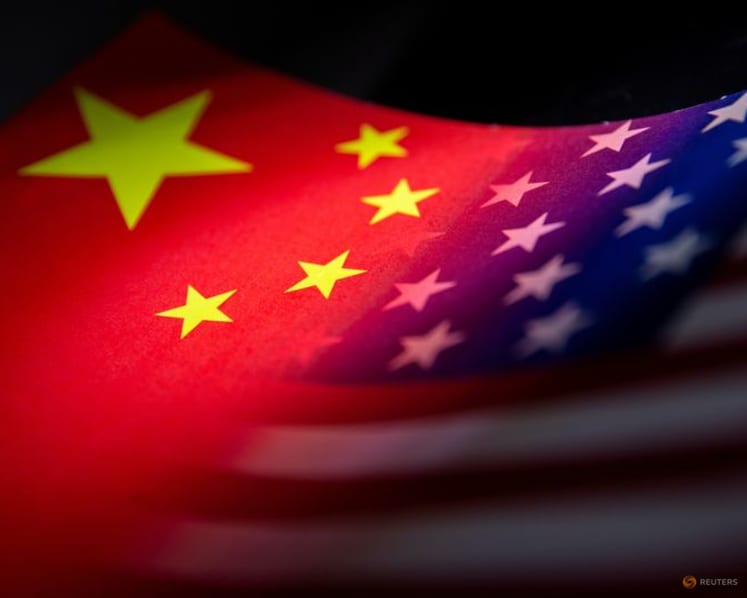
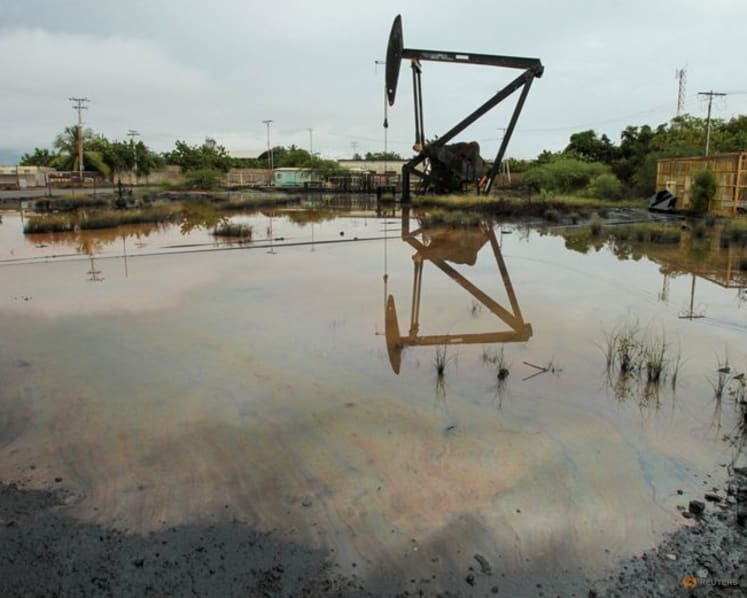
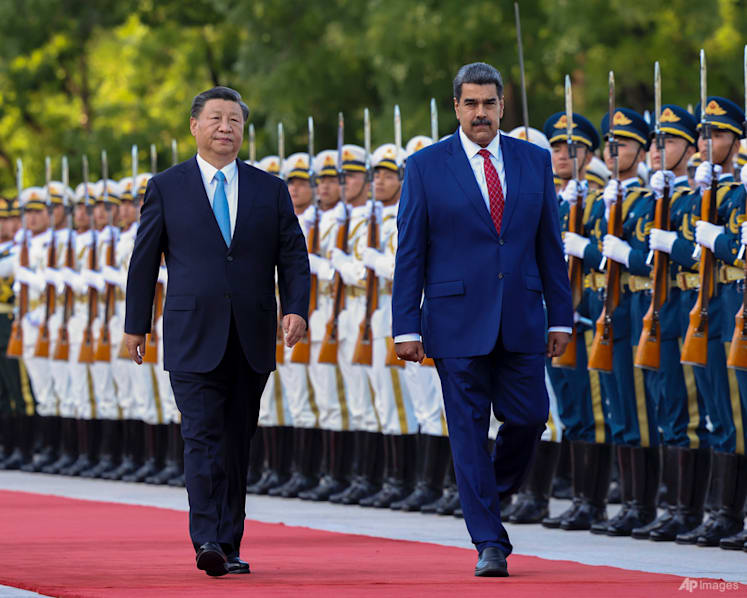
SINGAPORE: With the United States’ military intervention in Venezuela and President Donald Trump’s latest focus on influence in the Western hemisphere, could the US – a dominant security actor in the Asia-Pacific – cede more space in Asia to China?
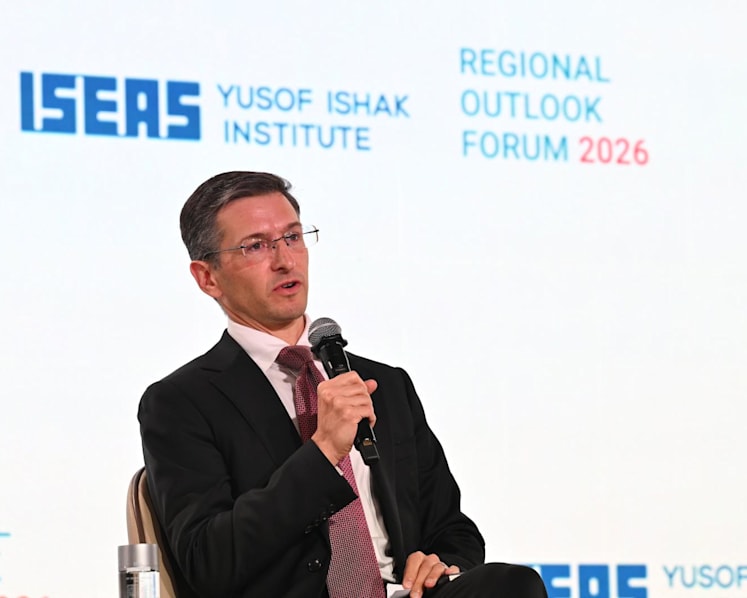
Zack Cooper, a senior fellow at the American Enterprise Institute (AEI), said an “obvious implication” of the US’ Venezuela intervention, as well as its recent military strikes in Africa and the Middle East, is that it decreases the amount of energy that the US can place in Asia.
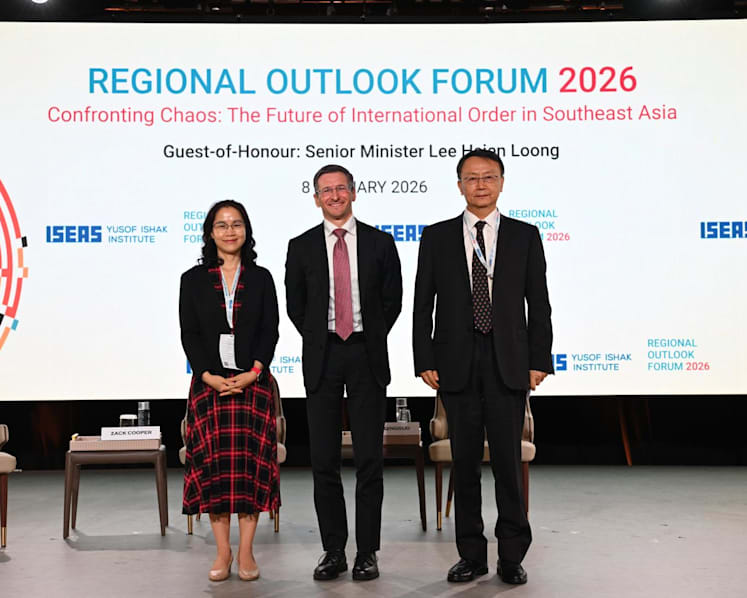
“I do think what's clear is that the US only has so much bandwidth, and one of the arguments that has been made for many years is that the US needs more resources and energy in Asia,” said Cooper, at Singapore think tank ISEAS-Yusof Ishak Institute's Regional Outlook Forum 2026 on Thursday (Jan 8).
Cooper was speaking during a session moderated by Hoang Thi Ha, a senior fellow at the institute, who asked about the possibility of both US and China dividing the world into their respective spheres of influence.
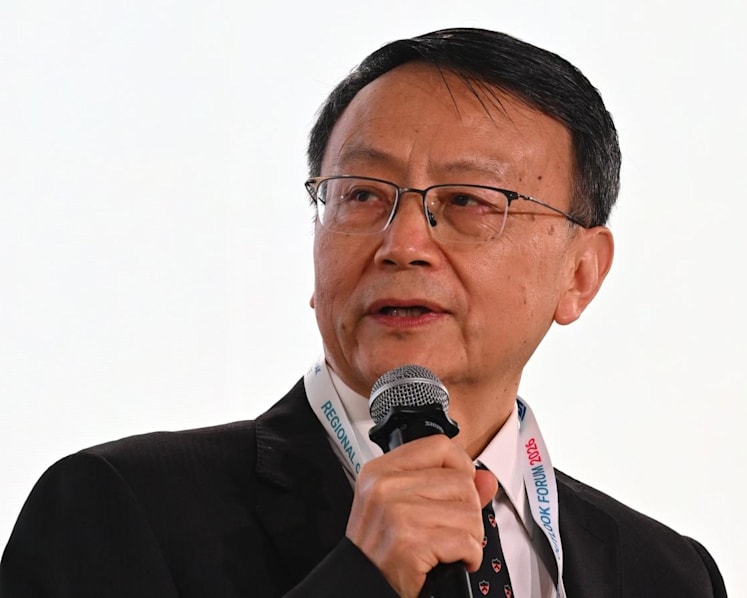
But fellow panellist, Peking University analyst Jia Qingguo, said China does not believe in spheres of influence, in response to a question on whether the US’ actions in Venezuela could “incentivise and embolden China to advance its ‘Asia for Asians’ agenda”.
“China believes that we should have global cooperation, multilateral cooperation, and ‘sphere of influence’ is like a concept of the 19th century. China does not believe it works,” Jia said during the session.
China has opposed the US operation in Venezuela and “does not believe that we should dictate other countries”, he added.





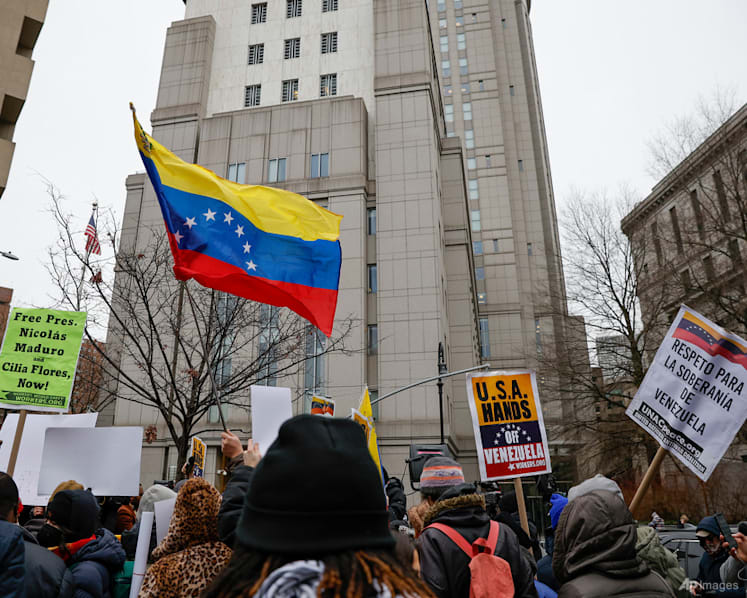
Following the US’ capture of Venezuelan President Nicolas Maduro and his wife, Trump had also cited the Monroe Doctrine, a US foreign policy position laid out in 1823 by then-President James Monroe warning European powers against intervention in the Western Hemisphere.
In 2014, President Xi Jinping spoke about a new “Asian security concept” at a conference, saying “it is for the people of Asia to run the affairs of Asia, solve the problems of Asia and uphold the security of Asia”.
The panellists, however, differed on the impact of the US ceding greater space in Asia to China.
“I think stability in the region is aided by a strong and clear US commitment, especially to its treaty allies,” said Cooper. “And so I think if we saw a decrease in US engagement, that would increase instability.”
“I think most Chinese believe that if the US takes its hands off, then probably there is a better chance for us to agree to some kind of a way to manage these disputes (in the region), if not solving them,” said Jia.
One of the flashpoints in the region is the South China Sea, where four Southeast Asian countries have overlapping claims with China, which claims the majority of the key waterway with its nine-dash line.
Jia noted that China has pushed for an early agreement on the Code of Conduct for the South China Sea.
But Hoang noted that in a draft negotiating text of the code a few years ago, China had inserted two provisions that sought to give it "veto power” on military exercises between regional countries and external powers, as well as on the involvement of foreign companies in energy exploration in the South China Sea.
“How do you explain this as not related to a kind of … preference (by China) for a more exclusive area where China doesn't want to have the engagement of major powers, albeit selectively?” Hoang asked.
Jia said China’s move was a reaction to the perceived previous interventions on the part of the US and other countries on the issues surrounding the South China Sea.
“China does not want to exclude other countries, but then it wants to kind of create a situation in which the so-called Western countries will not try to interfere in this region's affairs, undermining the security interests of the members of the region,” he said.
“This probably applies to both the Southeast Asian countries and also to China. So it's binding to both sides, rather than just China (dictating) that Southeast Asian countries should not work with foreign oil companies or with foreign countries in conducting military exercises in the region.”
STABILITY AND FRAGILITY
Amid the ongoing US-China tensions over a host of issues including tariffs, expectations are building over two reciprocal visits between Trump and Xi this year, starting with a touted state visit by the US leader in April, which analysts say will test how far both countries are willing to steady ties.
When asked about the state of US-China relations, Jia said ties were relatively stable but also “quite fragile”.
Despite some ups and downs, especially over tariffs, US-China relations have “stabilised to some extent, with joint efforts on both sides”, he said.
Both sides have not reached a trade deal yet, and it would likely not happen “in the near term”, Jia believes.
“I think probably the most important reason is that the US does not want to have a trade deal in the short term,” he said.
“Why? Because if (Trump) makes a trade deal with China, he has to make more concessions than he would do with other countries, and he hasn't reached trade deals with other countries yet,” he said.
If Trump and Xi do meet in Beijing in April, it would be “symbolic” of the stability of US-China relations, said Jia.
“If you don't have a fairly good relationship, you don't have a state visit.”
Both sides would likely discuss many issues including trade, said Jia. While there may not be a “grand trade deal”, they could come up with a framework that could be discussed, he said.
“But of course, maybe the (Trump) administration would change its mind and say, ‘maybe it's time for us to have a grand trade deal’, for domestic political reasons,” said Jia.
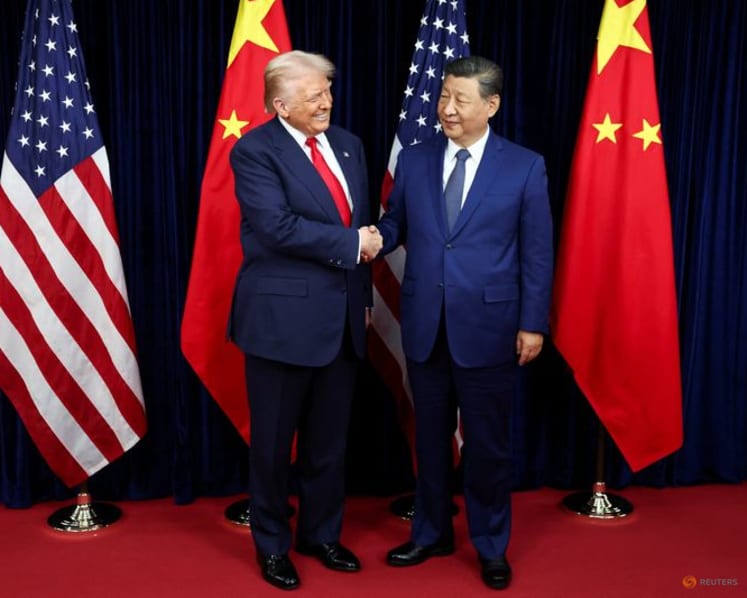
Both leaders previously met in the South Korean port city of Busan last October - their first face-to-face talk since 2019.
During that meeting, Trump said he had agreed with Xi to trim tariffs on China in exchange for Beijing cracking down on the illicit fentanyl trade, resuming US soybean purchases and keep rare earths exports flowing.
In a call in November, Trump had also accepted Xi's invitation to visit Beijing in April this year, adding the latter would reciprocate with a visit to the US later in the year.
Cooper, however, felt a summit would likely yield a “bunch of nice photo opportunities”.
“I think Beijing has been expert at trading away very short term concessions to the Trump administration and getting some pretty long-term concessions from the United States in exchange,” he said.
“I don't think that we're talking about anything structural, and I think that means that the fundamental problems in the US-China relationship are not going to be addressed.”
Both experts agreed the fundamental issues include Taiwan and ideological differences.

Jia said there is “a lot of distrust” from China over US intentions with regards to Taiwan, a self-governed island that China claims as its territory. China has never ruled out the use of force to bring Taiwan under its control, if necessary.
He said the distrust stems from the US continued sales of arms to the island, despite Washington’s pledge to support a peaceful resolution of the cross-strait issue.
To improve trust, he said the US should state a support for peaceful unification, which will show “your real purpose is not to separate Taiwan from China”.
Both sides have “different answers” for what they should do about Taiwan, said Cooper.
“My view of US policy on cross-strait issues is that it's often characterised as strategic ambiguity, but I think the Biden administration was strategic yet not ambiguous, and the Trump administration is ambiguous but not strategic.”
Cooper also added that while he doesn’t object to the US stating more publicly it would not oppose unification, the only way politically was for US leaders to say if China attempts to use force or coercion, Washington would respond “forcefully”.
Another issue is ideological, which Cooper did not see as “solvable”.
Both countries are in a competition to see which of their systems “produce better outcomes for their people and for the world”, he said.
“I'm not so sure that the US is winning that competition at the moment … But until we address that issue, we can't build the trust that I think the two countries would need to have to have a genuinely stable relationship.”
WHAT SOUTHEAST ASIA CAN DO
Asked what the region could look out for amid the Sino-US rivalry, Jia said relative stability between China and the US is a good thing as Southeast Asian countries “are not pressed that hard to take sides”.
Southeast Asian countries could think about how they can help shape the relationship of the two superpowers in a way that is conducive to their interests, Jia said.
Cooper said the region could try and welcome in a broader set of powers such as India, European players and others.
“Is that a perfect solution? No, but I think it's probably more conducive to stability than hoping that the US-China relationship is going to stabilise over the long term,” he added.
Other sessions at the forum – attended by some 650 participants including academics, local and foreign officials and lawmakers – covered trade protectionism, the political outlook in Indonesia, Myanmar, Thailand and the Philippines, as well as political reforms in Malaysia.
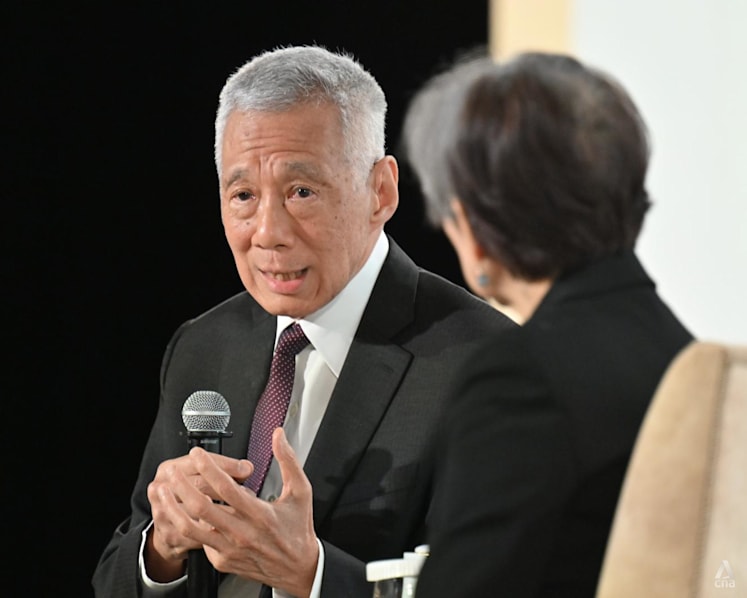
Held at the Marina Bay Sands Expo and Convention Centre, the event opened with a dialogue with Singapore Senior Minister Lee Hsien Loong. He spoke about the consequences of the US military operation in Venezuela for the international system, among other issues.