analysis East Asia
What the US capture of Maduro means for China’s interests in Venezuela and beyond
As China condemns the US capture of Venezuelan leader Nicolas Maduro, analysts say the implications for Beijing run far deeper across Latin America.

This audio is generated by an AI tool.


SHANGHAI: The United States’ direct operation in Venezuela, capturing President Nicolas Maduro and his wife, has generated international shockwaves and mostly condemnation, including from China.
It is among the countries that have publicly criticised the US, and condemned the operation as a "clear violation of international law" and demanded the immediate release of Maduro and his wife.
US elite forces had swooped into Caracas during a lightning pre-dawn raid on Jan 3, seizing the Venezuelan leader while airstrikes pounded sites in and around the capital.
Maduro faces US criminal counts including narco-terrorism and conspiracy to import cocaine. On Monday (Jan 5), he appeared in a New York court, where he pleaded not guilty to narcotics-related charges. His wife Cilia Flores also pleaded not guilty.





Washington has justified the strike - the biggest US intervention in Latin America since 1989 - as a targeted law-enforcement operation rather than broader military intervention.
While the forcible removal of a sitting head of government has sparked domestic and global unease, analysts say the stakes for Beijing extend well beyond Venezuela - to its Latin America strategy, its currency ambitions, and possibly even its calculus over Taiwan.
Here's their take on key questions for Chinese policymakers.
WHAT’S AT STAKE FOR CHINA IN LATIN AMERICA?
The short answer: investments, energy supplies, and influence.
China has poured more money into Venezuela than any other country in Latin America.
According to data from the Center for Strategic and International Studies, a US think tank, Venezuela has received over US$62 billion from China since 2007 - representing 53 per cent of all Chinese lending to Latin America.
The next largest recipients were Brazil, Ecuador and Argentina.
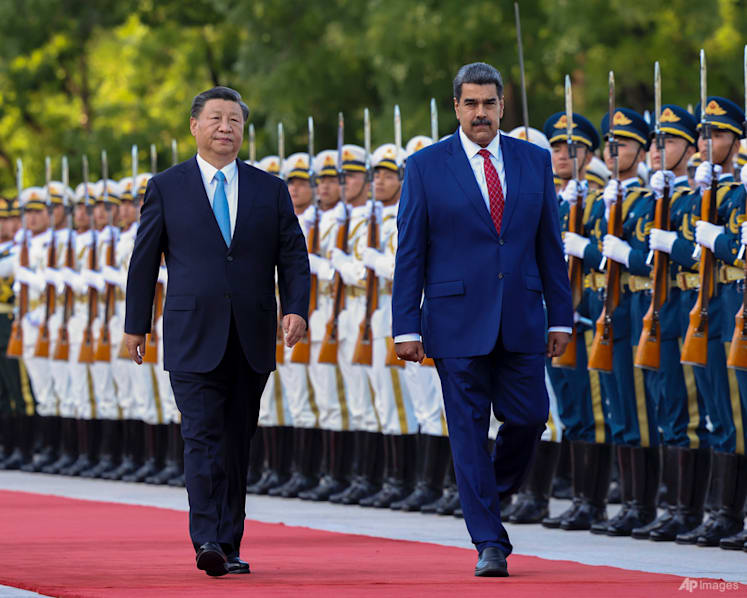
The relationship took shape under former Venezuelan President Hugo Chavez, who was in power from 1999 to his death in 2013. Chavez signed several trade agreements with Beijing and described China as a "Great Wall" against US influence.
Under these agreements, Venezuela committed to supplying up to one million barrels of oil per day to China. In return, Beijing promised political backing. Maduro continued these arrangements after taking office in 2013, though new Chinese lending largely dried up since 2016 as both sides focused on restructuring existing debt.
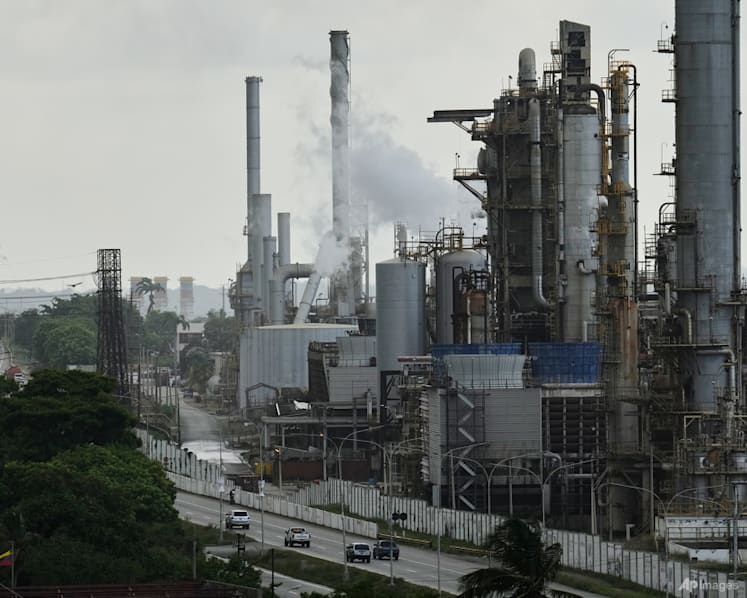
But much of the oil flow was debt repayment, not market purchases. According to energy analytics firm Vortexa, Chinese imports of Venezuelan crude averaged about 470,000 barrels per day during 2025 - roughly 4.5 per cent of China's seaborne crude imports.
China remains Venezuela's largest buyer, accounting for around 80 per cent of all oil exports, according to Reuters.
With Maduro removed from power, questions now hang over the fate of that debt and the continued flow of oil, Dylan Loh, an associate professor of public policy and global affairs at Singapore’s Nanyang Technological University (NTU), told CNA.
"US$60 billion in outstanding debt is not a tiny drop, but the bigger question is that this recovery and the continuous flow of oil is now in the hands of (China’s) adversary," said Loh, referring to the US.
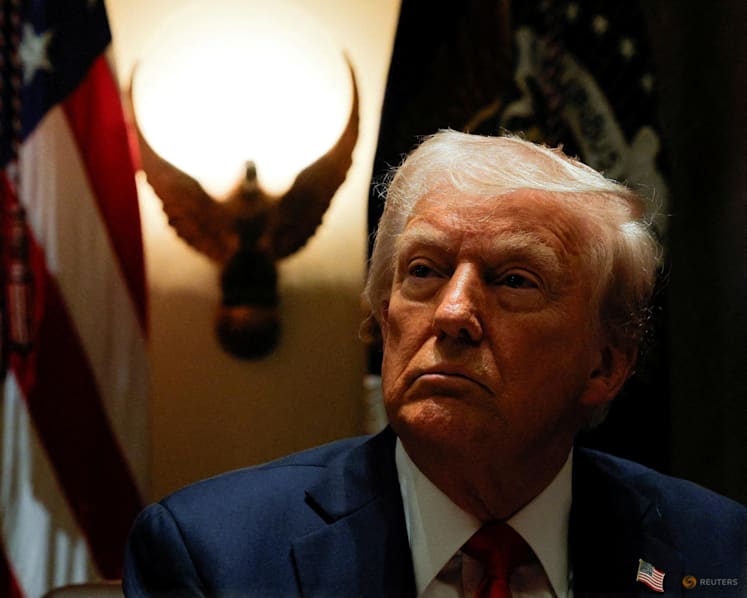
US President Donald Trump has said that Washington will “run” Venezuela and tap its huge oil reserves.
"China has also lost one of its staunchest ideological allies in the Western Hemisphere,” Loh added.
Venezuela has also been pricing oil in yuan since September 2017, when Maduro declared the country would "free itself from the dollar tyranny", making it a testing ground for Beijing's currency internationalisation ambitions.
Loh described the US operation as a "stress test" that "exposes the vulnerabilities of China's currency internationalisation under US sanctions pressure”.
Josef Gregory Mahoney, a professor of politics at East China Normal University, said the strike may be part of what he described as broader "currency wars".
He noted that some analysts believe the operation is aimed at slowing de-dollarisation and propping up the dollar. Venezuela has been selling oil in yuan and repaying Chinese loans in crude rather than dollars.
"There are analyses that suggest that what the US has done has bought the dollar more time - five years, 10 years - but there are competing analyses," he said.
The strike also sends a broader message to the region, said analysts.
Mahoney noted that some see the operation as aimed at discouraging regional involvement in projects under China’s Belt and Road Initiative, Beijing’s flagship global infrastructure programme.
"It raises questions for every country in Latin America,” he said. "Do they divest themselves in terms of their relations with China? Or do they move forward?"

China's engagement in the region has been growing steadily. According to China's Ministry of Commerce, trade volume between China and Latin American countries reached a record US$518.4 billion in 2024 - double the figure from a decade ago.
In May 2025, Chinese President Xi Jinping announced a 66 billion yuan (US$9.2 billion) credit line to members of the Community of Latin American and Caribbean States regional bloc.
But analysts noted Beijing may also see opportunity as Washington faces backlash over its actions in Venezuela.
"I'm concerned that the US ostentatiously invoking the Monroe Doctrine may actually cause pushback across the region, because local people don't want a return to unfettered US imperialism," Leland Lazarus, founder of geopolitical risk firm Lazarus Consulting, told CNA.
The Monroe Doctrine was a US foreign policy position laid out in 1823 by then-President James Monroe, warning European powers against intervention in the Western Hemisphere.
The Trump administration's National Security Strategy, released in December 2025, explicitly invoked a “Trump Corollary” to the doctrine, asserting America's right to deny “non-Hemispheric competitors” the ability to own or control strategically vital assets in the Americas.
NTU’s Loh said China can now "double down and make a real push for it being an alternative" to Washington.
At the same time, he cautioned that the US operation in Venezuela also reveals to Beijing the limits of its economic diplomacy.
“These can be and will increasingly be contested by a show of force. Is China prepared to do more outside of traditional economic, coercive or grey zone measures to achieve its goals?” he said.
Loh also highlighted that China is presenting itself as a “systemic alternative, not a security guarantor”.
“Its foreign policy is officially premised on not entering into alliances, and so there are clear limits to Chinese partnerships."
WHAT DOES IT MEAN FOR CHINA’S TAIWAN CALCULUS?
Analysts were divided on whether the US strike changes Beijing's calculus on Taiwan, the self-governed island that China claims as its territory. China has never ruled out the use of force to bring Taiwan under its control, if necessary.
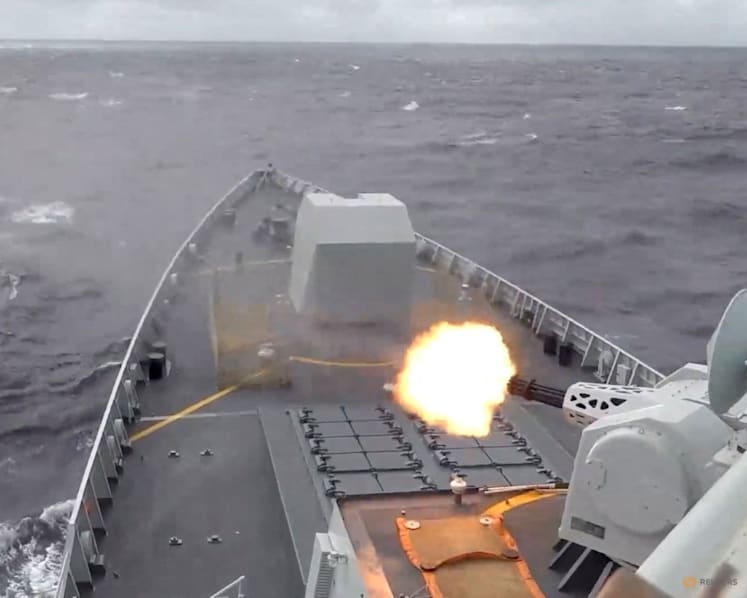
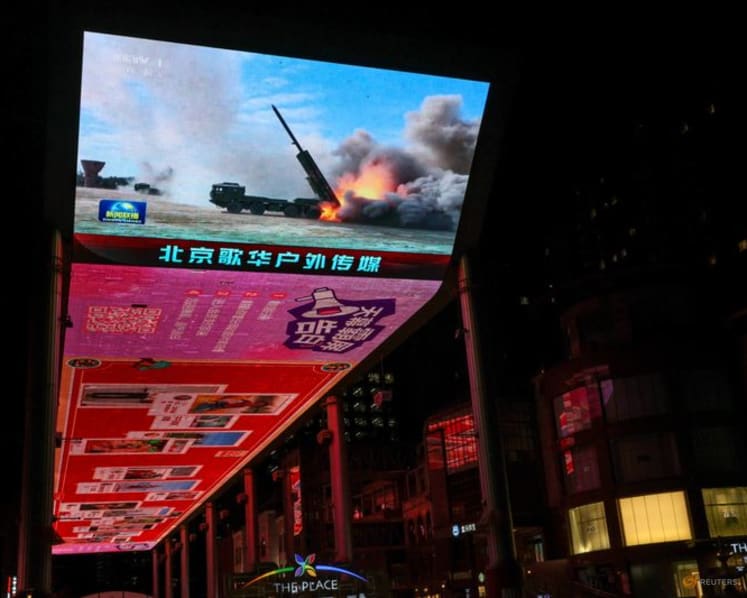
In late December, the People's Liberation Army (PLA) conducted large-scale drills encircling the island. Codenamed “Justice Mission 2025”, the Chinese military fired rockets and rehearsed a blockade of key ports in the live-fire exercises, which Beijing said were aimed at deterring outside intervention.
In the wake of the US strike in Venezuela, Chinese social media users called for the PLA to conduct a similar operation against Taiwan's President Lai Ching-te.
But Loh said he does not think China's calculation changes much.
"There are no real compelling push or pull factors for China to either delay or speed up whatever plans it has," he said.
"Lai is not angling for independence, and there's no indication that he is making moves towards that."
As for nationalist sentiment, Loh said it "can be managed" and would likely be "contained in the social media sphere”.
Mahoney from East China Normal University argued that Taiwan is fundamentally different from Venezuela.
"The island chain strategy is used to contain Chinese power projection - above all, submarines," he said.
The island chain strategy dates back to the Cold War, when US military planners envisioned a chain of allied territories - from Japan through Taiwan to the Philippines - as a perimeter to contain Soviet and Chinese naval power.
Meanwhile, Taiwan's semiconductor industry and its value as a weapons customer also make it a strategic priority Washington will not abandon, Mahoney pointed out.
He added that the Chinese leadership does not want to be in a situation “where they are attacking, using military action” in Taiwan.
“It does not want to be put in a position where it's killing Chinese citizens - above all, children, women, noncombatants,” he said.
“This would not only be a public relations nightmare, it (also) runs contrary to their own values.”
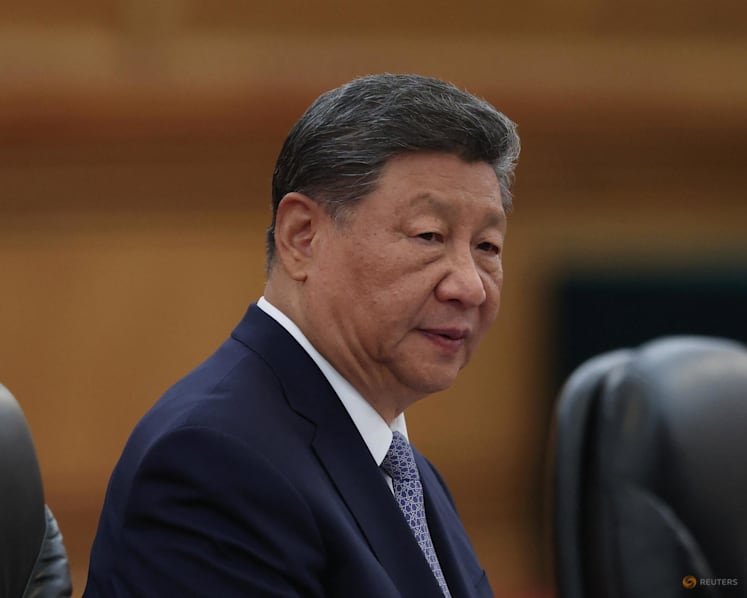
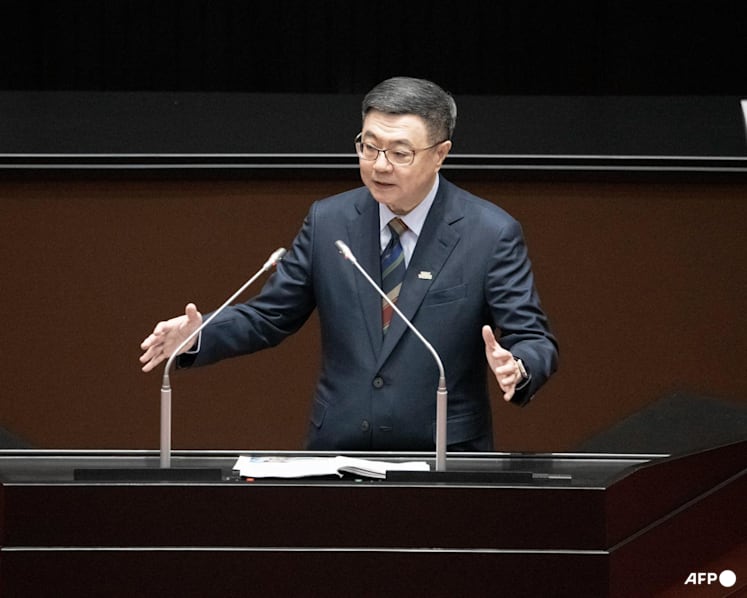
But Lazarus from Lazarus Consulting took a different view. He said the operation provides "further proof to China that Trump sees the world in spheres of influence”.
“With Trump asserting the 'Donroe Doctrine’, why can't the Chinese assert the 'Xi doctrine' over Taiwan and the South China Sea?” he said, referring to the US president’s stylised invocation of the Monroe Doctrine.
Trump coined the term - a portmanteau of "Donald" and "Monroe" - at his Jan 3 press conference announcing Maduro's capture.
Lazarus identified a lesson Beijing is likely drawing from the strike.
"The element of surprise is key. Any attack against Taiwan will need to be quick, targeting key infrastructure,” he said.
Mahoney from East China Normal University cautioned that Beijing faces a dilemma.
"If you escalate over Venezuela, will the US escalate over Taiwan? China has to be very careful."
WHAT ABOUT CHINA’S SUPPLY CHAIN RESILIENCE?
Beyond the immediate financial losses, the strike raises questions about China's access to strategic resources.
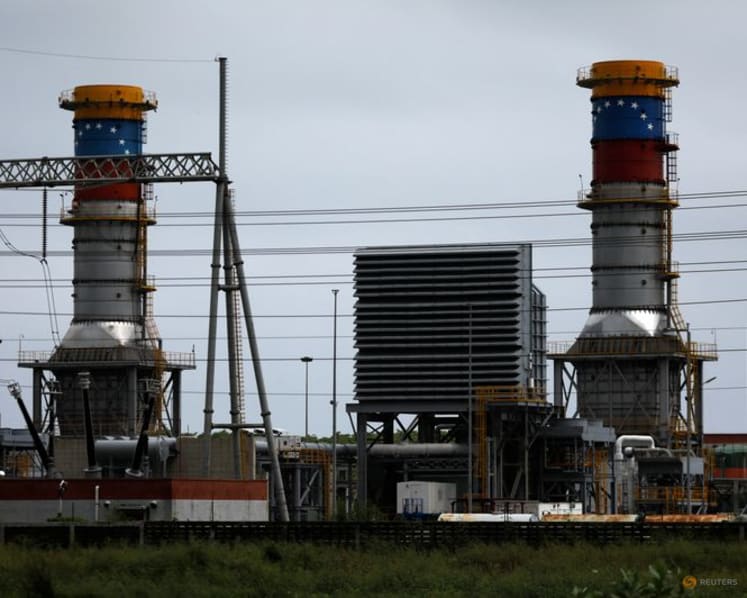
Venezuela holds the world's largest proven oil reserves - an estimated 303 billion barrels, according to data from the Organization of the Petroleum Exporting Countries (OPEC).
But production has collapsed. According to OPEC, Venezuela produced only 934,000 barrels per day in November 2025 - less than 1 per cent of global demand and a shadow of the more than 3 million barrels a day it pumped in the late 1990s.
The decline began under Chavez, who politicised the state oil company PDVSA and purged some 18,000 technical staff after a strike in 2002.
Years of underinvestment and infrastructure decay followed. US sanctions imposed in January 2019 - targeting PDVSA after Maduro's disputed second inauguration - then accelerated the collapse by cutting off finance and market access.
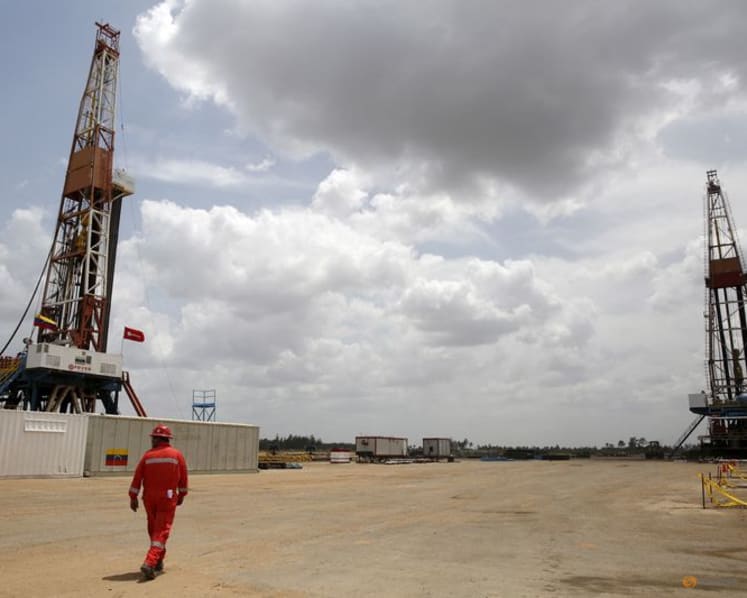
For China, the direct energy impact is manageable. Venezuelan oil represents roughly 4 per cent of China's total crude imports, according to Chinese customs data.
But the strategic implications extend beyond oil.
Mahoney said the US "covets Venezuela's strategic minerals and rare earths” and gaining access to them would help Washington counter China's export controls.
According to him, China used these export controls to “force” the trade war ceasefire with the US.
"This is another strategic risk to China," he said. "If the US is able to gain access to them, it would potentially undermine the strength of China's export controls."
According to the International Energy Agency, China controls around 90 per cent of global rare earth refining capacity.
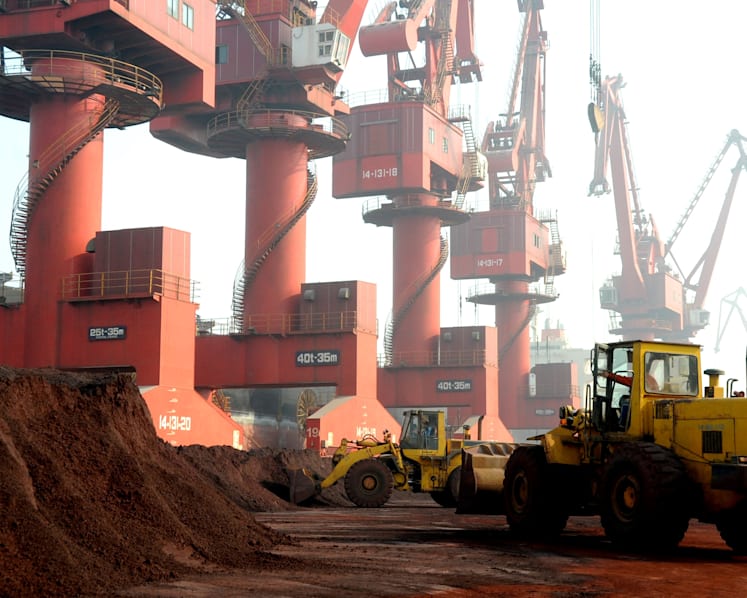
While Western nations seek to reduce this reliance, Chinese buyers have increasingly accessed materials from regions with weak regulatory oversight - including the Colombian-Venezuelan border area, according to a December 2024 investigation by Brazil-based environmental journalism outlet InfoAmazonia.
While Venezuela’s wealth of oil is proven, its rare earth potential remains uncertain, with no sizeable proven reserves despite reported occurrences.
Venezuela's Orinoco Mining Arc - a 112,000 sq km zone established in 2016 - contains coltan, gold, iron ore, and bauxite. According to a CSIS report on illegal mining in Venezuela, the region also has reported occurrences of rare earth elements in the Guayana Shield.
Lazarus, the founder of the eponymous geopolitical risk firm, pointed to one specific vulnerability: control over Venezuela’s mineral survey data.
He cited remarks made by María Corina Machado, a leading Venezuelan opposition figure, at a business forum in Miami in November last year.
“(She) said that in 2012, China's state-owned CITIC company conducted the only full geological survey of Venezuela's critical mineral resources,” Lazarus said.
Geological survey data is essential for resource extraction - it maps where deposits lie, what minerals they contain, and their estimated value.
According to CITIC Construction's own project listing, the company signed a contract with Venezuela's Ministry of Energy and Mines in September 2012 for a "Nationwide Geological and Mineral Resources Survey" covering aero-geophysical prospecting, regional geochemical surveys and mineral resource evaluation.
“It is the only company that has that survey to this day,” Lazarus said.