US willingness to act unilaterally, including military actions in Venezuela, has major geopolitical implications: SM Lee
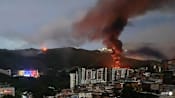
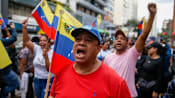
While the US intervention in Venezuela may be a “spectacular military success”, the longer-term consequences are something “to worry about”, SM Lee Hsien Loong said at a forum on Thursday.
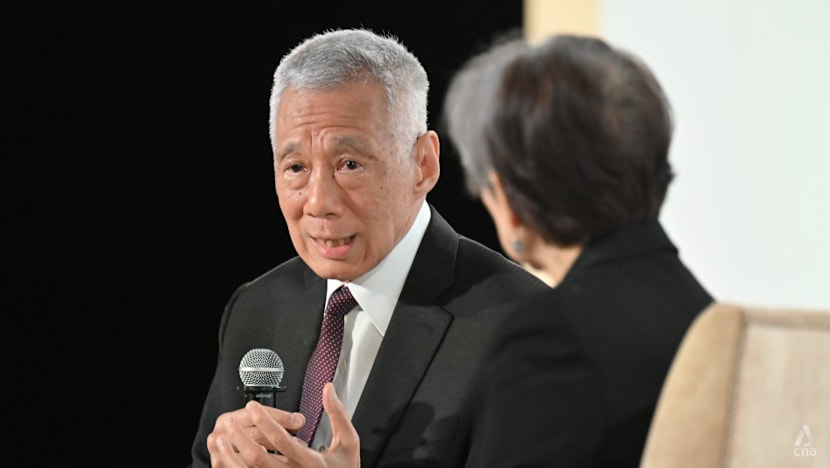
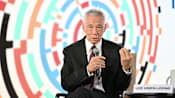
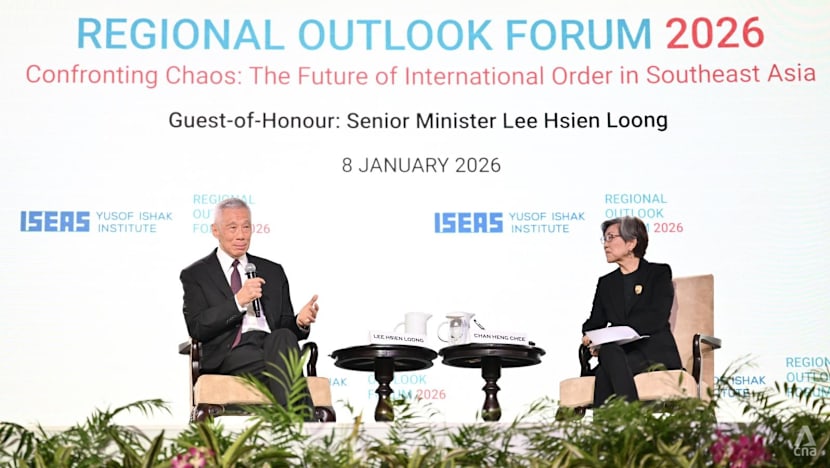
Senior Minister Lee Hsien Loong speaking during the special dialogue at the Regional Outlook Forum 2026 by ISEAS - Yusof Ishak Institute in Marina Bay Sands Expo and Convention Centre on Jan 8, 2026. (Photo: CNA/Jeremy Long)

This audio is generated by an AI tool.




SINGAPORE: Singapore is “gravely concerned” by the United States’ military intervention in Venezuela because it is contrary to international law and the United Nations Charter, said Senior Minister Lee Hsien Loong at an academic forum on Thursday (Jan 8).
While Venezuela is a “complicated country” with questions over the legitimacy of its government - as well as impact on its neighbours and the US when it comes to issues like drugs and refugees - it “does not justify military intervention by one country into another, unilaterally and without any proper authorisation”, he said.
Mr Lee said at Singapore think tank ISEAS-Yusof Ishak Institute’s Regional Outlook Forum 2026 held at the Marina Bay Sands Expo and Convention Centre.
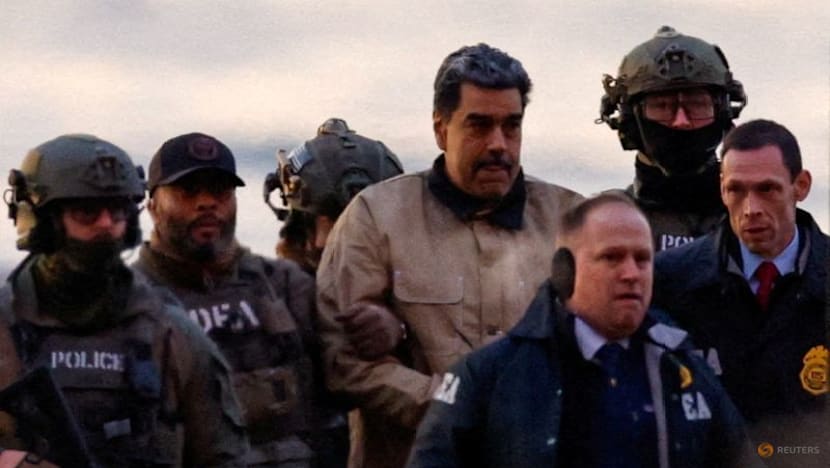
The US captured Venezuelan President Nicolas Maduro and his wife Cilia Flores in its operation on Jan 3, and Maduro pleaded not guilty to narcotics charges at the Manhattan federal court on Monday. He faces four charges of narco-terrorism, cocaine importation conspiracy and possession of machine guns and destructive devices.
The immediate consequence of the US intervention may be that “it works” and is a “spectacular military success”, SM Lee said.
“The longer-term consequences on the international system, I think that is something which we have to worry about. From the point of view of a small country, if that is the way the world works, we have a problem,” he told an audience of 650 participants, consisting of academics, local and foreign officials and lawmakers, and other guests.
Singapore’s Ministry of Foreign Affairs had on Jan 4 said Singapore is deeply committed to international law and the principles of the UN Charter that safeguard the independence, sovereignty and territorial integrity of all states, especially small states.





Singapore has consistently opposed actions contrary to international law by any parties, including foreign military intervention in any country, the ministry added.
Mr Lee said on Thursday that Singapore has always stated its position “unequivocally on these matters, whichever the situation”, including on Ukraine in 2022 and the Caribbean country of Grenada in 1983.
In March 2022, Singapore was among the countries which co-sponsored and voted in support of UN General Assembly Resolution ES-11/1 condemning Russia’s aggression against Ukraine and calling for the withdrawal of Russian forces from Ukraine.
Singapore voted in support of a UN General Assembly resolution denouncing the US’ invasion of Grenada in 1983, which then-President Ronald Reagan ordered citing the threat of Grenada’s Marxist regime to Americans in the country.
US “MORE WILLING” TO ACT UNILATERALLY
Major strategic changes have taken place globally in the past year, including in trade and security, SM Lee said in a dialogue with Professor Chan Heng Chee, chairperson of ISEAS-Yusof Ishak Institute’s board of trustees.
One major change is “the US has been more willing to act unilaterally when it sees its national interests require this”, said Mr Lee, citing its actions in the Middle East – where the US struck Iran’s nuclear facilities in June 2025 – Nigeria and, most recently, in Venezuela.
In the short term, these actions have sometimes had “spectacular and even positive results”, he said. In the Middle East, there has been a ceasefire in Gaza, imperfect though it may be, he said.
But there are longer-term consequences for the rest of the global system, which is based on the UN Charter, international law, as well as countries understanding they have to co-exist peacefully and work with one another, he said.
“Going to war has grievous and very unpredictable consequences,” SM Lee warned.
On the security front, European countries are engaged in deep soul searching on the responsibility they can take for defence and how they can come together in order to determine their own security policy and be less dependent on the US, Mr Lee said.
“It's going to be not just a lot of budget, but it's also going to be the difficulty of coming up with a European policy (on) security, direction and action. And that's a fundamental change to the world,” he said.
Ukraine, on the frontline of a war with Russia “with a completely different US”, will now have to think about what is a realistic path forward, Mr Lee added.
Meanwhile, Asia Pacific countries will also be “rethinking their positions carefully”, he said. The US remains a very important security and economic partner, among other things, but China is a major and growing partner in economic issues and more.
“I think a lot in the Asia Pacific will depend on how China decides that it wants to engage its regional neighbours and the world,” he said. China has been making the “right statements” about multilateralism, trade, and a rules-based system, and “we hope to see that this will be realised as real policies”.
“We are now in a different world, and we are going to see the consequences of the sea change in the economy, as well as in the security area, in 2026 and for many years to come,” said Mr Lee.
“We hope we don't have any tectonic shocks again … Nobody can predict these things, but we hope that 2025 will have been more exciting than 2026.”
“TENSER, MORE TROUBLED” RELATIONSHIP IN THE TAIWAN STRAIT
Mr Lee believes the US and China do not desire incurring a huge economic cost in their rivalry in the immediate future, be it in rare earths, pharmaceuticals or electronics.
But the “fundamental” issue is that the US is the status quo power, and wants to keep China down or at least some distance behind, while for China, its “right to develop is a red line”, he said.
“So how do you reconcile that?”
Tensions between both countries will remain, as well as the potential for “mis-assessment” by the other side when incidents – such as a high-altitude balloon originating from China that flew into North American airspace in 2023 – occur, he said.
“China is not a pushover. America, for all its difficulties, is not going to disappear and, as (former US Secretary of State) Henry Kissinger often says, a war between the US and China cannot be won and must not be fought,” said Mr Lee.
“But that's not something which is top of mind, I think, right now in the decision makers.”
Asked about relations across the Taiwan Strait and China’s recent military exercise around Taiwan following the US’ record US$11.1 billion arms sale to the self-governed island that China views as part of its territory, Mr Lee said it is important to have peace in the Taiwan Strait.
Singapore upholds the one-China policy, is against Taiwan independence and against unilateral changes to the status quo, he said.
“But the trouble is, in the real world, the status quo is never a static, frozen thing. It is dynamic, it shifts,” he said. “Countries adjust their position, other countries react, then the other side reacts to the reactions.”
While all sides maintain that they are upholding the status quo, there has been a shift towards “tenser, more troubled relationships” in the Taiwan Strait in recent years, Mr Lee said.
“So that is very troubling. I hope that we will be able to gradually calm things down.”
He added that there is some hope of that because if Washington “wants to avoid a breach with China for now, they will also be careful not to allow Taiwan to upset that”.
“And I think with this (Trump) administration, there are many things which people have views on what it is doing. But on Taiwan, I do not think they have been doing wrong things recently.”
TRADE RELATIONS
On the trade front, the results of US President Donald Trump’s tariffs have been “slightly less bad” than feared but are still playing out, Mr Lee said.
“The results have been slightly less bad, because the tariffs are a bit lower than initially headlined, because the implementation has been slower, because the US have had an AI tech boom, which has driven the US economy. And that's carried us along, but we should understand that it's a drastic change,” he said.
The consequences will take some time to play out, because other countries will react “to defend themselves, to retaliate, perhaps to secure their own supply chains”, he said.
These will result in a world economy with “less stability, less growth, less prosperity, less economic integration and technological progress”, he said. “I think that is not in doubt.”