Did you catch these 10 stories in 2025? This is why they’re not to be missed
These CNA stories, from profile pieces to investigative work, offer a snapshot of what helped shape 2025 at home and abroad and made viewers feel deeply, think harder and see the world more clearly.


This audio is generated by an AI tool.


SINGAPORE: In 2025, CNA’s documentaries took viewers into places both familiar and unseen, from prison cells to illicit migration routes, and delved into a range of subject matters, from everyday objects at home to geopolitical flashpoints.
Across Asia and beyond, our journalists followed people navigating rising costs, societal pressures, tightening borders and difficult choices in a changing world.
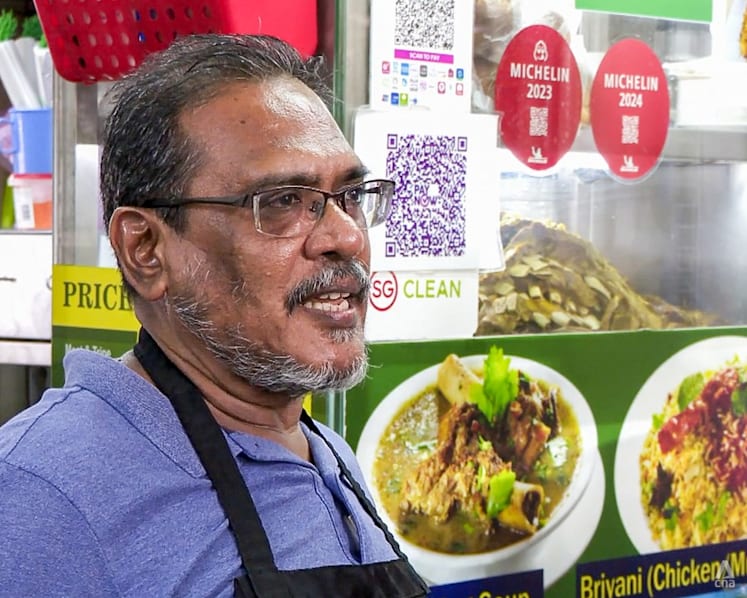
These stories include a Michelin-recognised Singaporean hawker guarding a recipe passed down through generations; and young men from India risking it all on the “Dunki” route through Latin America to reach the United States.
Elsewhere, our cameras travelled from Pakistan to Canada to confront the global war on drugs and into Thai households struggling with high levels of debt.





Together these stories offer a snapshot of the year as it was lived. If you are looking to catch up on (or rewatch) CNA’s shows, these 10 stories are not to be missed.
1. HOW DIRTY IS YOUR KITCHEN SPONGE?
Could your kitchen sponge be dirtier than your toilet seat?
When Talking Point tested 10 sponges of varying ages collected from viewers’ homes, the findings were “very gross”, according to host Diana Ser, who investigates how much bacteria may be lurking in one of the most-used household items.
With help from experts who explain why sponges are a hotspot for microbes, the episode finds out how often they should be replaced, whether the material matters and if other cleaning tools might offer better hygiene.
2. INSIDE THE ILLEGAL ‘DUNKI’ ROUTE
Undercover Asia traces the journey of two brothers from India to the US, at a time when Indians are one of the largest groups of undocumented migrants in the US.
The risks of taking the “Dunki” (Punjabi for “hop from place to place”) route to the West are great: exploitation, violence and even death as smugglers move migrants across borders and through criminal-controlled corridors.
For many illegal migrants, arrival is just the start of a harsher chapter, one that can end in debt for their families, detention or deportation. Some of them simply vanish along the way.
Yet, they keep coming, convinced that the gamble, however costly, is their only shot at a different future.
3. I FLY TO WORK 5 DAYS A WEEK, FROM PENANG TO KL
Racheal Kaur travels to work not by bus or train but by plane, waking at 4am to board a flight at 5.55am. She is in the office by 7.45am.
With a staff discount in AirAsia, flying in from Penang costs less than renting in Kuala Lumpur. It also means more time with her children. “It’s exhausting,” she says but adds that seeing her children at the end of the day makes it worthwhile.
She features in a Money Mind episode examining how rising living costs and family priorities are reshaping work-life decisions.
4. ASIA’S CHANGING MIDDLE CLASS: THAILAND
Thailand’s middle class was once a symbol of upward mobility.
Today, it is feeling the squeeze, with household debt close to 90 per cent of gross domestic product — among the highest in Asia — as easy credit, stagnant wages and rising costs converge to create a debt trap.
Millions of borrowers in Thailand have a limited ability to service their debts, and delinquency rates remain a worry.
The programme, Insight, follows a Gen Zer busking to help pay his school fees and families juggling multiple loans, and asks whether government measures can effectively ease a burden that now threatens economic growth.
5. INSIDE THE WOMEN’S PRISON
CNA takes viewers inside Singapore’s only women’s prison in this tell-all series as six inmates navigate life behind bars and the pain of separation from loved ones. Most of them are incarcerated for drug offences and come from turbulent backgrounds.
The three-part documentary shows how inmates cope with prison life through daily routines and improvised comforts and how officers balance discipline with care as they support rehabilitation. The emotional cost of incarceration runs through every story.
“I pray for you every day, ‘Oh God, let this be the last time my daughter and I are incarcerated,’” Juliana Baba, 52, says to her daughter, Nur Joanna Zulkepeli, 22, during a face-to-face session for the two inmates.
6. ‘MEAT’ THE AUSTRALIAN WHO WORKS IN A WET MARKET
At 4am, while most of Singapore sleeps, Adam Speering’s working day begins. The 42-year-old Australian, who has lived here for a decade, runs Outback Butchery with his wife at a wet market, building a life and livelihood far from home.
Singapore Hour follows a day in his life, from early-morning preparations to serving regular customers, and looks at how he has adapted to the local culture while raising five children.
7. SEPARATION: DECLASSIFIED
This two-part documentary revisits one of Southeast Asia’s most dramatic political divorces, putting declassified documents and oral accounts together to shed light on little-known details about Singapore’s break with Malaysia.
Singapore was not simply forced out of the merger; the series shows a more complicated reality shaped by secrecy, high-stakes political manoeuvrings and fraught decisions.
It might surprise viewers that Britain found out about the split only the night before, that Lee Kuan Yew feared assassination enough to reinforce his Oxley Road home with steel plates and that Tengah Air Base housed nuclear weapons under British control.
8. ADDICTED: THE CURSE OF CRYSTAL METH
The three-part series, Addicted, opens with a look at the war on synthetic drugs such as crystal meth and investigates how drugs are produced, trafficked, consumed and fought across the world.
The documentary offers access to the front lines of various countries, from a police raid in Karachi, Pakistan, to a monk-run rehabilitation process in Thailand to the fentanyl crisis on the streets of Vancouver, Canada.
It raises questions about enforcement, public health and whether societies can respond to the growing drug epidemic before it is too late.
9. ‘NUMBER ONE MUTTON SOUP IN SINGAPORE’
At Adam Food Centre, 64-year-old Syed Abdul Rahaman Mohammad Ahdam has served the same mutton soup for decades, with the recipe passed down from his father.
While his stall has earned its third Michelin Bib Gourmand, he worries about what comes next. He is the sole cook, working long hours with few breaks and relying on instinct rather than written measurements.
“My measurement is my hand,” he says, which explains why consistency is difficult to pass on.
On The Red Dot explores the question whether his sons can take over the stall and preserve the taste that has kept customers coming back for years.
10. CHINA AND THE GLOBAL SOUTH: INDONESIA
This segment of China And The Global South focuses on Southeast Asia’s largest economy, where Beijing is making significant inroads.
As Indonesia seeks to move up the value chain in critical minerals and electric vehicles (EVs) to boost economic growth, China has emerged as a key partner with its advanced battery and EV technology.
Chinese-backed projects, from Southeast Asia’s first high-speed rail to major nickel refining and battery investments, are having a major impact. But as tensions over the Natuna Islands brew, how will Indonesia balance economic cooperation with questions of sovereignty and security?