Chinese matchmakers see new demand as an extra 30 million men struggle to find love
As dating gets more complicated, young professionals in China are seeking help to navigate love. CNA’s Chinese Matchmakers follows them and the experts reshaping the way they present themselves, right from their awkward first dates.
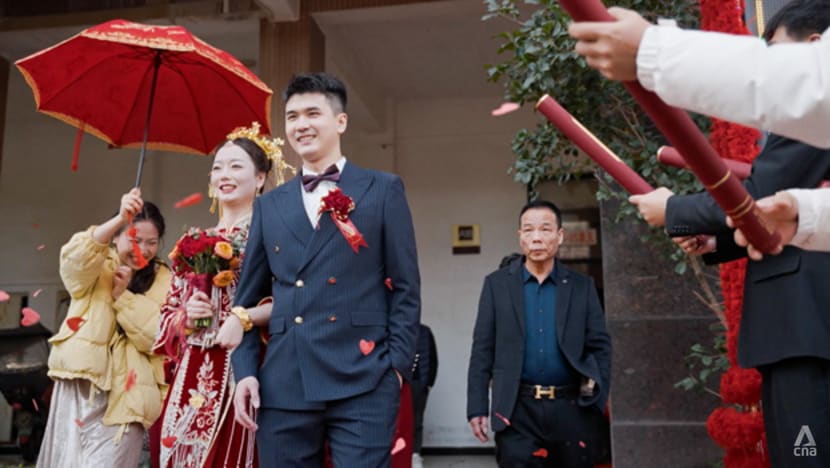
A couple getting married in China, where marriage registrations have fallen to just over half the number a decade ago.

This audio is generated by an AI tool.




CHENGDU: On paper, Zhao Xiangjie, 33, appears to have a lot going for him in China’s dating market.
He works as an information technology product manager, earning 300,000 yuan (US$43,000) a year. He owns a flat in Chengdu, while his parents own another that currently stands empty. He drives a car, keeps active and comes from a stable family.
So when he had a sit-down with matchmaker Jiang Ping, 43, she cut straight to the point. Seeing that he was also “pretty good-looking”, she asked: “Why are you still single?”
Zhao quipped: “People joke that those who shouldn’t be single are all unattached!”





But his situation is far from unusual. In a society where marriage has long been regarded as a key milestone in life, many young Chinese men are finding it difficult to find a partner.
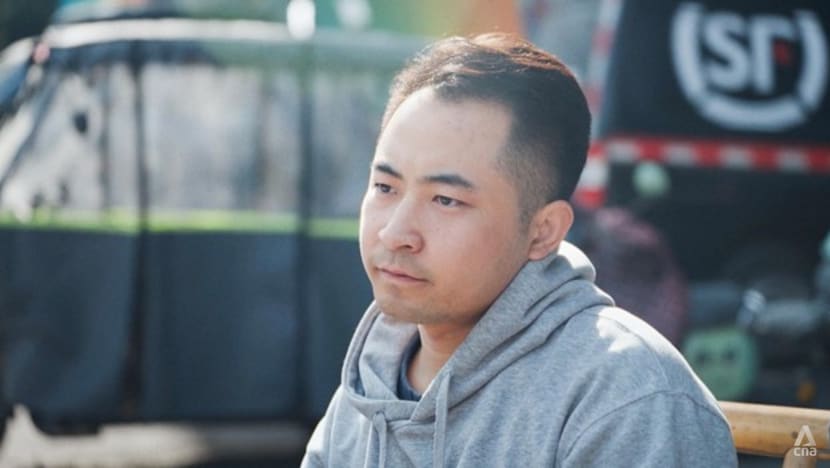
Marriage registrations have fallen, with 6.76 million couples tying the knot last year, just over half the number a decade ago.
The decades-long one-child policy and a long-standing preference for sons have also left China with 30 million more men than women.
For men like Zhao, the search for a partner has become more competitive and uncertain. Increasingly, they are turning to matchmakers, whose centuries-old trade has evolved into a modern industry offering personalised coaching and dating events.
Across cities and towns, professionals in their 20s and 30s are signing up to matchmaking services or joining livestreams to meet potential partners.
CNA’s two-part series, Chinese Matchmakers, follows several of these men and the matchmakers guiding them. We find out why more young men are seeking help and offer a window into the way dating expectations have shifted.
WATCH: Part 1 — How matchmaking agencies in China are helping young men find love (45:15)
WHY LOVE DOESN’T COME EASILY
The difficulty for many young men begins with meeting enough women. Shanghai-based matchmaker Meng Weili, 38, said demanding work schedules often leave singles with little time to socialise, limiting them to small circles of colleagues and existing friends.
That is the case for “Cong”, a 33-year-old engineer who works long hours. “You can meet more people through a matchmaker,” said Cong, who declined to reveal his real name. “In certain respects, it’s more efficient.”
At Meng’s agency, first meetings between clients last about 30 minutes, which keeps them focused and limits time lost on any potential mismatch. Matchmakers vet the profiles and arrange the introductions, allowing clients to meet several candidates quickly.
Even so, with fewer women in the dating pool, they can often be more selective. Expectations have also risen, and men have a high financial bar to clear.
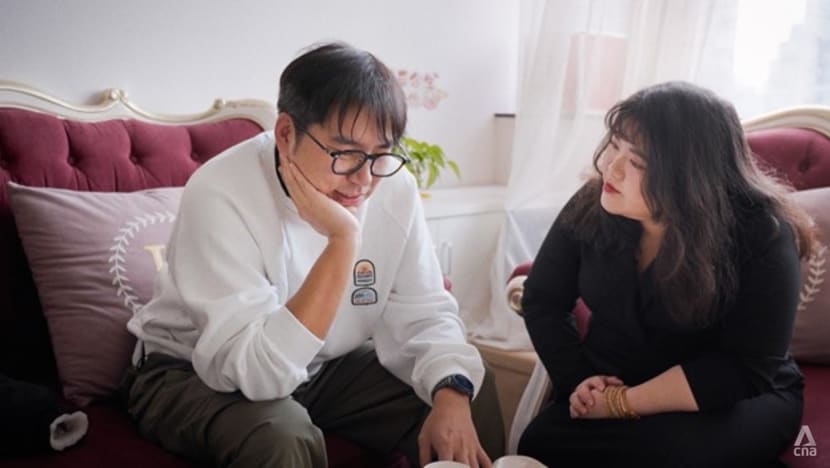
Sun Guanle, 54, a matchmaker in Zhucheng, Shandong province, said women now expect a partner who owns a car and a “mortgage-free apartment” with at least three bedrooms.
Also, a job in a state-owned company — with an attendant income of “at least 12,000 yuan” a month, plus “generous benefits and a good pension” — is ideal.
One of her clients, however, falls short of those expectations: Machine tools salesman Sun Guoxu, 31, earns 78,000 yuan a year and is paying off a mortgage.
Both of his first two blind dates declined to meet him again and did not accept his requests to stay in touch on messaging platform WeChat.
“In the past, clients valued each other as people,” said his matchmaker. “Now everyone wants to find someone with good prospects. Everybody wants to marry up and skip years of struggle.”

Some men narrow the field for themselves through their own expectations. They tell matchmakers they are looking for partners who are younger, attractive and easy-going. Education is also valued, often seen as a sign of intelligence and compatibility.
“If you were to marry someone you didn’t know too well, a good education would be a kind of insurance,” said Cong, who is looking for someone under 28 with an understanding personality.
In practice, this can lead some men to pass over potential matches.
Chen Yukun, 29, a civil servant from Jiangxi province who said his intelligence was his biggest appeal — and called himself “down to earth” — rejected several suggested profiles as being not attractive or slim enough.

Given his modest salary and lack of property ownership, Jiang his matchmaker questioned whether he could afford to be so selective.
“What kind of woman would choose intelligence over money?” she asked, highlighting the gap between his expectations and the realities of modern dating.
HELPING MEN FIGURE OUT WOMEN
Even well-qualified men are not guaranteed success. Zhao, for example, meets many financial expectations, but his matchmaker said his challenge lies in understanding what women want — a gap that matchmakers are stepping in to address.
Acting as counsellors and coaches, they help shape the way clients present themselves and are perceived, guide them through each stage of dating and step in with advice, encouragement or hard truths when needed.
WATCH: Part 2 — China’s young men seek love, but do they know what women want? (46:59)
In Shanghai, Meng arranges for shy clients like Cong to meet potential partners in a low-pressure setting — her agency office — and receive feedback right after that. “Introverts need a lot of guidance and a familiar environment,” she said.
These meetings give clients room to learn from their missteps. On one of his first couple of blind dates, for instance, Cong asked the girl if she had ever been in a relationship. She got defensive, and the conversation stalled.
Afterwards Meng advised him to steer initial conversations to safer ground, while reassuring him about how it ended.
“Maybe you hit her sore spot. That was unfortunate,” she said. “If there’s no spark, then move on. There’s no need to dwell on it.”
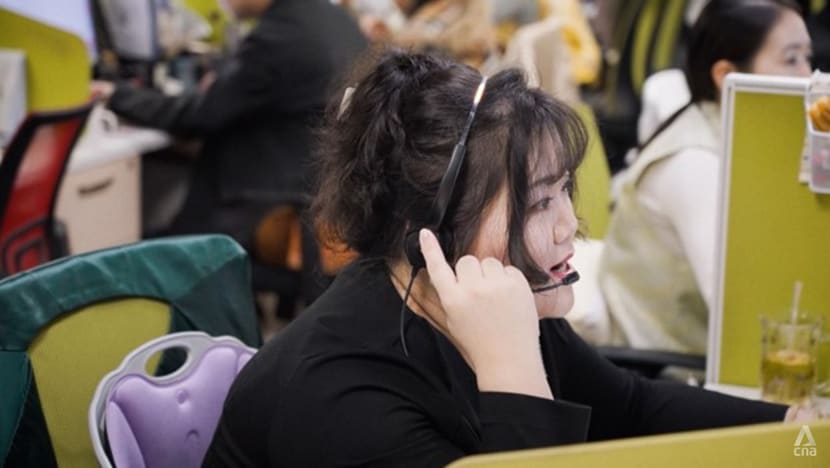
Matchmakers also coach clients on pacing themselves. When Chen was preparing for a first date, he was told to focus on building momentum instead of jumping to conclusions.
“The goal of your first date is to get a second date,” Jiang told him.
Don’t spend four or five hours on the first date and think you’ve found ‘the one’. In my experience, this kind of connection usually doesn’t lead to a second date.”
The guidance continues as relationships develop. When Zhao found a girlfriend but the relationship began to falter, he turned to Jiang. After reviewing his messages, she told him he was coming across as overly eager.
“The more anxious you are, the more she’ll avoid you,” she said, urging him to hold back. She also encouraged him to address tensions over money and lifestyle expectations directly. “Don’t be afraid of losing her,” she added.

The relationship eventually ended, with the girl saying she did not truly like him, only how nice he was to her.
Jiang can trace a familiar pattern to such relationships. “If you’re looking for a comfortable, intimate relationship, you can’t base your choice only on looks,” she said.
A large part of her job is about recalibrating expectations. When Zhao said he wanted a partner who was a teacher or a doctor, Jiang cautioned against expecting such a wife to be the one taking care of the family.
“(Teachers and doctors) put in long hours too,” she said. “These jobs aren’t as easy as you think.”
In Fujian’s Changle district — where there are 109 men for every 100 women — matchmaker Jiang Xiaoling had a client with a clear list of what he wanted. But he struggled to articulate what he could offer.
“The women (he’s) going after,” she said, “already have everything they need.”


Getting clients to confront these mismatches can be uncomfortable. But matchmakers say it is necessary for men to understand how they are seen by the women they hope to attract.
As one practitioner put it: “Sometimes you just need to tell them to wake up.”
NEW FORMATS, BUT PRESSURE ONLY GROWS
In a landscape where chances are uneven, not everyone will find a match. But new formats are expanding access.
Some matchmakers now host livestreams and online chat rooms, where singles introduce themselves to a large audience and field questions in real time. This offers them a way to be seen by far more potential partners than traditional setups allow.
Why China’s Gen Z and millennials are ditching the ‘marriage market’ for livestream matchmaking (9:24)
Clients are also getting younger. Some of them are quick to see how difficult it has become to find a partner; others are encouraged, or made to sign up, by their parents.
“People realise the earlier they come to us, the better their chances, especially for women,” one matchmaker said. “Youth and good looks are their biggest selling points.”
But even as men can meet women who are younger through matchmaking, shifting norms are adding to the gender imbalance.
Jiang Ping herself, though in the matchmaking industry since 2010, is unmarried. She also broke with tradition by opting to raise a child on her own. “Marriage is a choice. It’s not for everyone,” she said.
“Ever since having children out of wedlock became acceptable, my friends have told me, ‘Ms Jiang, you’re truly ahead of your time.’”
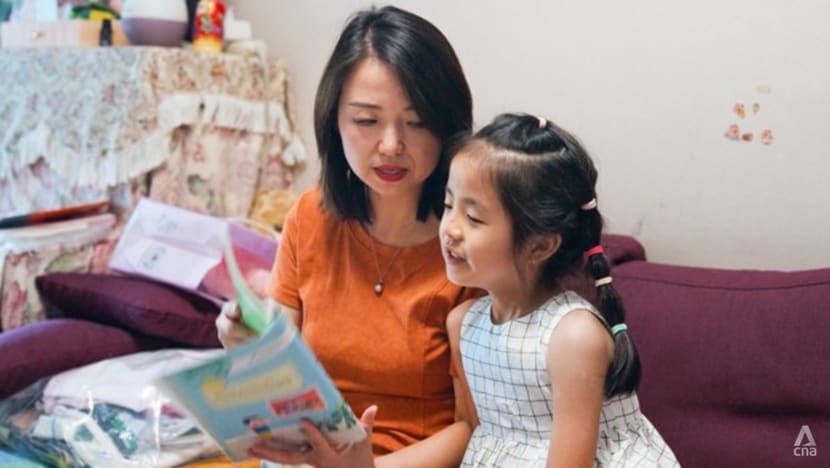
Policies are beginning to reflect these shifts. In Sichuan province, whose capital is Chengdu, authorities now provide single mothers and their children with benefits once reserved for married couples.
But for men like Zhao, traditional expectations remain strong. During his Chinese New Year reunion dinner, his family pressed him again about his private life and the goal of marriage. “Stop pressuring me,” he pleaded.
His parents find it hard to remain patient.
“I’m so worried that my hair is falling out and turning grey,” said his mother, 60. “Some of our friends wonder what we’ve done wrong. Their grandchildren are already four or five years old.”
His father, 64, added: “In the countryside, where we came from, everyone needs to get married. … No matter how successful your career is, without being married, you can never be considered a real success.”