Commentary: Chinese consumer behaviour during Golden Week was exactly what Beijing hoped to avoid
China needs to boost consumption, but weak spending and consumer subsidies risk creating a vicious cycle, says Enodo Economics’ Diana Choyleva.
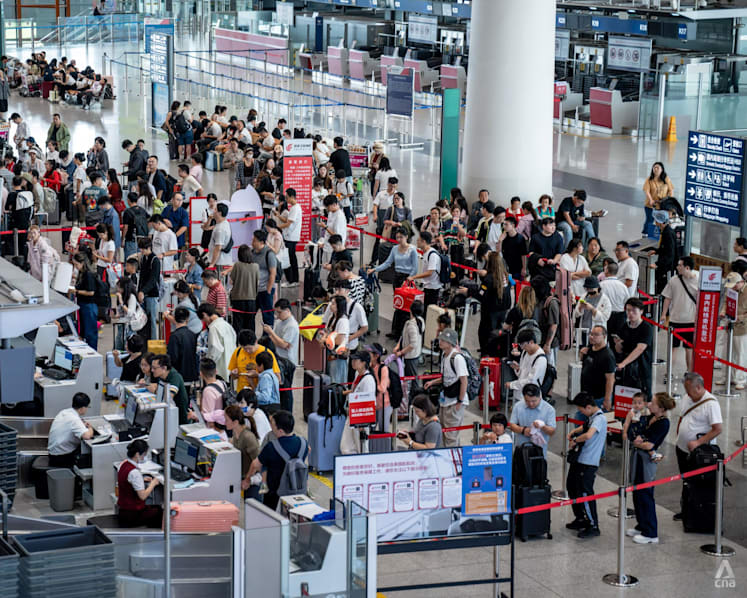
Passengers waiting to check in at Beijing Capital International Airport in China on Oct 1, 2025. (Photo: CNA/Hu Chushi)

This audio is generated by an AI tool.


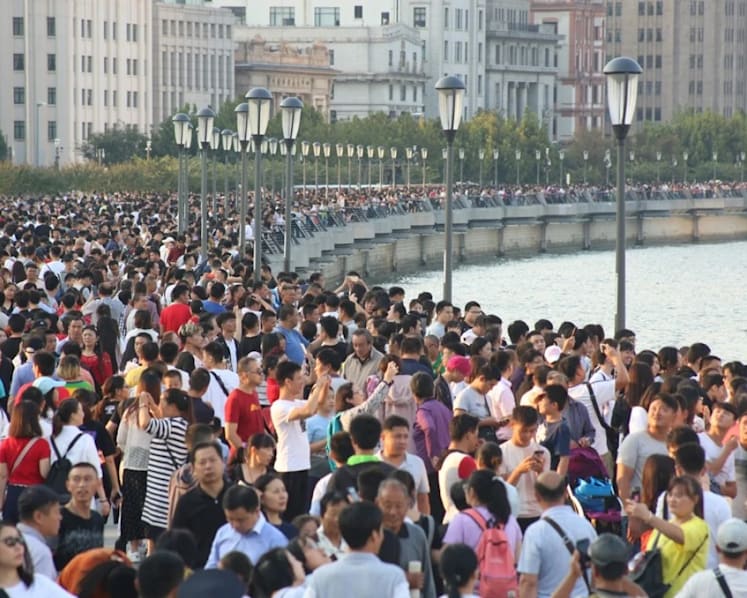
SHANGHAI: China's recent eight-day Golden Week holiday in October produced a striking paradox: record-breaking travel alongside conspicuously restrained spending. While 888 million domestic trips represented a surge of over 120 million journeys compared to last year, average spending per trip fell to roughly 911 yuan (US$114) – the lowest since 2022.
This disconnect between movement and money exposes critical flaws in Beijing's current approach to consumption-led growth.
The most revealing insight came not from official statistics, but from the Enodo team's ground-level observations across Shanghai, Jiangsu and Guangdong during Golden Week.
Conversations with travellers and friends revealed a troubling pattern in that many households are explicitly waiting for the next round of consumer subsidies before making major purchases.





This expectation-driven restraint represents precisely the moral hazard Beijing hoped to avoid, and it demonstrates why subsidy-dependent consumption cannot serve as a long-term solution.
SUPPLY-SIDE LOGIC DRESSED AS CONSUMPTION SUPPORT
When consumers learn to anticipate government handouts, they rationally defer spending until support materialises.
Golden Week's thin receipts despite packed trains suggest this dynamic is getting entrenched. People are willing to travel – taking advantage of local discounts and incentives – but are doing so on a budget and holding back on broader consumption in anticipation of better deals or direct subsidies.
This risks creating a vicious cycle, one where weak spending prompts more subsidies, which trains consumers to wait for subsidies, perpetuating weak baseline consumption.
The pattern of hyper-competitive pricing that characterised Golden Week – cheaper movie tickets, aggressive tourism discounts, promotional campaigns – reflects the structural weakness in consumer demand which Beijing needs to address head-on.
Yet Beijing's response remains inadequate. Trade-in subsidies and price wars may temporarily move merchandise, but they cannot solve the core problem. Chinese households lack sufficient income and confidence to spend naturally.
The result is what we witnessed during Golden Week – consumers responding to deals without developing sustainable spending habits. Once subsidies and discounts end, consumption retreats. This approach generates temporary statistical wins while avoiding the structural reforms that genuine rebalancing requires.

THE MISSING FOUNDATION: HOUSEHOLD ASSET INCOME
The critical constraint on Chinese consumption is not wage income – China's wage share of GDP matches the United States – but household asset income. Chinese households are large net savers, yet earn artificially low returns because the government suppresses interest rates on their deposits (currently at their lowest rate since the 1980s, according to World Bank data), channelling cheap credit to state-owned enterprises (SOEs) and local government projects instead.
The most potent tool for boosting consumption – higher deposit rates – remains off the table.
Without market-determined returns on savings, households naturally maintain excessive precautionary savings buffers, particularly when facing job insecurity and a weak property market. Even rising stock prices cannot overcome this defensive positioning easily when the bulk of household financial wealth sits in deposits earning below-market rates.
Beijing's chosen alternatives – equity market development, affordable rental housing supply, expanded social transfers – show promise over multi-year horizons.
However, Golden Week demonstrates that these solutions struggle to generate near-term consumption momentum. Households will remain cautious until they see meaningful improvements in asset income and job security, not just incremental policy adjustments.
THE SUBSIDY TRAP
The travel-without-spending pattern observed during Golden Week reveals why Beijing's current approach will likely produce only gradual, incomplete progress toward rebalancing. The government pursues pro-consumption rhetoric and incremental measures, but refuses to deploy the most effective tools.
Because doing so would require accepting uncomfortable trade-offs.
Genuine consumption-led growth demands transferring income and wealth from state-owned enterprises and local governments to households. This could be achieved – not through temporary subsidies, but through structural reforms like market-determined interest rates, higher social security and elimination of incentives that allow SOEs to hoard rather than distribute profits.
This redistribution comes at the expense of government revenues and state enterprise profits that currently fund technological ambitions. It requires local governments to shift from infrastructure investment to social transfers. It demands trusting market mechanisms and allowing household preferences greater influence over resource allocation.
All these entail ideological shifts that conflict with President Xi Jinping's emphasis on party control and state dominance of strategic sectors.

THE 2026 INFLECTION POINT
Golden Week serves as a critical test of Beijing's resolve entering 2026, when China's next five-year plan will either institutionalise or abandon consumption-focused policies.
The holiday data suggests authorities face their most likely outcome: gradual progress under constant pressure, with partial commitment producing some rebalancing but falling short of the accelerated transition that economic fundamentals demand.
The danger is that Beijing will waver when growth weakens, and end up oscillating between consumption-focused measures and growth-seeking investment if it faces intense internal pressure to restore investment-led stimulus from local governments desperate for fiscal relief and state-owned enterprises protecting their resource allocation.
China's Golden Week paradox crystallises the central challenge. Beijing recognises that consumption-led growth is essential for long-term economic resilience and even national security, yet may lack the political resolve to accept the slower growth and reduced state control that genuine rebalancing demands.
Chinese households are responding rationally to policy incentives – moving when it's affordable, spending when subsidised, waiting for better deals, and maintaining defensive savings positions.
No amount of promotional campaign efforts or targeted subsidies will unlock sustainable domestic demand until Beijing addresses the structural foundations of weak consumption.
Diana Choyleva is the founder and chief economist of Enodo Economics and a senior fellow at the Asia Society Policy Institute’s Center for China Analysis.