







Commentary: Faishal Ibrahim’s resignation needs more transparency for proper closure
Without more information, the public has made all sorts of speculation and ill-informed judgement – the most damaging of which are not about the nature of the minister’s interactions with a woman, says veteran newspaper editor Han Fook Kwang.
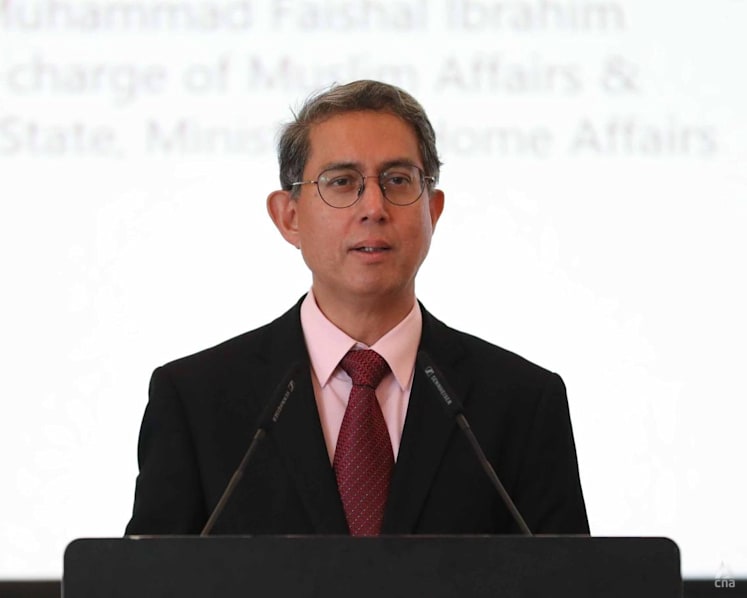
Acting Minister-in-charge of Muslim Affairs Faishal Ibrahim speaking at the SCIS advisory panel meeting on Jun 24, 2025. (File photo: CNA/Lim Li Ting)

This audio is generated by an AI tool.


SINGAPORE: Whatever your views about the sudden resignation of Acting Minister for Muslim Affairs Faishal Ibrahim, you have to feel for the man.
It is a huge personal tragedy to lose your job as a minister and sitting Member of Parliament in such a public manner, amid so much speculation about what was done and said in private messages to a woman.
The man was, by many accounts, a decent person performing a creditable job and had recently been promoted to acting minister. It is not hard to imagine what he and his family are going through now.
But the thing is that we cannot say whether he deserved such an outcome because we do not really know what happened.





That is a major problem. When you can’t form a view about it because of a dearth of information, there is no proper closure for the public.
In its place, all sorts of speculation and ill-informed judgment have taken root, many of which might be completely off the mark and unfair to the man or the woman involved.
These wild guesses include not just what he did but the decision made by Prime Minister Lawrence Wong to accept Assoc Prof Faishal's resignation.
While Mr Wong has made clear that the outcome would have been the same regardless of which minister had been in Assoc Prof Faishal's shoes, several questions remain unanswered: Where did he cross the line and fall short of the standards expected? What are these standards anyway? Has the bar been set too high for public officers in matters concerning personal conduct that are not related to the job they perform?
WHAT HAS BEEN SAID AND THE QUESTIONS THAT REMAIN
What we have are Mr Wong’s statement and the letters exchanged between Mr Wong and Assoc Prof Faishal on the matter.
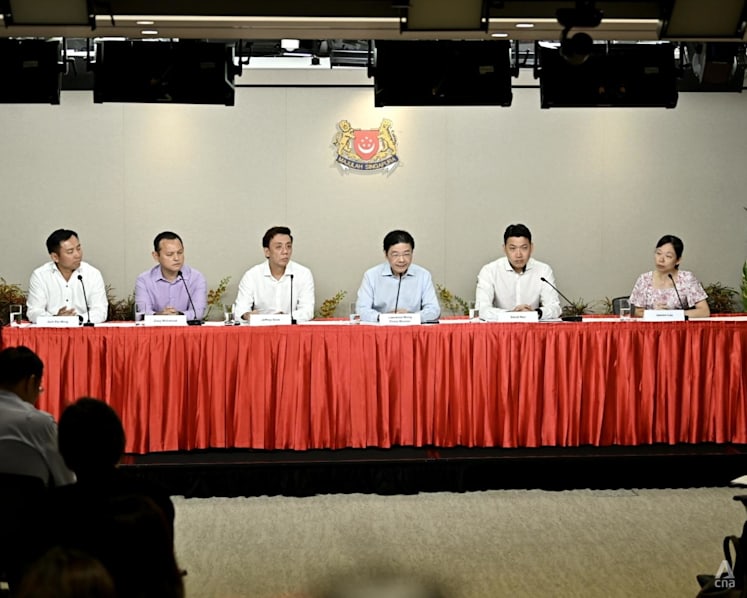
Home Affairs Minister K Shanmugam subsequently posted about the matter on Facebook, while Mr Wong also spoke about it at a press conference unveiling his new Cabinet line-up.
At the press conference on Wednesday (Jul 22), Mr Wong described his initial reaction as "disbelief and shock" when he first saw the email which the woman sent to his office. The email contained screenshots and other information regarding her interactions with Assoc Prof Faishal.
Mr Wong said that he had initially even thought that the contents were fabricated.
While this indicates how severe the indiscretions were, it probably led to more public intrigue over the contents of the email.
The prime minister also addressed concerns about whether Assoc Prof Faishal had been dealt with too harshly, saying that if it had happened to any other MP, "the same process, the same standards would apply and the same consequences would have followed".
He added that Assoc Prof Faishal himself had accepted his actions were “not tenable” and that he had requested to step down.
All this is fair enough but it still did not provide the complete picture.
In his earlier public statement, Mr Wong also said the matter was referred to the police after both parties accused the other of harassment.
“After carefully considering the facts and circumstances, and in consultation with the Attorney-General Chambers, it was assessed that no criminal offence had been committed by either party,” Mr Wong’s statement read. “But there was a separate question of whether Assoc Prof Faishal’s conduct met the standards expected of a political office holder and MP.”
Assoc Prof Faishal had this to say in his resignation letter to the prime minister: “While there was no physical relationship between us, and I did not intend for the interactions to develop into one, there was a lapse of judgment on my part in the way I handled the interactions, and in failing to establish clearer boundaries at an earlier stage. On reflection I recognised that my conduct fell short of the standards expected of me and was not consistent with the responsibilities entrusted to me.”
Given the scarcity of information provided, it is not surprising there are questions about whether Assoc Prof Faishal should have resigned. This much is clear: There was no physical relationship between the two. Everything thus hinges on the nature of those online messages, but not enough has been revealed to determine one way or other whether they crossed the line to result in such a spectacular fall.
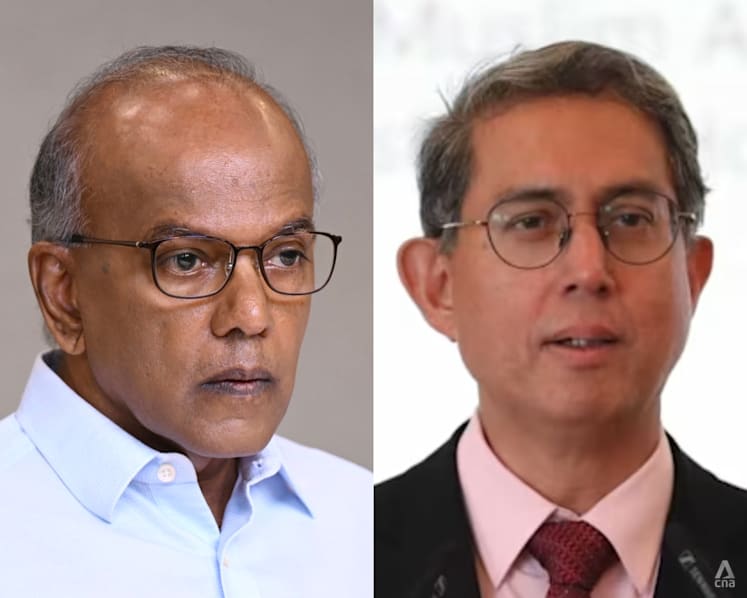
Mr Shanmugam’s Facebook post on Wednesday acknowledged the many questions being asked about the affair and provided additional information which is worth quoting here:
“Faishal explained that he was worried the lady might react negatively if he abruptly cut her off. Nevertheless, his responses were, objectively, inappropriate and questionable. They come across as engaging with her. Indeed, that was how the lady interpreted his responses, and said she was encouraged to continue.
“The lady became angry when Faishal subsequently tried to put a stop to the online exchange. She emailed PM, sent some of the messages and pictures and alleged harassment.”
I am afraid after reading this I am still no clearer what were in the messages or pictures that were deemed inappropriate and questionable.
They remain a mystery. If anything, a plain reading of Mr Shanmugam’s comments might even reinforce the feeling that Assoc Prof Faishal had been dealt with too harshly as it appears he did try to stop the exchanges but the woman reacted angrily to this and escalated the matter.
POLITICS OF DISMISSAL
Of all the speculation, the most damaging are not about the nature of the interactions but those to do with the politics of the dismissal.
For example, there is this observation by political analysts in various reports that the prime minister had to take decisive action because of the fallout from how his predecessor handled the Tan Chuan Jin affair.
Then Prime Minister Lee Hsien Loong had not acted immediately to remove the ex-Speaker of Parliament after discovering an affair between the latter and another MP, Ms Cheng Li Hui. He had explained that by giving the matter some time, he had hoped to give them a softer exit, and save them and their families the pain and embarrassment they are suffering now.
“In retrospect, and certainly now, knowing how things eventually turned out, I agree. I should have forced the issue sooner,” Mr Lee said in August 2023. “I placed much weight on protecting their families – perhaps too much.”
In the case involving Assoc Prof Faishal, Mr Wong had pointed out that the fact that it was no longer a private matter had forced him to conclude there was no way for Assoc Prof Faisal to continue in office.
"A complaint has been made against him; it has entered the public arena, and that's why we have to undertake this objectively, undergo a process where we listen to both parties, and we certainly took pains to listen to Faishal's explanations as well," he said. "But after doing all that, we also have to look at the evidence and the facts.”
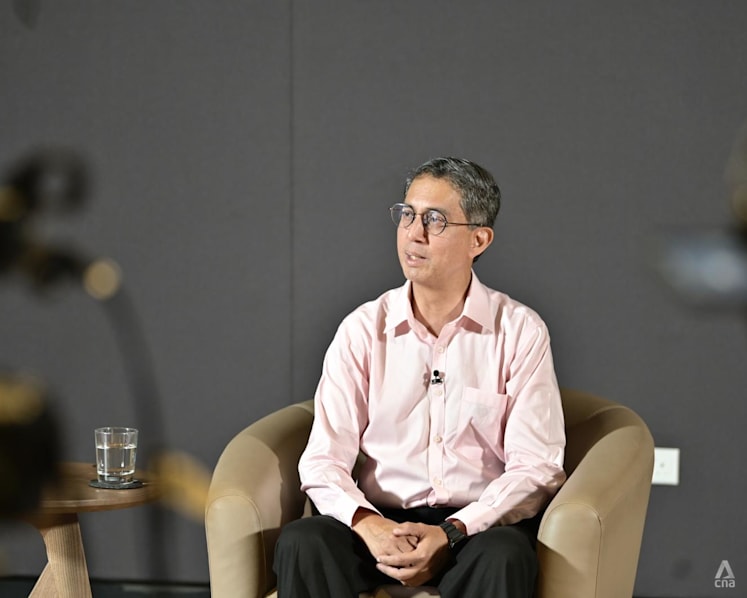
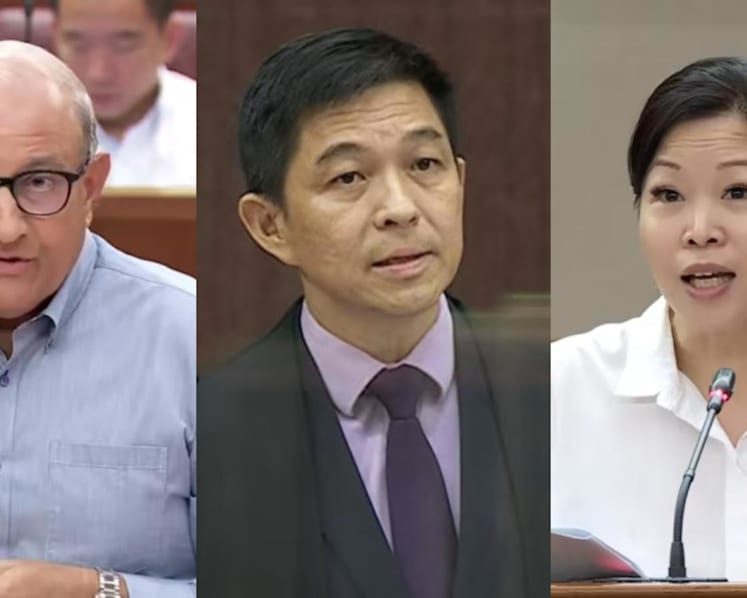
The different circumstances surrounding the two cases are clear, but that has not stopped the observers from arguing that Mr Wong had to act more firmly lest he be accused of making the same mistake.
I hope this isn’t the case because it should not be how these matters are dealt with. If a minister has fallen short of conduct expected of him, one has to look at what he actually did and punishment imposed according to the severity of the act.
The trouble with getting politics involved is that you are likely to swing from one extreme to another according to public sentiment, with no consistency in the standards applied.
The best policy is to be open and transparent, to disclose as many facts as is possible without revealing unnecessarily personal details, and to be clear and unambiguous about the rules.
Everyone should know what is expected and where the boundaries are. If the rules are too vague and ambiguous, the natural tendency is to play safe and become overly cautious. But ministers are not civil servants and a large part of their job is to engage and interact with their constituents, to understand how they feel about issues and help solve their problems.
It is not an easy balance to strike - to be able to empathise and show their human side, yet not cross the line and become emotionally involved.
Hence, the need to be as clear as possible about the rules and to make them public.
It is still not too late for the ruling party to do so and bring proper closure to the issue.
Han Fook Kwang was a veteran newspaper editor and is Senior Fellow at the S Rajaratnam School of International Studies, Nanyang Technological University.




