Commentary: Soaring World Cup ticket prices could bring in US$15b for FIFA, but where will the money go?
This year’s World Cup will provide organiser FIFA with a golden opportunity to make more than US$15 billion in revenue, which would be a record, says this academic.
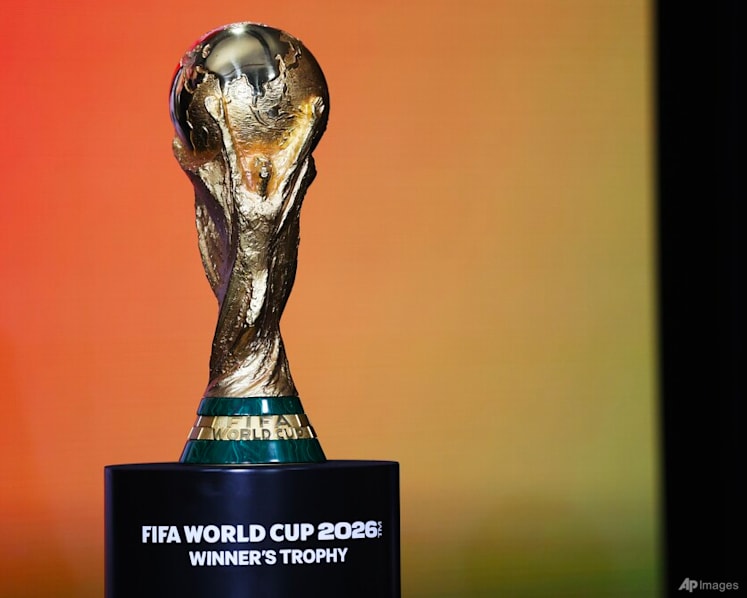
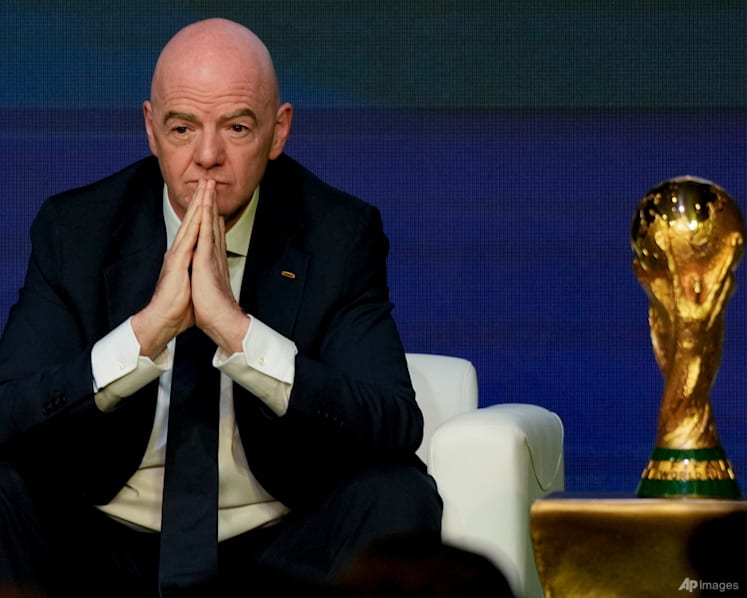
A FIFA World Cup trophy is displayed on stage for a panel on the 2026 FIFA World Cup soccer tournament halftime show at the Global Citizen NOW summit, Thursday, May 14, 2026, in New York. (AP Photo/Heather Khalifa)
NOTRE DAME, Indiana: At the FIFA World Cup, the top scorer gets the “golden boot”, and the best goalkeeper is handed the “golden gloves”. This year’s tournament will also provide organiser FIFA with a golden opportunity to create billions in additional ticket revenues.
Ticket prices are so high that even United States President Donald Trump, a billionaire ally of FIFA president Gianni Infantino, said he wouldn’t pay.
The concern is that FIFA is pricing out many of the sport’s most devoted fans. In the 2022 Qatar-hosted World Cup, group stage Category 1 tickets - the best seats - cost about US$220, while Qatari residents could purchase tickets for US$11 in some group stage matches. Category 1 tickets to the final were about US$1,600.
For the 2026 World Cup, dynamic pricing, which deliberately makes pricing opaque and subject to real-time changes, is being used for the first time. It means ticket prices may vary dramatically both across games and even for a given game over time.





The initial baseline for Category 1 tickets during World Cup 2026 was about US$600 when they first went on sale in the autumn of 2025 but now they generally sell for over US$1,000 and sometimes much higher.
The price for Category 1 tickets for the opening game in Mexico City is currently over US$2,500, and even Category 3 tickets, the lowest available tier, are over US$1,000. For the final, Category 1 tickets initially cost over US$6,000 and had exceeded US$32,000 by early May.
As an emeritus professor of finance and author of Keeping Score: The Economics Of Big Time Sports, I’ve done some number crunching and predict that increased ticket receipts will help FIFA exceed US$15 billion in revenue this cycle - which would be a record-breaker for football's governing body and significantly more than its 2022 stated goal of US$11 billion.
FIFA’s ticket pricing approach may be a logical way to capture at least some of the revenue that normally goes to ticket scalpers, but it’s also unlikely to find a sympathetic audience among potential ticket buyers.
Further, what remains unclear is FIFA’s plan on how to spend the extra billions of revenue, with its stated goal to support positive social change belied by a track record of corruption and lack of transparency.
HOW FIFA OPERATES
It’s important to put ticket pricing in the context of FIFA’s broader finances and objectives.
FIFA is a nonprofit organisation, registered as a charity in Switzerland, with a mandate not only to organise competitions like the World Cup but also to grow the game and expand football access globally. It operates on a four-year budget cycle with most revenues generated by the World Cup in the last year of the cycle.
Historical comparisons help frame the issue. The 1994 World Cup in the United States, widely seen as a major success, generated US$700 million in net revenue - or profits - versus a US$550 million budget, driven largely by stronger-than-expected ticket sales and sponsorships. Large venues and high attendance also helped advance FIFA’s development goals, including the launch of Major League Soccer.
By 2022, FIFA’s finances had grown dramatically. Revenue for the cycle that included that year’s World Cup was budgeted at US$6.44 billion but ended up reaching US$7.57 billion - with most growth coming from broadcasting and marketing.
Budgeted ticket revenue appeared modest due to smaller venues in Qatar, but actual ticket revenue significantly exceeded expectations, most likely due to FIFA’s conservative revenue forecast. On the cost side, spending closely matched the budget, with US$2.8 billion allocated to development programmes in the 2019-2022 cycle. Despite this expense, reserves rose from US$2.81 billion to US$3.89 billion as a result of the 2022 tournament’s success.
Looking ahead to the 2026 World Cup cycle, FIFA budgeted that revenue would increase by US$4.36 billion relative to the 2019-2022 cycle, to US$11 billion, driven largely by ticketing - up US$2.59 billion - and broadcasting, up US$890 million. Costs were expected to rise by US$4.57 billion, implying a projected surplus of about US$100 million, the same small increase projected in the prior cycle. By 2024, a revised FIFA budget increased the forecasted revenue for the 2023-2026 cycle up to US$13 billion.
FIFA'S LEVERAGE WITH TICKET DEMAND
FIFA’s track record suggests a pattern: conservative revenue projections, accurate cost control and consistent “surprises” in ticketing and licensing that generate higher than expected revenues and a dramatic increase in ending reserves.
My projections suggest that broadcasting and marketing this year are on track to equal their budgeted values, and historically FIFA’s actual costs closely track budget values. But ticketing remains the key revenue variable - and the central controversy. The expanded 2026 tournament means more teams, more matches, more fans and significantly higher ticket demand.
Even with larger stadiums than any World Cup since 1994, demand has vastly exceeded supply. There were over 500 million ticket requests for the random draw, but roughly 7.1 million available seats. This imbalance gave FIFA tremendous pricing power.
To try to mitigate criticism, FIFA introduced US$60 “Supporter Entry Tickets” allocated through national associations. Yet these account for only a small share of tickets, fewer than 600 per match, and have done little to dampen the outrage over prices.
Most tickets have been sold in phases using dynamic pricing, with substantial increases across phases and most sales occurring in the later and more expensive phases. Venue seating charts also indicate most tickets are classified as the highest priced tier. Meanwhile, FIFA will receive ticket revenue from FIFA-controlled resale.
All three factors will likely push ticket revenue well above FIFA’s budget. Based on these dynamics, I project ticketing and hospitality revenue of a minimum of US$7.44 billion - more than double FIFA’s budget, but consistent with stadium capacities, pricing across phases, seat allocation by category and ongoing resale activity.
Ticket and hospitality revenue per match in 2022 averaged US$14.5 million. FIFA’s US$3.1 billion budget for 2026 implies average ticket revenue per match would be about US$30 million.
But given the larger stadiums and substantially higher ticket prices, that number appears to grossly understate actual ticket revenues. A final ticketing and hospitality value of close to US$9 billion would not be a surprise. My predicted total revenue for FIFA is US$14 billion to US$19 billion.
FOLLOWING THE MONEY
Football fans, whether they are ticket buyers or media viewers, generate FIFA’s revenue. In turn, FIFA’s objectives are to use those funds to put on a great World Cup and to grow football and make it accessible. As revenues grow, however, it is reasonable to ask why - beyond fairness and ticket accessibility questions - FIFA believes that it needs reserves of over US$4 billion - over half of its total costs in the 2019-22 cycle?
Indeed, the numbers suggest the organisation has actually decreased some core funding priorities on a relative basis - significantly.

In the 2023-26 cycle, the budget for competitions rose from US$2.45 billion to US$5.62 billion, about a 130 per cent increase, while the budget for development increased only 44 per cent, and its share of budgeted revenues dropped from 44 per cent to 36 per cent.
FIFA could argue that maximum revenue is needed to cover costs of future events and fund football development, but that is not the whole story told by FIFA’s 2027-2030 budget.
Total additional costs are set at around US$3 billion, with the main driver being competition and events. Crucially, for the 2019-2022 cycle, development was 44 per cent of the costs; for 2023-2026, it dropped to 36 per cent of the costs; and for the 2027-2030 cycle, it is budgeted to further decrease to 29 per cent of costs.
Undoubtedly, these numbers will change, but they currently do not signal that FIFA is going to use its additional ticketing revenue to support broader football-related or social change investments.
That is perhaps not surprising, as FIFA has faced governance challenges in the past, including issues of corruption, bribery and fraud, plus accounting practices that critics say lack transparency. Reforms have attempted to mitigate those problems, and FIFA has started programmes like the FIFA Foundation, whose stated purpose is to use football to improve people’s lives.
Given FIFA’s background, surplus and reserves, however, the biggest question should be whether FIFA’s financial resources are being effectively used to achieve its objectives. FIFA has described its purpose with phrases like “develop the game, touch the world and build a better future”. But to me, its budgets suggest it is focused primarily on the first.
Richard Sheehan is a Professor Emeritus of Business and Economics at the University of Notre Dame. This article first appeared in the Conversation.