Commentary: Singapore bets on home ground advantage at SEA Games 2029
The ramping up of support before the SEA Games return to Singapore is an encouraging sign, says former Team Singapore chef de mission Nicholas Fang.
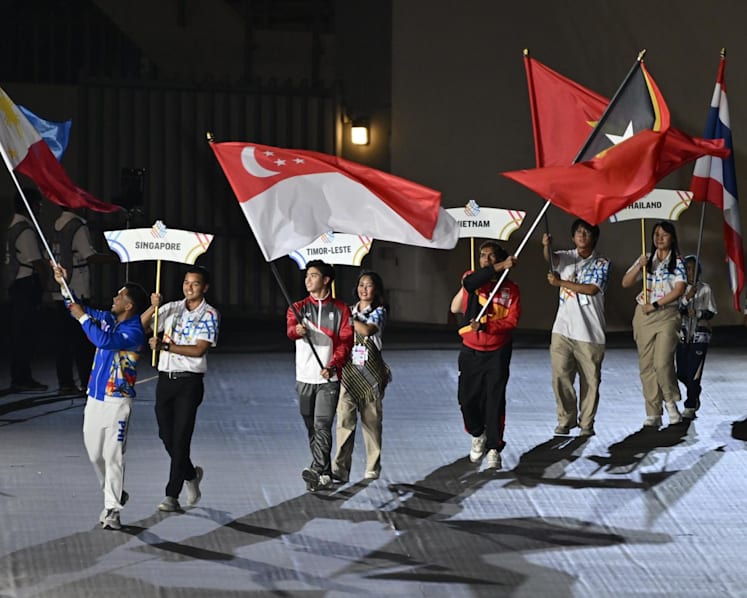
Team Singapore’s flag bearer waves the flag as he walks past at the Rajamangala National Stadium during the 33rd SEA Games Closing Ceremony on Dec 20, 2025. (Photo: CNA/Jeremy Long)

This audio is generated by an AI tool.


SINGAPORE: The Singapore government has begun to roll out support for Team Singapore athletes with sights set firmly on a superlative performance at future SEA Games.
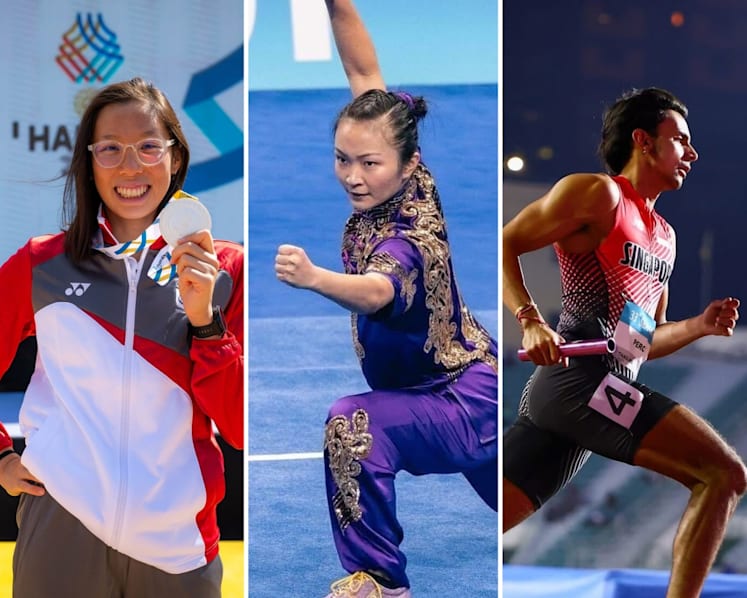
Acting Minister for Culture, Community and Youth David Neo said at the end of April that another 200 Singapore athletes across a wider range of sports will be supported with full-time equivalent training as part of preparations for the 2029 SEA Games.
This adds on to the current 165 athletes already on full-time training equivalent support under Sport Singapore’s Sport Excellence programmes.
Singapore will host the SEA Games in 2029, still some three years away. In the interim, athletes in the region will have to contest the next edition of the biennial games in Malaysia in 2027.





DREAMING BIG
At the 2015 SEA Games in Singapore, our athletes delivered the country’s best SEA Games performance to date, coming in second at the final medal tally.
As Team Singapore’s chef de mission in 2015, I remember clearly the euphoria and pride felt across the nation as we placed ahead of other regional sporting powerhouses. But I also recall feeling a mild pang of regret.
After all, most other host nations of the SEA Games often leverage the home-ground advantage to take aim at the top step of the podium. As a former national athlete, it was always clear to me that our regional rivals often invested relatively more into sports, which made it challenging for us to dominate the regional games as we would have liked to.
The government’s preparations for the 2029 Games are heartening for the sports community for a number of reasons.
For one, the full-time equivalent training support is meant to provide what an athlete needs to be able to commit fully to his or her sport, without needing to worry about maintaining a day job to pay the bills.
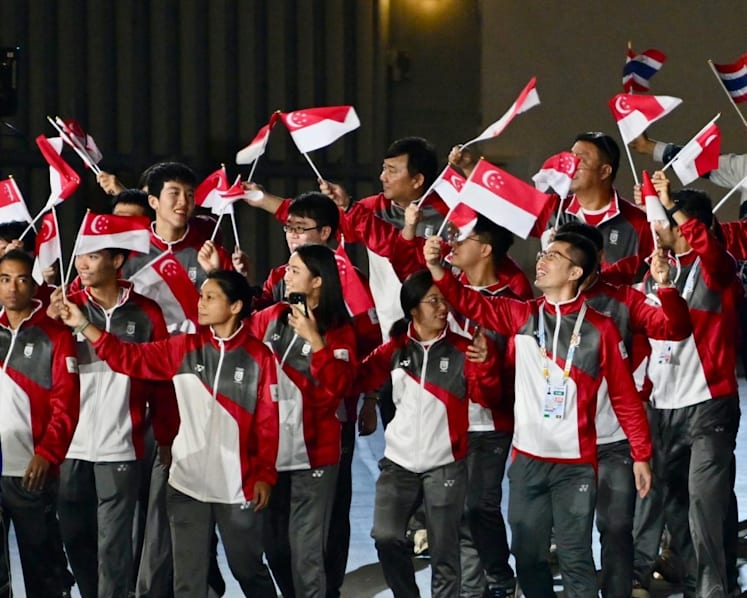
SportSG will also look at improving support services in sports science, education, career development, family planning, financial literacy and personal growth. Such efforts support Singaporean athletes in their sporting endeavours and in achieving elite performances at major games.
WHAT MORE IS NEEDED
However, there are other pieces that also need to fall into place if Singapore is to beat out other regional sporting nations such as Thailand, Indonesia, Malaysia and the Philippines to pole position on the medal table come 2029.
A big part of the equation is the national sports associations, which govern and drive their individual sports. SportSG typically works through these federations to administer funding, development programmes and high-performance pathways, which means that they are a vital linchpin in the sporting ecosystem.
Yet many national sports associations are run by boards or executive committees comprising volunteers from the individual sports communities, supported by secretariat staff. In some cases, the skillsets and capabilities in these teams are not optimal for running sports at a national level.
Mr Neo said that the new Sport Excellence Singapore (SpexSG) will boost support for these organisations by deepening their expertise in areas such as athlete development and strengthening their governance and operational capabilities.
These efforts will be critical to ensure that taxpayers monies are utilised efficiently in the pursuit of Singapore’s sporting goals, and also optimise the commitment and sacrifice of athletes, their families and supporters, and coaches and sports administrators.
TEAM EFFORT
At the end of the day, achieving sporting success is never a solo endeavour. A united and holistic effort involving athletes, policymakers, stewards of the various sports at the national level, and even sports fans and the media will be critical towards a successful outing at the 2029 SEA Games.
If this is achieved, then the impact will not be isolated to the games themselves. Post-2015 SEA Games, Team Singapore went on to achieve their best away Games performance in 2017 in Kuala Lumpur.
An equally strong, if not better, performance in 2029 could similarly have a knock-on effect to galvanise more support and commitment from the entire sporting fraternity in the years to come.
The fact that the government has already stepped forward to signal its commitment towards an outstanding outing when the SEA Games return to our shores is definitely a welcome sign. It’s now time for the rest of Team Singapore to do our part.
Nicholas Fang is a former national fencer, triathlete and sports administrator, and was Team Singapore’s chef de mission at the 2015 SEA Games. He is a former Nominated Member of Parliament and currently runs local sports consultancy Novastella. He writes a monthly column for CNA.