





Commentary: Lessons from SEA Games 2025 for Singapore sports
With Singapore hosting the SEA Games in 2029, it is critical to consider broader issues in sports development, says former national athlete and sports administrator Nicholas Fang.
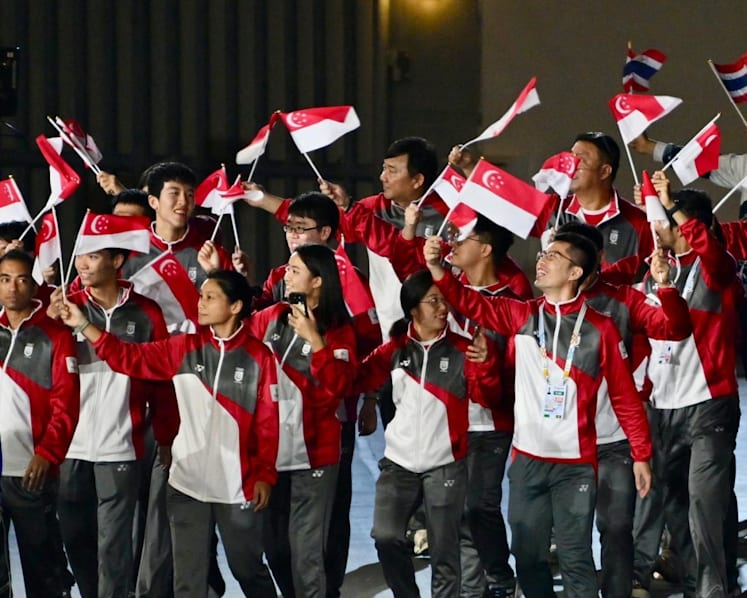
Singapore's athletes ended their SEA Games campaign with a medal haul of 52 golds, 61 silvers and 89 bronzes. (Photo: CNA/Jeremy Long)

This audio is generated by an AI tool.


SINGAPORE: The dust is settling around this year’s 33rd SEA Games, which ended in Thailand on Saturday (Dec 20).
For many of us in the Singapore sports community, the SEA Games are a rite of passage, something that every aspiring national athlete aims to participate and do well in to earn the right to progress to bigger sporting stages. This makes the event an important target when it rolls around every two years.
The games are also an opportunity for Southeast Asian countries that may not yet be established global sporting powerhouses to win medals and make headlines, and hence, a focal point for national pride.
Team Singapore finished with a medal tally of 52 golds, 61 silvers and 89 bronzes, taking fifth place on the overall medal table. This is the country’s fourth-best showing at the event, and a step up from the 2023 Games scorecard of 51 golds, 43 silvers and 64 bronzes.





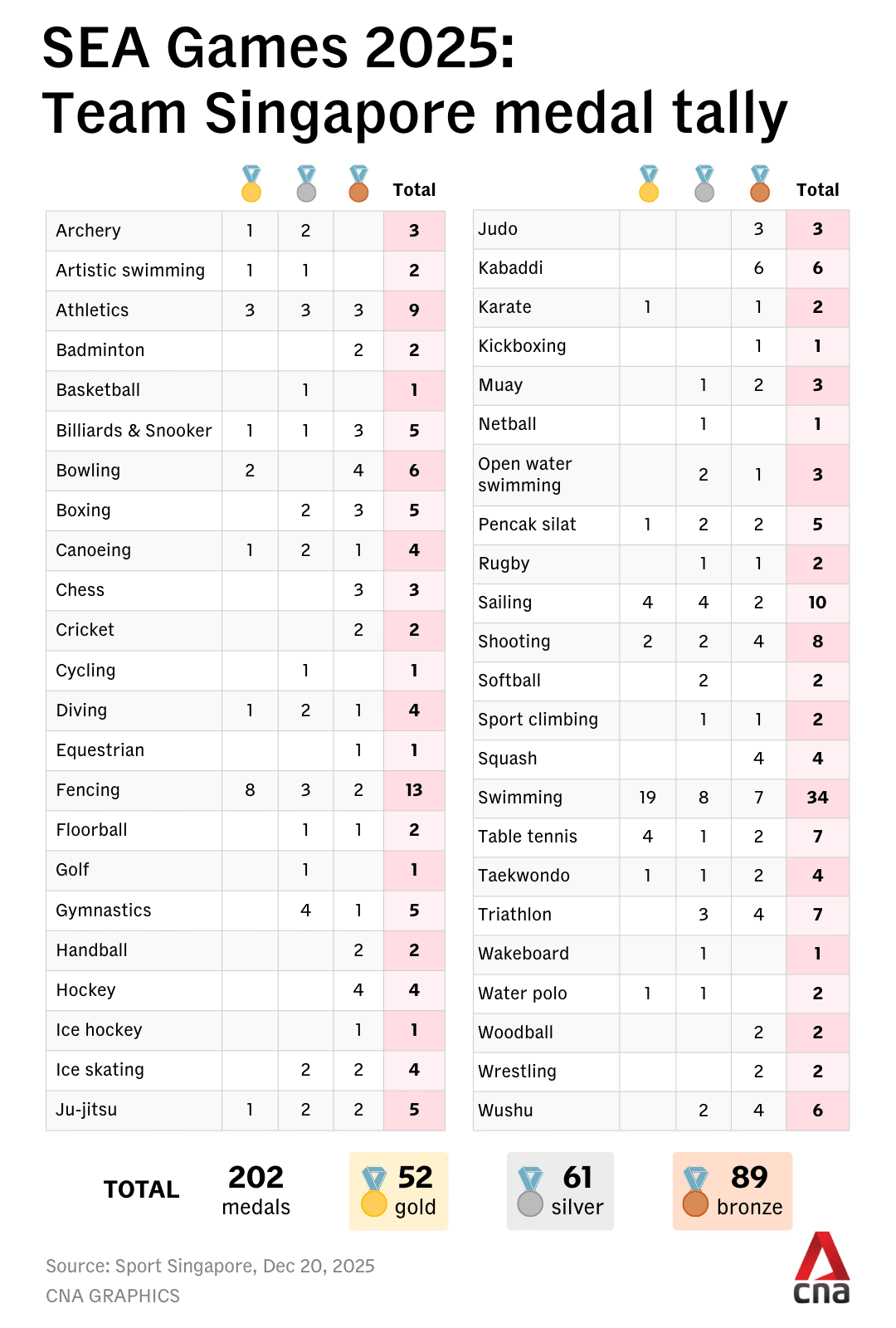
Officials and observers have begun analysing the 2025 medal tally and identifying which sports can pull their weight.
For instance, Singapore National Olympic Council secretary general Mark Chay identified athletics and aquatics as “two compulsory sports” at the SEA Games. He said that athletics need to “come to the party” in bagging more gold medals, while aquatics must “see what they need to do in the next four years for a good home showing”.
The after-action reviews will go on at the national level and also within the individual national federations.
But my view is that we should look beyond the medals and consider some broader issues in terms of sports development, as Singapore gears up to host the SEA Games in 2029.
MORE THAN JUST MEDALS
Team Singapore fielded its largest SEA Games contingent of 926 athletes competing across 48 sports. That puts us fifth in terms of contingent size, behind the usual regional powerhouses of Thailand, Indonesia, Malaysia and the Philippines.
The sheer size of Team Singapore lent to the diversity of participants and the sports they took part in. From 75-year-old Tan Kok Tiong’s bronze medal in woodball in his SEA Games debut, to 12-year-old Anya Zahedi’s silver-winning performance in the girls’ optimist sailing event, there was something for every sports fan to get behind.
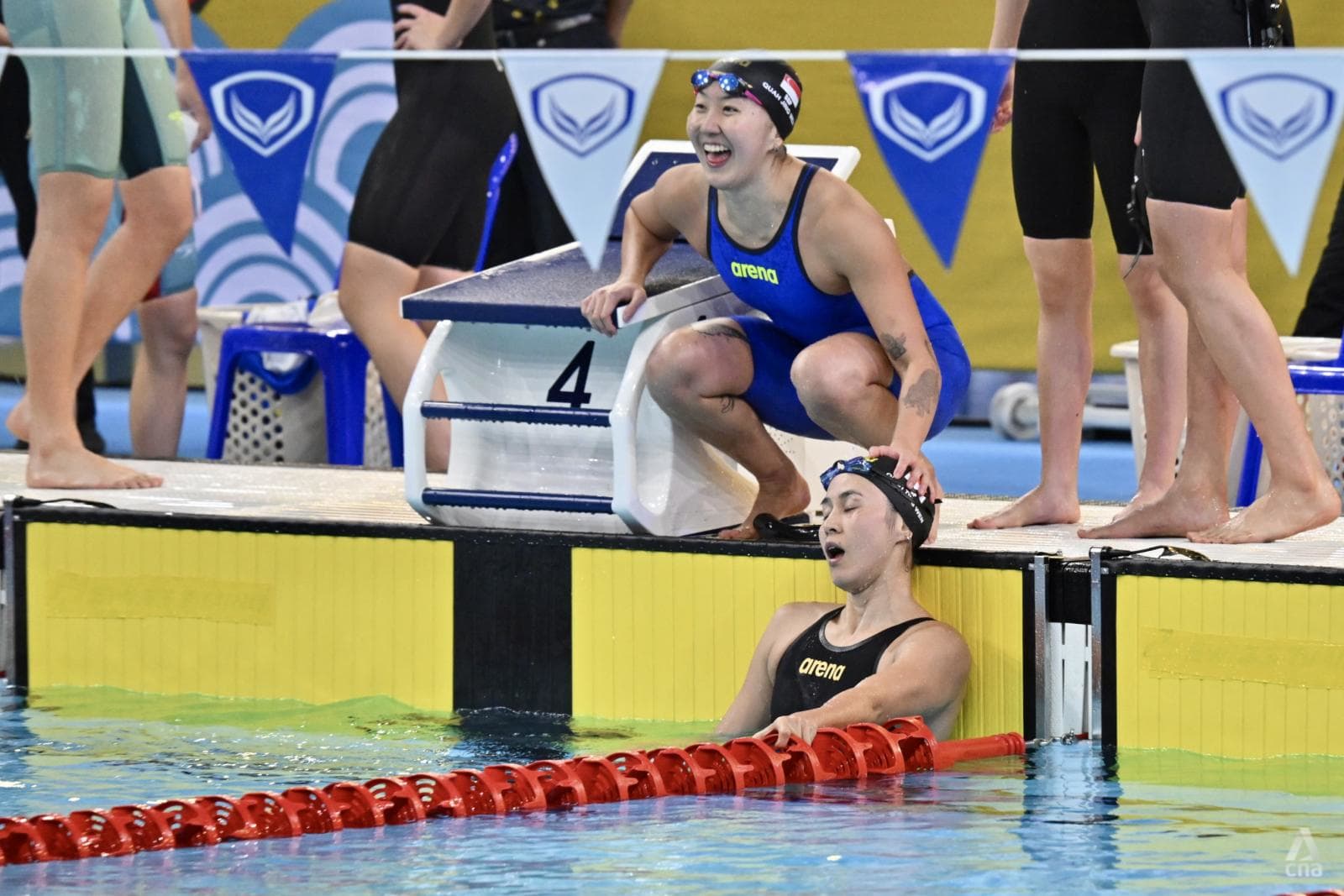
Alongside the high-performing debutants, veterans like Quah Ting Wen, who overtook swimming legend Joscelin Yeo as the most bemedalled athlete of the SEA Games across all nations with a whopping 63 medals, also flew the flag high for the country.
This variety of stories among Singaporean athletes meant that the media and spectators alike were kept enthralled throughout the two weeks of competition.
In the build-up to the 2029 games on home soil, such narratives become something that supporters can coalesce around when the time comes to support our hometown heroes and heroines.
More importantly, broader awareness of the trials and tribulations, not just triumphs, of our athletes goes towards building a more robust sporting culture. Their stories will help make sports relevant to Singapore as a whole, and thus attract increased support, financial and otherwise, from the public and private sectors.
Related:
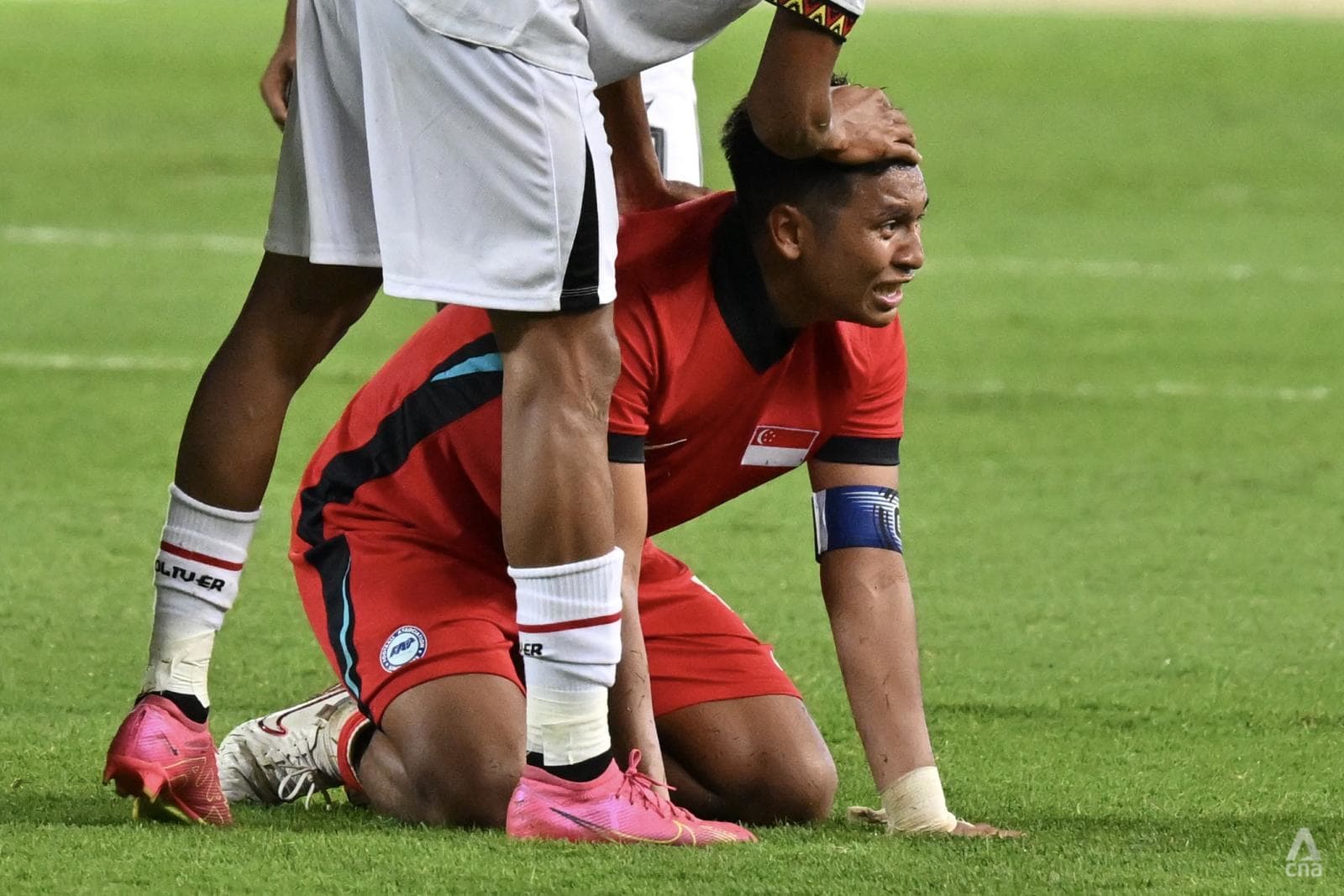
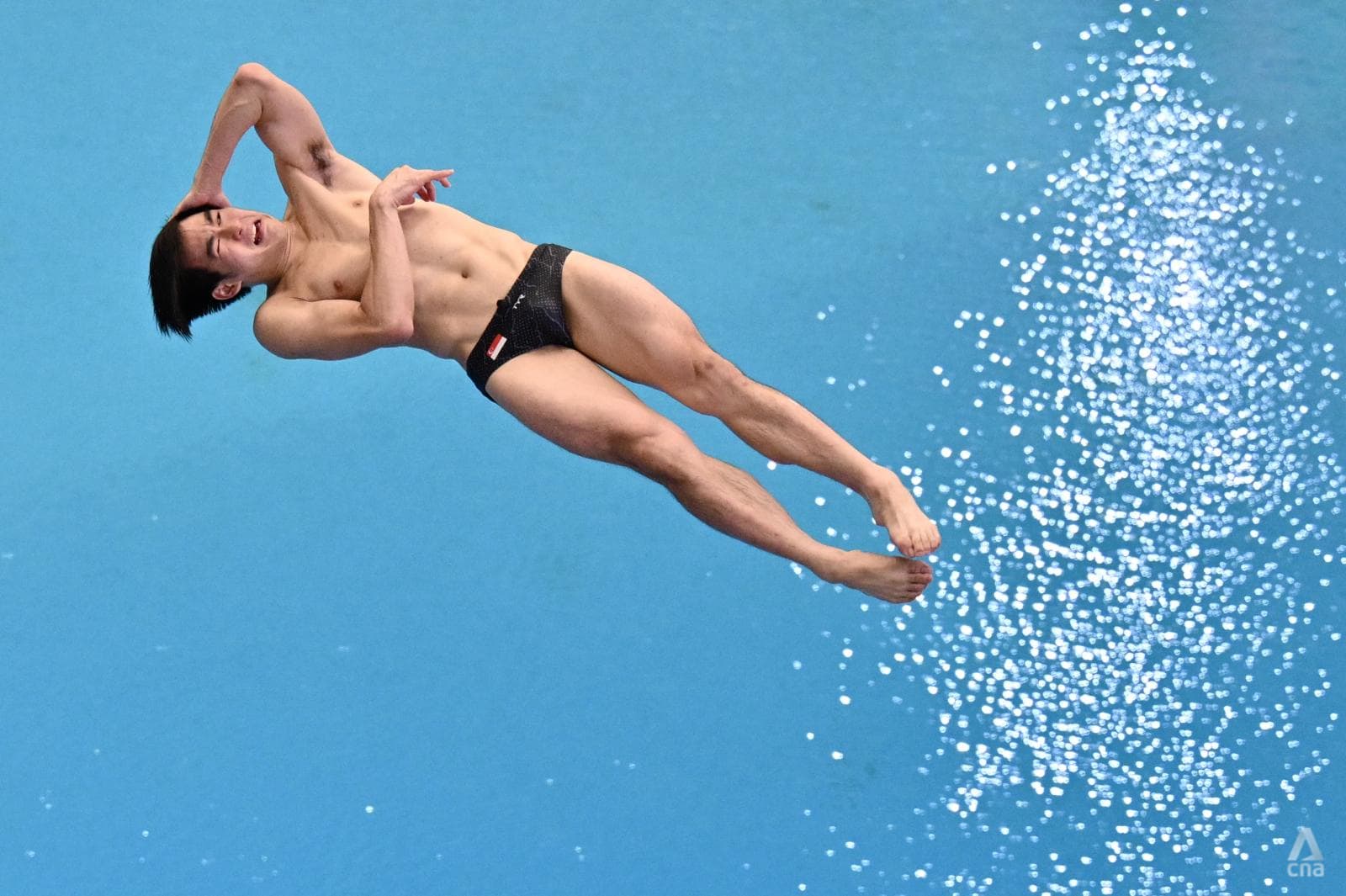
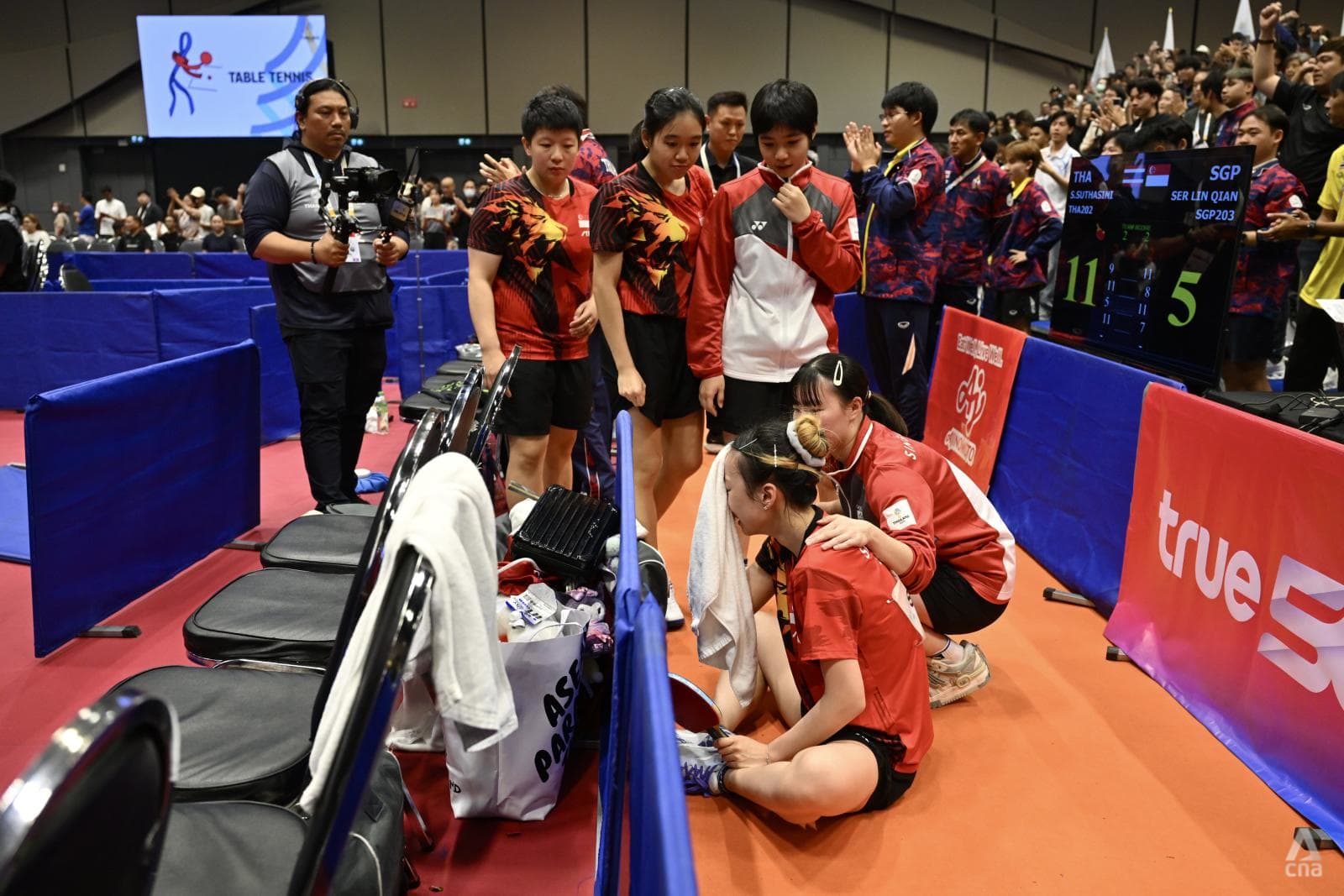
SEA Games 2025: The best of the action through the lens of our visual journalist
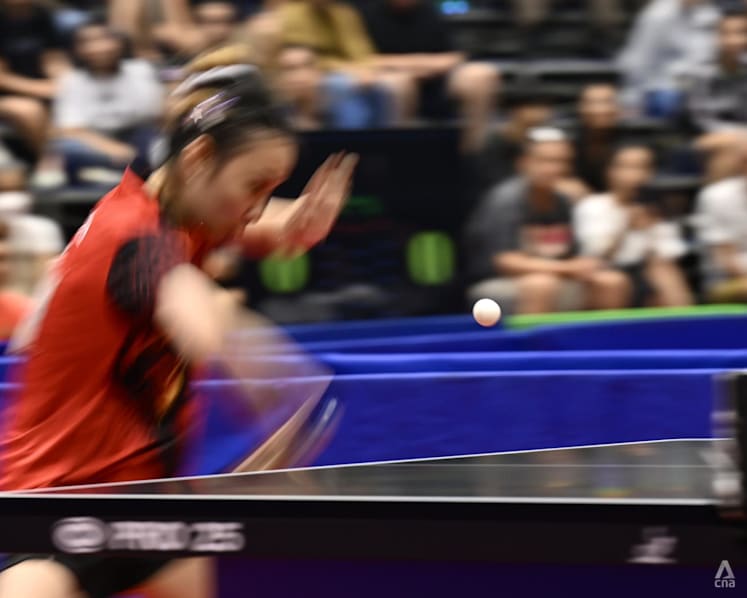
Singapore's Ser Lin Qian in action in the table tennis women’s team final on Dec 14, 2025. (Photo: CNA/Jeremy Long)


BANGKOK: The 33rd SEA Games in Thailand drew to a close on Saturday (Dec 20), after some two weeks of competition that saw records fall, medals decided by the narrowest of margins, and years of hard work and passion rewarded by elation - or heartbreak.
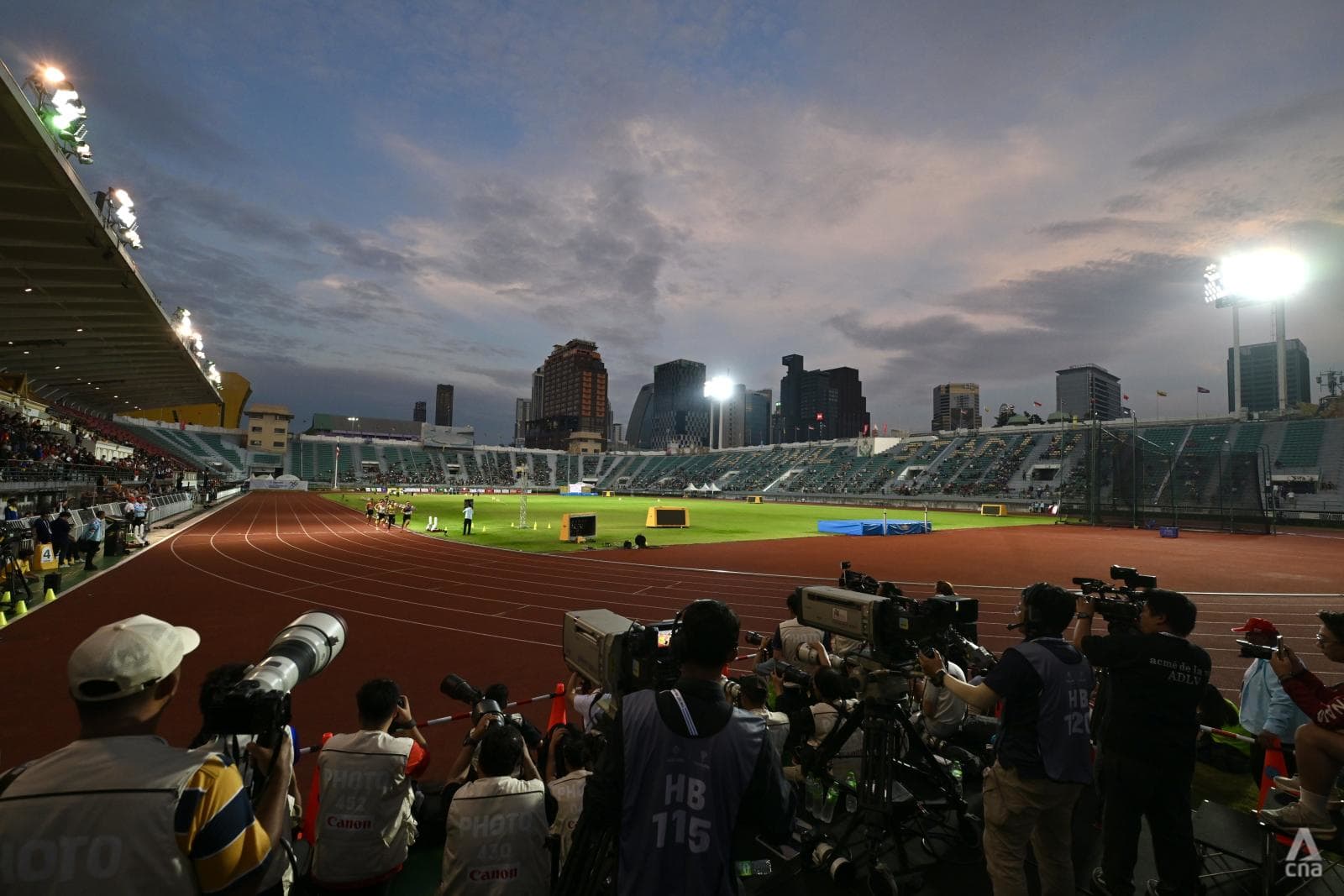
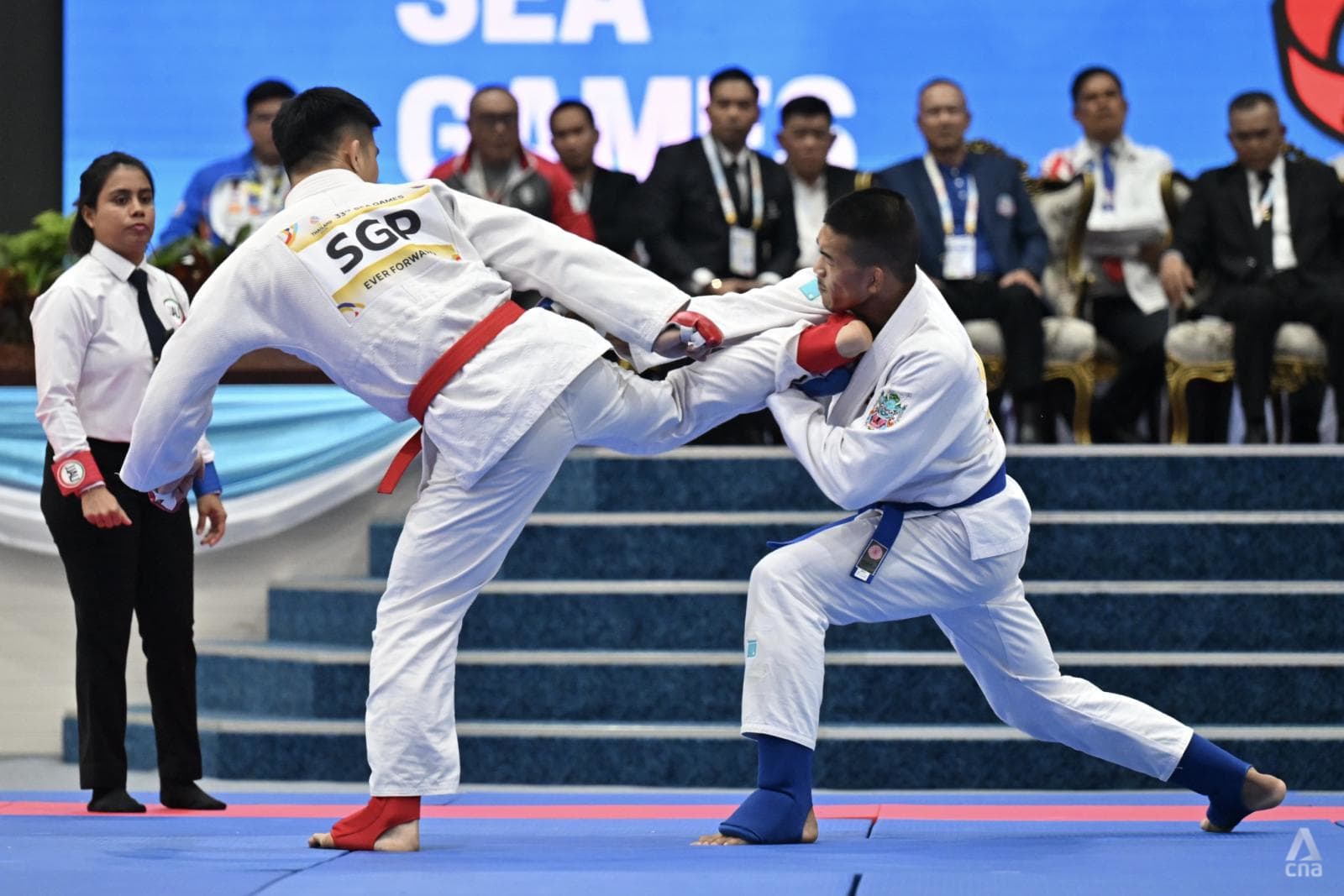
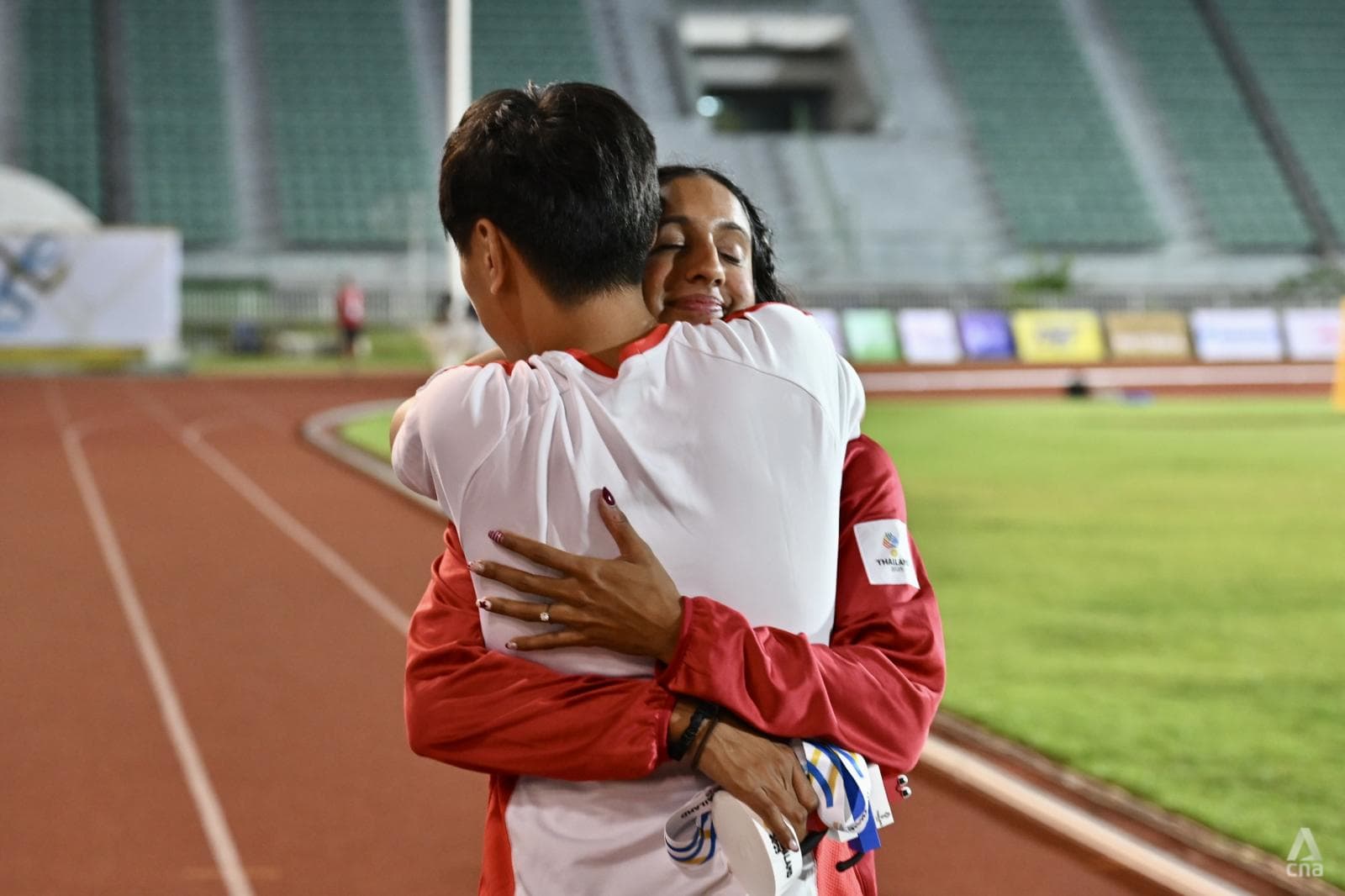
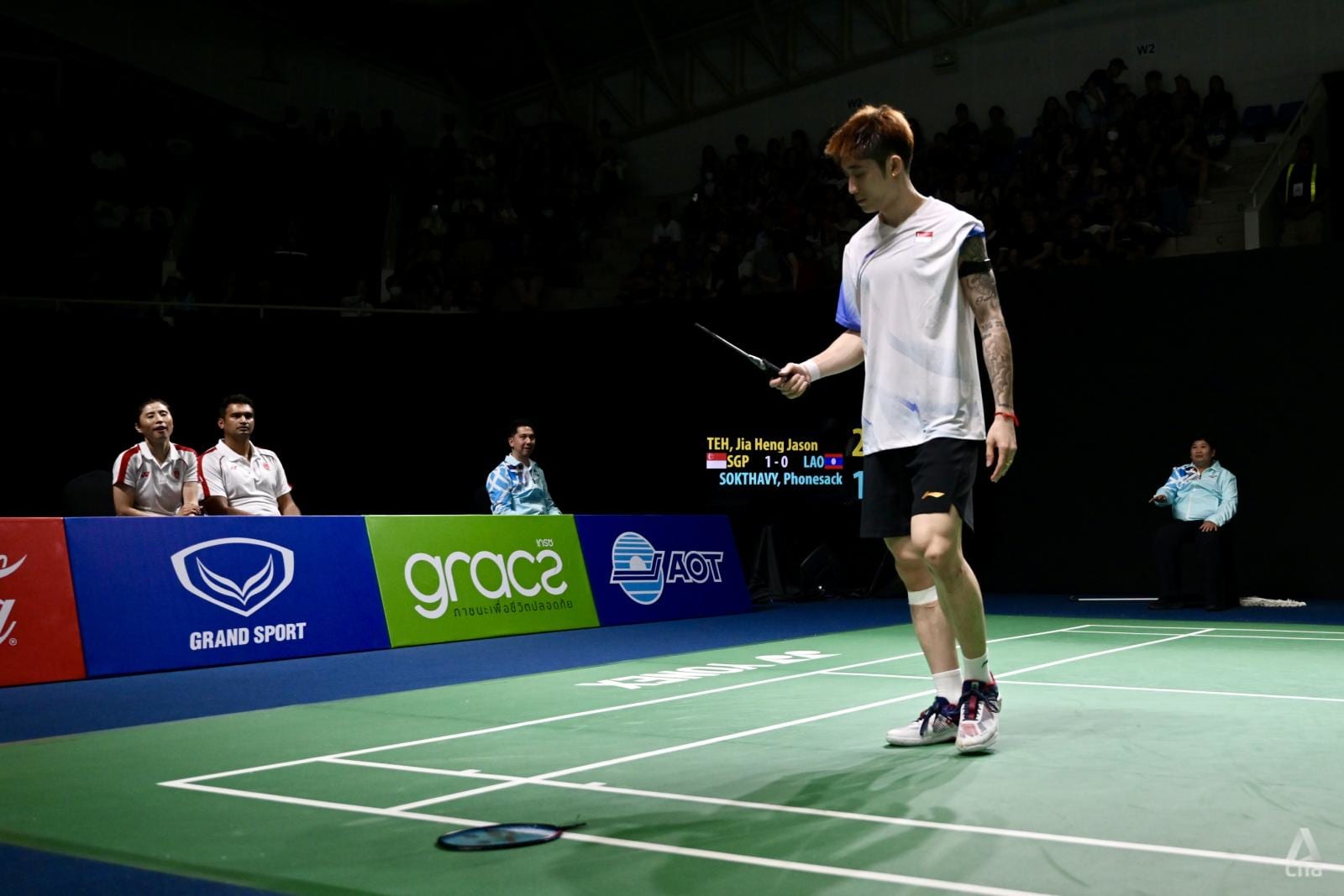
CNA visual journalist Jeremy Long was on the ground covering Team Singapore's campaign. Here's our pick of his most striking images from the Games.



BUILDING FOR 2029 SEA GAMES IN SINGAPORE
The next home SEA Games may be four years away, but any athlete will tell you that that time can pass in a flash.
Home SEA Games will always have a special place in my heart. In 1993, when Singapore hosted the SEA Games for the second time (third if you include its predecessor – the Southeast Asian Peninsular Games), I was a cub reporter covering the competition as a member of the media.
When the Games came to Singapore the next time in 2015, I had the honour of being chef de mission for Team Singapore. In the interim, I competed in four SEA Games as an athlete.
It’s obvious that hosting a major multisport games will increase attention, focus and scrutiny for the home team’s athletes, sports officials and administrators.
As Team Singapore gears up for 2029, a few points come to mind in ensuring that the strong performance in Thailand is not wasted.
First, the issue of how to use competitions like the SEA Games to prepare athletes to excel on the global stage becomes critical.
Standards at the Games have been improving, with sports like table tennis and badminton featuring some of the best in the world. At the same time, the limited playing field (of the 11 Southeast Asian nations) means that competition is not of the stature or quality of the other major games like the Olympics.
The ability to balance flying our flag high and blooding new talent will be an important task for sports federations and Sport Singapore, the national sports authority. The 2026 Asian Games in Japan and the 2027 SEA Games in Malaysia will be important to find this balance.
Second, the need to continue building strong sports infrastructure is paramount. This extends beyond hardware, like stadiums and training facilities, to high-quality sports administration.
The challenge for most management committees of national federations is that they are typically democratically elected by their community, and most serve in voluntary capacities. This can pose difficulties in terms of the ability to commit the required time and energy to ensure the sport grows and develops as it should.
For example, the executive committee of one of the top-performing sports at the 2025 SEA Games were unable to travel to Bangkok to support their athletes. Such challenges mean that developing professional full-time secretariat talent to staff the federations will be key in the years ahead.
When it comes to high-performance sports development, the identification, retention and development of sporting talent often compete with academics and the exigencies of careers and family life.
If Team Singapore is to deliver a superlative outcome in four years’ time on home ground, these and other challenges must be addressed in a holistic fashion. That will require sports to be ranked among the key priorities for the country in the intervening years and beyond.
Nicholas Fang is a former national athlete and sports administrator. He was also a former member of the Singapore National Olympic Council and chef-de-mission for Team Singapore at the 2015 Southeast Asian Games.