







Commentary: More young adults are surviving cancer, but they face many unseen challenges
More young adults in Singapore are being diagnosed with cancer but our ecosystem of support has not kept up, says 365 Cancer Prevention Society’s Ben Chua.

This audio is generated by an AI tool.


SINGAPORE: Imagine being 32 with a growing career and plans to start a family. Then in the middle of a fertility treatment, you are diagnosed with cancer.
You are left reeling, with no clear sense of what to do next and no support group that quite fits. Late at night, you turn to the internet for answers, searching for questions you never thought you would ask: “Young adult cancer support in Singapore” and “Do young people with cancer die?”
This was the reality for Rebecca who was diagnosed with endometrial cancer.
A cancer diagnosis in your twenties or thirties is more than just a health crisis. It can derail a life in motion at a time when careers are taking shape, relationships and family plans are unfolding, and the future feels full of possibility. These are lives interrupted at a pivotal chapter, and the numbers are rising.





A TREND WE CANNOT IGNORE
Data from the latest Singapore Cancer Registry annual report, published in January 2026, showed there were 4,995 cancer diagnoses among those under 40 between 2019 and 2023 – a 34 per cent increase from 2003 and 2007 when the number stood at 3,729.
This reflects a global trend. Research from the Global Burden of Disease study found that early-onset cancer incidence rose by nearly 80 per cent worldwide between 1990 and 2019.
Dr Francis Chin, a radiation oncologist and vice president of 365 Cancer Prevention Society, has observed younger patients having cancers that were once associated predominantly with older age groups. These include colorectal cancer, breast cancer and haematological malignancies which refer to blood cancers such as leukaemia.
Likely contributing factors of early-onset cancers include sedentary lifestyles and environmental factors such as exposure to carcinogens, although the actual causes are not yet fully understood. But one thing is clear: More young adults in Singapore are being diagnosed with cancer and our ecosystem has not kept pace.
THE CHALLENGES THAT GO UNSEEN
Cancer care in Singapore is strong by regional and global measures, with skilled medical teams, an established treatment infrastructure and improving screening techniques. Survival rates have improved significantly but survivorship – the experience of living through and beyond cancer – remains a different matter, particularly for young adults.
Most psychosocial support – programmes and services such as counselling, support groups and financial assistance – has historically been structured around two groups: children and older adults.
In a support group with predominantly older cancer patients, conversations tend to revolve around retirement and grandchildren, not career advancement and family planning. For a young adult in their thirties, this distance may make a space meant for support feel like another reminder of how alone they are.
The feeling of loneliness and isolation can run deeper in their social lives. While peers move forward with careers and other milestones in life, young adults with cancer may feel they are left standing still as urgent treatments interrupt daily routines. Friendships can begin to drift apart, and without spaces to connect with others who truly understand, many may feel they are facing an arduous journey alone.

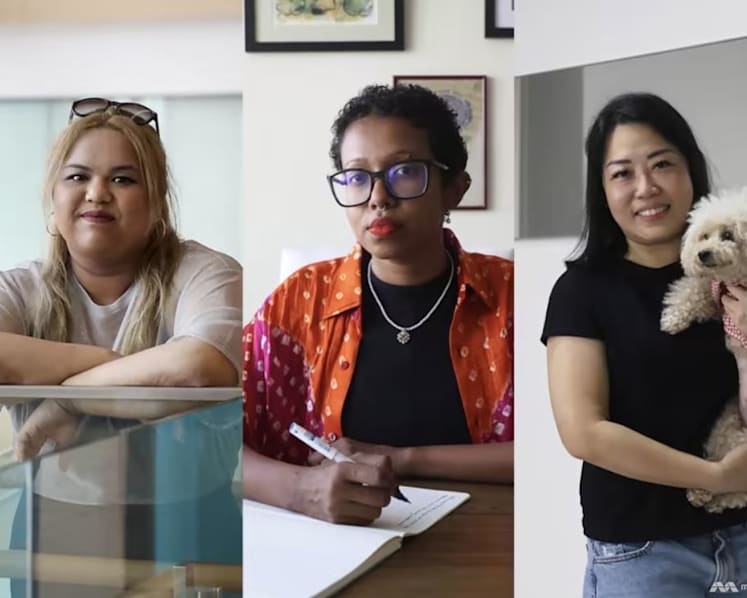
These do not end with the conclusion of treatments. In fact, that may be the start of even more difficult adjustments.
Returning to work means confronting questions with no easy answers – will stress trigger a relapse, how to disclose a diagnosis to a new employer and will colleagues treat them differently. There are also the invisible side effects that survivors carry into the workplace – fatigue, memory fog and even a quiet loss of confidence in their own abilities.
These are not peripheral concerns and they call for a different kind of care.
ADDRESSING THE GAP
To address that, 365 Cancer Prevention Society launched Strong Olive, a young adult-focused cancer initiative last month.
This was co-founded by Rebecca who has survived endometrial cancer and drew on her own experience for the initiative’s programmes.
These programmes are intentionally kept small and relational. For example, support groups for young parents managing cancer alongside caregiving, a walking club that prioritises presence over performance, counselling that holds space for grief, identity, and relationships, not just symptoms.
Currently, Strong Olive supports over 135 young adults aged 18 to 45.

As young adult cancer cases continue to rise in Singapore, we need broader conversations about what holistic survivorship support looks like, and who is responsible for providing it.
For employers, a young employee returning from cancer treatment does not need sympathy. They need flexibility, understanding and a workplace that makes space for the invisible work of recovery.
For policymakers, survivorship must be recognised as a long-term, whole-of-life issue, not a post-treatment footnote.
For the wider public, the most powerful thing any of us can offer is the willingness to understand that surviving cancer is not the end of the story, especially for young adults.
Ben Chua is the CEO of social service agency 365 Cancer Prevention Society.




