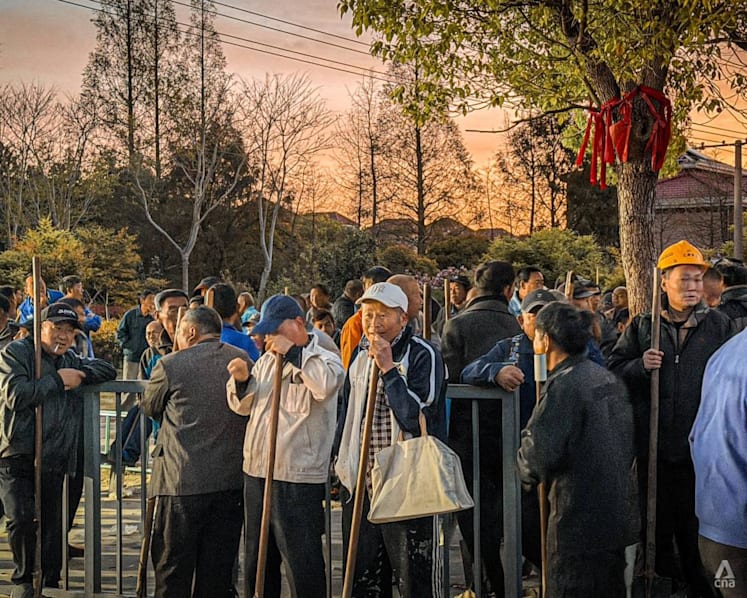
Beyond the ‘iron rice bowl’: Why more young Chinese are choosing flexible work
Around one in three workers in China are now in flexible jobs, led by a younger generation seeking greater autonomy despite the trade-offs. The second of this two-part series focuses on people drawn to this way of working, rather than those pushed into such roles.
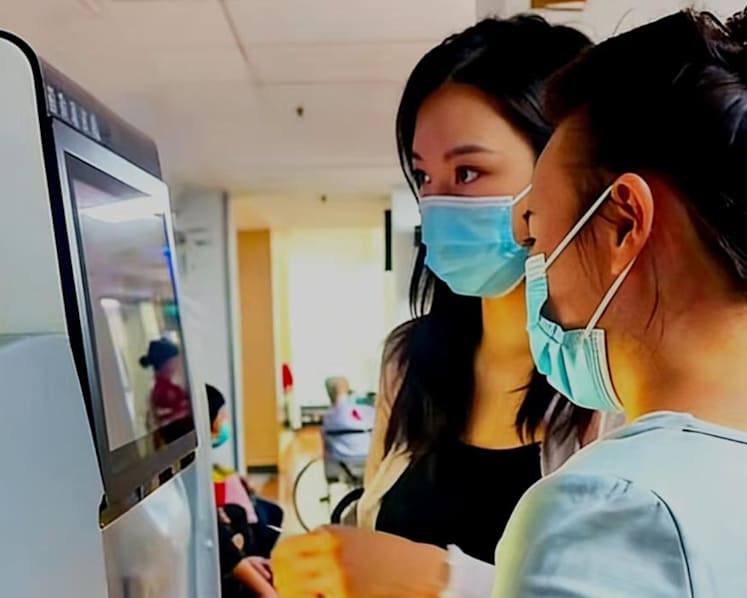
Zhao Xiaoyu (left) works as a "medical escort”, accompanying patients and helping them navigate registration, consultations and test procedures. (Photo: Guangzhou HUGA+ Health Management)

This audio is generated by an AI tool.


SHENZHEN: Zhao Xiaoyu is at a busy hospital in Guangzhou to meet her client for the day.
The 25-year-old is not a nurse or doctor. Instead, she works as a “medical escort”, or “pei zhen shi” in Chinese, accompanying patients and helping them navigate registration, consultations and test procedures.
“I was drawn by the flexibility and the chance to use my medical background to help people,” the nursing graduate said.
Compared with fixed office work, she added, the role offers something many young workers increasingly value: control over their own time.





Zhao takes assignments through a platform that connects freelance escorts with patients who need help navigating hospital visits, earning about 6,000 to 8,000 yuan (US$875 to US$1,167) a month.
“Rather than being tied to fixed office hours and a single career path, I’m willing to accept some uncertainty if it means having control over my own time,” she said.
Zhao is part of a growing cohort of young Chinese workers turning to flexible, platform-based roles - drawn by greater autonomy, new digital opportunities and even a rejection of the gruelling “996” corporate work culture, which typically means working from 9am to 9pm, six days a week.
Yet many are also navigating the trade-offs of unstable income, weaker social protections and uncertain career trajectories.
As the trend gathers pace, companies are unbundling roles into on-demand tasks, analysts point out, while authorities move to rewrite labour and social security rules to accommodate what economists see as a potentially enduring shift in China’s labour market.
FLEXIBLE EMPLOYMENT
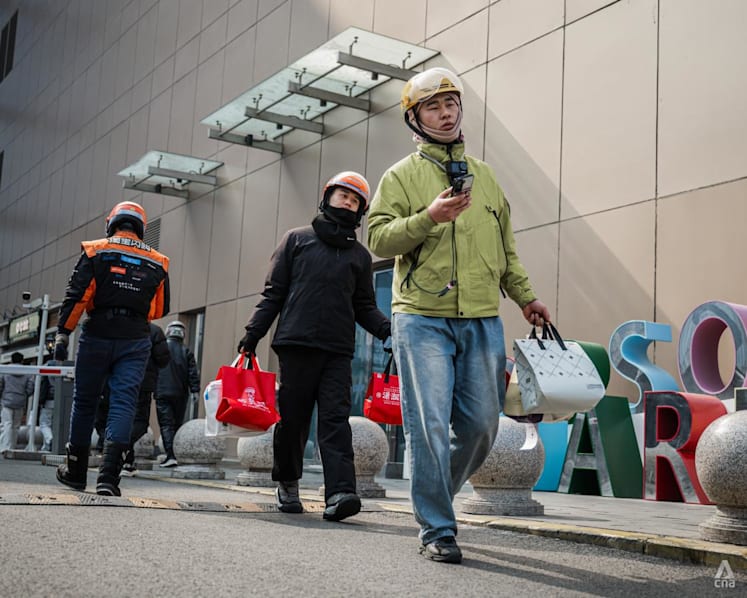
Known as “new forms of employment” or “xin jiuye xingtai” in Chinese, China’s flexible employment sector spans everything from ride-hailing drivers and livestream hosts to independent creatives, remote developers and specialised services such as medical escorts.
As of the third quarter of 2025, about 247 million people were in such roles, accounting for around 30 per cent of China’s workforce, according to the National Bureau of Statistics. That is up from about 200 million in 2021, reflecting the rapid expansion of this part of the labour market.
Young workers dominate this segment. Research by the Chinese Academy of Labour and Social Security (CALSS), a state-affiliated think tank, shows that those aged under 24 make up more than half of platform-based flexible workers.
This shift stands in stark contrast to a long-held ideal in China’s labour market.
For decades, the ideal career path in the country was relatively clear: secure a stable job, preferably in government or a large company, and build a predictable career. This has long been referred to as the “iron rice bowl” - long-term employment with strong job security.
That model, however, is beginning to loosen as the labour market comes under growing pressure.
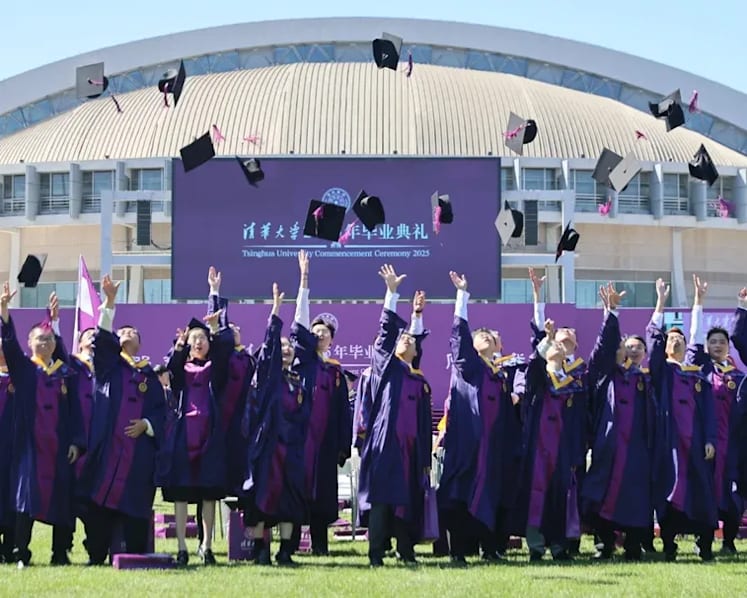
This year, a record number of university graduates are entering the workforce, while competition for traditional white-collar jobs has intensified.
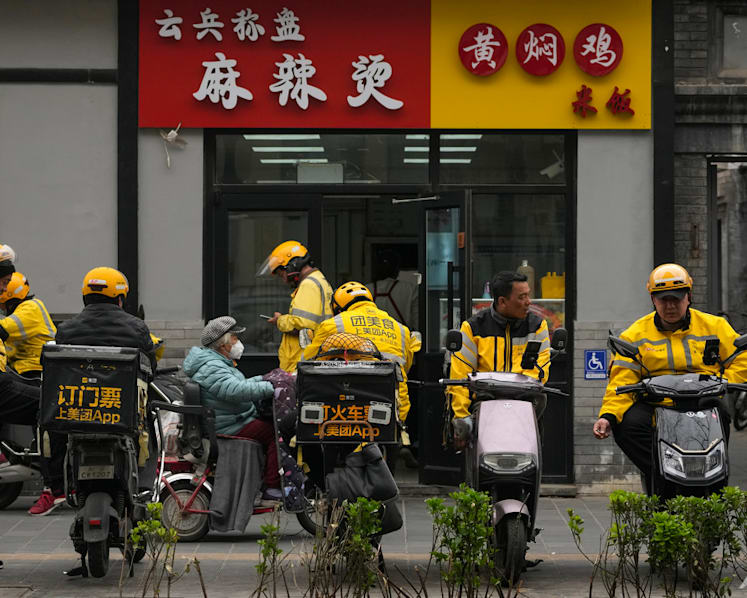
Flexible employment can be broadly grouped into two types: location-based roles and cloud-based positions.
Location-based jobs require workers to be physically present, such as driving passengers or delivering food.
Cloud-based roles mean the service can be done entirely online and delivered through digital platforms, such as livestreaming and digital content creation to other knowledge-based services including coding and design.
A report released in March by Jinan University’s Institute for Economic and Social Research and recruitment platform Zhaopin, based on 2025 hiring data, found job postings linked to flexible employment roles rose 15.1 per cent year-on-year, while the number of jobseekers increased by 11 per cent.
Feng Shuaizhang, dean of Jinan University’s Institute for Economic and Social Research and lead author of the report, described the phenomenon as a hybrid of platform and flexible employment in which workers effectively become their own employers.
“Platform-based flexible employment has revitalised what used to be marginal forms of casual work,” he told CNA.
Analysts said platforms connect fragmented demand with individual workers at scale, turning irregular gig work into a more viable livelihood.
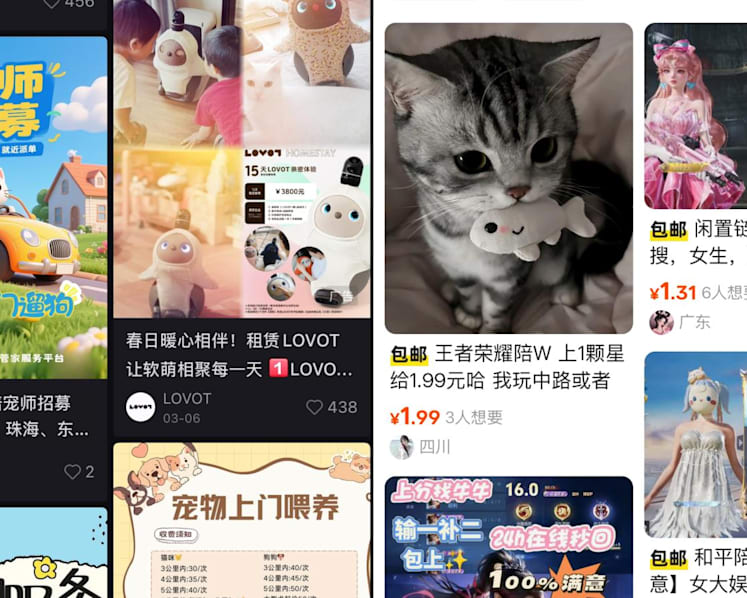
The shift is not driven by workers alone - companies are also reorganising how work is distributed, said economists.
Guangzhou HUGA+ Health Management, a platform that matches patients with freelance medical escorts like Zhao, saw demand for such services surge from late 2022 to early 2023 as hospital visits increased sharply after China abandoned its zero-COVID policy, while many adult children were unable to accompany their elderly parents due to work and distance.
Huang Binchang, the platform’s general manager, told CNA that relying on flexible workers ensured such demand could be met.
“As a platform, we can respond quickly during peak periods and attract experienced professionals who may not be able to work fixed hours,” he said.
Zhang Chenggang, an associate professor at the Capital University of Economics and Business in Beijing who studies new forms of employment, said firms are increasingly shifting towards a task-based model of work.
“Enterprises are increasingly delivering work to the market in the form of tasks rather than fixed jobs,” he told CNA.
“Platforms then connect those tasks with workers and enable more efficient matching of labour and demand.”
WHY YOUNG PEOPLE ARE DRAWN IN
For Li Shuai, leaving full-time employment was not a sudden decision.
The 33-year-old had worked in photography and video production for several years before gradually building a network of clients. By 2021, he felt ready to step away from a fixed job.
Today, Li works as an independent videographer. His schedule shifts depending on assignments, with busy periods followed by quieter stretches between jobs.
“The income moves in a kind of zigzag pattern,” he said. “Some months are busier than others.”
But to him, the flexibility is part of the appeal.
“I can control my own schedule, the workload is less intense, and compared with a full-time job, my time has greater value,” he said.
Zhang Dandan, a professor of economics and deputy dean at the National School of Development at Peking University, said many people in flexible employment function almost like “small bosses”.
“They decide when to work and where to work, using their own labour to earn income,” she told CNA.

Such flexibility stands in contrast to the constraints of traditional full-time work.
Under national labour regulations, full-time employees are typically entitled to just five to 10 days of paid annual leave, depending on their years of service.
Public holidays in China often see millions of people travelling at the same time, crowding tourist sites and transport networks.
For Li, being an independent operator means he can take a break whenever he wants and avoid the holiday rush altogether.
“If I want to rest for a few days or travel somewhere, I can decide myself,” he said.
Some young people are even turning hobbies into flexible sources of income.
Bruce Tang, a 24-year-old computer science student in Guangxi, works as a travel companion, joining clients on trips while helping to plan routes, driving and taking photos.
He began posting about his travels on Chinese lifestyle app Xiaohongshu before followers started asking if he could accompany them on their own trips, turning a hobby into paid work.
“I think it’s quite fun,” Tang said. “Through this, I’ve met professors, business owners and people from many different industries. It exposes me to experiences and knowledge beyond my usual social circle.”
Tang said he typically earns between 500 yuan and 1,000 yuan per day, though he describes the work less as a stable job and more as a way to combine travel with meeting new people.
“For me, the experience of travelling and taking care of the trip is something I really value,” he said.
Tang said he has yet to decide whether to pursue flexible work after graduation, saying he is weighing options, including online content creation or a more traditional job within the state system.

Others are drawn by new opportunities created by digital platforms and artificial intelligence (AI).
Andrew Liu, a 29-year-old developer, left a conventional career at an internet company in Shanghai two years ago to pursue remote work building AI agents.
“Our generation tends to see work as something that can be designed as part of a lifestyle, rather than just a fixed job or identity,” he said.
Working remotely has also opened opportunities beyond China.
“In the past, your income might have depended on a single market,” said Liu, who currently resides in Lishui, Zhejiang province.
“Now it can come from the global market.”
Liu told CNA he currently earns about 400,000 to 500,000 yuan a year, compared with around 300,000 yuan annually in his previous full-time job.
In some parts of China, local governments have begun promoting so-called “one-person companies”, where entrepreneurs use AI tools to run businesses that would previously have required small teams, taking on tasks such as coding, marketing and customer service.
Cheng Cheng, founder of the 52Hz Digital Nomad Community in Zhejiang province, said she has observed a growing number of young professionals experimenting with alternative ways of working since 2025.
Many members previously worked in internet companies or technology roles, she said. Some now build AI tools for influencers or overseas clients, while others are launching independent online businesses.
“There is both anxiety and excitement,” Cheng said. “AI is disrupting traditional jobs, but it is also creating new possibilities.”

Analysts said technological change is expanding the kinds of work that can be done independently, particularly as digital services become easier to deliver across borders.
Zhan Yang, an associate professor of cultural anthropology at Hong Kong Polytechnic University (PolyU), said what is often described as “new employment” is in many ways a digital reconfiguration of long-standing patterns of informal labour in China.
Temporary and casual work has long been part of the country’s labour market, particularly among migrant workers, he noted. What has changed is the scale.
“The growing preference for freedom and greater control over one’s schedule reflects shifting values among younger workers,” Zhan said.
But he added that this desire for flexibility often coexists with a continuing search for stability, with many young people still aiming for secure jobs within the state system.
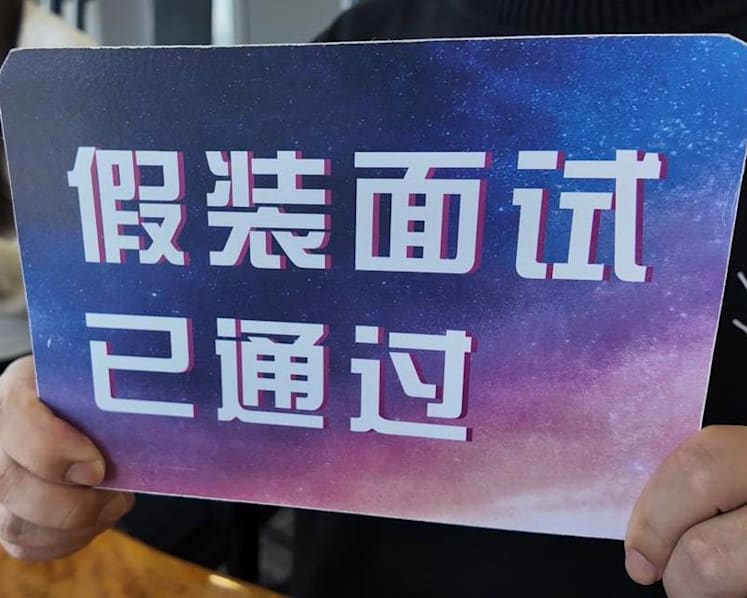
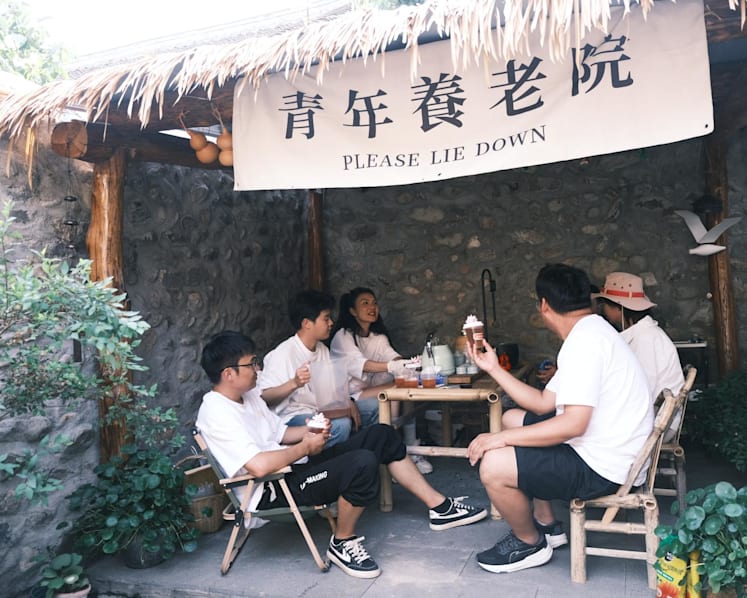
ADAPTING TO A NEW LABOUR REALITY
The rise of flexible work also brings new uncertainties.
Analysts said freelancers and gig workers often lack stable income, employer-provided benefits and predictable career paths.
“This kind of work can make people’s careers more fragmented,” said Peking University’s Zhang Dandan. “It may also make long-term planning more difficult.”
Many platform companies do not function as traditional employers, she further highlighted.
“Workers therefore sign service agreements rather than labour contracts, which creates a much looser employment relationship,” she told CNA, referring to the fact that many do not automatically receive employer-funded benefits such as social insurance, paid leave or job security, though flexible workers can opt to contribute to separate social insurance schemes.
At the lower end of the sector, incomes can also be modest. The same 2025 survey by CALSS found nearly 80 per cent of platform-based flexible workers earned 2,000 yuan or less per month, placing many below China’s median monthly disposable income of about 3,019 yuan in 2025, according to official statistics.
For Li, his switch to freelance work brought him freedom and a higher income. But it also came with trade-offs, including paying nearly 1,800 yuan a month out of pocket for social security, medical insurance and housing fund contributions that employers would normally cover.
Li’s experience points to a broader challenge facing many flexible workers.
“Many flexible or platform-based workers fall into regulatory grey areas, where access to social insurance, healthcare, unemployment benefits and other forms of protection remains limited or ambiguous,” said Zhan from PolyU.
Authorities have begun rolling out measures to address these gaps.
China issued new guidelines on Apr 27, in the form of a 12-point plan, that call for stronger protections for gig workers and tighter oversight of platform algorithms.
The measures included fairer wage payments, improved social security and greater transparency in how platforms allocate work.
Measures announced during the Two Sessions political gatherings in March include removing household registration barriers that had prevented flexible workers from joining employee pension and medical insurance schemes in the cities where they work.
Human Resources and Social Security Minister Wang Xiaoping pledged to “weave a tighter safety net of rights protection” for workers in new forms of employment.
Authorities are also expanding occupational injury insurance nationwide this year, focusing on ride-hailing, delivery and courier workers.
More broadly, other steps include flexible social security contribution cycles - allowing monthly, quarterly or annual payments to match volatile incomes - as well as one-stop mediation centres to resolve labour disputes more quickly.
Zhang Dandan from Peking University said the policy shift also reflects broader fiscal realities.
“As new forms of employment expand, traditional formal jobs are relatively shrinking … that means fewer people are contributing to the existing social security system.” she said.
“Expanding coverage helps bring more workers into the system and enlarge the social security pool,” she added, noting that China faces growing pension pressure as its population ages.
Alfred Wu, an associate professor at the Lee Kuan Yew School of Public Policy, National University of Singapore, said such steps suggest growing recognition that flexible employment is becoming a lasting feature of China’s labour market.
“It seems both workers and the government are beginning to accept these new forms of employment as part of the labour market,” he told CNA.
Over time, he added, the rise of flexible work could reshape China’s employment system more broadly.
“This may require systematic changes across the labour market, including legal protections, social security and even how universities prepare students for work.”
In the meantime, for Li, the independent videographer, freelance life remains a deliberate choice - one that gives him greater freedom over his time and higher income, at least for the moment.
“(Only) if my income becomes consistently unstable, would I consider going back to a traditional job,” he said.