The rise of 'Chinamaxxing': Cultural curiosity or TikTok caricature?
A playful TikTok trend celebrating everyday Chinese habits has gone global, prompting debate over cultural appreciation - and whether online fascination can reshape perceptions.

This audio is generated by an AI tool.


SINGAPORE: Are you “becoming Chinese”?
If you drink hot water regularly, prefer having rice or congee for breakfast, or even enjoy soothing foot baths, some social media users might say you are.
The newly-coined phrase, also referred to as “Chinamaxxing”, exploded online in January - gaining traction particularly among Gen Z TikTok users in the West.
It has since spawned other variations like “you met me at a very Chinese time of my life” and “transforming into a Chinese baddie” - with posts and videos often showing people, many of them non-Asian, embracing traditional Chinese day-to-day habits as part of their everyday routines.





The playful trend has also sparked debate over cultural appreciation - and whether this surge of online curiosity can shape long-term perceptions or simply reduce complex traditions to “superficial symbols”.
While some analysts argue that greater visibility is “better than nothing” in fostering cultural awareness, others caution that surface-level adoption risks misappropriating an identity that has at times faced discrimination.
“CHINA-MAXXING”
TikTok users and media reports have attributed the trend to Sherry Zhu, a 23-year-old Chinese American TikTok influencer.
In a video shared on Jan 15 which has since gone viral - amassing more than 530,000 likes and 3.1 million views on TikTok, Zhu joked: “As a Chinese baddie myself, I'm here to tell you that the minute you turn Chinese, you’re coming with us to hotpot.”
“I tell you to drink your hot water, I tell you to wear the house slippers, this is part of the culture,” she added.
Zhu, whose parents hail from China, told Chinese state news outlet CGTN that Chinese culture has been a “great source of happiness” for her growing up.
“I recognised from an early age that it brought a lot of benefits to my life,” she said. “I definitely want to share that.”
TikTok users have eagerly responded - sharing videos of themselves trying out Zhu’s tips.
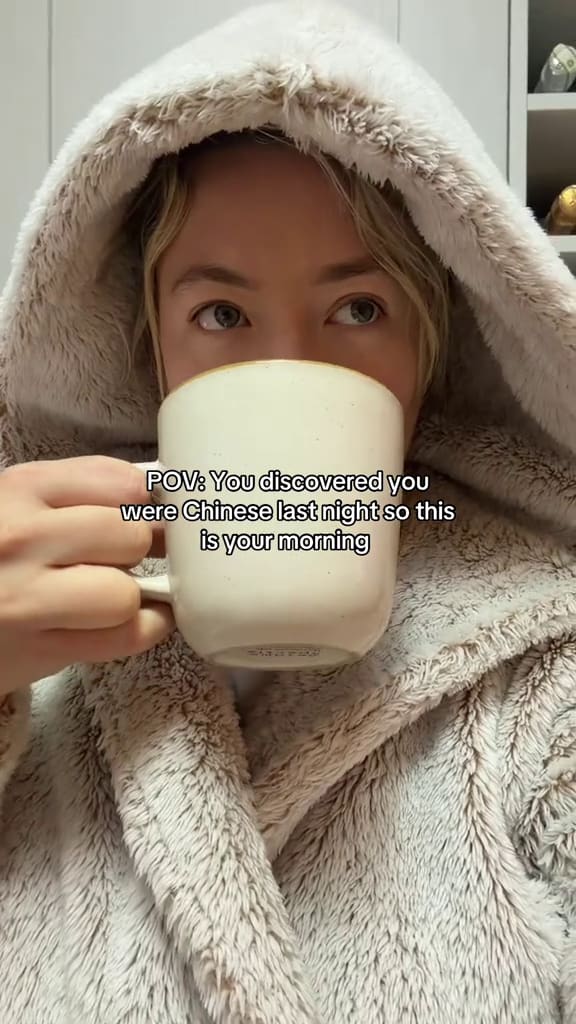
A user named Imogen shared her morning routine of having congee for breakfast and drinking hot water.
“POV: You discovered you were Chinese last night so this is your morning,” she said in her post. “Congee has been my fav for a while! Please everyone get on this side of TikTok!”
Users on Instagram have also joined in.
“I can’t get enough of this content,” said a user with the handle Farah Pink, as she filmed herself boiling apples.
“I love being a Chinese baddie, thank you @sherryxiirui.”
The timing around Chinese New Year, which fell in mid-February this year, has also amplified the trend, experts said.
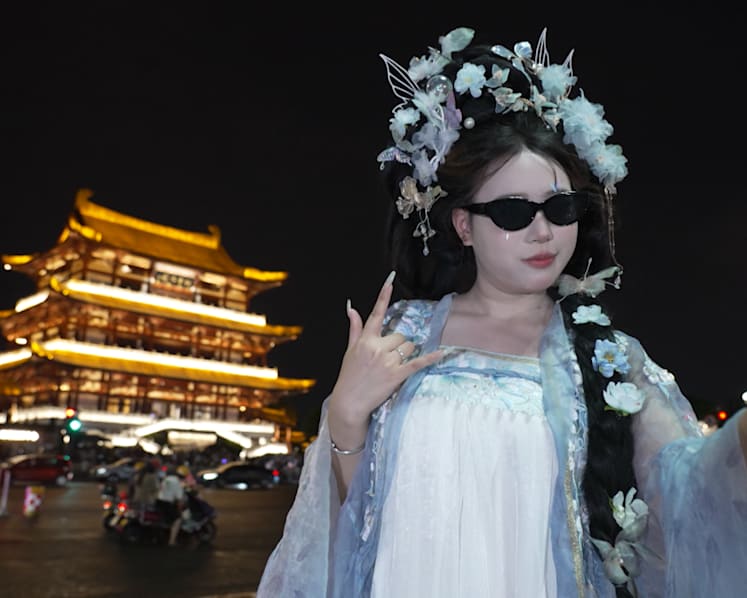
On TikTok and Instagram, many users shared photos and videos of themselves wearing red - symbolising prosperity.
Others discussed superstitions like not cutting or washing one’s hair on the first day, as it is believed to wash away good luck.
Zhang Xinzhi, an associate professor at the City University of Hong Kong (CityUHK), noted the rapid rise of Chinese culture and soft power in recent years.
“These factors have merged China-related topics into mainstream digital discourse, potentially triggering dormant curiosities and resonating with audiences.”
The trend shows a “more grassroots” and “high-resolution” view of everyday life, Zhang said, adding that what distinguishes it is its focus on ordinary people’s lifestyles and “small moments”.
“Unlike state-led or state-affiliated narratives about major advancements like infrastructure projects, technology, or innovation, this trend centres on the mundane aspects of daily Chinese life,” Zhang said.
“(For example) drinking hot water and incorporating Traditional Chinese Medicine (TCM) principles have low participation barriers and require minimal expertise …These activities are not off-putting, and the natural response is: Why not try?”
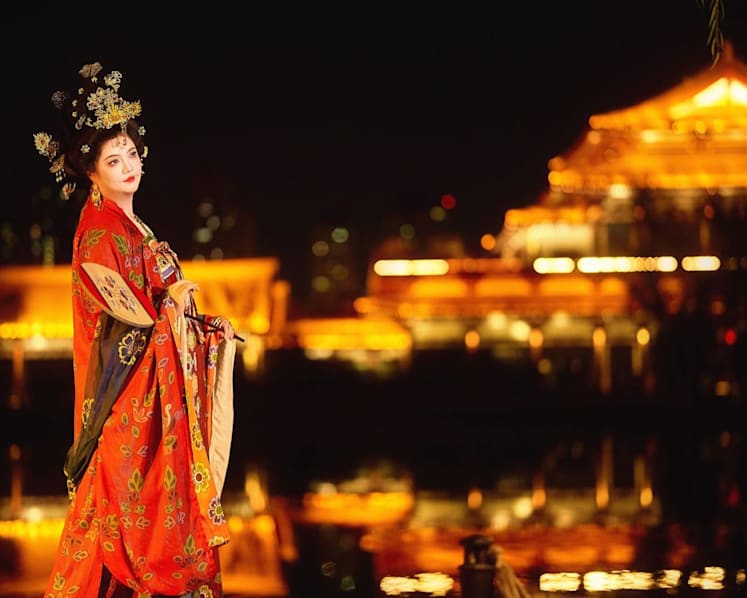
“The novelty perhaps lies in the convergence of cultural curiosity, transmedia storytelling and playful deployment of stereotypes surrounding both ancient and modern Chinese culture,” said Troy Chen, an associate professor of media and cultural studies from the University of Nottingham Ningbo China.
“At its core, this is a viral trend,” Chen said, also noting that many western influencers, as well as members of the overseas Chinese diaspora, have “joined the bandwagon - playing humorously and light-heartedly with shared cultural identity”.
WHAT DO CHINESE PEOPLE THINK?
Shanghai native Lisa Wang shared her thoughts on the trend, saying it was not “a bad thing”.
“Given how tense the current state of (the world) is, there’s still this desire to understand each other’s natural way of life. At least from what you can see among Gen Z, there’s still this willingness to understand the world,” she said.
Niki Eu, a Singaporean Chinese speech pathologist in Perth, said that more people were exposed to the growing influence of Chinese culture and embracing traditions like TCM and acupuncture or food like hotpot and herbal soups.
“That’s becoming more common (in Australia),” Eu told CNA.
“It’s like walking into a Northern Chinese restaurant and seeing foreigners ordering hotpot. You know what hotpot is - and you actually want to eat it? That’s interesting.”
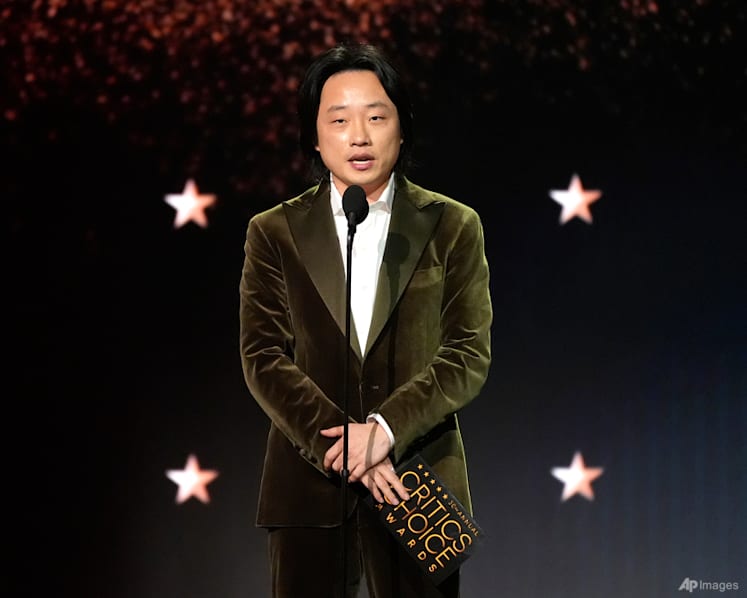
Prominent Chinese celebrities and public figures such as Hong Kong-American comedian Jimmy O Yang have also contributed to the trend’s growing momentum, said Zhang from CityUHK.
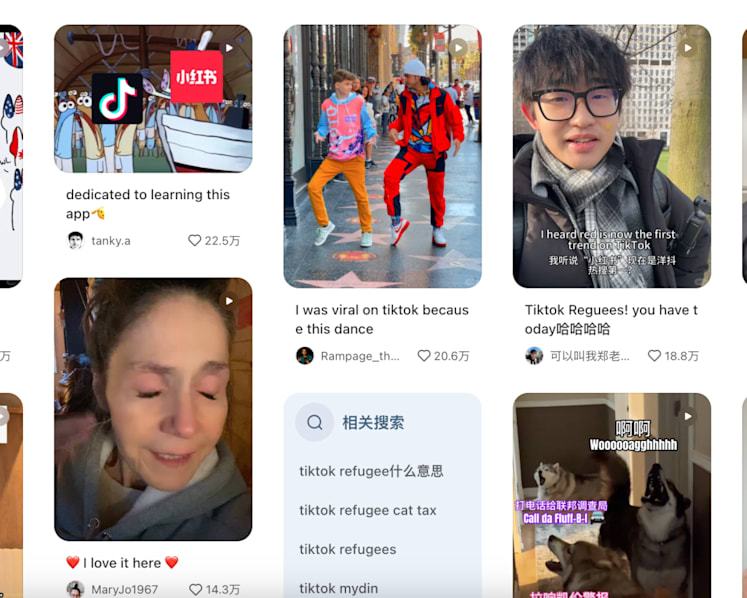
Notably, last year’s mass exodus of American TikTok users to Chinese platforms such as Xiaohongshu gave US audiences “a rare opportunity to directly interact with Chinese internet users”, he added.
However, the trend has also drawn criticism, particularly from members of overseas Chinese communities and the wider Asian diaspora.
Some Chinese TikTok users have shared what it was like growing up as minorities in Western countries, where elements of their heritage - from the food they ate to their accents and physical features - were mocked or met with racism.
“Drink the tea or whatever, but claiming to be ‘Chinese’ for doing it is insensitive to those who have suffered for being Chinese and doing the exact same thing,” one user from Australia with the handle chloedyhe wrote.
Vivien Wang, a 26-year-old civil litigator in Australia whose parents migrated from mainland China in the 1980s, told CNA that she has “really complex feelings” about the trend.
“Growing up as a second-culture kid in a predominantly Western environment, it’s very easy to develop internalised racism,” said Wang.
“It’s something I’ve struggled with for a long time - seeing parts of my culture that I was once shunned for now becoming popularised and accepted.”
Others pointed to the surge in anti-Asian racism during the COVID-19 pandemic when attacks and hate crimes rose across many major US cities.
Chen from the University of Nottingham Ningbo China said that while the trend could serve as a “promising entry point” for cultural curiosity and mutual understanding, it also risks striking a sensitive chord among some Chinese communities.
“Those who identify with Chinese culture should have a say in defining it. (But) when that identity is challenged, mocked, misappropriated or exploited for views - it creates a jarring sense of unease,” he said.
That discomfort can feel particularly acute among Chinese people in the West, where many have grown up as minorities in local communities - sometimes marginalised, sometimes misunderstood.
The trend has also caught the attention of the Chinese government.
At a recent press conference, Chinese Foreign Ministry spokesman Lin Jian was asked about the videos going viral on social media worldwide.
“Glad to see that more and more foreign friends show interest in experiencing today’s China and exploring the Chinese people’s everyday life here,” said Lin on Feb 6.
He added that in the eyes of “many foreign friends”, China has been “much more than traditional symbols such as the Great Wall of China, Kung Fu, pandas and Chinese cuisine”.
BEYOND THE VIRALITY
Experts said the deeper question is whether this burst of cultural curiosity can translate into a longer-term shift in perceptions.
While cultural curiosity can open the door to dialogue, not all attention translates into meaningful engagement, said Zhang from CityUHK.
Memes and viral posts offer simplified - and at times stereotypical - depictions of Chinese people and life in China, he added.
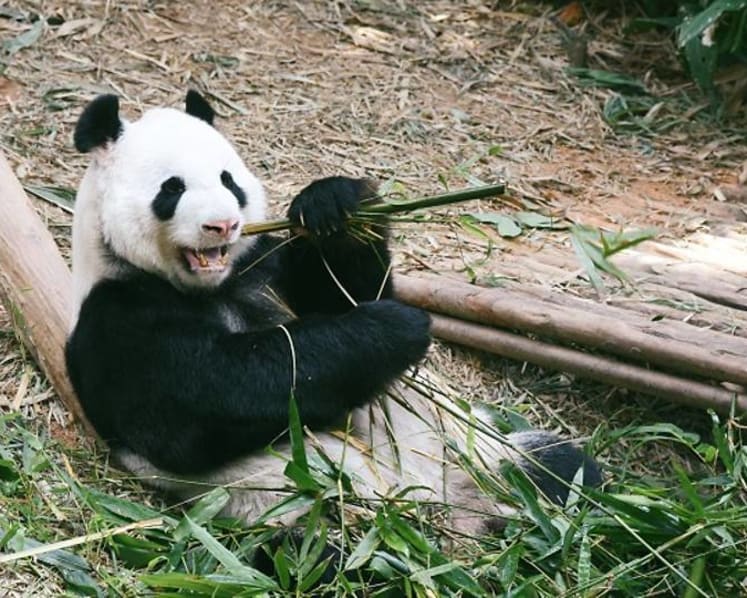
“Some stereotypes may seem relatively benign but others risk reducing complex cultural practices to caricatures or superficial symbols,” Zhang said.
“There is a clear difference between respectful cultural exchange and the surface-level adoption of cultural elements without understanding their deeper significance.”
Chinese creators on both TikTok and Instagram have voiced their concerns over issues like racism and reducing their ethnicity to being a punchline.
“I understand humour but I actually don’t think it is hitting,” said Australian writer Maggie Zhou. “It’s funny because we’re the butt of the joke, our ethnicity is kind of half of the punchline here.”
“We lived through the stigma, the racism, the fear of existing in public as an Asian person during a global pandemic,” said Carina Lee, a Taiwanese content creator on Instagram.
“But now our culture is a mood board?”
Experts said it remains to be seen whether the trend will lead to a meaningful shift in public perceptions.
“It is hard to say. Perhaps it is better than nothing. At the very least, no publicity is bad publicity,” Chen said.
Similarly, Zhang characterised the trend as a “potentially meaningful initial step” in cross-cultural engagement.
“Even if the immediate impact is limited, the fact that China-related topics are being discussed more widely and in more varied contexts creates opportunities for deeper mutual understanding over time.”
Li Mei, a media lecturer at the University of Sydney, said China’s soft power has long faced challenges related to discourse power, with its actions and narratives “often reframed, contested, or overshadowed by dominant external narratives”.
“When global audiences begin to appreciate cultural products or lifestyle elements on their own terms, negative stereotypes can dissipate more subtly and organically than through top-down messaging.”
However, she cautioned that the “fragmented and short-lived nature” of viral moments makes it difficult to translate short-term fascination into long-term changes in attitudes.