analysis East Asia
Not just symbolism: What the KMT chair’s China trip signals for Beijing, Washington and Taipei
Cheng Li-wun will be the first sitting chair of Taiwan’s opposition Kuomintang to visit the mainland in a decade, in a trip analysts say is laden with political signalling ahead of US President Donald Trump’s expected visit to Beijing next month.
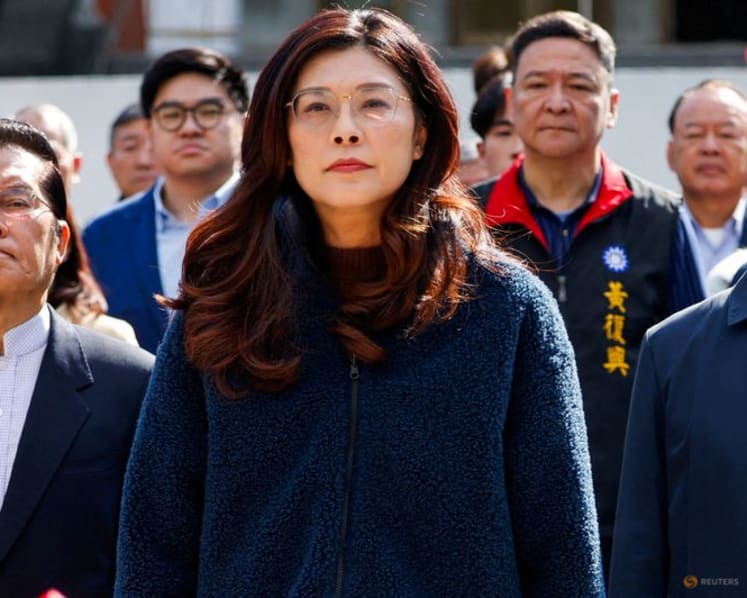
Cheng Li-wun, the chairwoman of Taiwan's largest opposition party, the Kuomintang attends an event in Taipei, Taiwan Mar 12, 2026. (File photo: Reuters/Ann Wang)

This audio is generated by an AI tool.


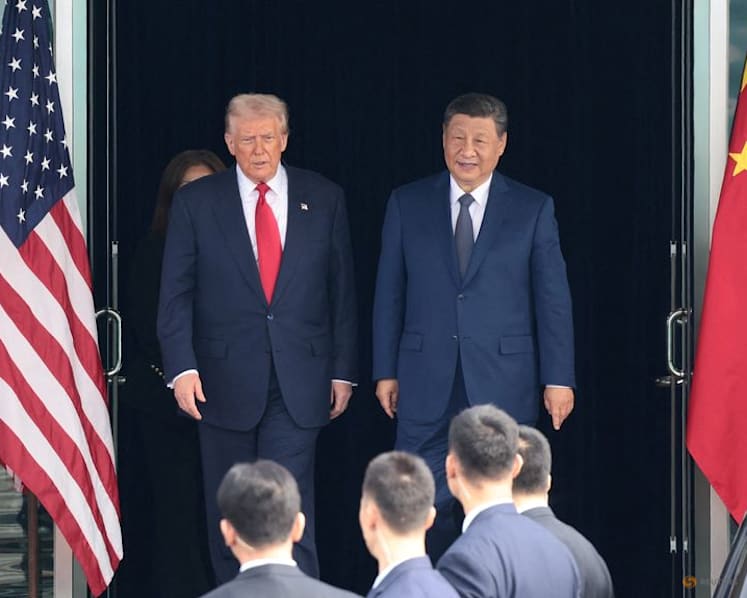
BEIJING: As a Trump-Xi summit looms and debate over Taiwan’s defence intensifies, Kuomintang (KMT) chair Cheng Li-wun is heading to China - the first sitting party chair to do so in a decade - in what analysts describe as a politically-charged signalling exercise.
Washington is weighing heavily on both Beijing’s and the KMT’s calculations, analysts told CNA, with the visit likely to be closely scrutinised in Taiwan, China, and the United States.
“Cheng is trying to thread a needle between three audiences,” said Li Yaqi, a research assistant at the S Rajaratnam School of International Studies (RSIS) in Singapore.
Cheng will lead a KMT delegation to Jiangsu, Shanghai and Beijing from Apr 7 to 12 at the invitation of Chinese President Xi Jinping, Xinhua reported, citing Song Tao, head of the Communist Party’s Taiwan Work Office.





Cheng later confirmed that she had “gladly accepted” Xi’s invitation, reiterating opposition to Taiwan independence and adherence to the “1992 Consensus”, an understanding that both sides acknowledge there is “one China” while leaving room for different interpretations of what that means.
She added that she hoped to show Taiwanese that “war across the Taiwan Strait was neither inevitable nor necessary”.
TIMED FOR MAXIMUM IMPACT?
Analysts said the timing of Cheng’s trip is significant, coming before US President Donald Trump’s expected China visit in May and amid heightened scrutiny over Taiwan’s defence spending and deterrence posture.
Although the KMT has been out of government for 10 years, analysts said the visit still carries substantial political weight.
Taiwan-based economist and political commentator Wu Jia-lung said the visit has been inserted into a particularly charged moment in US-China-Taiwan dynamics, giving it added importance beyond a routine opposition outreach trip.
Xi may see a meeting with Cheng as a way to send a message to Washington ahead of the Trump summit, Wu said, especially as Trump has offered Beijing little reassurance - from fresh military backing for Taiwan to exerting broader pressure on China’s partners.
“In my view, this is to show that Xi has a way to penetrate Taiwan’s internal politics and, through the Kuomintang, block the special defence budget,” Wu said.
“Can Trump do the same?”
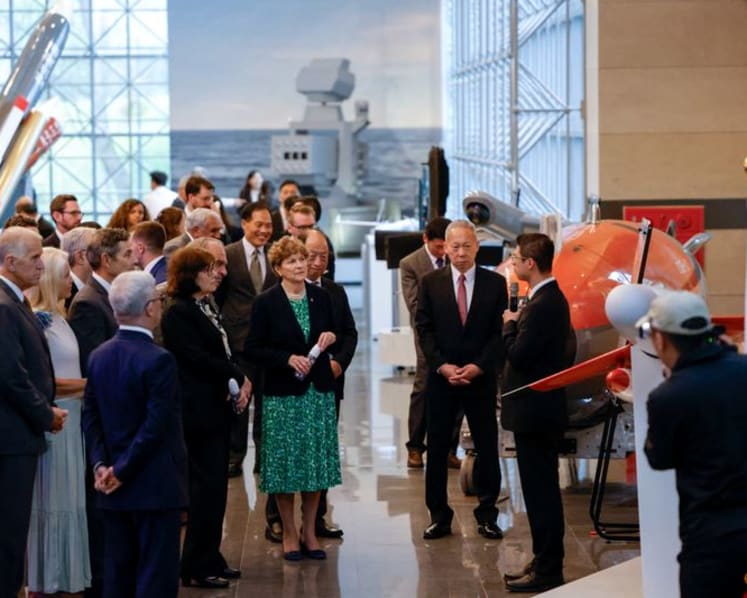
He also pointed to the Mar 30 visit by US senators to Taipei, where a bipartisan delegation urged Taiwan’s parliament to approve the special defence budget, as further context for Beijing’s decision to elevate Cheng’s trip.
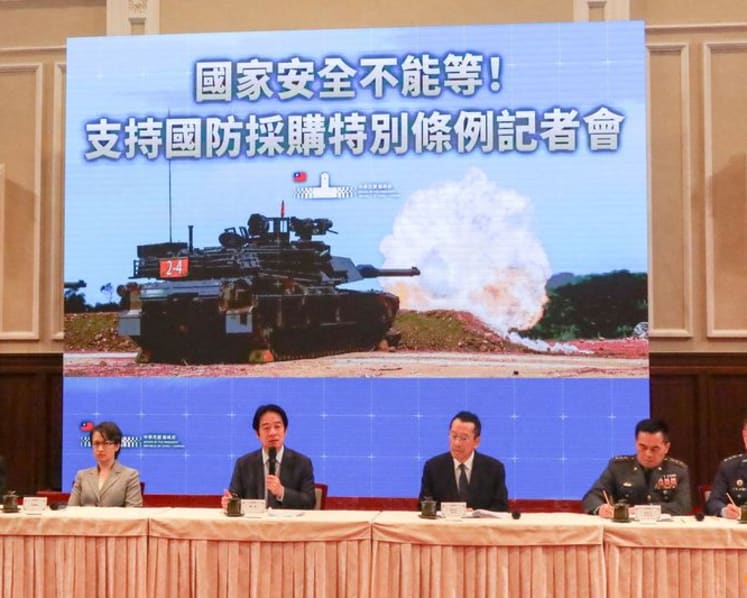
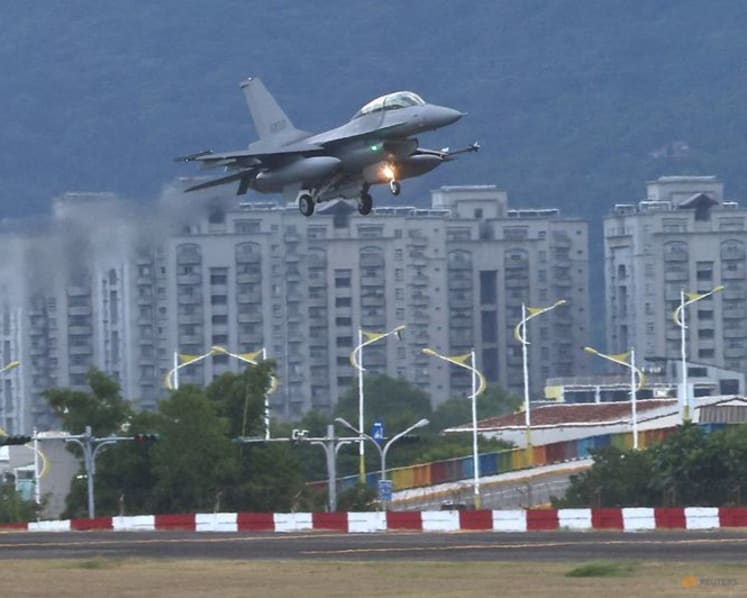
Proposed by Taiwan President Lai Ching-te, the US$40 billion defence spending is currently stalled in the opposition-controlled parliament. Intended to fund major US weapons purchases, it has also become a proxy for broader questions over deterrence, US support and Beijing’s leverage.
“Seen this way, Xi Jinping is not meeting Cheng Li-wun because he originally wanted to see her, but because he wants to use the gesture to show Trump something - to throw Trump a problem,” Wu said.
The last sitting KMT chair to visit the mainland was Hung Hsiu-chu in 2016, underscoring the significance of Cheng’s upcoming trip.
While a meeting between Cheng and Xi has not been formally confirmed, it is widely anticipated by analysts given the level of official signalling around the visit.
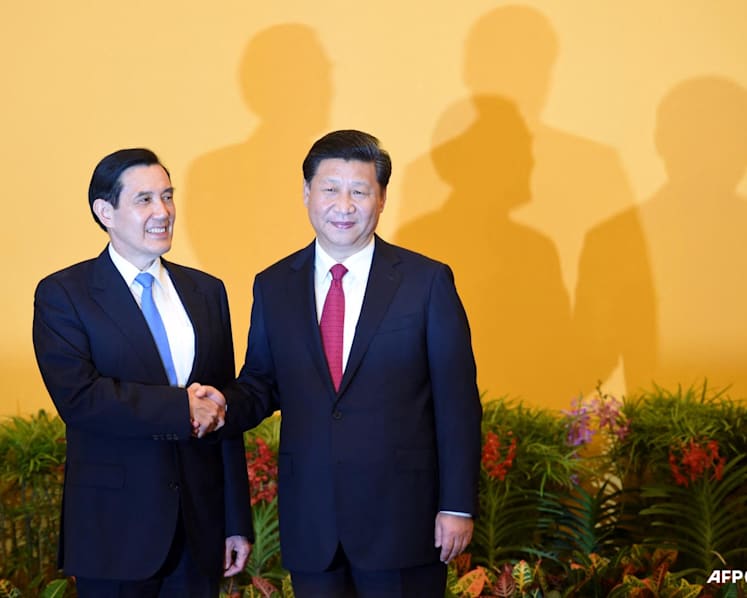
Li from RSIS said Cheng’s visit follows a steady progression of increasingly sensitive cross-strait exchanges - from former president Ma Ying-jeou’s trips, to legislative delegations and revived think tank exchanges - culminating in a possible Xi-Cheng meeting.
Each step, he said, tested “a higher threshold of political sensitivity”.
Cheng’s visit will test “whether a sitting party chair can meet Xi and emerge strengthened rather than damaged”, Li added.
BEIJING’S CALCULUS
Beyond timing, analysts said the bigger question is what Beijing wants to get out of elevating Cheng’s visit - and what it hopes to signal.
By receiving Cheng at a high level, Xi can reinforce the idea that cross-strait tensions are not inevitable but depend on political choices in Taipei - and that those prepared to engage Beijing on its terms can still be rewarded with access and possibly practical concessions.
Those terms typically include adherence to the “1992 Consensus” - a framework acknowledging “one China” that the Democratic Progressive Party (DPP) has long rejected.
Cross-strait ties have deteriorated since the DPP returned to power in 2016, amid rising tensions between Beijing and Taipei.
Chong Ja Ian, an associate professor from the National University of Singapore (NUS), said the message from Beijing is clear - accepting Beijing’s terms can bring “prominence and opportunities”, while also showing it can “circumvent Taiwan’s government” by working through opposition parties and other actors.
Beijing could also promise reduced military pressure or economic benefits, Chong said - but only under conditions which it “can alter or withdraw at any time”.
Li argued the more consequential signal is structural.
Beijing is “not simply bypassing the DPP government”, he said, but using the opposition-controlled legislature to constrain what Lai’s administration can do.
“What Lai faces is not a parallel channel but a veto structure,” he added.
That makes Cheng’s visit more than a symbolic show of preference for the KMT, Li said.
It is also a demonstration that Beijing has built a usable opposition channel in Taiwan - one capable of generating leadership-level engagement while limiting the DPP government’s room for manoeuvre, he added.
James Chen, an assistant professor of diplomacy and international relations at Tamkang University, offered a similar reading.
In his view, Xi is seeking to restore suspended party-to-party exchanges and show that dialogue remains possible - but on terms where Beijing “continues to hold leverage and dominance”.
A softer reading came from Lim Tai Wei, an East Asian affairs observer and professor at Soka University - who said Beijing also wants to project “a soft power side” and a desire for “better relations, avoidance of tensions and peaceful dialogue”.
Yet even that message, analysts suggested, rests on a clear premise - that any reduction in pressure or opening for dialogue comes on Beijing’s terms, not Taipei’s.
THE VIEW FROM WASHINGTON
Washington is another key audience.
Chong said Beijing may be trying to show that tensions can be managed politically rather than militarily ahead of a Trump-Xi meeting.
“If the CPC (Communist Party of China) can get Cheng and the KMT to accept their language in exchange for Beijing’s largesse and an easing of military pressure towards Taiwan, Xi can turn to Trump before their meeting to indicate that further military sales to Taiwan are unnecessary,” he said.
That, Chong said, could also create political cover for the KMT domestically - framing its stance not as anti-defence, but that the problem lies with whether the US is still willing or able to provide the weapons Taiwan wants.
The risk for Washington, in his view, is that any Xi-Cheng understanding could weaken Taiwan’s defence preparedness while deepening public doubts about US reliability.
“Security-oriented officials and politicians are likely to be concerned that any Xi-Cheng deal may weaken Taiwan’s ability to defend itself,” Chong said, adding that this could also affect Washington’s position in the Western Pacific and its support for allies including Japan, South Korea, the Philippines and Australia.
He also suggested that views in Washington may not be uniform.
Those focused more on Trump’s own political interests may be more open to any arrangement that helps create the appearance of a successful Trump-Xi meeting, he said.
Soka University’s Lim said any sign of cooling tensions would likely be welcomed by Washington, especially if it helps stabilise US-China ties ahead of Trump’s visit to China.
Taiwan-based economist Wu offered a harder-edged interpretation, arguing that Xi may be using the meeting largely as a signal for Trump rather than as a genuine attempt at cross-strait accommodation.
THE KMT’S DELICATE BALANCING ACT
Ultimately, analysts said the bigger test for Cheng lies at home.
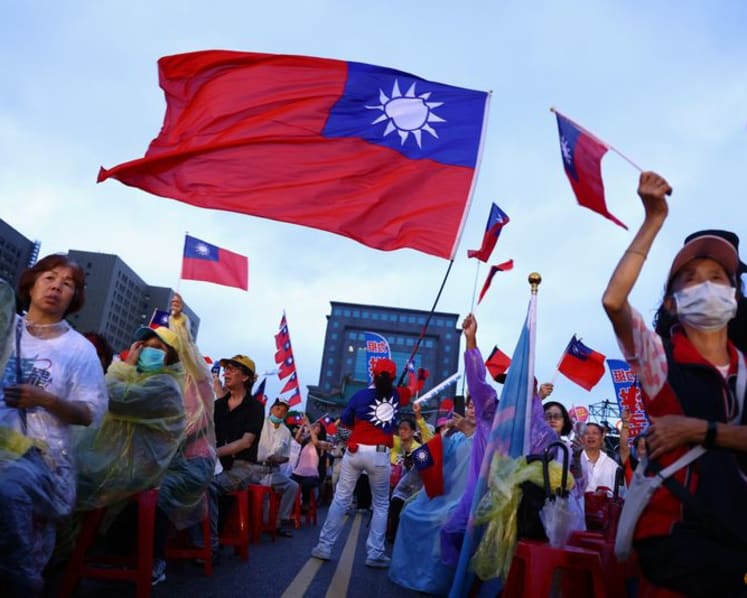
She must show that the KMT can engage Beijing productively without reinforcing perceptions that the party is drifting too close to mainland China - a concern among Taiwanese swing voters who largely favour maintaining the status quo.
That would make local elections in November an important test of whether Cheng’s outreach helps broaden the party’s appeal or becomes a liability, noted Chen of Tamkang University.
Any benefits or practical gains from the trip - whether in trade, tourism or other exchanges - would still remain bargaining chips, analysts said.
Chong said the strategy may help mobilise the KMT’s base ahead of local elections later this year - but it also risks backlash.
“In Taiwan’s domestic politics, an appeal to the PRC (People’s Republic of China) appeals to an important segment of the KMT’s base,” he said.
“Of course, the bet could go wrong and lead to counter mobilisation among voters who are wary of the KMT,” Chong said.
“However, getting too close to Beijing may also lose them credibility in Washington and having little to offer can erode their usefulness to Beijing,” he added.
Chen from Tamkang University suggested Cheng could eventually follow up with a US visit to reassure Washington.
For now, however, the central question remains domestic: whether Taiwanese voters view the trip as political skill - or political proximity to China.