







analysis East Asia
‘Disrespectful’ or not? How Beijing views Trump’s abrupt postponement of summit with Xi
Trump’s move to delay his China visit just two weeks before it was due may reinforce Beijing’s view of Washington’s unpredictability, analysts say, even as China looks to turn the disruption to its advantage.

This audio is generated by an AI tool.


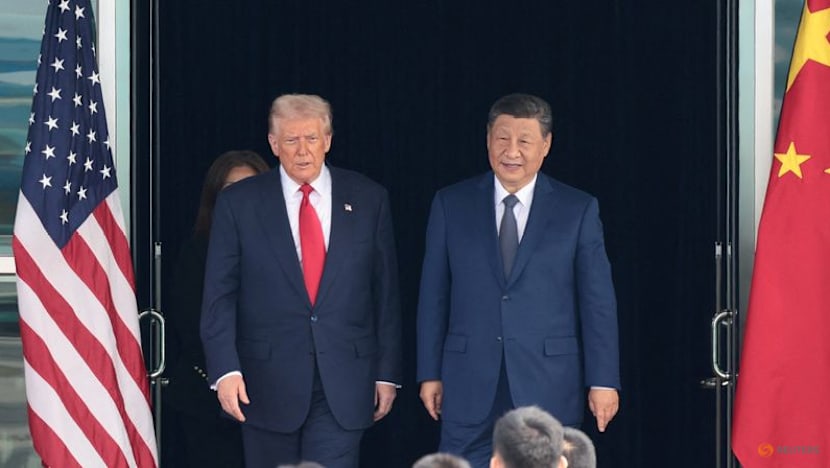
BEIJING: China likely views United States President Donald Trump’s abrupt postponement of a much-anticipated summit with his Chinese counterpart Xi Jinping - just two weeks before the initially scheduled date - as further evidence of Washington’s unpredictability, even as it seeks to turn the delay to its advantage, say analysts.
While the rescheduling adds uncertainty to a pivotal moment in US-China ties, Beijing is expected to maintain a calibrated response, avoiding public escalation while keeping communication channels open, observers add.
Trump said on Monday (Mar 16) he was looking to push back the much-anticipated summit with Xi in Beijing by around a month because of the Iran war. It was initially scheduled for Mar 31 to Apr 2, the White House had said earlier.
On Tuesday, the US president said he expected to make the trip “in about five or six weeks”.
"We're working with China. They were fine with it," Trump said.
"I look forward to seeing President Xi; he looks forward to seeing me, I think."
WEIGHING THE OPTICS
Optics and protocol carry particular weight in Chinese diplomacy, where leader-level meetings are carefully choreographed and imbued with symbolism, observers noted.
A request to postpone a meeting between the leaders of the world’s two largest economies on short notice would therefore not be an easy signal for Beijing to accept, they said.
“I think the postponement may reinforce Chinese perceptions that Trump is unpredictable and unreliable,” Michael Clarke, an associate professor at Deakin University’s Centre for Future Defence and National Security, told CNA.
He added that Beijing may, internally, see the abrupt move as “disrespectful” and indicative of a “level of strategic incoherence” in Washington.
But Sun Chenghao, a fellow at Tsinghua University’s Center for International Security and Strategy, noted the exceptional situation.
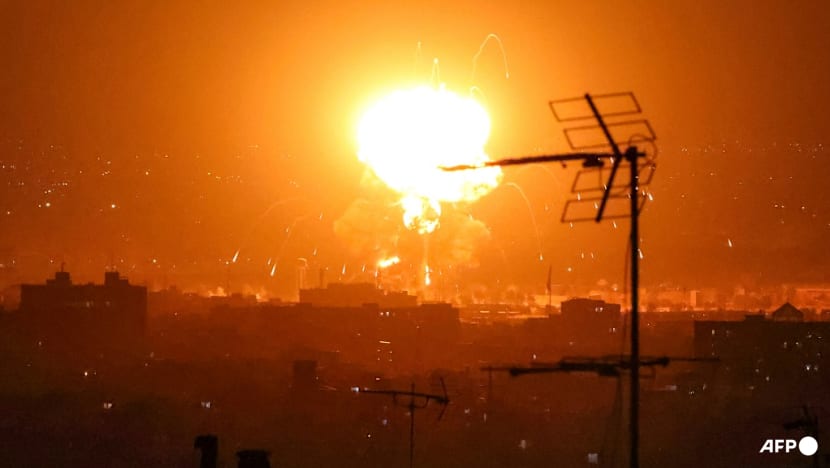
Since US and Israeli strikes on Iran on Feb 28, the conflict has spilt over to much of the Middle East as Tehran retaliates. An Iranian squeeze on the vital Strait of Hormuz has also caused oil and gas prices to spike, impacting global markets.
“As a result, China is unlikely to publicly elevate this into an issue of ‘disrespect’,” he said, adding that Beijing will more likely “maintain a calm external posture, keep communication going, and wait for a suitable moment to proceed”.
China’s public messaging so far has reinforced this measured approach.
“China and the US remain in communication on President Trump’s visit to China, including the dates,” Chinese foreign ministry spokesperson Lin Jian said at a regular press briefing on Tuesday, in response to questions on Trump’s remarks about delaying the visit.
The muted response reflects a deliberate choice by Beijing not to escalate the issue publicly, said Chong Ja Ian, an associate professor at the National University of Singapore (NUS) and a non-resident scholar at Carnegie China.
“The lack of a response suggests that Beijing seems unwilling to publicly challenge Trump on the delay,” he told CNA.
The Chinese leadership recognises that the US “remains uniquely able to create disruption and impose costs”, making a measured and restrained response the more likely course, Chong added.
TURNING DISRUPTION INTO ADVANTAGE
Beijing’s restrained public response may also mask a more calculated approach, with analysts saying China could use the delay to its advantage - both to shape perceptions and to better prepare for talks.
The additional time is likely to serve practical purposes, allowing Beijing to refine its negotiating stance - firming up potential concessions, preparing countermeasures to recent US trade moves, and sharpening its demands on sensitive issues such as US arms sales to Taiwan, observers added.
NUS’ Chong said Beijing may “play up the idea of an unreliable United States” to underscore its own positioning as a “stable, predictable partner to the world”.
Li Yaqi, a researcher at the S Rajaratnam School of International Studies (RSIS) in Singapore, said China might actually welcome the delay.
He pointed to a Mar 10 Bloomberg report - before news of the postponement - that said Chinese officials had been frustrated by what they saw as insufficient US preparation ahead of the Trump-Xi summit, which may limit the outcomes to trade agreements while leaving key diplomatic and security issues unresolved.
According to the report, China had earlier proposed a late-April visit by Trump to allow more time for preparations.
“A month’s postponement gives Beijing the preparation time it wanted without having to ask for it,” Li told CNA.
STRAIT OF HORMUZ: A POSSIBLE FACTOR?
While Trump has cited the Iran war as the reason for the rescheduling, attention has also turned to whether tensions around the Strait of Hormuz - and Washington’s push for greater burden-sharing - were a contributing factor.
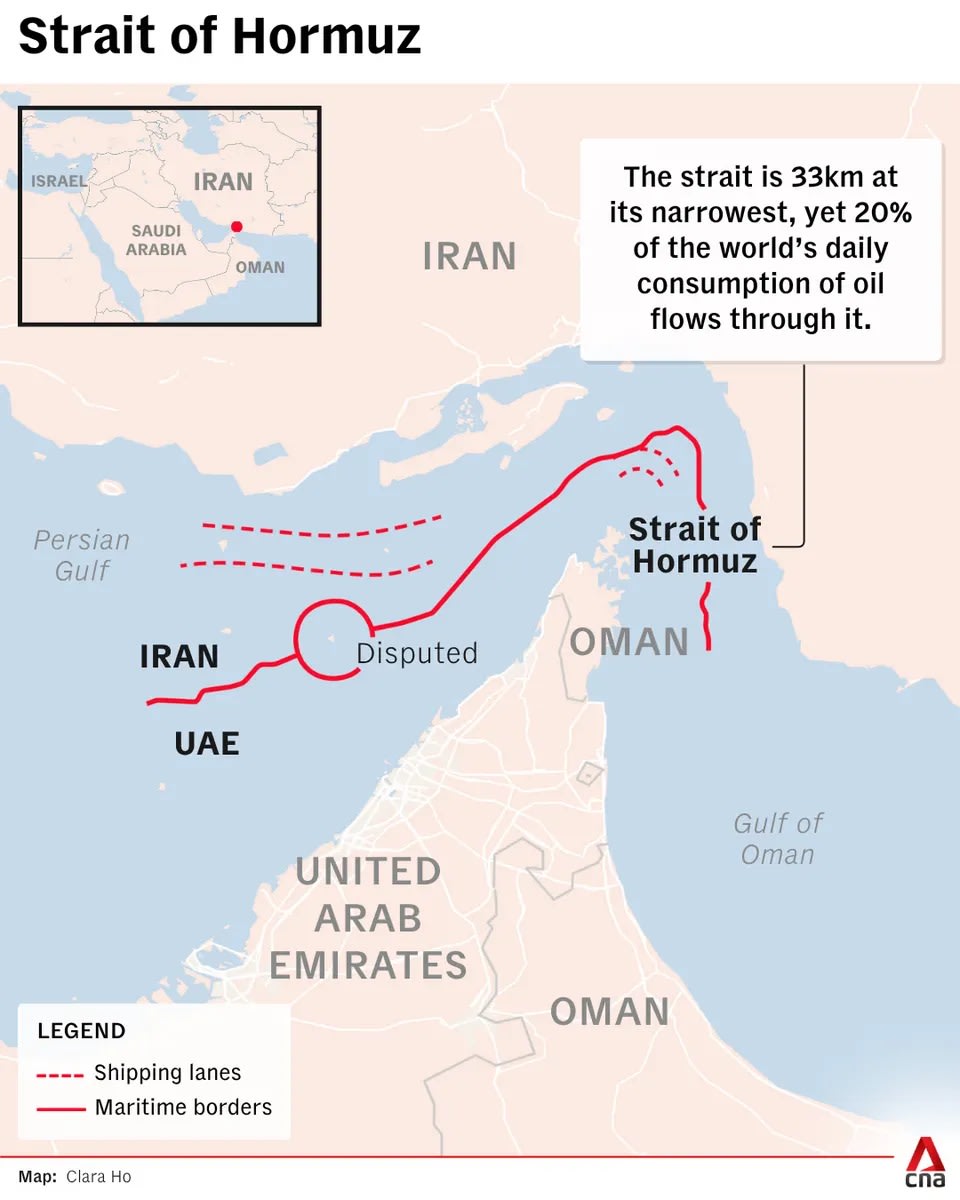
About one-fifth of global oil and LNG flows pass through the narrow waterway between Iran and Oman. Tehran has effectively choked off traffic through the channel, severely disrupting shipping and driving up energy prices.
Trump said on Sunday that he was talking to seven countries about helping to secure the strait. While declining to identify them, the US president said in an earlier social media post that he hoped China, France, Japan, South Korea, Britain and others would participate.
“I think China should help too because China gets 90 per cent of its oil from the straits,” Trump told the Financial Times in an interview that same day, further suggesting that “we may delay” the summit.
However, that linkage was quickly downplayed by US officials.
Barely 24 hours later, US Treasury Secretary Scott Bessent said talk of such a link was a “false narrative”, indicating that any postponement would instead be down to “logistics” and Trump’s need to remain in Washington.
Trump himself also weighed in. "There's no tricks to it either, it's not like 'oh gee, I'm waiting.' It's very simple. We got a war going on. I think it's important that I be here," he said on Monday.
Such contradictions are “harder to process than a clear threat”, said Li from RSIS, adding that these have effectively placed Beijing in a “holding pattern”.
“The most telling signal … is not what officials are saying but what the broader policy establishment is not saying”, Li said, pointing to the absence of a clear “tone-setting” from China’s leadership.
In China’s system, he noted, authoritative commentary on sensitive diplomatic developments typically follows internal guidance, and the lack of such signalling suggests Beijing has yet to settle on a definitive reading.
In Tuesday’s regular briefing, Chinese foreign ministry spokesperson Lin noted that “the US has publicly made clarifications” on the matter.
“The US side stressed that the visit is not linked to the issue over the Strait of Hormuz,” he said.
Still, for some analysts, Washington’s shifting explanations have raised deeper questions about its intentions.
“Given the previous stakes Trump himself has indicated are at play in the Sino-US relationship, is (the) delay to be read as prevarication?” said Clarke from Deakin University.
Li from RSIS said the more consequential issue is precedent.
“If summit access can be conditioned on cooperation in a third-party regional conflict today, the same logic could apply to the South China Sea or technology transfer tomorrow,” he said.
Either way, analysts said China sees little reason to respond on Washington’s terms, even if Trump had indeed hoped the delay and public pressure would push it into doing more on the Strait of Hormuz.
NUS’ Chong said Beijing does have some stake in preventing further disruption, as high oil prices would be felt globally and its relationships and investments in the Gulf could come under strain.
But he added that Beijing is unlikely to want to appear to be acting under US pressure “unless of course there is some bigger pay-off”, adding that this “does not seem to be the case” for now.
Li from RSIS said China’s incentives to join any US-led effort remain “very limited”.
He noted that Beijing has been able to secure energy flows through direct channels with Tehran, and singled out Trump’s claim that China gets 90 per cent of its oil through the strait as a “significant overstatement”.
While China is more exposed than the US, its reliance is far lower than suggested - with estimates from the US Energy Information Administration and independent analyses indicating roughly one-third to nearly half of its crude imports transit the strait, accounting for about six to seven per cent of its total energy consumption.
With strategic reserves, alternative supply routes including Russian pipeline crude, and some Chinese-linked tankers still able to transit the strait, Li said Beijing’s calculation is straightforward.
“Why (bear) the political cost of joining a US-led coalition when it can manage the energy problem quietly through bilateral channels?”


LIMITED IMPACT, LINGERING UNCERTAINTY
The postponement of the Trump-Xi summit is unlikely to alter the broader trajectory of US-China ties in the near term, with trade talks still moving ahead and both sides continuing to lay the groundwork for a future summit, analysts said.
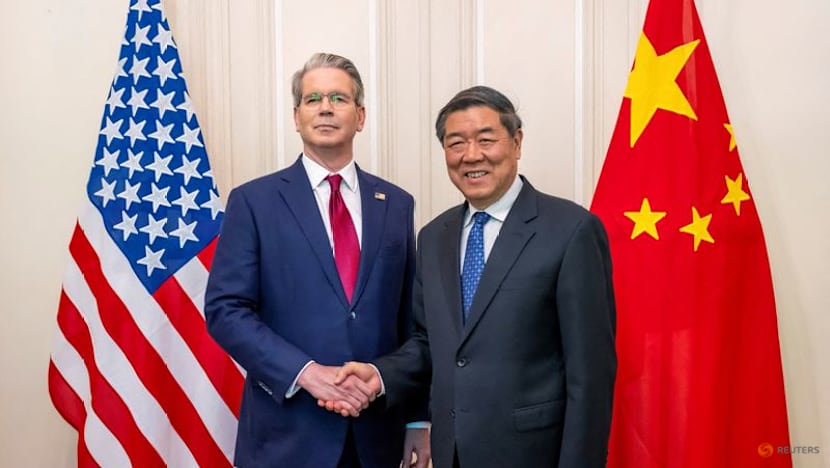
Chinese Vice Premier He Lifeng and US Treasury chief Bessent led their respective delegations in Paris over the weekend for the latest bout of trade talks. Both sides described the talks as constructive.
However, Sun from Tsinghua University said the delay will introduce uncertainty and “some psychological unease” for China in the short term, while also further shaping its perspective towards the US.
“The episode reinforces Beijing’s view that US diplomacy remains highly crisis-driven and shaped by transactional logic,” he said, warning this would further weaken confidence in the predictability of summit planning and broader bilateral engagement.
Li from RSIS described the episode as “short-term disruption, not structural rupture”.
For Beijing, the longer-term concern may be less the delay itself than what it reveals about the difficulty of dealing with a White House that, in Li’s words, appears to be improvising “in real time”.
Li described China’s response as “silence on intent, acceleration on structural preparation”, suggesting that Beijing is focusing less on deciphering Trump’s intentions and more on preparing for what may come next.






