analysis East Asia
Cherry-picking influence: Why China is cautious about filling gaps left by US global retreat
As Washington withdraws from 66 global institutions, China is expected to step up selectively rather than seek to replace the US as a new centre of authority, analysts say.


This audio is generated by an AI tool.


BEIJING: Washington’s retreat from 66 global organisations may have created openings across global governance but Beijing is unlikely to rush in to take its place, analysts say.
Instead, it is more likely to pursue a cautious strategy - stepping up where influence can be gained gradually, interests align and costs remain manageable, while steering clear of roles that bring political risk or heavy obligations in the year ahead.
This cautious approach reflects Beijing’s assessment of costs and risks, experts add, as it seeks to avoid high-profile leadership roles that invite scrutiny or binding commitments - all while managing economic pressures and safeguarding political stability ahead of the Communist Party’s 21st Congress in 2027.
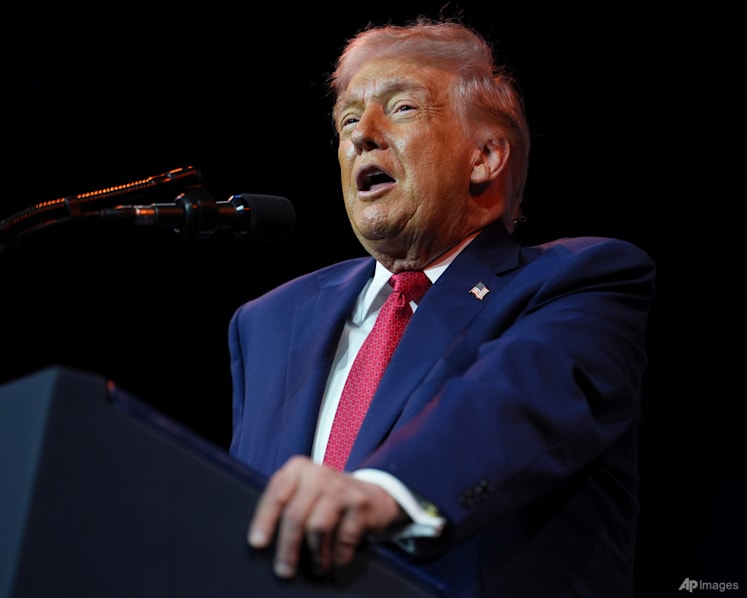
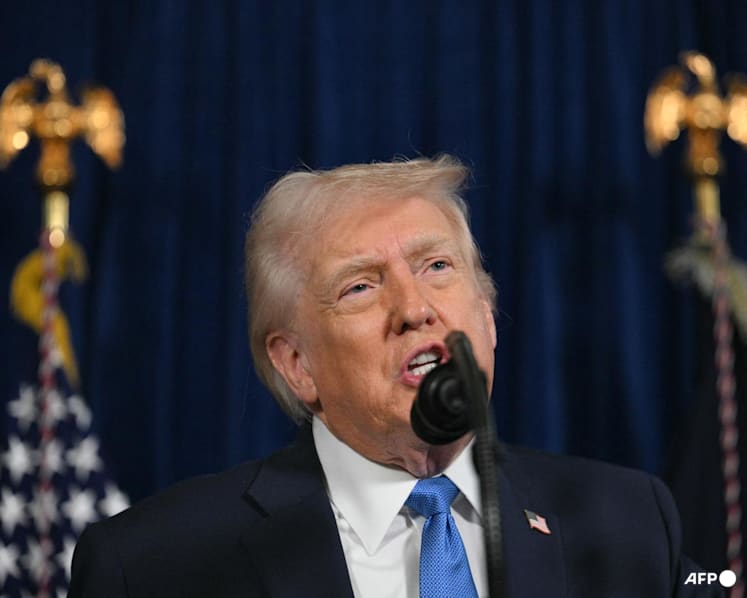
United States President Donald Trump signed a proclamation on Jan 7, withdrawing the US from 35 non-United Nations (UN) organisations and 31 UN entities because they promoted “radical climate policies, global governance, and ideological programmes that conflicted with US sovereignty and economic strength”.





These include the Global Counterterrorism Forum (GCTF), International Energy Forum (IEF), the World Health Organisation (WHO), UN Peacebuilding Fund and the UN International Trade Centre.
A US retreat “widens China’s lane in development and capacity-building bodies such as UN DESA (Department of Economic and Social Affairs) … where agenda-setting, training, and technical assistance shape Global South policy preferences”, said Jonathan Ping, an associate professor at Bond University in Gold Coast, Australia.
Ping noted that these platforms “align closely with China’s Global Development Initiative, reinforcing South-South cooperation narratives and normalising Chinese development models”.
Others have cautioned against overstating China’s capacity or appetite.
“The China of today is not the PRC of ten years ago”, said political scientist Chong Ja Ian, also an associate professor at the National University of Singapore (NUS), noting it is “far less flush with money that it can throw around”.
While engagement can yield diplomatic and strategic gains, it can also “bring backlash” when projects go wrong, Chong said. “And they sometimes do.”
This mix of opportunity and restraint helps explain why China is more likely to cherry-pick its engagements than seek to lead across the board, experts added.
WHERE BEIJING COULD STEP UP
Rather than filling gaps left by the US, China is more likely to increase its influence in selected institutions, experts said.
An area where the impact could be most consequential is international law.
In particular, the International Law Commission (ILC), a UN body of experts responsible for helping develop and codify international law, stands out, said Chong of NUS - because its draft texts often “become the basis for new treaties”.
With the US stepping back, countries such as China and Russia may find it easier to advance interpretations of international law that better serve their interests, Chong said.
While not inherently positive or negative, fewer restraints on major powers could leave middle and smaller states more exposed to pressure, Chong added.
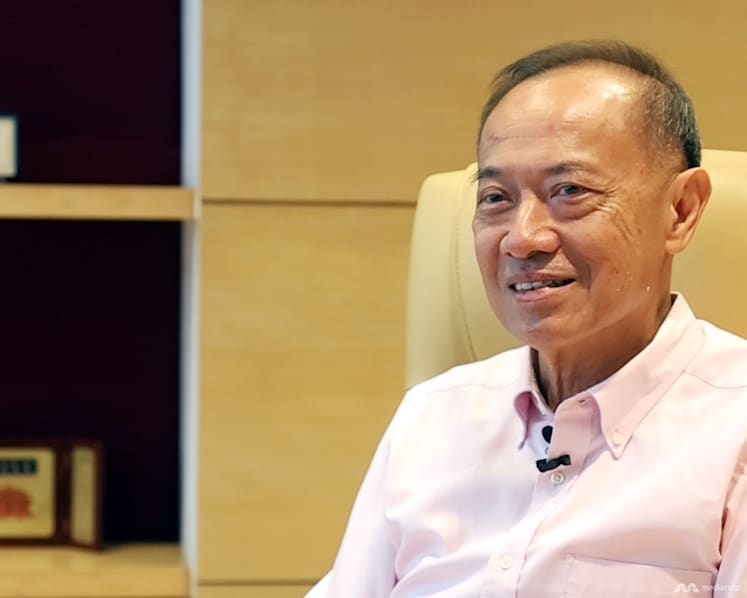
Singapore’s former foreign minister George Yeo said that the US pullback from global institutions would accelerate the emergence of a more fragmented, multipolar world.
In an interview with Shanghai digital news outlet The Paper that was published on Jan 9, Yeo said Washington’s withdrawal was a sign that “a multipolar world is quickly forming and becoming clearer”.
As global power becomes more diffused, regions and major players will be forced to find new balances - from Europe’s relationship with Russia to stability across Asia - while the UN itself will need to adapt to a changing global distribution of power, Yeo said.
Climate governance is another area where Beijing could gain ground.
A US retreat from key UN climate institutions creates space for China to shape agendas around implementation norms, green finance and technology standards, said Bond University’s Ping.
China’s position as the world’s largest emitter of greenhouse gases, and a dominant clean-energy manufacturer, gives it practical leverage, Ping added - allowing it to influence timelines, metrics and South-South cooperation frameworks - which focus on collaboration, financing and technology sharing among developing countries.
But at the same time, Beijing’s influence is constrained by mistrust from advanced economies, as well as its reluctance to accept binding commitments, and competing centres of power such as the European Union, climate-vulnerable coalitions and private-sector standard-setters - making a fragmented, multipolar outcome more likely than a China-led order, Ping said.
Within Asia, the US withdrawals could also open narrower but strategically important lanes, he added.
Washington’s exit from two bodies - the Secretariat of the Pacific Regional Environment Programme (SPREP) and the ReCAAP agreement - risks ceding agenda-setting in Pacific environmental governance and maritime security coordination, said Ping.
SPREP is an intergovernmental organisation based in Samoa charged with protecting and managing the environment and natural resources of the Pacific, while ReCAAP is the first regional multilateral agreement to promote and enhance cooperation against piracy and armed robbery against ships in Asia.
In the Pacific, funding gaps could increase reliance on Chinese climate finance and infrastructure-linked adaptation projects, Ping said.
In maritime Southeast Asia, weakened ReCAAP capacity may open space for Chinese-backed information sharing, training and patrol cooperation framed as capacity-building.
Any Chinese role, he added, would likely lean toward bilateral assistance and technical missions rather than overt multilateral leadership.
From Beijing’s perspective, these choices reflect a deliberate calculus rather than opportunism.
Sun Chenghao, a fellow at Tsinghua University’s Centre for International Security and Strategy, told CNA that China tends to assess multilateral engagement not in terms of high risk or low return, but based on controllability, institutional fairness and alignment with its developmental stage.
Areas that provide public goods, expand shared interests and enhance the voice of developing nations - such as development, infrastructure, public health, food security and selected climate cooperation initiatives - are seen as more attractive.
By contrast, highly security-sensitive and politicised domains are viewed as more likely to generate uncertainty.
CHERRY-PICKING OVER LEADERSHIP
China’s response is guided less by the sheer scale of the US pullback than by whether influence can be exercised gradually, responsibilities shared, and outcomes aligned with Beijing’s development-first priorities - without exposing itself to disproportionate costs or political risk, observed analysts.
That calculus helps explain why China is wary of stepping into high-profile leadership roles that carry heavy expectations or a high risk of blowback.
Even well-supported development projects can backfire, Chong said, also noting that “UN agencies, funders, and even the PRC have all supported development projects that have fallen through, resulting in harms locally and backlash”.
He cited numerous examples - ranging from the World Bank-backed Chad-Cameroon oil pipeline to labour disputes at Chinese-invested mines in Zambia, as well as the troubled Kajaki Dam project supported by the US in Afghanistan.
Such cases underline how involvement “can bring benefits in terms of cooperation” and also “backlash when projects go wrong”, Chong said.
Similar trade-offs loom in security and cyber cooperation, where leadership often comes with heightened scrutiny.
The withdrawal of US support weakens counterterrorism coordination by reducing “intelligence-sharing, training, and funding for capacity-building in fragile states”, said Ping - and could create gaps where China could potentially fill through UN programmes, regional forums or bilateral assistance.
But this can come at a cost - “increased reliance on Chinese systems, reduced transparency, and the diffusion of security practices that prioritise regime stability over civil liberties”.
From Beijing’s perspective, this reinforces the appeal of selective engagement rather than sweeping leadership.
The main draw lies in enhancing China’s institutional influence when “governance vacuums, rule instability, or insufficient public goods provision emerge”, allowing Beijing to steer agendas closer to developing countries’ concerns while avoiding being drawn into bloc confrontation, said Sun of Tsinghua University.
What China seeks, he added, is not unlimited responsibility but to shape outcomes through cooperation, “avoiding the instrumentalisation of global mechanisms by a minority of nations”.
This helps explain why China is likely to be selective about where it steps in, focusing on areas where engagement is seen as sustainable, while remaining cautious about assuming leadership roles that carry broader political, financial or reputational implications, said Sun.
CONSTRAINTS AT HOME
Analysts believe China’s selective approach to global engagement is tied to pressures at home, where economic management and political stability are taking precedence in the coming year over expansive global commitments.
With youth unemployment rates still a concern and spending confidence yet to fully recover, Beijing will be focused on stabilising the economy and boosting domestic consumption this year as it embarks on the 15th Five-Year Plan.
Domestic priorities loom especially large ahead of the Communist Party’s 21st Congress in 2027, a politically-sensitive milestone when leadership continuity and social stability will be closely watched.
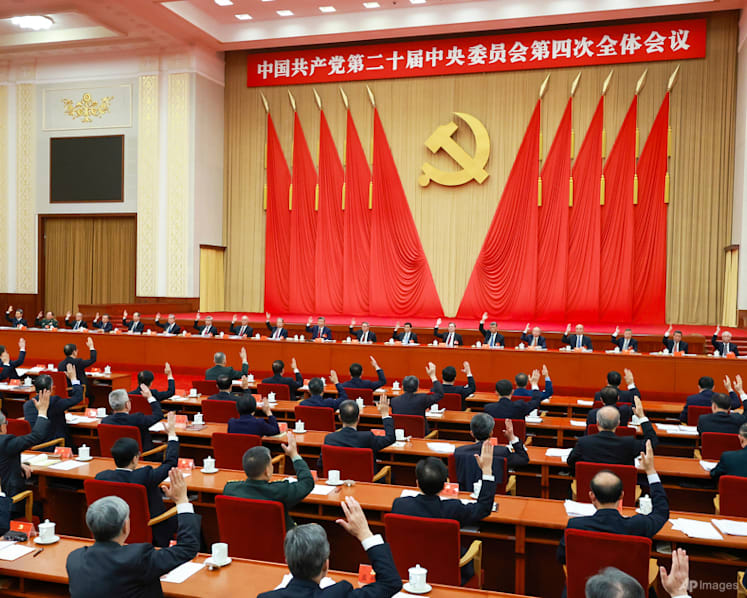
“Domestic priorities - enhancing economic growth quality, managing employment and social expectations, and safeguarding political stability - inevitably elevate the opportunity cost of external commitments”, said Sun of Tsinghua University.
But it will not mean that China is retreating from the international stage altogether.
Instead, emphasis will be on areas where domestic and external interests overlap, Sun added.
“The key lies in delivering public goods where domestic objectives align with external benefits,” he said, pointing to development cooperation, infrastructure connectivity, public health, disaster relief, selective climate and energy initiatives, peacekeeping and humanitarian assistance.
Such engagement, he added, allows China to contribute internationally without overextending itself.
To manage costs and risks, Beijing is also expected to place greater weight on multilateral channels that diffuse responsibility.
China is likely to prioritise “amplifying the efficiency of its contributions through multilateral platforms”, said Sun - particularly through the UN and broadly participatory mechanisms, in order to share burdens rather than assume them alone.
Ping noted that greater involvement can bring trade-offs, including “debt sustainability concerns, perceptions of politicised assistance, and resistance from recipient states seeking strategic autonomy”.
Overreach risks backlash, he added, particularly if Chinese-backed programmes are seen as “undermining transparency, local ownership, or institutional independence”.
Sun said China does assess “the manner and boundaries of its engagement”, but stressed that the starting point “is not avoidance”, rather a desire to prevent the “passive assumption of asymmetric obligations” or being drawn into politicised “traps”.
China will also be wary of filling gaps left by others that could be framed as geopolitical expansion or an institutional challenge, potentially triggering “further stigmatisation and antagonistic mobilisation”, Sun added.
As a result, Beijing is likely to operate within broad multilateral frameworks such as the UN, where responsibilities are shared through established rules and procedures.
“China is not reluctant to shoulder responsibilities,” Sun said, but emphasised that shared responsibility, contribution according to capacity, and adherence to equitable rules reflect a broader concern that global governance should not become a mechanism for a small number of countries to shift costs onto others.
A MULTIPOLAR WORLD, NOT A VACUUM
Chinese leaders have recently repeatedly framed global change through a more multipolar lens, one which sees international players moving away from US dominance towards a more globally-dispersed distribution of power.
Chinese President Xi Jinping has used platforms like meetings linked to the Shanghai Cooperation Organization (SCO), to call for a world marked by “greater balance”.
Chinese Foreign Minister Wang Yi has also warned against what Beijing sees as the politicisation and instrumentalisation of international institutions by “a small number of countries”.
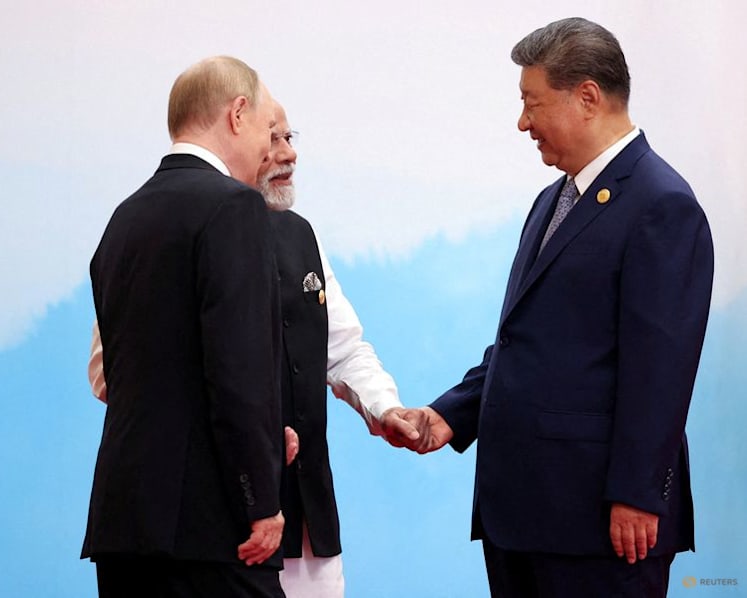
For analysts, that rhetoric offers important clues to how China views the US retreat from global bodies.
Rather than seeking to replace Washington as a new centre of authority, Beijing appears more interested in reshaping the environment in which power is exercised, they said.
China’s emphasis on multipolarity is not about establishing a new hierarchy, but about promoting a more decentralised form of governance that expands the voice of developing countries, said Sun.
This means encouraging broader participation in agenda-setting and rule-making, he said.
At the same time, analysts caution that a more multipolar system might not necessarily produce consensus or stability.
With the US stepping back, China could “have an easier time pushing norms that favour less restraint on state behaviour”, said Chong of NUS - also adding that opposition does not disappear simply because Washington is absent.
“Other states may find reason to oppose or seek demands as well,” Chong said, adding that most international organisations still operate on principles of formal equality - meaning even a louder Chinese voice does not translate into uncontested control.
US pullback is likely to accelerate a shift towards a more contested and uneven global order, analysts said, one which sees China taking on a larger role in some areas, but stopping short of assuming the kind of sweeping leadership once exercised by Washington.
In that sense, Beijing’s vision of multipolarity may be less about filling a vacuum, and more about ensuring no single power dominates it.