







Beverage container return points to be set up within 5-minute walk of most HDB residents
The scheme will launch in April with 1,000 return points across major supermarkets and high-footfall areas. The aim is to double that number within the first year of operations.
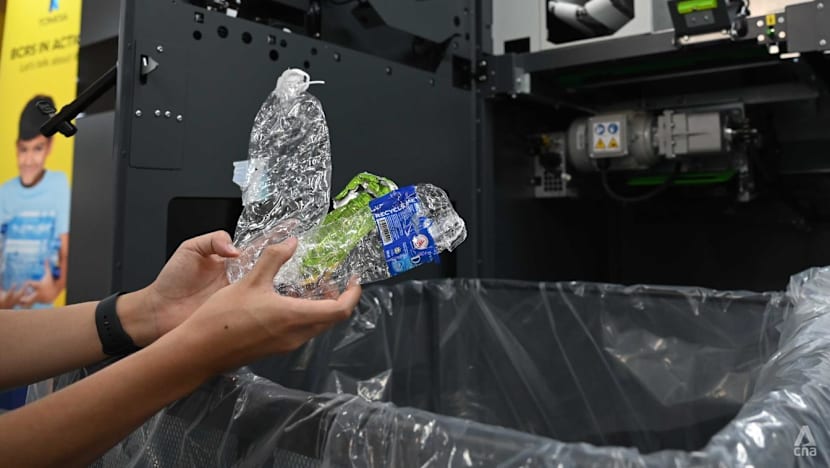
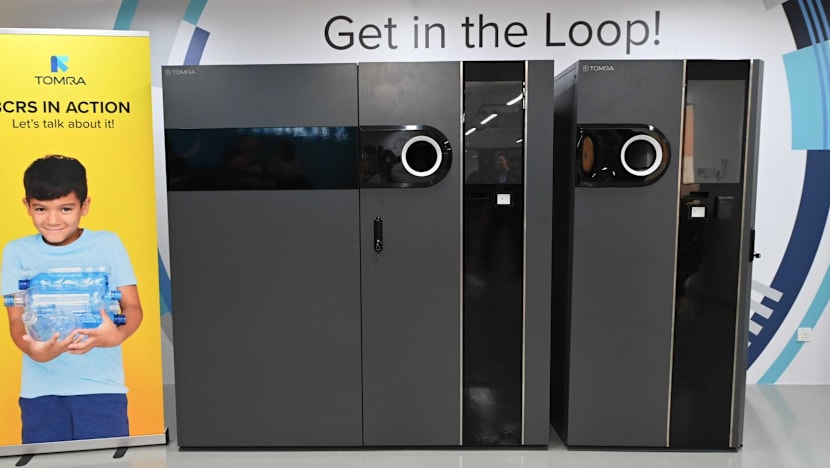
Over 350 of TOMRA's reverse vending machines will be deployed across supermarkets and other public areas in Singapore to collect used beverage containers. (Photo: CNA/Justin Tan)

This audio is generated by an AI tool.


SINGAPORE: Nine in 10 Housing and Development Board (HDB) residents will be within a five-minute walk of a beverage container return point when a new national recycling scheme launches in April, Senior Minister of State for Sustainability and the Environment Janil Puthucheary said on Friday (Jan 30).
About 1,000 return points will be deployed across major supermarkets and high-footfall areas. The aim is to double that number within the first year of operations, said Dr Puthucheary.
Such containers would gradually enter the market during the transition period from Apr 1 to Sep 30, with widespread availability expected by August and September.
"This phased approach helps us optimally place reverse vending machines, making it easier and more convenient for everyone to use them."
Dr Puthucheary was speaking at the opening of TOMRA’s new office in Singapore. The Norwegian company, which designs reverse vending machines, has been appointed as the return point network operator for the central and north-eastern regions of Singapore.
In a press release on Friday, TOMRA said it would install at least 350 reverse vending machines at locations including supermarkets with floor areas larger than 200sqm, HDB void decks and town centres.
Besides deploying the machines, the company will also oversee areas such as site acquisition, cleaning and maintenance, as well as the transportation of collected containers to the processing plant, which will be supported by local service provider Chye Thiam Maintenance.
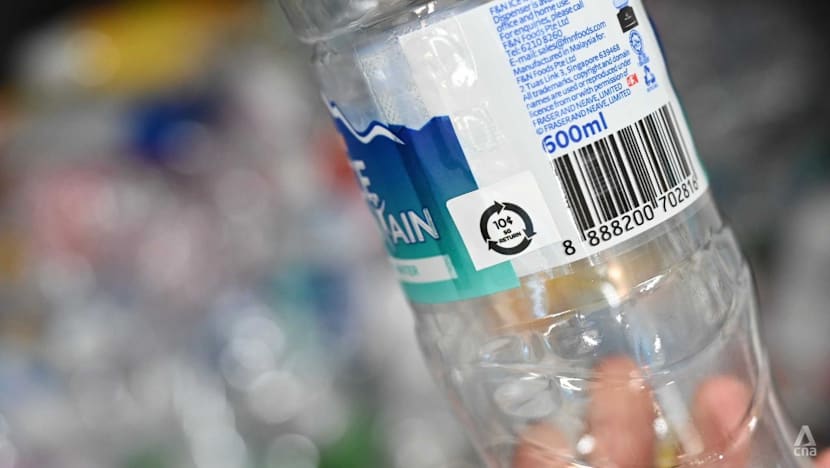
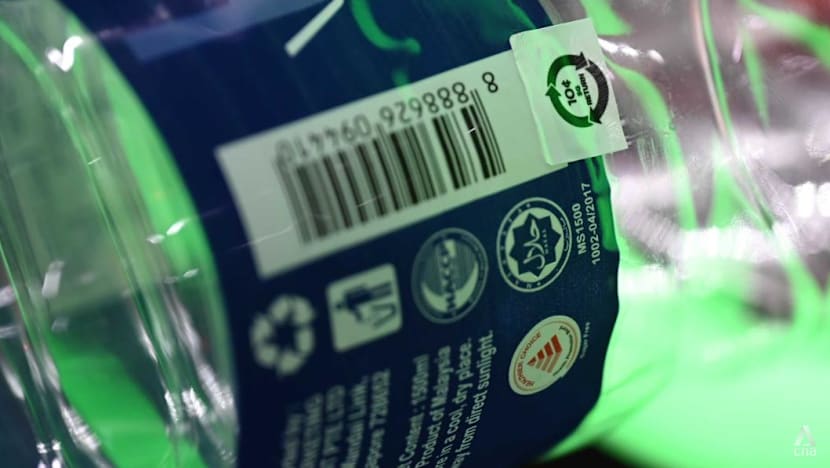
Under the beverage container return scheme, consumers will pay a S$0.10 (US$0.07) refundable deposit when purchasing pre-packaged beverages in plastic bottles or metal cans between 150ml to 3L.
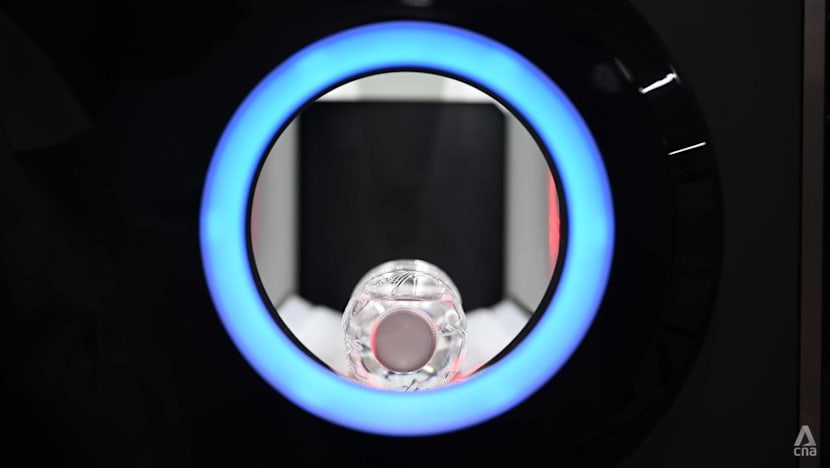
They can reclaim this deposit by returning the empty containers at any of the designated points.
The machines at return points will support all four main languages and offer refunds via EZ-Link cards, including concession cards for seniors and students.
Other digital refund options will be announced closer to the launch, said Dr Puthucheary.
While this new scheme may "result in some inconvenience", he expressed confidence that people in Singapore would adapt.
The scheme is expected to recover more than 16,000 tonnes of material annually from the over 1 billion beverage containers used each year.
BEHAVIOURAL CHANGES
Dr Puthucheary said Singapore’s journey towards sustainability will take time, perseverance, and a collective effort from everyone.
Given the country's limited land and natural resources, Singapore must rethink how it consumes, manages waste, and how it extracts value from what it uses.
"Circularity is a necessity for us to meet our net-zero commitments and secure a liveable future for the next generation," he said, adding that there is an urgent need for this as Singapore's landfill, Semakau, is filling up fast.
"If we do not change the way in which we manage waste today, the environmental, economic, and social costs will be borne by future generations."
He added that while the amount of packaging waste generated in Singapore is growing fast - forming one third of the domestic waste generated each year. Overall recycling rate is low with only around five per cent of plastics being recycled, he noted.
Through the scheme, producers will take responsibility for the beverage containers they place on the market, ensuring that these are collected and properly recycled, he said.
"Over time, the producers will make changes to their supply chains, to their processes, to the materials that they use, knowing that they have some responsibility for recycling the container after it is sold. Consumers, in turn also have a responsibility ... to recycle," he added.
Dr Puthucheary said the successful implementation of the scheme would require the support, understanding, and shared commitment from all stakeholders involved: producers, retailers, recyclers, and consumers.
"There will be teething issues and adjustments along the way, but we can address them with everyone’s support," he said.
"When our scheme is implemented in April, we know it's the first step and adjustments will continue to be needed along the way in order for the scheme to be effective and impactful," he added.
He added that the scheme will spark important changes in behaviour among people in Singapore, such as being more mindful of the packaging they consume, practising good recycling habits, reducing littering and keeping shared spaces clean.
The transition requires adjustment on the part of all producers, he said, noting that they will need to change labels, modify supply chains, and introduce new barcodes and deposit markings.
"These are complex changes, so it is very important and it is very useful that the scheme is producer-led. As a producer-led entity, BCRS Ltd is best placed to take on views from industry, and ensure the scheme is implemented as efficiently, as effectively, as possible, and for it to achieve a significant impact," said Dr Puthucheary.
He added that producers of 80 per cent of beverage containers can change their container designs to meet the scheme's requirements.
Beyond one-off implementation costs, they would incur a fee of around 3 to 4 cents per container, which would cover the logistics to collect and recycle their containers.
This is comparable to fees in other jurisdictions, said Dr Puthucheary.
Some may need to place a sticker on their containers to comply with the scheme, and the cost will vary depending on the quantity of containers and how their supply chains are organised.
Some can do so for about 3 cents per container if done at source overseas and at scale, bringing the total cost per container to around 6 to 7 cents.
For small quantities done locally, the cost would be higher.
"We expect producers to work with BCRS Ltd to lower the costs over time by optimising their operations," said the senior minister of state.
To help businesses, the government has introduced a transition grant of S$2,500.
"We will be flexible and supportive to producers who reach out to BCRS Ltd so that we can help address their concerns," he said.
The government will work closely with all stakeholders to build understanding and support for the scheme in the coming weeks, he said.
From February, it will be reaching out to grassroots organisations, schools, youth groups, non-governmental organisations, and corporate partners to share how the scheme works and why it matters.
He added that they are already in discussions with other key stakeholders, such as coffee shops and smaller retailers, and will work to help them become familiar with the scheme and address concerns they have about implementation.
"At its core, the (beverage container recycling scheme) is not simply a scheme to collect beverage containers. It is a call for each of us to change our habits and behaviours," he said.




