Diesel surges past S$4 a litre: Singapore businesses caught between rising costs and reluctant customers
Some companies have introduced surcharges to cushion the blow. But others see pushback from customers.
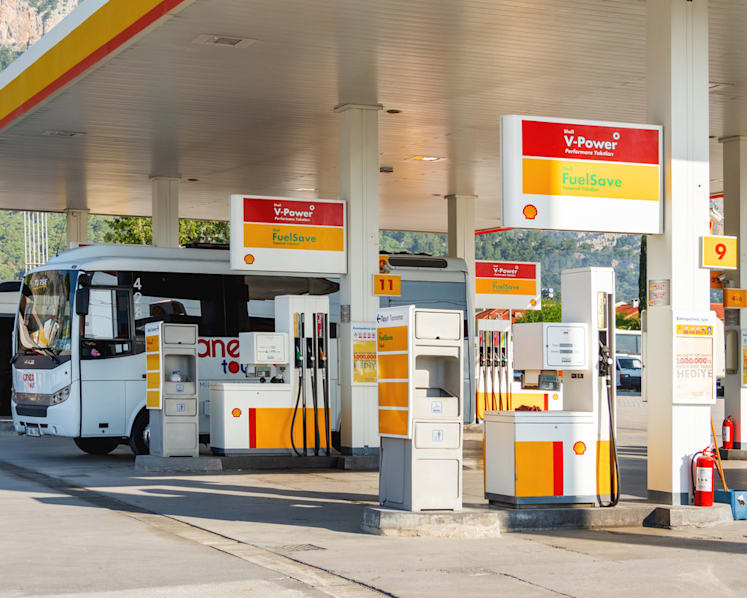
A bus at a Shell pump station. (Photo: iStock/Konstantin Aksenov)

This audio is generated by an AI tool.


SINGAPORE: Just this month alone, Mr Farid Khan, CEO of Singapore Cab Booking, has seen 20 freelance minibus drivers stop accepting jobs with the company, unable to cope with rising diesel prices.
They could no longer afford the rental costs that had risen in tandem with diesel prices, and returned their minibuses. Some quit or switched to driving taxis, he said.
"In my 20 years' experience in this industry, I never saw the fuel go up so high … We are not really prepared to face this," said Mr Khan.
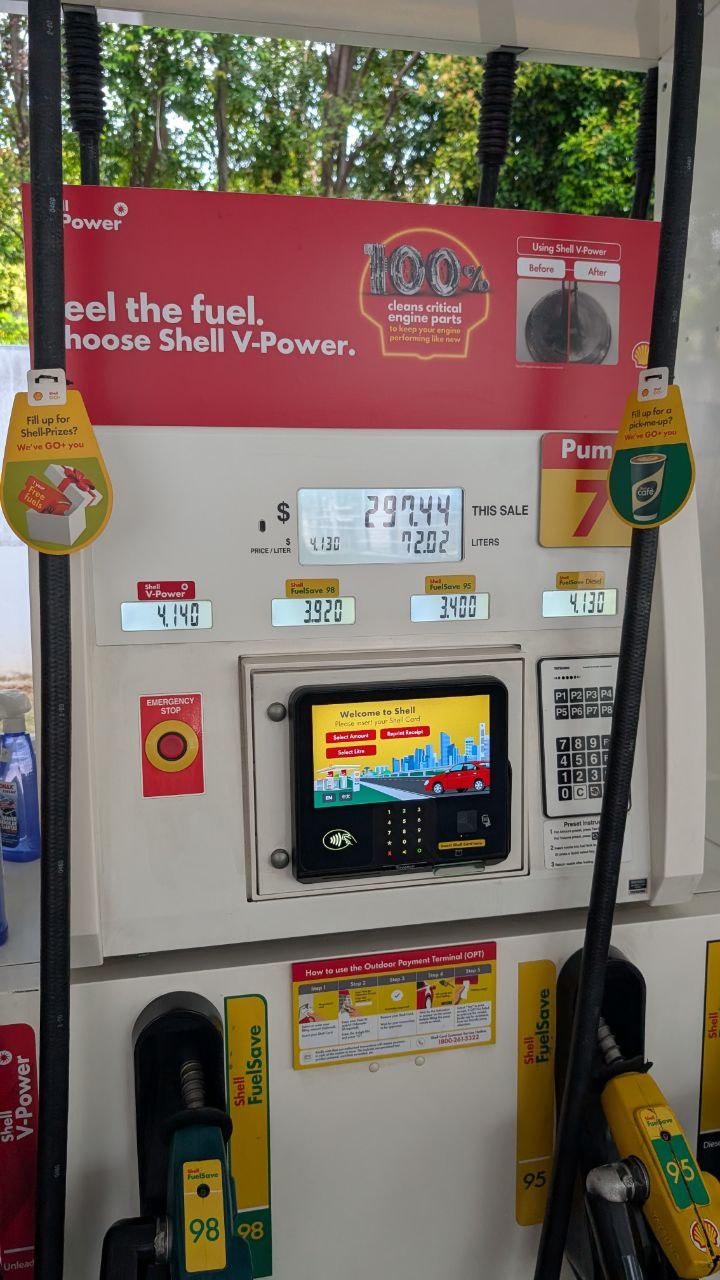
Diesel prices have surged past S$4 a litre, outpacing petrol. Checks on price comparison app Price Kaki on Monday (Mar 30) show that Shell, Esso and Caltex were charging S$4.13 per litre for diesel, SPC S$3.92 and Sinopec S$3.72.
By comparison, 95-octane petrol prices range from S$3.40 to S$3.42.
As recently as late February, diesel prices were significantly lower, with the major pumps charging between S$2.57 and S$2.66.
The surge in diesel prices, driven by a disruption in crude oil supply due to the ongoing US-Israel war with Iran, has pushed up operating costs for businesses ranging from logistics providers to last-mile delivery firms.
Diesel sits within a tighter supply pool and is more exposed to global shipping routes. In contrast, petrol prices are capped by higher inventories and a more flexible supply. "That means when there’s a shock, diesel feels it immediately," said Mr Nithin Prakash, a commodity market analyst for oil at Rystad Energy.
Several companies CNA spoke to have introduced surcharges to cushion the blow, while others highlighted pushback from customers.
"STUCK IN THE MIDDLE"
For Singapore Cab Booking, diesel expenses have almost doubled and operating costs have risen by 40 to 60 per cent per month, said Mr Khan.
The company, which offers maxicab and bus charter services to corporate clients, managed to convince some customers to pay S$5 more per trip as a surcharge. But others say their finances are stretched.
"Customers sound very unwilling to pay for the price hike. They expect us to absorb," said Mr Khan, adding that he is worried customers may turn to competitors if he raises prices across the board.
With some customers, he cannot force through a price increase due to existing contracts.
"We cannot increase the price because the contract is already signed for one or two years. So we are stuck in the middle," he said.
Mr Khan said the current situation reminded him of the COVID-19 pandemic, when companies were similarly hit hard. If the situation persists, he may be forced to cut costs, including selling part of his 16-vehicle fleet or retrenching staff.
"We are hoping that the government steps in and advises us on how to absorb the current situation," said Mr Khan.
The situation is less dire for private bus operator Westpoint Transit, though its diesel expenses have risen by about 150 per cent on average, pushing operating costs up 15 to 20 per cent this month.
"Aside from the cost factor impacting our margins, everything else remains status quo, as our customers regard daily staff transportation as vital to their continued operations," said director Lionel Lee. The company operates 65 buses of various sizes.
Westpoint Transit reached out to customers earlier this month to discuss fuel surcharges, with a proportion agreeing to a 5 to 15 per cent increase, said Mr Lee.
LOGISTICS SECTOR UNDER STRAIN
The logistics sector is also feeling the pressure, especially companies with significant road transport operations.
As fuel is a major operating cost, sustained increases can tighten margins and weigh on overall expenses, said Mr Dave Ng, chairman of the Singapore Logistics Association.
The impact varies across companies depending on their business models and contract structures, he added.
SB Express Logistics, which runs more than 60 vehicles daily, said its diesel expenses have jumped over 110 per cent.
"The spike in fuel prices has led to a noticeable rise in total delivery costs, in some cases increasing transportation expenses by more than double compared to previous months," said director Sebastian Lee.
The firm introduced a temporary surcharge of about S$2 per delivery drop to offset higher fuel costs for some customers. For larger clients, adjustments will be applied based on a percentage aligned with fuel fluctuations, he added.
But the remaining customers have rejected requests for higher charges. "We have no choice but to absorb the cost," said Mr Lee, who is also hoping the government will step in to assist local logistics companies.

Last-mile delivery service provider Channel Management Systems has seen a 50 per cent increase in diesel costs since January. Its boss, Mr Henry Ong, said the company is unable to pass on higher expenses due to fixed contract rates, though he expects to eventually have to do so.
SingPost told CNA it is closely monitoring global energy prices and their impact on postal and logistics costs.
"At present, we have no immediate plans to introduce a fuel surcharge, but we are keeping a close watch on the situation should current market conditions persist," a spokesperson said.
LOOKING AT ALTERNATIVES
The companies CNA spoke to are taking steps to manage the higher costs.
Westpoint Transit is in active discussions with fuel suppliers and expects prices to hover around current elevated levels over the next six to eight weeks, given that fuel costs are largely driven by conditions in the Middle East, said Mr Lee.
The company is working with diesel suppliers, fleet drivers and customers to optimise bus capacity relative to ridership, and is ramping up the use of electric buses within its fleet.
Singapore Logistics Association's Mr Ng said companies are managing through operational adjustments such as route optimisation and tighter cost controls. Over the longer term, some are exploring alternative energy options including electric vehicles.
Not all operators can easily make the switch, however. SB Express Logistics' Mr Lee said: "At present, there is nothing we can do."
The company anticipates fuel prices will remain volatile given ongoing geopolitical uncertainties, and is preparing by maintaining flexible pricing mechanisms and working with customers on sustainable price adjustments.
Singapore Cab Booking is similarly constrained. Electric vehicles are not a viable option for now, said Mr Khan.
"We are commercial vehicles, mostly using diesel. We cannot buy (electric vehicles) overnight."