







EV charger usage at HDB car parks nearly doubles to 18% in three months
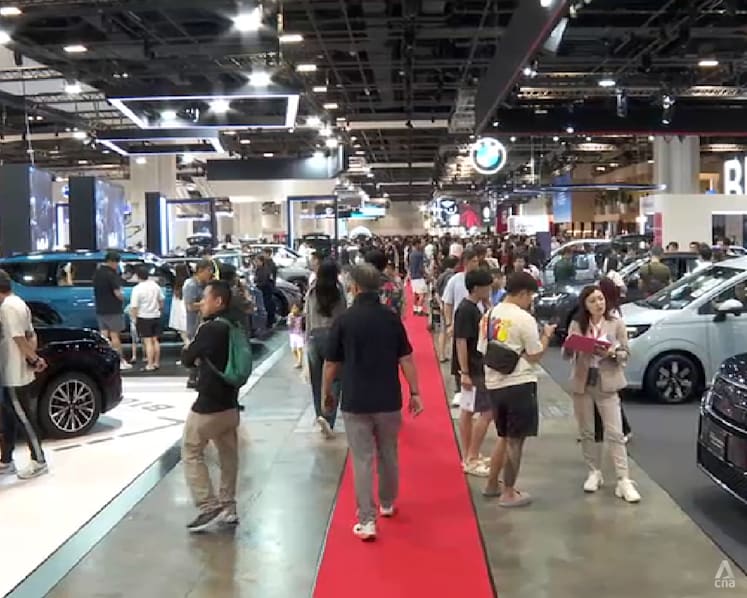
Electric vehicles have been growing in popularity in Singapore, making up 43 per cent of new car registrations in the first nine months of 2025.
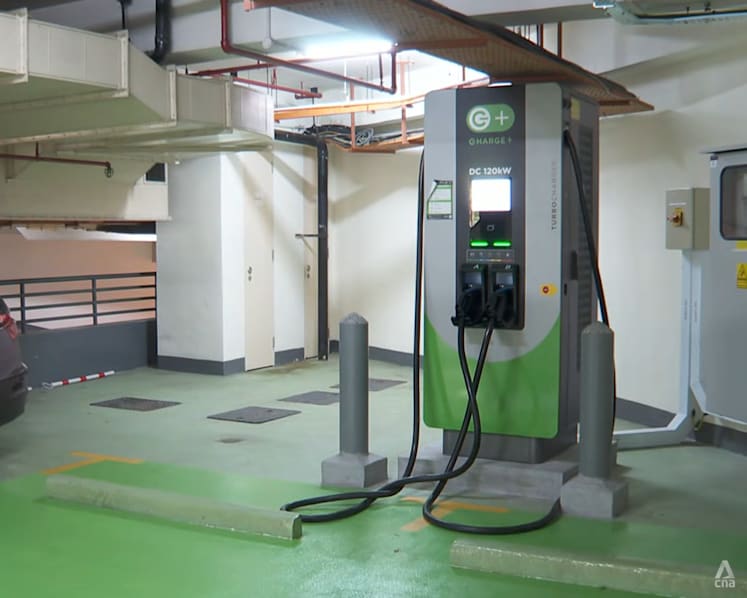
An electric vehicle charger at a Housing and Development Board carpark.

This audio is generated by an AI tool.




SINGAPORE: The use of electric vehicle (EV) chargers at Housing and Development Board (HDB) car parks has nearly doubled in just the past three months, according to the Land Transport Authority (LTA).
About 18 per cent of EV chargers at HDB car parks are now in use at any given time, up from around 10 per cent in September last year.
Despite the rise, operators say the current demand does not yet justify a rapid expansion of charging infrastructure.
As of the end of 2025, EV charging points have been deployed in 1,820 HDB car parks, covering more than 90 per cent of all such car parks nationwide, said an LTA spokesperson in a statement.
The remaining car parks without chargers are largely affected by technical constraints such as insufficient power supply or space limitations, or because residents prefer to install chargers at a later stage, noted the spokesperson.
He added that EV drivers continue to have convenient access to nearby charging points.
Plans are also in place to deploy more chargers, including fast chargers, this year.





OVER 25,000 CHARGING STATIONS
With nine in 10 HDB car parks now equipped with EV chargers – on top of those in condominiums and commercial buildings – Singapore has more than 25,000 charging stations in total.
About half of these are open to the public.
EVs have been growing in popularity in Singapore, making up 43 per cent of new car registrations in the first nine months of last year.
Mr Freddie Chew, general manager of ComfortDelGro Engie, said Singapore’s charging capacity remains sufficient for now.
“At this moment, capacity is definitely enough, because Singapore is running at every one charger supporting only three EVs,” he pointed out.
“But … we are aware that there are some countries running at one charger for every 11 EVs.”
However, he noted that scaling up too quickly may not be sustainable for operators even as utilisation rates rise.
Some EV drivers may continue facing difficulties in certain locations as well, particularly in older buildings that were not designed to support EV charging due to limited power capacity.
To address this, operators like Charge+ are exploring new solutions aimed at tackling the lack of power supply.
Charge+ CEO Goh Chee Kiong said the company is focusing on software-driven load management systems that can handle a building’s changing power needs.
(This is) so that we can adjust to the varying power supply and demand in the building, and to be able to install even more EV chargers in the same building,” he added.
CROSS-ORDER OPTIONS
Beyond Singapore, some major operators have also rolled out cross-border charging options.
Charge+, ComfortDelGro Engie and SP Mobility allow EV drivers to access charging networks in Malaysia.
SP Mobility’s managing director Dean Cher said the feature helps address range anxiety for drivers.
“They can locate where the chargers are on their journey. They can plan and they can charge using the SP app, so I think this gives a lot of confidence to Singaporeans because we love going to Malaysia,” he added.
“This… allows users to adopt without worrying (whether this would) impact their current lifestyle.”
Operators said they expect the EV charging network to become more sustainable in the coming years as Certificate of Entitlement (COE) quotas increase, leading to more EVs on the road.




