







HDB resale prices dip 0.1% in Q1, in line with estimates; private home prices up 0.9%
The fall in HDB resale prices could be due to slower buying sentiment, says an analyst.
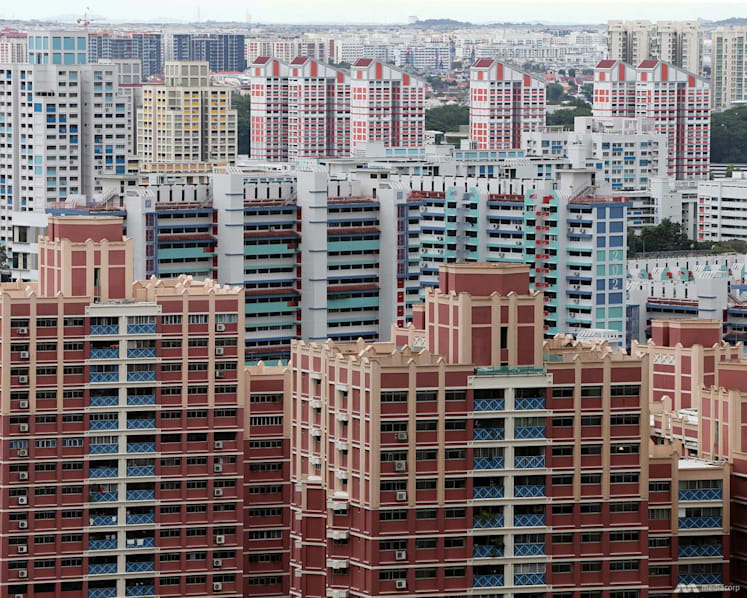
HDB flats in Singapore. (File photo: TODAY/Ooi Boon Keong)

This audio is generated by an AI tool.


SINGAPORE: Resale prices for public housing fell by 0.1 per cent in the first quarter of 2026, matching earlier flash estimates and marking the first decline since Q2 2019.
This comes on the back of five consecutive quarters of slower or no price growth, the Housing and Development Board (HDB) said on Friday (Apr 24).
Meanwhile, private residential property prices rose by 0.9 per cent in the first quarter, up from 0.6 per cent in the previous quarter, and above the Urban Redevelopment Authority’s (URA) earlier flash estimate of 0.3 per cent.
The fall in HDB resale prices could be due to slower buying sentiment, said Ms Christine Sun, chief researcher and strategist of Realion (OrangeTee & ETC) Group, adding that there was a "substantial increase" in the supply of public housing flats.





There are also more resale flats reaching the minimum occupation period that are being listed for resale, she noted.
"Supply is expected to rise substantially over the next few years, exerting downward pressure on prices," said Ms Sun.
One example is the upcoming Build-to-Order (BTO) exercise in June, with about 6,900 new flats in Ang Mo Kio, Bishan, Bukit Merah, Sembawang and Woodlands on offer.
Should the conflict in the Middle East escalate, it will lead to higher interest rates and increased business costs, as well as impact employment, all of which would "dampen consumer confidence and housing affordability in the HDB resale market", said Ms Sun.
"Given the macroeconomic uncertainties, we expect price growth to remain subdued."
While HDB resale transaction volume rose 19.6 per cent in the first quarter to 6,285 cases, up from 5,256 in the previous quarter, Huttons senior director of data analytics Lee Sze Teck noted that "this was likely to be seasonal".
This is because the first quarter of the year usually tends to be busier than the fourth quarter.
HDB resale transactions were also down 4.6 per cent in Q1 compared with the same period in 2025.
This was the lowest first quarter volume since 2021, said Mr Lee, adding that the "HDB resale market may be heading for a soft landing in 2026".
HDB data also showed that median resale prices for five-room flats in three towns - Toa Payoh, Ang Mo Kio and Bukit Merah - all crossed the S$1 million (US$780,000) mark. Likewise, the median resale prices for four-room flats reached S$1 million for two towns, Queenstown and Toa Payoh.
PRIVATE HOME PRICES
URA data showed that prices of non-landed properties rose by 1.3 per cent in Q1, compared with a 0.2 per cent fall in the previous quarter.
By region, prices of non-landed properties in the Core Central Region increased by 0.6 per cent, rebounding from the 3.5 per cent decrease in the preceding quarter.
In relation to the Rest of Central Region (RCR), such prices rose by 0.8 per cent, compared with the 0.7 per cent increase in the previous quarter.
Meanwhile, the prices in Outside Central Region (OCR) increased by 2.2 per cent, compared with the 1 per cent increase in the previous quarter.
Prices of landed properties fell by 0.4 per cent, a reverse from the 3.4 per cent increase in the previous quarter.
"The steep price appreciation over the past year has brought landed prices to new highs, weighing on affordability and tempering buyer demand," said Wong Shanting, director and head of research at Newmark.
Ms Wong noted that non-landed property prices in the OCR "rose the fastest" this quarter on the back of benchmark pricing at recent launches such as Pinery Residences.
The Tampines project achieved a "benchmark price of S$2,547 psf", she said.
She added that ongoing Middle East conflict could "cast a shadow over housing demand, with downside risks intensifying if the situation escalates", and higher land and construction costs are likely to drive new home prices higher in the next six to 12 months.
However, the moderation of overall housing demand in Q1 "should not be read as a sign of market weakness".
SRI's head of research and data analytics, Mohan Sandrasegeran, echoed similar sentiments.
"Recent inflation data indicates that price pressures may broaden in the coming months, driven by higher energy costs and supply chain disruptions linked to ongoing geopolitical tensions," he said.
"Overall, we expect private residential property prices to grow at a measured pace of around 2.5 per cent to 3.5 per cent for the full year, reflecting a market that is transitioning towards a more sustainable growth phase."




