







'This family means a lot to me': The Night Cafe that offers rough sleepers more than a meal
The Night Cafe at Waterloo Street has become a place where rough sleepers begin rebuilding their lives.
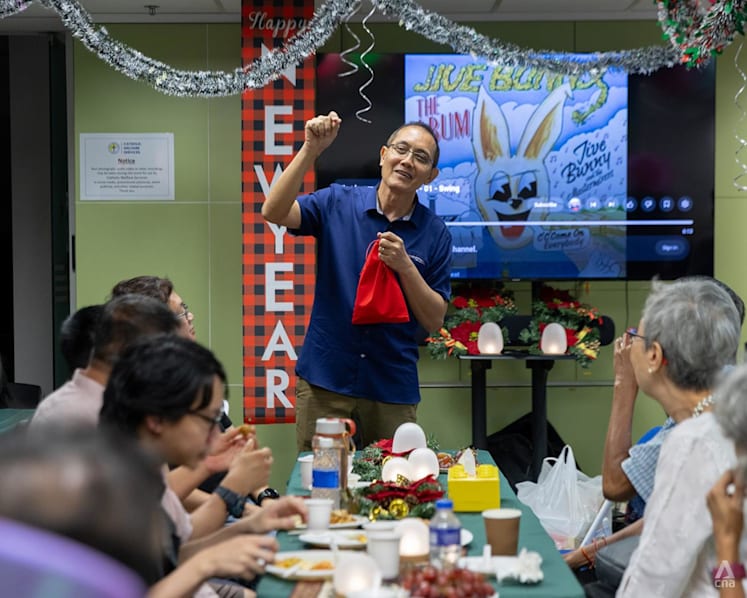
Catholic Welfare Services manager of shelters and programmes Brian Monteiro during a Night Cafe Christmas party at CWS on Dec 9, 2025. (Photo: CNA/Ili Mansor)

This audio is generated by an AI tool.


SINGAPORE: Bernie remembers the year she saw four supermoons in the night sky while rough sleeping on the streets of Singapore.
Between 2023 and 2024, she had no home to return to. She slept outside, initially at Marina Bay, then settling at a downtown university campus with quieter surroundings.
“When I’m outside, I really appreciate nature, because that is where you see the beautiful wonders that’s happening,” said the 71-year-old, who wanted to be identified only by her first name.
Bernie used to have shelter and stability – a flat she rented with her mother and a job as a secretary “earning big bucks”. By her reckoning, she had a good life.





That changed when she lost her job in the 2010s. She started working part-time, but eventually, that wasn’t enough to pay the rent.
When they lost their home, a close relative took in her mother, but Bernie was left on her own due to a family dispute she declined to elaborate on.
“I left because no one wants to take me,” she said.
She drifted between budget hotels at first, but once her savings ran low, she turned to the streets for the first time in her late 60s.
The supermoons were among Bernie’s brighter memories of rough sleeping, along with the times strangers went out of their way to give her food or a blanket, or expressed concern about her.
Others were less kind. She remembers parents passing by and warning their children: “When you grow up, you don’t listen, you got no money, you’re going to sleep in the streets like her.”
She would wake at 5.30am, wash up in a public toilet and go to her part-time job. She took showers at fitness centres and washed her clothes at a laundromat. She kept what she could fit into two bags she took wherever she went, and stored the rest of her belongings with a friend.
Mostly, she kept to herself. “People have been very disappointing when you ask for help and no help came,” she said.
“Then out of nowhere, Brian and his team came … They built up a confidence in me that I can open up to this team of people.”
Mr Brian Monteiro is the manager of shelters and programmes at Catholic Welfare Services (CWS). Since 2014, he has led CWS’ night walks to befriend and help those living on the streets.
When the reticent Bernie first encountered CWS volunteers during one of these night walks in January 2024, she closed herself off: “I just didn’t want to talk to any one of them.”
Over a month of check-ins, she gradually warmed to them and started to open up about her life. In April 2024, she was persuaded to visit CWS’ Night Cafe at Waterloo Street, which was newly reopened after a lengthy hiatus due to the COVID-19 pandemic.
There, in a bright, clean and air-conditioned room, Bernie met other rough sleepers.
She joined them at a table with the volunteers, where they dug into packets of freshly cooked donated food.
On Tuesdays, they get bento sets courtesy of the Grand Pacific Hotel, and on Wednesdays, patrons enjoy tze char meals prepared by a generous restaurant owner.
This year, CWS started a third session on Thursdays, with a “long-term goal of operating the cafe every weeknight”, not only to provide meals, but also “companionship and a sense of belonging”, the charity said in its annual report.
As the patrons ate, they opened up about their personal stories.
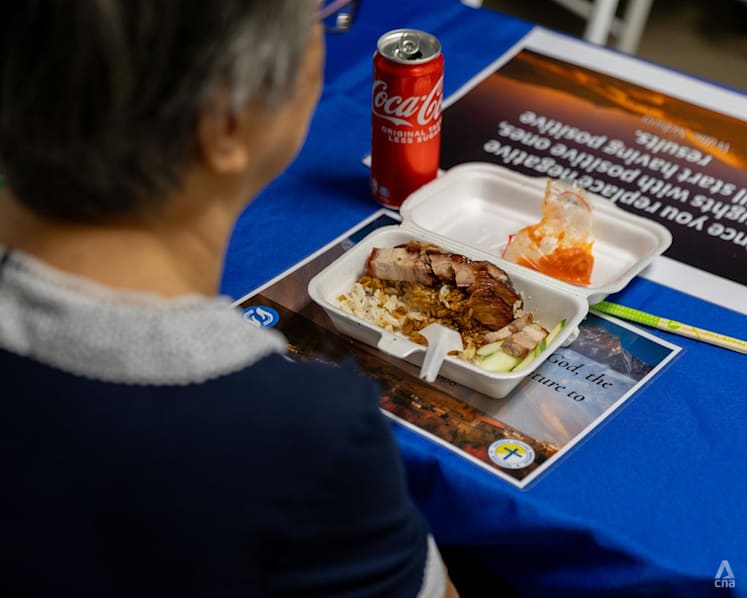
Bernie has not stopped returning to the Night Cafe since. From a hesitant visitor, she is now a cafe fixture who even helps to pick up and deliver the meals.
“What kept me coming back each time? I think because of the friendships that I made here. They made me feel very welcome,” said Bernie.
“There’s no distinction or class between us. We are all sleeping outside, you see … so we are just friends only. Friends that come together to have a good meal, to laugh, to talk, to get out.”
Earlier this year, Bernie’s mother passed away before she got a chance to see the older woman one last time and say goodbye. After the funeral, Bernie returned to the Night Cafe to mourn with her friends.
“They were the ones that consoled me and kept me company,” she said. “This family means a lot to me, and whatever I have, I will share with them.”
ROUGH SLEEPERS AMONG US
The Night Cafe does not open overnight and is not a shelter, so those who visit do not spend the night there.
For rough sleepers who need a place to sleep, there are transitional shelters funded by the Ministry of Social and Family Development (MSF) and Safe Sound Sleeping Places (S3Ps) run by community groups instead.
But not all of them are ready to move from the streets directly into a shelter.
Since its post-COVID reopening last year, the Night Cafe has been offering its patrons a warm meal, a community of friendly faces, as well as a stepping stone to more stable housing and financial arrangements through the help of community volunteers and social workers.
MSF distinguishes between homeless individuals – those who do not have access to adequate housing – and rough sleepers – those who sleep in public spaces, regardless of their housing circumstances.
The ministry recorded 530 rough sleepers during its street count on Nov 11, 2022. This followed pioneering street counts by a team at the Lee Kuan Yew School of Public Policy, which counted 921 to 1,050 people on the streets in 2019, and 616 in 2021.
Rough sleeping is a complex phenomenon involving a mix of issues, according to Mr Eric Chua, Senior Parliamentary Secretary for Social and Family Development and Law.
“Not all rough sleepers are actually homeless. The common reasons for rough sleeping include relationship problems – for instance, disputes with family members, mental health issues,” he said.
Some have difficulty securing permanent housing because of employment or financial issues.
“Sometimes it’s personal preference as well. Some of the rough sleepers prefer to be with their friends in the streets, or they prefer to be on the streets to be near their workplace.”
The demographics of rough sleepers have not changed much over time, and the typical profile remains male, middle-aged to older and Chinese, added Mr Chua.
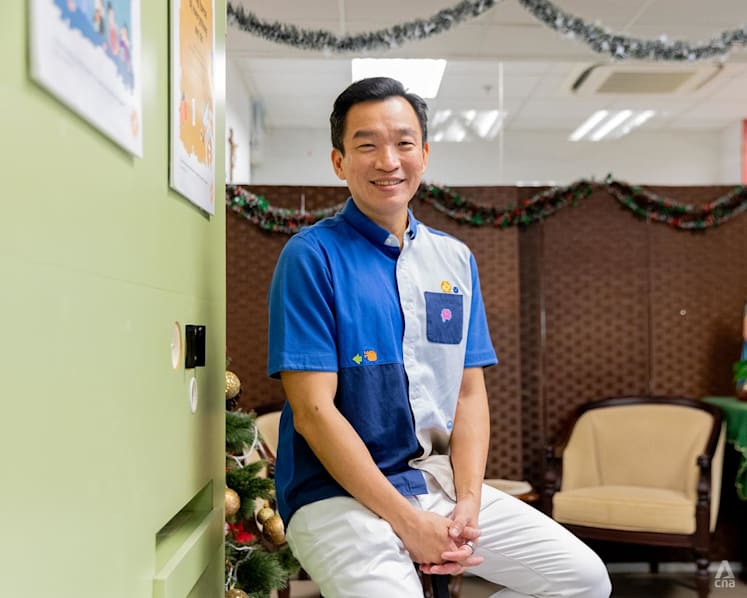
MSF’s outreach to rough sleepers is complemented by about 80 community partners in its Partners Engaging and Empowering Rough Sleepers (PEERS) Network, including CWS.
These efforts are shifting towards more proactive, upstream interventions for rough sleepers, according to Mr Chua. They include places like the Night Cafe, which provides a safe and welcoming space for social connection.
“The core of this stream of work in rough sleeper engagement really is about relationship-building,” he said.
“It makes it so much easier for social workers, for community volunteers, to be able to then have a conversation with the rough sleepers, build trust with them, understand their difficulties, appreciate their challenges, appreciate their strengths at the same time as well.”
MAKING A FAMILY
When CWS began conducting night walks in 2014, the team learnt the streets were no place for an in-depth conversation with those who needed their help.
They searched for a solution and in 2016 found the dining hall at St Vincent Home on Waterloo Street, a home for seniors, to be an ideal place for rough sleepers to find respite.
“Initially, we wanted a place for them to have a short respite for a few hours in the evening, to have a decent meal, to maybe watch TV, (have) some semblance of a normal life,” said Mr Thomas Tan, chair of CWS’ night missions and shelters committee.
“Because that’s the dignity of a person. No matter what circumstances you are in, you should be able to enjoy a decent roof over your head and a decent meal.”
Rough sleepers could also do their laundry and take a shower on the premises.
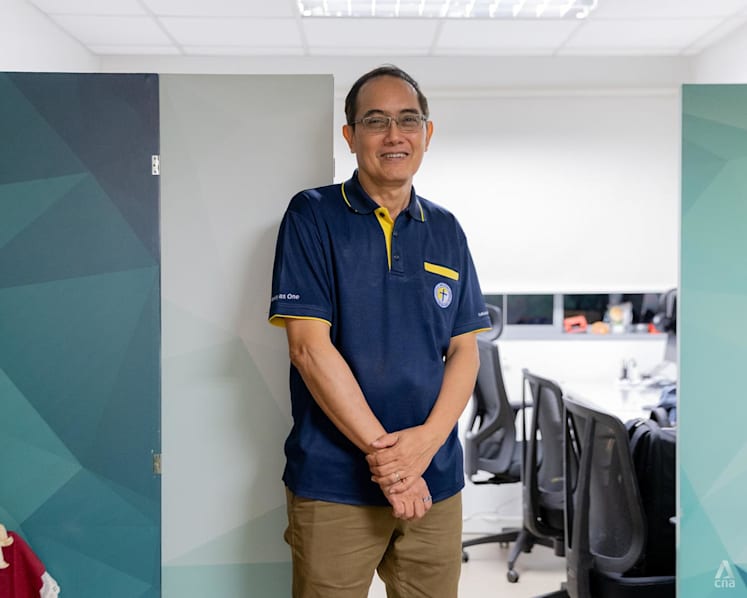
“Very soon, a very nice kampung spirit atmosphere was formed, where the elderly and the volunteers and the rough sleepers could sit at a table and play games together, and spend that one, two hours together,” said Mr Monteiro.
At its peak, the Night Cafe opened seven nights a week. But it closed indefinitely in 2020 during the COVID-19 pandemic.
Last year, a decade since CWS began its street outreach to rough sleepers, the team restarted the Night Cafe, gradually extending opening hours to three nights a week.
On a typical night, about a dozen beneficiaries – current and former rough sleepers – have dinner with CWS staff and volunteers, followed by a karaoke session or a screening of a movie or television series. The visitors are free to leave at any time, or to linger and talk.
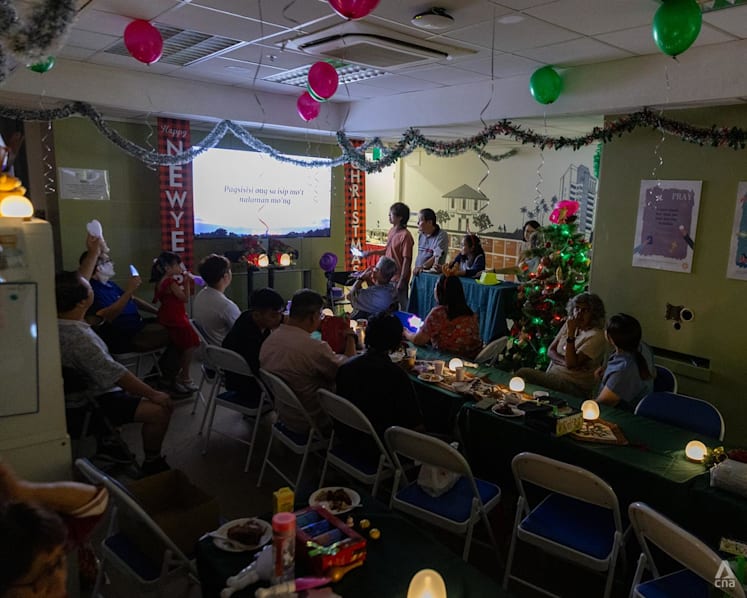
The community has grown to become a family. “This is what they are actually missing,” said Mr Monteiro.
“Many of them are not able to ever, ever go back to their families. Many of them have forgotten (their families), or (there) still may be a pain in them when they remember family ties.
“By coming here every week … and sitting down together and having a meal together, they have grown to know each other. Because they will share as how we share in families – our pains, our struggles, our joys, what happened during the day.
“Through that they have found that they can depend on each other for support, and that is what is happening here today,” he said.

“JUST WALK THROUGH THOSE DOORS”
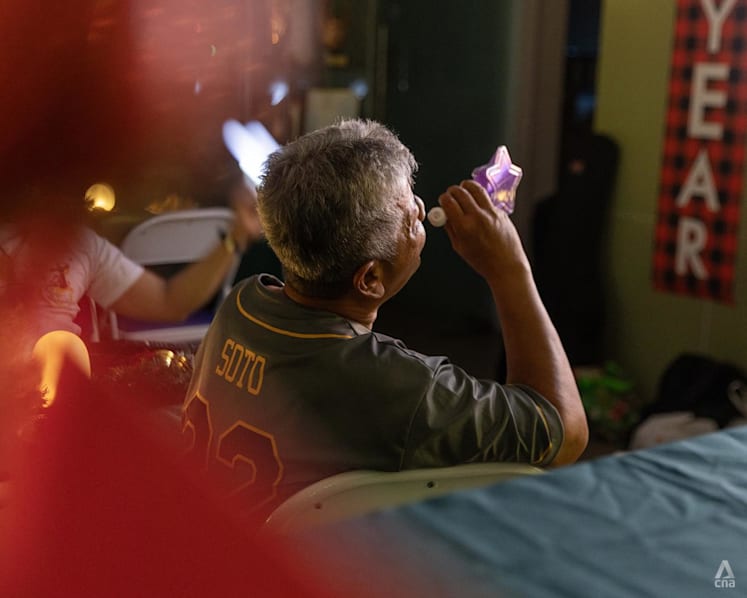
Another regular at the Night Cafe is Hassan, who also wanted to be known only by his first name. The 62-year-old has an impish smile that’s brightest when he’s egging on his friends to sing after dinner.
After his parents died and his brother sold the family home, Hassan slept on the streets for about 10 years. He spent many nights on a bench at a shopping mall along Raffles Boulevard.
When Hassan left his home, he lost his National Registration Identity Card (NRIC), which he needed to verify his identity and get paid at his cleaning job. Without an NRIC, he also wasn’t able to make a bank account to receive government assistance.
He started coming to the Night Cafe in June 2024 and was a regular for eight months before telling the volunteers about how he had been living and asking for help.
“I was taken aback, because this was his situation for quite a number of years,” said Mr Monteiro. “I asked him: ‘Then you come to the cafe once a week and you have your dinner. What about the next six days? Where do you get your meals from?’
“And he told me that sometimes his friends would give him something, or he would beg, and other times just go through the day without a meal.”
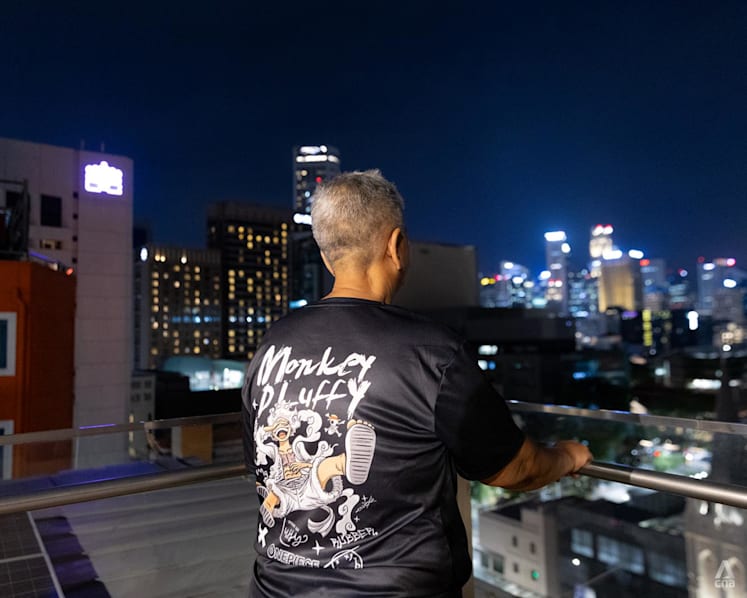
The first thing CWS helped Hassan to do was get a waiver for his NRIC replacement fee. With the new NRIC, they helped him set up his bank account and Singpass, and then find a job.
“The day when he got his IC and he walked through those doors, and he took it out from his wallet and he proudly showed it to us, we were all so overjoyed,” recalled Mr Monteiro.
“After that, we noticed whenever he walked through those doors on Tuesdays, he was no longer slouching and dragging his feet.”
Hassan was walking with his head held high, and even his attire seemed to have changed. “He was wearing it with so much dignity and pride,” said Mr Monteiro.
For rough sleepers like Hassan to feel comfortable asking for help at the Night Cafe, they must be willing to walk through the doors in the first place.
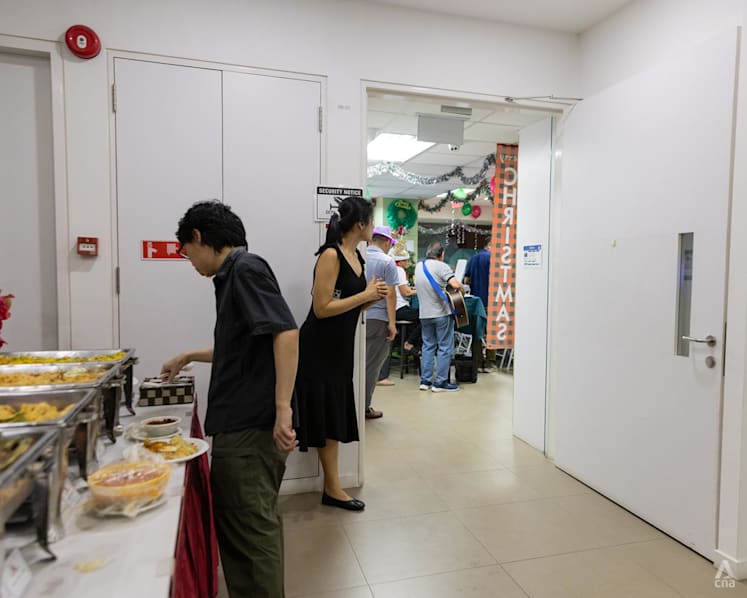
This is why visitors do not have to produce their NRIC or fill in any forms to enter, and there are no intimidating security guards, Mr Monteiro pointed out.
“Here, you just walk through those doors and join us,” he said.
This concept is beginning to resonate elsewhere in Singapore.
Earlier this year, CWS started running another Night Cafe with New Hope Community Services at a public rental pilot for singles located in the former Anderson Junior College hostel on Ang Mo Kio Avenue 8.
Toa Payoh Methodist Church runs a similar programme known as the Welcome Table.
For those curious about setting up a Night Cafe for rough sleepers, CWS’ Mr Tan advised: “Don’t try to do it on your own.”
“Have somebody hold your hand for the beginning, then you try and maybe do better than what people are offering,” he said.
It’s important to find a Night Cafe location away from “prying eyes” where rough sleepers may feel uncomfortable. For example, a coffee shop would be unsuitable as it is too open, he said.
The most important thing is to keep in mind the “end game” – to find permanent housing for the beneficiaries. This requires social workers to get involved, said Mr Tan.

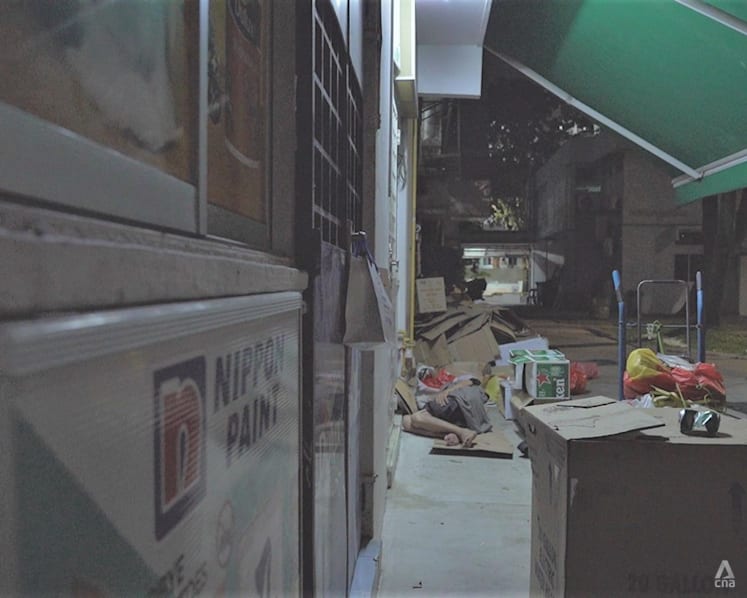
FINDING A HOME
Like Hassan, at first, Bernie would get her fill of food and friendship at the Night Cafe only to return to the streets to sleep immediately afterwards. This lasted for more than three months.
Not knowing who to ask for help was part of the reason why. She also resisted going into a shelter because of rumours she had heard about the rules and curfews at these facilities.
“I had a feeling that it’s going to be very restricted, so that’s why I didn’t want to go into any of the shelters or homes,” she said.
That changed on Aug 16, 2024, when she spoke to Mr Chua, the senior parliamentary secretary, during his visit to CWS. She agreed to give a transitional shelter a try that evening, and moved into one the very next day.
There are about 730 beds across the seven transitional shelters funded by MSF. The occupancy rate was about 62 per cent, or roughly 450 beds, as of August.
Transitional shelters provide interim accommodation for people who cannot return to their families or are at risk of being homeless, including families who have exhausted all other means of accommodation, said MSF.
Rough sleepers with more complex needs may be referred to transitional shelters, where they receive on-site social work intervention to address underlying challenges and barriers, as well as support to achieve financial and housing stability.
The other main sheltering option are the S3Ps, which are ground-up initiatives by community partners in the PEERS Network.
S3Ps are suitable for rough sleepers who want night shelters that are more flexible, as they may not be ready to work with social workers on longer-term goals, said MSF.
There were 22 active S3Ps with about 100 residents as of the end of July. This was higher than the average of about 70 residents between 2022 and 2024, which MSF partly attributed to recent targeted efforts to raise public awareness of S3Ps.
At S3Ps, rough sleepers have basic amenities such as mattresses, cabinets, charging points and shower facilities to rest for the night.
These facilities allow befrienders and social service agencies to regularly engage the residents and nudge them towards stable housing, said MSF.
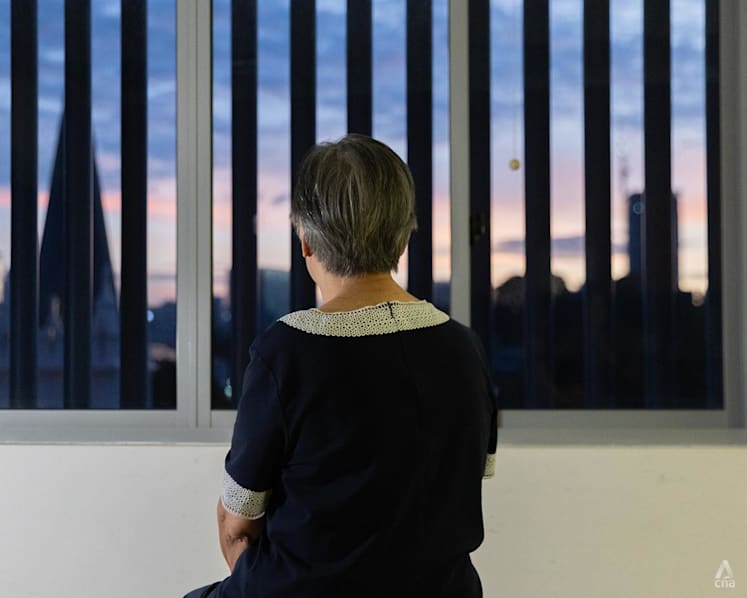
Bernie’s worries about restrictions were allayed once she moved into the transitional shelter.
She had no trouble keeping to the midnight curfew after her part-time job doing laundry, which CWS helped her to find. She had to share a dormitory with others, but was happy to have a bed and not to have to “hunt everywhere for a shower”.
She did not get into conflicts with other residents. In fact, she got on so well with her roommate that they eventually applied for a public rental flat together.
The roommates collected their keys in October and moved in the next month. In December, it was Hassan’s turn to bring to the Night Cafe the good news of his successful application for a public rental flat with a friend.
“The journey that I have from sleeping in the streets and going to apply for a rental flat seems impossible … but well, it came true,” said Bernie. “It starts a new chapter of my life again.”
She decided to open up about her experience, starting with this interview, in hopes that other rough sleepers who hear her story will also reach out for help as she once did.
“They might come here to the Night Cafe and look for it, what (I) have found here. They could find it here, or they could find it somewhere else.”
If you are interested in setting up an S3P or Night Cafe, or have other initiatives in mind to support rough sleepers, you can email MSF’s PEERS Office at MSF_PEERSOffice [at] msf.gov.sg.
If you would like to get help for a rough sleeper, you can call the ComCare hotline at 1800-222-0000 or use the Help Neighbour feature on the OneService app.




