Singapore music studios feel the squeeze as clients turn to AI-generated content
Some firms say project budgets have fallen by up to 60 per cent as artificial intelligence becomes increasingly common in music and voiceovers.
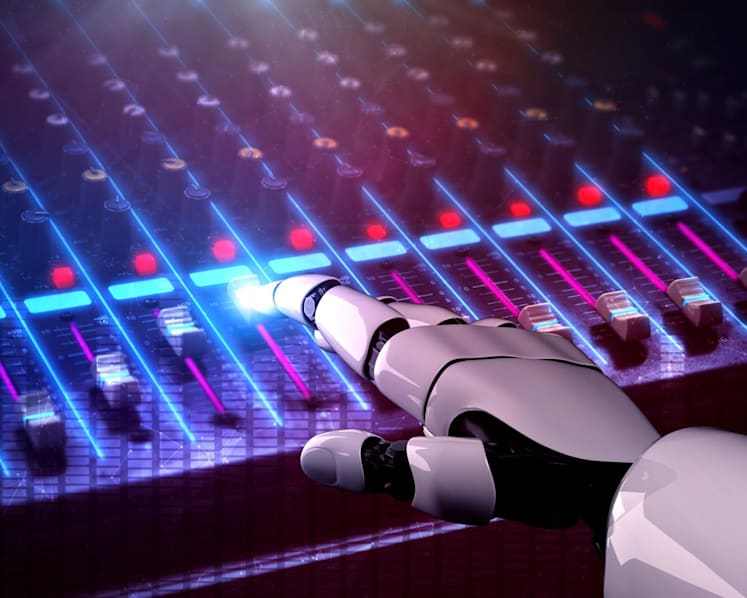
Music and audio firms say artificial intelligence is becoming a larger part of the production process. (Photo: iStock)

This audio is generated by an AI tool.




SINGAPORE: Artificial intelligence is helping music studios in Singapore produce content faster and at lower cost, but industry players say it is also driving down project budgets and squeezing creative professionals.
Several firms told CNA that clients are increasingly turning to AI-generated music and voiceovers, leading to lower project budgets and changing expectations about what creative work should cost.
Some reported varying levels of budget pressure, with declines ranging from 10 to 40 per cent and certain projects seeing cuts of up to 60 per cent.
Yet the issue, they say, is not simply about technology replacing people, but how AI is shaping perceptions of the value of creative work.
DISRUPTION TO CREATIVE OUTPUT
For decades, new technology has helped music studios work faster and more efficiently.
Digital audio workstations replaced analogue tape machines, while cloud services enabled remote collaboration. This meant shorter production timelines and lower costs.
But Mr Donny Pereira, managing director and founder of audio production company plusONE, believes AI represents a different kind of shift.
“With the dawn of AI, the difference here is dabbling in creative output … which then in turn determines the perceived value of the human output,” he said.
Mr Pereira said some plusONE projects have seen budget cuts of up to 60 per cent over the past two to three years, even as the volume of content being produced continues to grow.
Part of the challenge is that AI tools allow clients to generate rough music concepts or voiceovers themselves before approaching studios.
"If the compression of budgets begins from the top (and) filters down, we are the first to be cut," he said.





AI VOICES SEEN AS FASTER, CHEAPER
AI-generated voices are becoming a common feature in music production, advertising and content creation.
Tasks that once required voice actors, studio recording sessions and multiple rounds of revisions can now be completed within minutes.
"There are more requests right now for using AI voices, as opposed to a real human voice," said Mr Pereira.

"We can quickly change things on the fly. We can do it 10 times at the cost of one. It helps a lot in terms of processes, time, budgets."
But he added that many voice talents, musicians and freelancers are now feeling the effects.
Mr Pereira said there remains steady demand for plusONE's composers when it comes to original music. However, he has observed freelance opportunities across the industry fall by about 20 to 30 per cent as clients increasingly request AI-generated alternatives.
"It is a whole ecosystem of the talent community that's impacted by the usage of AI,” he said.

STUDIOS ADAPTING TO SURVIVE
While some local studios see AI as a threat, others are incorporating it into their workflows.
At Zynth Studios, AI is used to generate musical ideas and mock-ups that help composers move more quickly during the development stage.
Creative director and lead composer Muhammad Zahin Anwari said AI can be useful when deadlines are tight.
"When we are creating mock-ups for pitching projects for our clients, we work with very short timelines," he said.
"AI is definitely very helpful when it comes to generating work in a very fast way."
The company has also used AI to explore chord progressions, analyse musical references and overcome creative blocks.
But Mr Zahin stressed that the technology is being used only as an assistant.
"I do believe that AI is a tool for assisting artists instead of fully replacing our entire workflow in music."
CLIENTS STILL COME BACK TO HUMANS
Despite AI's growing capabilities, studios say clients are often dissatisfied with fully AI-generated music and voiceovers.
Mr Zahin said Zynth Studios has received feedback from customers who found AI-generated voices lacking in emotion and authenticity.
“We have this complaint … whereby the voices are not natural enough, or it's lacking in expression, which is rightfully so. It's not a human being,” he said.
The company has also found that clients frequently struggle to connect with AI-generated music, even if they cannot immediately explain why.
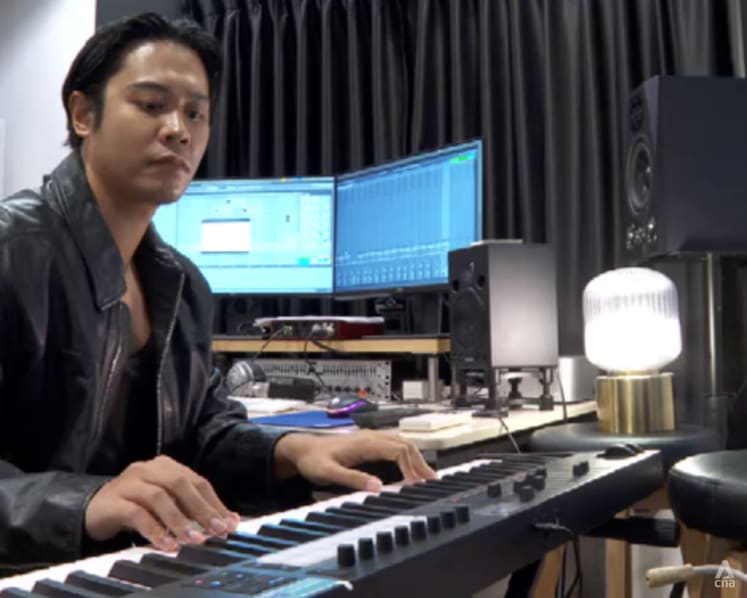
"Clients will always say that they're not sure why it doesn't sound good," said Mr Zahin.
"That is really the honest answer. They're just not sure why it's not resonating."
Mr Zahin believes this is because AI still struggles to replicate the human experiences that often shape creative work.
“Machines cannot experience pain. Machines cannot experience sacrifice. (They) cannot experience having to yearn for something or even to mourn for losses,” he added.


HUMAN CREATIVITY BECOMES MORE VALUABLE
Music agency Cross Ratio Entertainment has also seen project budgets decline, estimating reductions of between 10 and 30 per cent over the past few years.
Assistant manager Lim Yinghui said tasks such as copywriting, transcription, translation and the creation of certain marketing assets are increasingly being handled with AI tools.
At the same time, clients continue to seek services such as artist development, branding and community building that rely heavily on human creativity and relationships.
Ms Lim said the rise of AI may ultimately increase appreciation for authentic creative work.
“As much as technology can increase efficiency, the important things, like culture, storytelling, artistic expression, still come from the people,” she added.
“Authentic human creators also become a bit more valuable.”
WHAT OF THE NEXT GENERATION OF CREATIVES?
For some studios, the bigger concern lies not with today's established professionals but tomorrow's creatives.
Mr Pereira questioned how future composers and sound designers would develop their skills if many entry-level tasks become automated.
"With automation, we are seeing a new age of where (the) entry and mid-level workforce is kind of ambiguous and maybe not needed,” he said.
"You don't wake up the next day just to become a senior composer or senior sound designer, you got to learn the curve, you got to learn the art. If everything is automated, where do we begin?"
Industry players are also calling for clearer guidelines on the ethical use of AI, stronger protections for creators and more education on how the technology should be used in creative work.
They say more AI-related training and education is needed, stressing that students should continue to learn the fundamentals of music and creative work from the ground up.
Editor's note: An earlier version of this article stated that plusONE had reduced its use of freelancers by about 20 to 30 per cent. The studio has clarified that it was referring to a decline in freelance opportunities across the wider industry, not at plusONE specifically. The article has been updated to reflect this.